
Best Economics
Further, these pages hold a detailed discussion of Trump-style solutions for national security, education, health care, economic growth, government reform, and other important topics. The very essence of Trump's mission is a willingness to enact policies and set goals that send our country in a bold new direction - one that may be "unreasonable" to Washington but is sensible to millions of Americans outside the Beltway. He is a Fox News contributor and author of 34 books, including 14 New York Times bestsellers.
Reviews
Find Best Price at Amazon"I use the computer alot so when my eyes get tired it is great to just listen when ironing or driving on the weekends."
"If you love Trump, then you have an opportunity to find out why so many people are exploding with hatred for him. Similarly, if you hate him, it would be interesting to find out what it was about him that appealed to enough voters to win the election. Praise: In the front of the book, Gingrich explains the methods behind some of Trump's crazy habits. When a radio interviewer asked him to name some leaders in the middle east conflict, he quickly admitted he couldn't do that, but he'd know all about them when he needed to. I work in a technical job, where there are too many domains and details to hold in consciousness all the time; they will literally paralyze me. I practice Trump's method, holding on to what I need to know about the job at hand, confident I can throw new data in when necessary. I can't offer a solution but I'd like to say this: We'll never get anywhere until we admit that our present costs are unacceptable and that other countries do this MUCH better than we do."
"In any case, this book goes a long way toward articulating the ideological trends that drove Trump to a historic victory in the presidential election, giving context to the man himself, and looking forward to give us a glimpse of what we can expect in the future."
"OK, so it seems I posted my review on the wrong book- this is by far the BEST book on both the 2016 election and Donald Trump I've seen yet- and I've read over 2 dozen."
"He includes parts of speeches given by numerous people as well as Trump speeches. He also includes numerous excerpts from written material."
"Thoroughly enjoyed this book."
The #1 international best seller In Lean In, Sheryl Sandberg reignited the conversation around women in the workplace. With no small amount of self-deprecating humor, a massive quantity of facts and research, plus a liberal dose of very personal anecdotes, Sandberg forces each one of us—woman and man—to reexamine ourselves at work and in life, using a unique filter. In short, every single undoing of a woman’s career is examined thoughtfully and with twenty-first-century gentleness and exposed with recommended remedies.
Reviews
Find Best Price at Amazon"This book CHANGED MY LIFE. I attribute this selection to my newfound confidence in my abilities and contributions to the organization, and I attribute that confidence to this book! I think every working woman should read this (especially working mothers), and possibly more importantly, every manager, male or female, should read this book."
"I'm writing this because I think some of the reviewers are missing what is significant (at least) to me about the book. I've also been criticized for being too direct -- something that is not considered negative for a man. Thinking about these questions made me realize that I can be passive about my career choices. There's a young man in my department who is new to the industry and training for his new position. Even though some of his questions and comments are boarderline embarrassing, I guarantee upper management knows who he is."
"I read this book and in waiting to read the book I had a avoided reading anything about it."
"Sheryl does a great job looking at underlying causes and the continuing cultural norms that create the current work environment for women in careers today."
"As an aspiring leader, this book is a must read."
While preserving the integrity of Graham's original text, this revised edition includes updated commentary by noted financial journalist Jason Zweig, whose perspective incorporates the realities of today's market, draws parallels between Graham's examples and today's financial headlines, and gives readers a more thorough understanding of how to apply Graham's principles. Among the library of investment books promising no-fail strategies for riches, Benjamin Graham's classic, The Intelligent Investor , offers no guarantees or gimmicks but overflows with the wisdom at the core of all good portfolio management. Graham's sage advice, analytical guides, and cautionary tales are still valid for the contemporary investor, and Zweig's commentaries demonstrate the relevance of Graham's principles in light of 1990s and early twenty-first century market trends.
Reviews
Find Best Price at Amazon"If you are not a professional - you'll appreciate the commentaries and epilogue - read it first? Several rules of thumbs I noted into my keep: - Investor buys the business [based on its price/value], speculator buys the stock [based on an absurd believe that he can foresee where the stock price will go]. Thus, invest in such old economy companies while bubble grows, as soon as the bubble burst - undervalued companies would rise back. Dividends - money firm pays you for providing capital, they belong to you."
"Not only will you get superb financial advice, but also an outstanding piece of literature written by a brilliant mind. In an illustrative contrast between the two men, while Graham might show what he thinks about a certain Wall Street practice with a sardonic quote from classical literature, Zweig disparages IPOs by showing us how many silly phrases he can think up to stand for the acronym."
"I saw this on CBS Sunday morning during an interview with Warren Buffet."
"Item was exactly as described and arrived quickly."
"This book elevated my thinking about money and business."
"not easy for a novice clueless like me."
"best book about investing not for dummies only, but for experienced investors as well."
"No complaints of the book itself, but the Kindle edition of it is bad."
Best Banks & Banking
Where does money come from? The money magicians' secrets are unveiled. We get a close look at their mirrors and smoke machines, their pulleys, cogs, and wheels that create the grand illusion called money. The title refers to the formation of the Federal Reserve System, which occurred at a secret meeting at Jekyll Island, Georgia in 1910. Griffin gives numerous examples of this, such as repeated failures by American colonies and European states in using fiat money. It tells the real story of how bankers have lured politicians with easy money and ended up in control of most of the world. Topics covered: founding of the Federal Reserve, war mongering, bail-outs, boom-bust cycles, the J.P.Morgans and Rothschilds of the world, the history of central banking in the United States, and most fascinating: how the money system really works in this country. It is written in terms that anyone can understand, which will immediately rule out the kind of reader who is impressed by a lot of technical jargon that supposedly demonstrates an author's mastery of the subject while only serving to confuse laymen (and experts too). It tells the real story of how bankers have lured politicians with easy money and ended up in control of most of the world. Topics covered: founding of the Federal Reserve, war mongering, bail-outs, boom-bust cycles, the J.P.Morgans and Rothschilds of the world, the history of central banking in the United States, and most fascinating: how the money system really works in this country. It is written in terms that anyone can understand, which will immediately rule out the kind of reader who is impressed by a lot of technical jargon that supposedly demonstrates an author's mastery of the subject while only serving to confuse laymen (and experts too).
Reviews
Find Best Price at Amazon"This book puts it right: * Why America fought in WW1. * Why Russian revolutions occurred and who benefited from those. * Why people in other countries are so gullible when receiving foreign aid. * How the large bankers took advantage of those countries by legalizing smuggling, just for them, not the common folk. And most importantly: * How the common US folk is paying for all of it out of its own pocket through the hidden tax of inflation."
"good information Prompt delivery."
"Great!"
"This book is not about conspiracies, but a real and accurate description of the fraud perpetrated against Americans when members of Congress allowed this private agency to control our financial system."
"Great book."
"This book has so much information on the Federal Reserve, and the chapter on explaining the different types of money(such as fractional-reserves and fiat) is very helpful."
"It is one of the most interesting books I have ever read."
"Once finished with this book & audio book (buy them both), you won't/can't look at ANYTHING happening in the world the same way again. I can't believe I had not heard about this book decades ago."
Best Commerce
"A fascinating new perspective on modern finance," --Oliver Hart, 2016 Nobel Laureate in Economics. "Lucid, witty and delightfully erudite...From the French revolution to film noir, from the history of probability to Jane Austen and The Simpsons , this is an astonishing intellectual feast." With incisive wit and irony, his lecture drew upon a rich knowledge of literature, film, history, and philosophy to explain the inner workings of finance in a manner that has never been seen before. The mix of finance and the humanities creates unusual pairings: Jane Austen and Anthony Trollope are guides to risk management; Jeff Koons becomes an advocate of leverage; and Mel Brooks’s The Producers teaches us about fiduciary responsibility. Among many surprising parallels, bankruptcy teaches us how to react to failure, the lessons of mergers apply to marriages, and the Capital Asset Pricing Model demonstrates the true value of relationships. "Accessible... Desai, a Harvard economist, is an omnivorous reader, referring to Trollope and Hammett amid explanations of such concepts as leverage and options theory." -- New Yorker "A strikingly involving, strangely life-affirming new tome... following Mr Desai through his arguments and explanations is, in practice, a disarming and illuminating process." "For those of us who have long believed that the field of finance was more than a way to make a good living, Mihir Desai has written a liberating book. "In this lucid, witty and delightfully erudite study, Mihir Desai connects finance to philosophy, literature and the deep essence of the human condition. Mihir eloquently traces the products, practices, and services of our modern financial system to their roots while providing literary context and illustration. "Mihir Desai brilliantly applies original lessons drawn from the world of finance to enable all of us to lead more secure, fulfilling and happier lives. Using myriad examples from historical sources and current experiences, Desai takes essential financial theories and translates them into easily understood ways to enrich and improve our lives. ". --Bill George, former chairman and CEO of Medtronic and author of Discover Your True North "The Wisdom of Finance does for the global economy what Alain de Botton's How Proust Can Change Your Life did for French literature: it expands our idea of an obscure topic and illuminates its centrality to your everyday. This is a work of true philosophy and passion, incorporating thinkers and artists from E. O. Wilson to Jeff Koons elegantly into our understanding of how we make choices. -- Rakesh Khurana, dean of Harvard College "A scholar who is equally at home with art, literature, contemporary culture and financial theory, Mihir Desai improbably brings these worlds together in an absorbing, personal narrative that has much to teach us about how they are deeply connected."
Reviews
Find Best Price at Amazon"The Wisdom of Finance is worth reading if only to marvel at Mihir Desai’s amazing mind, wide range, and exciting set of insights. The book undersells itself, claiming to use a range of novels, movies, music, TV shows, philosophy and history to better understand and illuminate finance."
"Easy read, extremely well written, and illuminating even for (or perhaps especially for) someone who has spent the last 20 years in the field."
"The best book I’ve read on that topic is entitled Financial Fitness: The Offense, Defense, and Playing People of Personal Finance. It makes me think of an advanced version of books like The Tipping Point or Freakonomics, except it seems to aim less to a business audience and more to academia. If you enjoy studying things like insurance and investment banking, this book gets past the math and statistics and helps finance come alive through stories and the human element."
"They teach you about present value of money, asset allocation, diversification, CAPM, ROA, ROE, Alpha, Beta, CDS, MBS, etc. He does not quote Shakespear, Jane Austen, or Socrates to show off his knowledge but instead to place whatever concepts he presents (such as options, derivatives, investments) in an interesting and often ancient historical context. I derived a good empirical knowledge and understanding of all that stuff as all practicioners of finance eventually do."
"One of the best books on finance that I've ever read."
Best Commercial Policy
Immediately upon publication, Globalization and Its Discontents became a touchstone in the globalization debate by demonstrating how the International Monetary Fund, other major institutions like the World Bank, and global trade agreements have often harmed the developing nations they are supposedly helping. His book clearly explains the functions and powers of the main institutions that govern globalization--the International Monetary Fund, the World Bank, and the World Trade Organization--along with the ramifications, both good and bad, of their policies.
Reviews
Find Best Price at Amazon"Still, I found his coverage and insights into events that now seem like ancient history, that is, the transition of Russia from communism to (mafia) capitalism, and the East Asian financial crisis of the late `90's to be fascinating. ), and when the government devalued, after the "Big Boys" got their money out at very favorable rates, then the poor are saddled with the obligation to pay off the loan. It is enough to give capitalism a bad name (and it has in such countries)! Another key point that the author makes concerns Adam Smith, who started the wonderful "invisible hand" of the marketplace business, but also clearly identified market failures. Numerous times he is straightforward in his critique, such as: "The billions of dollars in Cayman Islands and other such centers are not there because those islands provide better banking services that Wall Street, London or Frankfurt; they are there because the secrecy allows them to engage in tax evasion, money laundering, and other nefarious activities. Only after September 11 was it recognized that among those other nefarious activities was financing of terrorism." Numerous redundancies, numerous inane reminders that farmers need to buy seeds, and tautologies like the following: "A real and effective banking system requires strong banking regulation.""
"This should be considered a companion book of a trilogy to those wishing to learn from highly educated, directly-experienced and politically objective experts - those who have "been there, done that" - who reveal to us the inner workings of world politics and why it is so ineffective and counter-productive the way it is currently being managed. Incredible as his story is, it also dovetails precisely with what these other authors - a Nobel prize winner, a counsellor to the Secretary of commerce and special economic envoy to Japan, and a New York Times journalist- have consistently and convincingly presented as the same story and delivered as a remarkably similar conclusion from their different perspectives."
Best Comparative Economics
The main driver of inequality―the tendency of returns on capital to exceed the rate of economic growth―today threatens to generate extreme inequalities that stir discontent and undermine democratic values. A work of extraordinary ambition, originality, and rigor, Capital in the Twenty-First Century reorients our understanding of economic history and confronts us with sobering lessons for today. It seems safe to say that Capital in the Twenty-First Century , the magnum opus of the French economist Thomas Piketty , will be the most important economics book of the year―and maybe of the decade. Like [Paul] Kennedy a generation ago, Piketty has emerged as a rock star of the policy-intellectual world… But make no mistake, his work richly deserves all the attention it is receiving… Piketty, in collaboration with others, has spent more than a decade mining huge quantities of data spanning centuries and many countries to document, absolutely conclusively, that the share of income and wealth going to those at the very top―the top 1 percent, .1 percent, and .01 percent of the population―has risen sharply over the last generation, marking a return to a pattern that prevailed before World War I… Even if none of Piketty’s theories stands up, the establishment of this fact has transformed political discourse and is a Nobel Prize–worthy contribution. Whether or not his idea ultimately proves out, Piketty makes a major contribution by putting forth a theory of natural economic evolution under capitalism… Piketty writes in the epic philosophical mode of Keynes, Marx, or Adam Smith… By focusing attention on what has happened to a fortunate few among us, and by opening up for debate issues around the long-run functioning of our market system, Capital in the Twenty-First Century has made a profoundly important contribution. But beyond its remarkably rich and instructive history, the book’s deep and novel understanding of inequality in the economy has drawn well-deserved attention… [Piketty’s] engagement with the rest of the social sciences also distinguishes him from most economists… The book is filled with brilliant moments… The book is an attempt to ground the debate over inequality in strong empirical data, put the question of distribution back into economics, and open the debate not just to the entirety of the social sciences but to people themselves. What makes Thomas Piketty ’s Capital in the Twenty-First Century such a triumph is that it seems to have been written specifically to demolish the great economic shibboleths of our time… Piketty’s magnum opus. Thomas Piketty ’s Capital in the Twenty-First Century is a monumental book that will influence economic analysis (and perhaps policymaking) in the years to come. In the way it is written and the importance of the questions it asks, it is a book the classic authors of economics could have written if they lived today and had access to the vast empirical material Piketty and his colleagues collected… In a short review, it is impossible to do even partial justice to the wealth of information, data, analysis, and discussion contained in this book of almost 700 pages.
Reviews
Find Best Price at Amazon"Important book, even if long and complex."
"Good info comparing the US to Europe on upward mobility and politics as the primary cause of our inequality."
"Good book but the same could have been said in half the words."
"He is not preachy at all, not alarmist, not doom and gloom and angry like Marx and not delusional like Hayek and much of the Chicago school and all the "free market" positivists."
"I have not had a chance to review the references, but I have read elsewhere that the research on the data in this book is rigorous."
"An incredibly long listen."
"Piketty addresses the recent, volatile concern over inequality with a comprehensive analysis of the history of economic inequality and explains our present situation ."
"Ele levanta a questão central da economia sem cair em ideologismos fáceis se atendo a economia mainstream, usando todas as ferramentas econômicas possíveis, com maestria, clareza, sem que em momento algum tenha se cegado quanto a obrigação de todo cientista de continuar a questionar e a duvidar, sem dogmatismos, mas com uma perspicácia e perseverança incríveis."
Best Development & Growth Economics
“It seems safe to say that Capital in the Twenty-First Century , the magnum opus of the French economist Thomas Piketty, will be the most important economics book of the year―and maybe of the decade.”. ―Paul Krugman, New York Times. It seems safe to say that Capital in the Twenty-First Century , the magnum opus of the French economist Thomas Piketty , will be the most important economics book of the year―and maybe of the decade. Like [Paul] Kennedy a generation ago, Piketty has emerged as a rock star of the policy-intellectual world… But make no mistake, his work richly deserves all the attention it is receiving… Piketty, in collaboration with others, has spent more than a decade mining huge quantities of data spanning centuries and many countries to document, absolutely conclusively, that the share of income and wealth going to those at the very top―the top 1 percent, .1 percent, and .01 percent of the population―has risen sharply over the last generation, marking a return to a pattern that prevailed before World War I… Even if none of Piketty’s theories stands up, the establishment of this fact has transformed political discourse and is a Nobel Prize–worthy contribution. Whether or not his idea ultimately proves out, Piketty makes a major contribution by putting forth a theory of natural economic evolution under capitalism… Piketty writes in the epic philosophical mode of Keynes, Marx, or Adam Smith… By focusing attention on what has happened to a fortunate few among us, and by opening up for debate issues around the long-run functioning of our market system, Capital in the Twenty-First Century has made a profoundly important contribution. But beyond its remarkably rich and instructive history, the book’s deep and novel understanding of inequality in the economy has drawn well-deserved attention… [Piketty’s] engagement with the rest of the social sciences also distinguishes him from most economists… The book is filled with brilliant moments… The book is an attempt to ground the debate over inequality in strong empirical data, put the question of distribution back into economics, and open the debate not just to the entirety of the social sciences but to people themselves. What makes Thomas Piketty ’s Capital in the Twenty-First Century such a triumph is that it seems to have been written specifically to demolish the great economic shibboleths of our time… Piketty’s magnum opus. Thomas Piketty ’s Capital in the Twenty-First Century is a monumental book that will influence economic analysis (and perhaps policymaking) in the years to come. In the way it is written and the importance of the questions it asks, it is a book the classic authors of economics could have written if they lived today and had access to the vast empirical material Piketty and his colleagues collected… In a short review, it is impossible to do even partial justice to the wealth of information, data, analysis, and discussion contained in this book of almost 700 pages.
Reviews
Find Best Price at Amazon"Important book, even if long and complex."
"Good info comparing the US to Europe on upward mobility and politics as the primary cause of our inequality."
"Good book but the same could have been said in half the words."
"He is not preachy at all, not alarmist, not doom and gloom and angry like Marx and not delusional like Hayek and much of the Chicago school and all the "free market" positivists."
"I have not had a chance to review the references, but I have read elsewhere that the research on the data in this book is rigorous."
"An incredibly long listen."
"Piketty addresses the recent, volatile concern over inequality with a comprehensive analysis of the history of economic inequality and explains our present situation ."
"Ele levanta a questão central da economia sem cair em ideologismos fáceis se atendo a economia mainstream, usando todas as ferramentas econômicas possíveis, com maestria, clareza, sem que em momento algum tenha se cegado quanto a obrigação de todo cientista de continuar a questionar e a duvidar, sem dogmatismos, mas com uma perspicácia e perseverança incríveis."
Best Digital Currencies
While many books explain the how of bitcoin, The Internet of Money delves into the why of bitcoin. "Over the past three years, awareness of the sweeping, transformative potential of bitcoin and its underlying blockchain technology has grown exponentially. --Michael J. Casey, co-author of The Age of Cryptocurrency: How Bitcoin and Digital Money are Challenging the Global Economic Order.
Reviews
Find Best Price at Amazon"When I dove down the rabbit hole of Bitcoin in late 2013, Andreas' YouTube talks and podcasts pulled me further in, and this book is a compilation of these entertaining and informative talks."
"This study of Bitcoin is truly turning out to be an elemental experience where Andreaus' approach gives me the power to create endless scenarios about the world we live in."
"Andreas takes us on an unparalleled journey where he explains, in a simple way and with the best metaphors, the why of money, its history and its relationship with society and why cryptocurrencies and the blockchain are the greatest revolution seen in the society since the appearance of the Internet."
"It is a very knowledgeable book, but seems to just be literally the talks the author has given across the globe."
"THE BEST book there is about Crypto."
"Must read for anyone who is interested in cryptos, has cryptos, loves or hates the idea of cryptos."
"If you know anything about the blockchain you won’t want to waste your time with the comparisons to the early days of the internet or whatever."
Best Econometrics
![Freakonomics [Revised and Expanded]: A Rogue Economist Explores the Hidden Side of Everything](https://images-na.ssl-images-amazon.com/images/I/51pu8DBi4uL._SS600_.jpg)
How did the legalization of abortion affect the rate of violent crime? He is a much-heralded scholar who studies the riddles of everyday life—from cheating and crime to sports and child-rearing—and whose conclusions turn conventional wisdom on its head. Freakonomics is a groundbreaking collaboration between Levitt and Stephen J. Dubner, an award-winning author and journalist. What unites all these stories is a belief that the modern world, despite a great deal of complexity and downright deceit, is not impenetrable, is not unknowable, and—if the right questions are asked—is even more intriguing than we think. It is true that readers of this book will be armed with enough riddles and stories to last a thousand cocktail parties. “If Indiana Jones were an economist, he’d be Steven Levitt… Criticizing Freakonomics would be like criticizing a hot fudge sundae.” (Wall Street Journal). “Principles of economics are used to examine daily life in this fun read.” (People: Great Reads).
Reviews
Find Best Price at Amazon"Indeed, the most common reaction I get from people when telling them that I am an economist is that they have read Freakonomics, which implies that they have at least seen some work similar to what I do at aguanomics. All I remember was a lot of math and curves.” This depressing outcome results from lecturers who merely reproduce problems and equations on the blackboard, without helping students understand either why those theories are used or how they came to be so popular with economists. Third, there are books like mine [pdf] that try to explain how to improve failing policies using basic economic insights and incentives. This book with a memorable (but useless) name provides readers with just-so stories that are good for cocktail conversations but not for understanding economics. What struck me is their ongoing attempts to hold onto at least some elements in the original claim in later blog posts in what I’d call a “my-ladydoth-protest-too-much” manner. Looking over their other chapters (on cheating sumo wrestlers, drug dealers who live with their moms, the KKK as a multilevel marketing organization, etc. ), I agree that the chapters are interesting and thought provoking, but they do not provide “lessons on the hidden side of everything.” Instead, they read like a series of magazine articles whose quirky “insights” might contribute to your next cocktail conversation. [7] I didn’t detect any reliable technique (except perhaps to collect a neat dataset and call Steve Levitt), and that’s where I was disappointed. In this case, street dealers are (a) NOT condemned to death, (b) not able to find other work with their experience, and (c) not aware of their statistical mortality as much as their potential wealth. Dubner and Levitt present interesting puzzles worthy of cocktail conversation, but they overstate their contributions and accuracy (“numbers don’t lie” but theory can be incomplete or just wrong). He's a fine person and excellent economist, but this book is too “pop” in its oversimplification of his work and hagiographic treatment of his insights. Yes, he brings interesting statistical tools to“freaky” questions, but he’s not a “rogue economist exploring the hidden side of everything.” He’s just a guy with a dataset and empirical theory who finds some strong correlations. (8) My years of experience traveling in 100+ countries leads me to respect the diversity of beliefs and institutions that result in a variety of outcomes. As another example, take Dubner on page 199, who writes “that paper [on police officer counts and crime] was later disputed… a gradate student found an obvious mathematical mistake in it — but Levitt’s ingenuity was obvious.” I’m not sure I’d say the same about someone whose claims rested on logic with “obvious mathematical mistakes”!"
"I bought a few copies as gifts for my kids' history teacher, math teacher, and language teacher. I think it's better than the following books but they are also entertaining."
"University of Chicago professor and Economist Steve Levitt and Journalist Stephen J. Dubner are the authors of "Freakonomics" an insightful, informative, ingenious, and witty non-fiction book that seeks to discover "The Hidden Side of Everything." Going through all of the possible theories that may have contributed to the drop in crime, such as harsher prison sentences, more police, and better economy, to Levitt, one plausible cause was left out--Legal abortion. With convincing evidence, Levitt believes that those likely to have an abortion before and certainly after Roe V Wade were single, poor, young and uneducated women. I choose to write my whole review based on the Roe v Wade and correlation to crime drop because I thought it was the most significant finding in the book."
"I enjoyed the many hidden causal connections that no one without the proper research could ever have put together."
Best Economic Conditions
Further, these pages hold a detailed discussion of Trump-style solutions for national security, education, health care, economic growth, government reform, and other important topics. The very essence of Trump's mission is a willingness to enact policies and set goals that send our country in a bold new direction - one that may be "unreasonable" to Washington but is sensible to millions of Americans outside the Beltway. He is a Fox News contributor and author of 34 books, including 14 New York Times bestsellers.
Reviews
Find Best Price at Amazon"I use the computer alot so when my eyes get tired it is great to just listen when ironing or driving on the weekends."
"If you love Trump, then you have an opportunity to find out why so many people are exploding with hatred for him. Similarly, if you hate him, it would be interesting to find out what it was about him that appealed to enough voters to win the election. Praise: In the front of the book, Gingrich explains the methods behind some of Trump's crazy habits. When a radio interviewer asked him to name some leaders in the middle east conflict, he quickly admitted he couldn't do that, but he'd know all about them when he needed to. I work in a technical job, where there are too many domains and details to hold in consciousness all the time; they will literally paralyze me. I practice Trump's method, holding on to what I need to know about the job at hand, confident I can throw new data in when necessary. I can't offer a solution but I'd like to say this: We'll never get anywhere until we admit that our present costs are unacceptable and that other countries do this MUCH better than we do."
"In any case, this book goes a long way toward articulating the ideological trends that drove Trump to a historic victory in the presidential election, giving context to the man himself, and looking forward to give us a glimpse of what we can expect in the future."
"OK, so it seems I posted my review on the wrong book- this is by far the BEST book on both the 2016 election and Donald Trump I've seen yet- and I've read over 2 dozen."
"He includes parts of speeches given by numerous people as well as Trump speeches. He also includes numerous excerpts from written material."
"Thoroughly enjoyed this book."
Best Economic Policy & Development
In Zero to One , legendary entrepreneur and investor Peter Thiel shows how we can find singular ways to create those new things. Thiel begins with the contrarian premise that we live in an age of technological stagnation, even if we’re too distracted by shiny mobile devices to notice. Zero to One presents at once an optimistic view of the future of progress in America and a new way of thinking about innovation: it starts by learning to ask the questions that lead you to find value in unexpected places. What Thiel is after is the revitalization of imagination and invention writ large…" – The New Republic "Might be the best business book I've read...Barely 200 pages long and well lit by clear prose and pithy aphorisms, Thiel has written a perfectly tweetable treatise and a relentlessly thought-provoking handbook." This is a classic.” - Nassim Nicholas Taleb, author of Fooled by Randomness and The Black Swan “Thiel has drawn upon his wide-ranging and idiosyncratic readings in philosophy, history, economics, anthropology, and culture to become perhaps America’s leading public intellectual today” - Fortune "Peter Thiel, in addition to being an accomplished entrepreneur and investor, is also one of the leading public intellectuals of our time. "The first and last business book anyone needs to read; a one in a world of zeroes."
Reviews
Find Best Price at Amazon"For example "we never invest in entrepreneurs who turn up for the interview in a suit" or "four of the founders of PayPal had built bombs as children." Memo to Peter Thiel: you are successful despite your prejudice against people who don't share your sartorial taste, and your partners made it to adulthood despite having been poorly supervised as children. He was not beaten by a better provider of software, he was superseded by a shift in technology toward powerful mobile devices, tablets and the cloud, all of which, in turn, were motivated by other entrepreneurs' desire to obtain monopoly profits. So Steve Jobs dominated many of these arenas for long enough to enjoy monopoly profits and other people will some day take this all further. Even the government is in on the act, Peter Thiel claims, or else it would not be granting patents to inventors or freedom from competition from generic drugs to the pharmaceutical companies that first develop new medications. My mom taught me that "necessity is the mother of invention:" GM did not develop the Volt till it was up against the wall, Archimedes discovered how to screw water upwards during the Roman siege of Syracuse, the Germans developed jet propulsion, the swept wing and the rocket we later sent to the moon when they had pretty much already lost WWII. And then we have the cases where, as the author says, it's clear that you need to incentivize people to innovate (drugs spring to mind, where the US has a lead) and that's where patents come in. And it was crystal clear to everybody with a modicum of common sense that both Intel and Microsoft were not helping the world along when they used dirty tricks to hurt AMD and Netscape. The author takes us on a (rather gratuitous) trip from Plato and Aristotle to Nozick and Rawls via Epicurus, Lucretius, Hegel and Marx to discuss when optimism is and isn't warranted and the bottom line is that you're only allowed to be an optimist if you have "definite optimism" based on a specific Design (my capital D) for a business. Peter Thiel takes a massive swipe at the Malcolm Gladwells of the world who overemphasize chance, serendipity and fate with facile arguments about the similarity in Steve Jobs' and Bill Gates' birthdates. It's the Nassim Nicholas Taleb idea, and he duly appears on the back cover to endorse the book. For the best book on the subject I'd swerve around NNT's work and turn to Benoit Mandelbrot's masterpiece, "The (Mis)behaviour of Markets." The fourth idea is no more original, but Thiel puts it well: "there are many more secrets left to find, but they will yield only to relentless searchers." The fifth idea is you need to pick your partners i.e. your investors, your fellow managers and your (ideally 3) directors very carefully in order to make sure you all want the same thing out of the company (and it had better not be immediate rewards). But once they have their first billion and don't need to run their ideas by anyone else to get them funded they very often go do something stupid (dunno, like go mine asteroids) with exactly the same fervour they previously applied to the sensible endeavour that made them rich. The more grounded ones keep their further investments close to home and direct their creativity toward giving lectures and writing books."
"Along with business strategy, Thiel outlines how successful innovation shapes society and shares an intriguing vision. Rather than offer scripts or formulas, Thiel discusses the logic of starting a company that will make a truly meaningful and unique impact on the world. Blake did a great job of adapting and presenting the contents, many of which were delivered when Thiel taught at Stanford. Keeping in mind that companies growing 1000x often carry entire portfolios, Peter gives a good argument for successful moonshots and grand visions. He also highlights the dangers of trying to disrupt entrenched competitors and avoid extra resistance and burn rates on marketing. Rather, Tesla began by making powertrains, then started with high end luxury models to which no solid alternative existed. His strong argument for monopolies are both for novelty and to develop early market dominance should competitors arise later. I found a Monopoly Index by Forbes that showed these types of companies outperforming the Dow and S&P by 33%, which was a pleasant result of some due diligence. Even if you make a product that’s a 3x improvement over a market leader, you aren’t creating anything truly new, and well funded competitors are likely to catch up. It looks at economics, globalization, artificial intelligence, and historical trends along with founder characteristics and the qualities of great salespeople. If you like diving really deep into the mind of a founder across many life experiences, check out Tony Hseih’s Delivering Happiness."
Best Environmental Economics
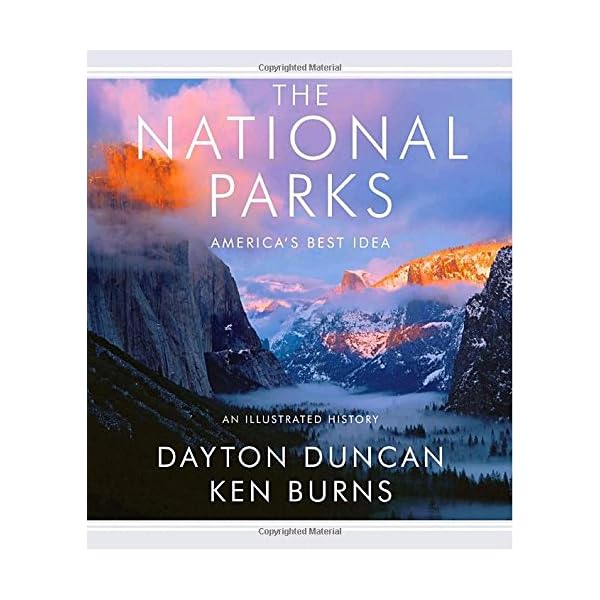
In this evocative and lavishly illustrated narrative, Ken Burns and Dayton Duncan delve into the history of the park idea, from the first sighting by white men in 1851 of the valley that would become Yosemite and the creation of the world’s first national park at Yellowstone in 1872, through the most recent. additions to a system that now encompasses nearly four hundred sites and 84 million acres. If Ken Burns’s upcoming documentary film on America’s National Parks is as good as the book laying open before me, he has another huge winner. The result is almost elegiac, producing the same kind of goose bumps that Burns created in his early work on the Brooklyn Bridge and the Civil War . Namely, as Burns puts it in the introduction, “for the first time in human history, land--great sections of our natural landscape--was set aside, not for kings or noblemen or the very rich, but for everyone, for all time.” As Wallace Stegner once observed, and the book’s subtitle echoes, this may have been “America’s best idea.” Burns links the idea to Jefferson’s magic words in the Declaration of Independence (i.e. “We hold these truths...”), our quasi-sacred text on human freedom, which takes on an almost spiritual resonance amidst the vistas of Yosemite or Yellowstone. Dayton Duncan , Burns's longtime colleague, has provided most of the text, which is designed to cast a spell that matches the wonder of the stunning illustrations.
Reviews
Find Best Price at Amazon"This book is full of breathtaking images, making it the perfect coffee table book for anyone who enjoys exploring our beautiful country and its national parks."
"Great photos and historical commentary."
"We were given this book as a gift and are now getting it to give to a family member as a gift."
"This presentation is more than 5 stars !!!"
"Gave it as a Christmas gift to a cousin who is traveling this year to western national parks."
Best Free Enterprise
Selected by the Times Literary Supplement as one of the "hundred most influential books since the war". How can we benefit from the promise of government while avoiding the threat it poses to individual freedom?
Reviews
Find Best Price at Amazon"Friedman is an amazing man and economist."
"I may not agree with everything mr friedman writes about, but must admit he has a very practical view of capitalism and freedom."
"This book should be read by everybody that can read, and especially those who followed the majority of left-wing economists of the 1950s and 1960s."
"While the most recent introductory update was 2002, and some illustrative topics are no longer applicable, this is a valuable high level commentary on the disfunctionality of a government attempting to manage an economy rather than serving narrower needs of the populace."
"This a great read and strong discussion on the economic movements that continue to dominate the political area today."
"I have seen some old interviews with Milton Friedman and read a couple of his books; including this one."
"Fantastic information."
Best Income Inequality
The main driver of inequality―the tendency of returns on capital to exceed the rate of economic growth―today threatens to generate extreme inequalities that stir discontent and undermine democratic values. A work of extraordinary ambition, originality, and rigor, Capital in the Twenty-First Century reorients our understanding of economic history and confronts us with sobering lessons for today. It seems safe to say that Capital in the Twenty-First Century , the magnum opus of the French economist Thomas Piketty , will be the most important economics book of the year―and maybe of the decade. Like [Paul] Kennedy a generation ago, Piketty has emerged as a rock star of the policy-intellectual world… But make no mistake, his work richly deserves all the attention it is receiving… Piketty, in collaboration with others, has spent more than a decade mining huge quantities of data spanning centuries and many countries to document, absolutely conclusively, that the share of income and wealth going to those at the very top―the top 1 percent, .1 percent, and .01 percent of the population―has risen sharply over the last generation, marking a return to a pattern that prevailed before World War I… Even if none of Piketty’s theories stands up, the establishment of this fact has transformed political discourse and is a Nobel Prize–worthy contribution. Whether or not his idea ultimately proves out, Piketty makes a major contribution by putting forth a theory of natural economic evolution under capitalism… Piketty writes in the epic philosophical mode of Keynes, Marx, or Adam Smith… By focusing attention on what has happened to a fortunate few among us, and by opening up for debate issues around the long-run functioning of our market system, Capital in the Twenty-First Century has made a profoundly important contribution. But beyond its remarkably rich and instructive history, the book’s deep and novel understanding of inequality in the economy has drawn well-deserved attention… [Piketty’s] engagement with the rest of the social sciences also distinguishes him from most economists… The book is filled with brilliant moments… The book is an attempt to ground the debate over inequality in strong empirical data, put the question of distribution back into economics, and open the debate not just to the entirety of the social sciences but to people themselves. What makes Thomas Piketty ’s Capital in the Twenty-First Century such a triumph is that it seems to have been written specifically to demolish the great economic shibboleths of our time… Piketty’s magnum opus. Thomas Piketty ’s Capital in the Twenty-First Century is a monumental book that will influence economic analysis (and perhaps policymaking) in the years to come. In the way it is written and the importance of the questions it asks, it is a book the classic authors of economics could have written if they lived today and had access to the vast empirical material Piketty and his colleagues collected… In a short review, it is impossible to do even partial justice to the wealth of information, data, analysis, and discussion contained in this book of almost 700 pages.
Reviews
Find Best Price at Amazon"Piketty provides exhaustive data throughout in a fascinating historical analysis of capital and the inevitable pitfalls of indecent inequality of wealth ("...the `first globalization of finance and trade (1870-1914) is in many ways similar to the `second globalization' which has been underway since the 1970's." and, "...capitalism automatically generates arbitrary and unsustainable inequalities that radically undermine the meritocratic values on which democratic societies are based."). Further, he recommends that the only reasonable way to address indecent wealth inequality is a progressive global tax on wealth, which in turn requires global transparency of accounts and an end to foreign tax havens; he goes on to say none of these measures will be easy, but does offer practical suggestions. Clearly, the plutocrats would panic over popularization of such a suggestion, and it only takes a word or two from them to spin up their PACs and puppet organizations (I won't name names) into blindly trashing these rational suggestions. At some point, wealth takes on a life of it's own whenever r>g and this and what amounts to regressive taxation at the top of the pyramid, are the driving force behind income inequality."
"Important book, even if long and complex."
"Good info comparing the US to Europe on upward mobility and politics as the primary cause of our inequality."
"Good book but the same could have been said in half the words."
"He is not preachy at all, not alarmist, not doom and gloom and angry like Marx and not delusional like Hayek and much of the Chicago school and all the "free market" positivists."
"I have not had a chance to review the references, but I have read elsewhere that the research on the data in this book is rigorous."
"An incredibly long listen."
"Piketty addresses the recent, volatile concern over inequality with a comprehensive analysis of the history of economic inequality and explains our present situation ."
Best Economic Inflation
This is a straightforward budget planning method that will completely transform your finances, and eliminate your money worries once and for all. Grady Harp. (Hall of Fame, Amazon Top 100 Reviewer, Vine Voice). " This is the rarest of all rarities - a really good ebook on personal finance. ". "Avery Breyer's self-help guide to consumer finances... is filled with great ideasfor getting out of a financial rut . I found her reasons for setting up a budget to be compelling and was impressed by the Money Tracker program she includes with the book... Avery Breyer is the best-selling author of the Smart Money Blueprint Series.Avery has been quoted on/in Woman's World magazine, Time.com, Fool.com (Motley Fool), MSN Money, GoBanking Rates, and featured as a guest on WOR 710 "The Voice of New York," on The Financial Quarterback , hosted by Josh Jalinski.
Reviews
Find Best Price at Amazon"How you manage your money (however much or little it may be) affects every aspect of your life - your physical and emotional well-being, your relationships, what hobbies you can pursue and where you can live. Don't make the mistake of thinking that you can avoid taking control of your spending by simply getting a job that pays more. It's a wonderfully readable combination of advice, fascinating examples, and moral support. It's like sitting down with that favorite aunt or uncle (or grandparent) who understands that people make mistakes and who believes in your ability to turn things around."
"I bought this for myself."
"But if you don't know what the basics is, then read this book."
"I thoroughly enjoyed this book."
"I liked the plan a b c approach as we all know that even with the best intentions getting to our financial goals don't always go to plan."
"Avery Breyer uses a step by step systematic approach to the discipline of MONEY..."
"Really found this helpful and if you want simple tips to work with a budget - this is for you!"
Best Financial Interest
Understanding Business by Nickels, McHugh, and McHugh has been the number one textbook in the introduction to business market for several editions for three reasons: (1) The commitment and dedication of an author team that teaches this course and believes in the importance and power of this learning experience, (2) we listen to our customers, and (3) the quality of our supplements package. He has written a marketing communications text and two marketing principles texts in addition to many articles in business publications.
Reviews
Find Best Price at Amazon"My professor actually wrote on our syllabus to get the 11th edition, however, he told us in person that he would rather have us buy an older edition for cheaper."
"It would have been 180 to rent at school and over 200$ to buy but hear it's only like 18-30$ to rent plus tax for the whole semester!"
"What I like about Understanding Business are the examples provided within each chapter."
"It was actually the previous edition to what my professor was using at the time, but almost exactly the same, including the pictures and captions, only difference was page numbers and a few minor details."
"It is a textbook, but arrived safely and in good condition."
"Book is fine, but the price is way too expensive for a rental."
"This textbook is interesting, it was used for class."
"I was under the impression that the book came with Connect Plus since the title reads "Understanding Business with Connect Plus.""
Best Labor & Industrial Economic Relations

The Curies' newly discovered element of radium makes gleaming headlines across the nation as the fresh face of beauty, and wonder drug of the medical community. Written with a sparkling voice and breakneck pace, The Radium Girls fully illuminates the inspiring young women exposed to the "wonder" substance of radium, and their awe-inspiring strength in the face of almost impossible circumstances. " Radium Girls spares us nothing of their suffering; though at times the foreshadowing reads more like a true-crime story, Moore is intent on making the reader viscerally understand the pain in which these young women were living, and through which they had to fight in order to get their problems recognized...The story of real women at the mercy of businesses who see them only as a potential risk to the bottom line is haunting precisely because of how little has changed; the glowing ghosts of the radium girls haunt us still." "This timely book celebrates the strength of a group of women, whose determination to fight improved both labor laws and scientific knowledge of radium poisoning. Written in a highly readable, narrative style, Moore's chronicle of these inspirational women's lives is sure to provoke discussion-and outrage-in book groups." "Moore's well-researched narrative is written with clarity and a sympathetic voice that brings these figures and their struggles to life...a must-read for anyone interested in American and women's history, as well as topics of law, health, and industrial safety." "Like Da a Sobel's The Glass Universe and Margot Lee Shetterly's Hidden Figures, Kate Moore's The Radium Girls tells the story of a cohort of women who made history by entering the workforce at the dawn of a new scientific era. Moore sheds new light on a dark chapter in American labor history; the " Radium Girls ," martyrs to an unholy alliance of commerce and science, live again in her telling" - Megan Marshall, Pulitzer Prize-winning author of Margaret Fuller: A New American Life and Elizabeth Bishop: A Miracle for Breakfast.
Reviews
Find Best Price at Amazon"In The Radium Girls Kate Moore tells the story of these young women, seemingly so fortunate, who were poisoned by the jobs they felt so lucky to have. After some of the women died and more became ill the companies making large profits on radium rushed to dismiss any hint that the work was unsafe. Eventually publicity stemming from lawsuits filed by some of the victims (using their own scanty resources) focused enough attention on the problem that governments felt compelled to set safety standards and regulations. The safety regulations and restrictions which were finally put into place hardly seem adequate, and the Epilogue and Postscript giving details of the women's later lives, as well as an account of another industry that made careless use of radium as late as the 1970s, are especially harrowing."
"This is one these books that will stay with you long after you finished reading it."
"One of the best books I have read in a long time!"
"The Radium Girls is the story of these girls, most of them young, in their teens and early twenties. Because some of the girls became ill after leaving the plant, it took a long time to prove that the radium in the paint was the cause of the girls' illness. And even after it was shown that the radium was the cause, the company continued the same practice of having the girls dip the brushes into the paint and then smooth the brush tips with their mouths. They lied to their employees even after it was shown that the radium paint was to blame for the girls' illnesses and deaths, they kept secret medical records they refused to share with the families or the girls themselves, and they continued to operate as they had before, with little to no regard for the safety of the girls in their employ."
"I agree with most of the good and bad reviews: The story is fascinating and tragic, but the author's writing leaves a bit to be desired. It's not enough to simply say "corporate greed killed off a group of women in the early 20th century, leading to reform of industrial health laws"."
Best Macroeconomics
Since 2014, international monetary agencies have been issuing warnings to a small group of finance ministers, banks, and private equity funds: the U.S. government’s cowardly choices not to prosecute J.P. Morgan and its ilk, and to bloat the economy with a $4 trillion injection of easy credit, are driving us headlong toward a cliff. "If you are curious about what the financial Götterdämmerung might look like you’ve certainly come to the right place... Rickards believes -- and provides tantalizing snippets of private conversations with those who dwell in the very eye-in-the-pyramid -- that the current world monetary and financial system is on the verge of insolvency and that the world financial elites already have a successor system for which they are laying the groundwork." An adviser on international economics and financial threats to the Department of Defense and the U.S. intelligence community, he served as a facilitator of the first-ever financial war games conducted by the Pentagon.
Reviews
Find Best Price at Amazon"I find Jim Rickards to be a gifted teacher - he successfully explains numerous complicated concepts in layman terms. Thanks to his writings in this particular book, I feel I have a basic working knowledge of some troubling issues that may very well threaten the long term success of not just my own family, but America in general. I found his suggestions to be tersely worded and lacking the "fleshing out" helpfulness characteristic in Rickards previous chapters. When I finished this much anticipated section I sensed Rickards had deliberately withheld information the average reader needed to understand and apply his suggestions and ideas."
"Rickards speaks of "elites," but as an amorphous group bound together by shared goals rather than as a dark organization dedicated to evil. The typical free trade policies have led to the gutting of US manufacturing, and the loss of the jobs on which the middle class used to depend. If President Trump can shift our trade policies so that a certain amount of manufacturing returns to the US, he will have done generations of Americans a great favor."
"It does paint a frightening picture of how both political parties are fostering the dangers with their greed and thirst for corporate graft."
"Also, does it bother anyone else that someone who previously worked for the CIA and has all this present day high level clearance, is just allowed to tell everything he knows without being offed?"
"If you really want to buy his book - Go Ahead - but order off Amazon - and save yourself the trouble of additional scammer charges for bogus info."
Best Microeconomics
PRINCIPLES OF MICROECONOMICS, Seventh Edition, continues to be the most popular and widely-used text in the economics classroom.
Reviews
Find Best Price at Amazon"I needed this for my Microeconomics class, the font was a good size and it was easy to read."
"Great prep for the Aplia test questions."
"It was a great experience and the delivery was right on time."
"It's the best Microeconomics book I've ever (been forced to) read."
"The book was written by Gregory Mankiw who has an incredible résumé being a Harvord University professor and an economic adviser to George W. Bush (political bias aside that is impressive)."
"Super easy to read and understand!"
"This is a good book that has understandable explanations and is a fine textbook."
"I think the math behind these curves is important and unfortunately the book stays high level and doesn't provide more in-depth examples or tutorials on how to calculate curves, deadweight loss and other important concepts."
Best Money & Monetary Policy
Where does money come from? The money magicians' secrets are unveiled. We get a close look at their mirrors and smoke machines, their pulleys, cogs, and wheels that create the grand illusion called money. The title refers to the formation of the Federal Reserve System, which occurred at a secret meeting at Jekyll Island, Georgia in 1910. Griffin gives numerous examples of this, such as repeated failures by American colonies and European states in using fiat money. It tells the real story of how bankers have lured politicians with easy money and ended up in control of most of the world. Topics covered: founding of the Federal Reserve, war mongering, bail-outs, boom-bust cycles, the J.P.Morgans and Rothschilds of the world, the history of central banking in the United States, and most fascinating: how the money system really works in this country. It is written in terms that anyone can understand, which will immediately rule out the kind of reader who is impressed by a lot of technical jargon that supposedly demonstrates an author's mastery of the subject while only serving to confuse laymen (and experts too). It tells the real story of how bankers have lured politicians with easy money and ended up in control of most of the world. Topics covered: founding of the Federal Reserve, war mongering, bail-outs, boom-bust cycles, the J.P.Morgans and Rothschilds of the world, the history of central banking in the United States, and most fascinating: how the money system really works in this country. It is written in terms that anyone can understand, which will immediately rule out the kind of reader who is impressed by a lot of technical jargon that supposedly demonstrates an author's mastery of the subject while only serving to confuse laymen (and experts too).
Reviews
Find Best Price at Amazon"This book puts it right: * Why America fought in WW1. * Why Russian revolutions occurred and who benefited from those. * Why people in other countries are so gullible when receiving foreign aid. * How the large bankers took advantage of those countries by legalizing smuggling, just for them, not the common folk. And most importantly: * How the common US folk is paying for all of it out of its own pocket through the hidden tax of inflation."
"I read this book many years ago and wanted to read it again."
"good information Prompt delivery."
"Great!"
"If you want the truth , read this book."
"All of the historical sequences are easy to read and understand due to the patient pace of the author."
"I had heard about this a long time ago so I was somewhat familiar with what happened."
Best Public Finance
William Bernstein’s commonsense approach to portfolio construction has served investors well during the past turbulent decade―and it’s what made The Four Pillars of Investing an instant classic when it was first published nearly a decade ago. The art and science of mixing different asset classes into an effective blend The dangers of actively picking stocks, as opposed to investing in the whole market Behavioral finance and how state of mind can adversely affect decision making Reasons the mutual fund and brokerage industries, rather than your partners, are often your most direct competitors Strategies for managing all of your assets―savings, 401(k)s, home equity―as one portfolio. From the essential soundness of classic portfolio theory through the inherent wisdom of investing in multiple asset classes, The Four Pillars of Investing provides a distinctive blend of market history, investing theory, and behavioral finance to help you become a successful, self-sufficient investor.
Reviews
Find Best Price at Amazon"Money and time are the two things we struggle to manage."
"Bernstein takes extra effort to simplify the intimidating jargon of investing."
"Best investing book on the planet."
"I would recommend this book as a must read for anyone with a 401(k) or brokerage account."
"I consider this to be one of the top 4 books that every investor should read - including (perhaps especially) people who save via an IRA, 401(k) or any other long-term savings/investment plan."
"Best book on investing for the masses."
"A great book!"
"Insightful and well structured."
Best Sustainable Business Development
Drawing upon a six-year research project at the Stanford University Graduate School of Business, Collins and Porras took eighteen truly exceptional and long-lasting companies -- they have an average age of nearly one hundred years and have outperformed the general stock market by a factor of fifteen since 1926 -- and studied each company in direct comparison to one of its top competitors. They examined the companies from their very beginnings to the present day -- as start-ups, as midsize companies, and as large corporations. Throughout, the authors asked: "What makes the truly exceptional companies different from other companies?" They set out to determine what's special about "visionary" companies--the Disneys, Wal-Marts, and Mercks, companies at the very top of their game that have demonstrated longevity and great brand image. The authors compare 18 "visionary" picks to a control group of "successful-but-second-rank" companies. This book, written by a team from Stanford's Graduate School of Business, compares what the authors have identified as "visionary" companies with selected companies in the same industry. The visionary companies, the authors found out, had a number of common characteristics; for instance, almost all had some type of core ideology that guided the company in times of upheaval and served as a constant bench mark.
Reviews
Find Best Price at Amazon"I honestly think there are better books out there for this subject matter."
"If you have the good to great I feel all info are just copy paste."
"As a manager in a large company that is trying to reinvent itself, I found many parallels to both the visionary and non-visionary examples."
"This books offers great insights on how some of the most successful organizations had been built."
"30/Jul/2009 Update: One can not read this book in the right context and perspective without reading The Halo Effect: ... and the Eight Other Business Delusions That Deceive Managers - so far the best business book I've ever read!"
"One of the classics and very much enjoyed reading."
"This work from team Collins/Porras is a fine book and. a must read for any business savy person or executive. interested in tuning in to some basic and yet essential. precepts on keeping ahead of the inevitable changes. and cycles that consume so many companies and industries."
Best Theory of Economics
But Steven D. Levitt is not a typical economist. “Principles of economics are used to examine daily life in this fun read.” (People: Great Reads). “Levitt dissects complex real-world phenomena, e.g. baby-naming patterns and Sumo wrestling, with an economist’s laser.” (San Diego Union-Tribune). This is bracing fun of the highest order.” (Kurt Andersen, host of public radio's Studio 360 and author of Turn of the Century). “Freakonomics challenges conventional wisdom and makes for fun reading.” (Book Sense Picks and Notables). “Economics is not widely considered to be one of the sexier sciences.... Steven D. Levitt will change some minds.” (Amazon.com).
Reviews
Find Best Price at Amazon"Indeed, the most common reaction I get from people when telling them that I am an economist is that they have read Freakonomics, which implies that they have at least seen some work similar to what I do at aguanomics. All I remember was a lot of math and curves.” This depressing outcome results from lecturers who merely reproduce problems and equations on the blackboard, without helping students understand either why those theories are used or how they came to be so popular with economists. Third, there are books like mine [pdf] that try to explain how to improve failing policies using basic economic insights and incentives. This book with a memorable (but useless) name provides readers with just-so stories that are good for cocktail conversations but not for understanding economics. What struck me is their ongoing attempts to hold onto at least some elements in the original claim in later blog posts in what I’d call a “my-ladydoth-protest-too-much” manner. Looking over their other chapters (on cheating sumo wrestlers, drug dealers who live with their moms, the KKK as a multilevel marketing organization, etc. ), I agree that the chapters are interesting and thought provoking, but they do not provide “lessons on the hidden side of everything.” Instead, they read like a series of magazine articles whose quirky “insights” might contribute to your next cocktail conversation. [7] I didn’t detect any reliable technique (except perhaps to collect a neat dataset and call Steve Levitt), and that’s where I was disappointed. In this case, street dealers are (a) NOT condemned to death, (b) not able to find other work with their experience, and (c) not aware of their statistical mortality as much as their potential wealth. Dubner and Levitt present interesting puzzles worthy of cocktail conversation, but they overstate their contributions and accuracy (“numbers don’t lie” but theory can be incomplete or just wrong). He's a fine person and excellent economist, but this book is too “pop” in its oversimplification of his work and hagiographic treatment of his insights. Yes, he brings interesting statistical tools to“freaky” questions, but he’s not a “rogue economist exploring the hidden side of everything.” He’s just a guy with a dataset and empirical theory who finds some strong correlations. (8) My years of experience traveling in 100+ countries leads me to respect the diversity of beliefs and institutions that result in a variety of outcomes. As another example, take Dubner on page 199, who writes “that paper [on police officer counts and crime] was later disputed… a gradate student found an obvious mathematical mistake in it — but Levitt’s ingenuity was obvious.” I’m not sure I’d say the same about someone whose claims rested on logic with “obvious mathematical mistakes”!"
"I enjoyed the many hidden causal connections that no one without the proper research could ever have put together."
"This book is absolutely brilliant."
"You may or may not agree with everything in here, but that is not the point."
"I thought this book was both thought provoking and interesting."
"Really a great book."
"Here's my verdict: if you want a fun, engaging read, and have a lot of time, don't read non-fiction a lot, etc., this would be a lot of fun."
"Only gripe I have with this particular edition (really of no fault to the book or its authors) is that I thought it was much longer (311 pages) than the actual book (192 pages) is."
Best Unemployment
Top Business Book of 2015 at Forbes. One of NBCNews.com 12 Notable Science and Technology Books of 2015 What are the jobs of the future? The book is both lucid and bold, and certainly a starting point for robust debate about the future of all workers in an age of advancing robotics and looming artificial intelligence systems. "For nonfiction, I tip my hat to Martin Ford's Rise of the Robots , which is vacuuming up accolades and is recommended reading for IIF staff. Ford's analysis, in a somewhat crowded field of similar books, offers a sobering assessment of how technology (robotics, machine learning, AI, etc.). is reshaping labor markets, the composition of growth, and the distribution of income and wealth, and calls for enlightened political and policy leadership to address coming, accelerating disruptions and dislocations. "Mr. Ford lucidly sets out myriad examples of how focused applications of versatile machines (coupled with human helpers where necessary) could displace or de-skill many jobs.... His answer to a sharp decline in employment is a guaranteed basic income, a safety net that he suggests would both cushion the effect on the newly unemployable and encourage entrepreneurship among those creative enough to make a new way for themselves. "Martin Ford has thrust himself into the center of the debate over AI, big data, and the future of the economy with a shrewd look at the forces shaping our lives and work.
Reviews
Find Best Price at Amazon"I realized that, as the technology of AI advanced, a point would be reached in which intelligent software and general-purpose robots could perform all tasks (both mental and physical) that are currently achievable only by highly educated humans. At one time I toyed with writing a book about my concerns regarding intelligent automation and its future effect on political and economic systems but Martin Ford has a done a 100-times better job that I could have ever done. I only have two complaints about Ford's book: (a) the title sounds a bit too much like a title for a pulp-fiction work and so I fear that not enough people will read it and (b) the first 75 pages consist of a standard summary of current economic facts and principles and so I fear that some readers may quit reading his book before they get to the really interesting parts, which in my opinion, start after page 75."
"Mr. Ford clearly expands on a evolving threat of technology changing how supply and demand define society."
"This is a very comprehensive account of the advances being made in the field of robotics."
"Delivered as expected!"
"This is a real complex scenario where our future is going to be affected due to robotics."
"The best book for those who want a general informational download on these themes; it is clear, precise, unbiased and full of data."
"Everyday we read about new advances in AI and robots."
"Lots of jobs are being lost to automation, and this book clearing (and frighteningly) shows the future path of automation."
Best Urban & Regional Economics
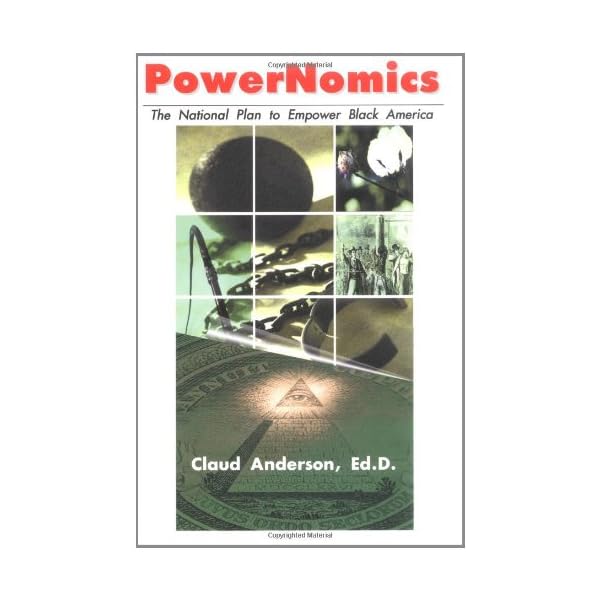
In PowerNomics: The National Plan , Dr. Anderson proposes new principles, strategies and concepts that show blacks a new way to see, think, and behave in race matters. In this book, Dr. Anderson offers insightful analysis and action steps blacks can take to redesign core areas of life - Education, Economics, Politics and Religion - to better benefit their race. PowerNomics: The Plan , is infused with Dr. Anderson's trademark creative thinking and answers questions such as: - Why are blacks the only group that equates success with working in a White corporation, government or the entertainment industry? - How did power and wealth - businesses, resources, privileges, income and control of all levels of government get so disproportionately distributed into the hands of White society? To implement the strategy of industrializing Black communities, he has established a vertically integrated seafood industry that is currently operating and will expand into urban areas across the nation. In addition to his most recent seafood project, he owns a vertically integrated publishing company and was one of the first blacks to own a radio station in Florida.
Reviews
Find Best Price at Amazon"Why aren't black educators teaching the truth about how slavery drove the industrial revolution and the debt America refuses to acknowledge it still owes its black citizens. Before this book, I had little idea of how responsible (culpable really) government was for the present and past plight of black people. And I never considered that black people have a good reason (damn good reason) to be prejudiced against white people, for example, the hispanics taking over black music and trying to replace blacks as the majority minority; how many times have blacks been pushed to the bottom of the ladder? I have to admit that reading the book made me not want to be black."
"AFFIRMATIVE ACTION WAS CREATED FOR BLACKS TO GET QUALITY POSITIONS IN THE WORKFORCE, BUT APPARENTLY PEOPLE HAVE TAKEN THAT OUT OF CONTEXT AS WELL AS THE 14TH AMENDMENT. People have won lawsuits for claiming to be African-American and true Black folks are being handed the short end of the stick because we don't control Public Policy. THIS BOOK ALOUD MANY BLACKS TO GO OVERSEAS TO EUROPE TO CLAIM REPARATIONS A COUPLE OF DECADES AGO."
"Outstanding information this is an absolute book that must be read."
"The book I purchased Powernomics was delivered on time in good condition, great experience from heritage books and more."
"Great plan just the implementation is needed."
"Dr. Claud Anderson is one of the giants."
"Most informative book Ive ever read!"
"He also brings to light the sad fact of how this society is FIGHTING to marginalize and minimalize Blacks as much as possible, to keep us the better 'ignorant, docile consumer'. Moreover, how other minorities (Asians, Indians, and Arabs) seek economic opportunities in Black neighborhoods, often leaving a large 'vacumming sound' in their wake having exploited Blacks for the money that we do have."
Best Economics
develop goals for every reader give students step-by-step strategies for skilled reading guide readers with prompts aligned to the strategies adjust instruction to meet individual needs with Jen's Teaching Tips craft demonstrations and explanations with her Lesson Language learn more with Hat Tips to the work of influential teacher-authors. Whether you use readers workshop, Daily 5/CAFE, guided reading, balanced reading, a core reading program, whole-class novels, or any other approach, The Reading Strategies Book will complement and extend your teaching. Jennifer Serravallo is the author of New York Times bestseller The Reading Strategies Book as well as other popular Heinemann titles, including Teaching Reading in Small Groups; Conferring with Readers; and The Literacy Teacher's Playbook, Grades K - 2 and Grades 3 - 6.
Reviews
Find Best Price at Amazon"Most books about teaching reading require plowing through lots of pages about the author's philosophy and practices before getting to the good stuff...the stuff you can use in the classroom tomorrow. Every teacher, from classroom teachers to reading specialists to literacy coaches to tutors to home-school teachers, from pre serviice teachers to veteran teachers, will quickly and easily be able to find the strategies they need to teach the students in front of them."
"- Jennifer Serravallo, The Reading Strategies Book: Your EVERYTHING Guide to Developing Skilled Readers. Jennifer Serravallo created the ultimate book of reading strategies. - Classroom Teacher: This is truly a comprehensive book to help you develop individual reading goals or goals for reading strategy groups. The book is organized around the following goals (chapters) for developing skilled readers: - Supporting Pre-Emergent and Emergent Readers. - Teaching Reading Engagement: Focus, Stamina, and Building a Reading Life. - Supporting Print Work: Increasing Accuracy and Integrating Sources of Information. - Teaching Fluency: Reading with Paraphrasing, Intonation, and Automaticity. - Supporting Comprehension in Fiction: Understanding Plot and Setting. - Supporting Comprehension in Fiction: Thinking About Characters. - Supporting Comprehension in Fiction: Understanding Themes and Ideas. - Supporting Comprehension in Nonfiction: Determining Maint Topic(s) and Idea(s). - Supporting Comprehension in Nonfiction: Determining Key Details. - Supporting Comprehension in Nonfiction: Getting the Most from Text Features. - Improving Comprehension in Fiction and Nonfiction: Understanding Vocabulary and Figurative Language. - Supporting Students' Conversations: Speaking, Listening, and Deepening Comprehension. - Improving Writing About Reading. Each chapter starts with a research-based explanation of WHY the goal is important to developing skilled readers."
"I am a literacy coach and am so excited to use this book next year with teachers at my school. Here's why: I love how Jennifer compares The Reading Strategies Book to a cookbook, It's a great analogy for the lessons in the book. Jennifer walks you through navigating the book, choosing goals for students, how the book might fit into your current literacy instruction, and supporting strategies with visuals. I think this book should be a required text for college literacy courses and should be a welcome gift to new teachers when hired."
"The Reading Strategies Book will be my go-to resource for improving my students' reading comprehension for years to come."
Best Finance
While preserving the integrity of Graham's original text, this revised edition includes updated commentary by noted financial journalist Jason Zweig, whose perspective incorporates the realities of today's market, draws parallels between Graham's examples and today's financial headlines, and gives readers a more thorough understanding of how to apply Graham's principles. Among the library of investment books promising no-fail strategies for riches, Benjamin Graham's classic, The Intelligent Investor , offers no guarantees or gimmicks but overflows with the wisdom at the core of all good portfolio management. Graham's sage advice, analytical guides, and cautionary tales are still valid for the contemporary investor, and Zweig's commentaries demonstrate the relevance of Graham's principles in light of 1990s and early twenty-first century market trends.
Reviews
Find Best Price at Amazon"If you are not a professional - you'll appreciate the commentaries and epilogue - read it first? Several rules of thumbs I noted into my keep: - Investor buys the business [based on its price/value], speculator buys the stock [based on an absurd believe that he can foresee where the stock price will go]. Thus, invest in such old economy companies while bubble grows, as soon as the bubble burst - undervalued companies would rise back. Dividends - money firm pays you for providing capital, they belong to you."
"Not only will you get superb financial advice, but also an outstanding piece of literature written by a brilliant mind. In an illustrative contrast between the two men, while Graham might show what he thinks about a certain Wall Street practice with a sardonic quote from classical literature, Zweig disparages IPOs by showing us how many silly phrases he can think up to stand for the acronym."
"It is not a 101 guide to the basics of the stock market, but even if you go into this book with little to no knowledge of the stock market, it is informative enough that if you are intuitive, you can learn (by deduction) about investing."
"Very good that one book all information available for investor."
"New and seal in plastic wrap."
"Difficult for me to follow."
"The original text was updated in 1972 by Graham and then Jason Zweig adds his commentary in 2003 to relate to the changes at that time."
"No complaints of the book itself, but the Kindle edition of it is bad."
Best Investing
While preserving the integrity of Graham's original text, this revised edition includes updated commentary by noted financial journalist Jason Zweig, whose perspective incorporates the realities of today's market, draws parallels between Graham's examples and today's financial headlines, and gives readers a more thorough understanding of how to apply Graham's principles. Among the library of investment books promising no-fail strategies for riches, Benjamin Graham's classic, The Intelligent Investor , offers no guarantees or gimmicks but overflows with the wisdom at the core of all good portfolio management. Graham's sage advice, analytical guides, and cautionary tales are still valid for the contemporary investor, and Zweig's commentaries demonstrate the relevance of Graham's principles in light of 1990s and early twenty-first century market trends.
Reviews
Find Best Price at Amazon"If you are not a professional - you'll appreciate the commentaries and epilogue - read it first? Several rules of thumbs I noted into my keep: - Investor buys the business [based on its price/value], speculator buys the stock [based on an absurd believe that he can foresee where the stock price will go]. Thus, invest in such old economy companies while bubble grows, as soon as the bubble burst - undervalued companies would rise back. Dividends - money firm pays you for providing capital, they belong to you."
"Not only will you get superb financial advice, but also an outstanding piece of literature written by a brilliant mind. In an illustrative contrast between the two men, while Graham might show what he thinks about a certain Wall Street practice with a sardonic quote from classical literature, Zweig disparages IPOs by showing us how many silly phrases he can think up to stand for the acronym."
"It is not a 101 guide to the basics of the stock market, but even if you go into this book with little to no knowledge of the stock market, it is informative enough that if you are intuitive, you can learn (by deduction) about investing."
"Very good that one book all information available for investor."
"New and seal in plastic wrap."
"Difficult for me to follow."
"The original text was updated in 1972 by Graham and then Jason Zweig adds his commentary in 2003 to relate to the changes at that time."
"No complaints of the book itself, but the Kindle edition of it is bad."
Best Valuation
A timely update to the global best-selling book on investment banking and valuation. In the constantly evolving world of finance, a solid technical foundation is an essential tool for success. Investment Banking: Valuation, Leveraged Buyouts, and Mergers & Acquisitions, Second Edition is a highly accessible and authoritative book that focuses on the primary valuation methodologies currently used on Wall Street--comparable companies, precedent transactions, DCF, and LBO analysis--as well as M&A analysis. In codifying the art and science of investment banking, the authors convert this oral history into an accessible framework by bridging the theoretical to the practical with user-friendly, step-by-step approaches to performing primary valuation methodologies.” –Joseph R. Perella, Chairman and CEO, Perella Weinberg Partners. "Investment Banking provides a highly practical and relevant guide to the valuation analysis at the core of investment banking, private equity, and corporate finance. "This book will surely become an indispensable guide to the art of buyout and M&A valuation, for the experienced investment practitioner as well as for the non-professional seeking to learn the mysteries of valuation." Rosenbaum and Pearl have created a comprehensive and thoughtfully written guide covering the core skills of the successful investment professional with particular emphasis on valuation analysis." Investment Banking provides specific step-by-step valuation procedures for LBO and M&A transactions, with lots of diagrams and numerical examples."
Reviews
Find Best Price at Amazon"This is a very good book for professionals working in the different areas of Corporate Bankin."
"It is my pleasure to recommend 'Investment Banking: Valuation, Leveraged Buyouts, and Mergers and Acquisitions', which is easily one of the best and most practical books on M&A and valuation that I've read."
"This is more informative than many longer investment banking books I've owned and it's much more accessible and lays in the information out in a more practical manner than lighter investment banking books that I've owned."
"Actually, this is the only book I found, which is practical oriented and allows the reader to gain practical oriented experience while using the book as a tool to work through Valuation, LBOs, and M&As."
"Great product, great book."
"It even includes a sample LBO model which is well constructed and will give some insights not only into Excel, but also into the economics of an LBO."
"This provides detailed explanation on the process of investment banking and valuation methods including examples."
"I bought this book after the authors of this book, Rosenbaum and Pearl, presented at a finance summit at Rutgers Business School."
Best Real Estate
Three concepts that drive production Economic, organizational, and lead generation models that are the foundations of any high-achiever's business How to "Earn a Million," "Net a Million," and "Receive a Million" in annual income. "Hundreds of people who have attended The Millionaire Real Estate Agent seminars have all asked Dave and me the same thingwhen will The Millionaire Real Estate Agent be available in audiobook form?"
Reviews
Find Best Price at Amazon"Helped me well with my Real Estate business this year."
"Informative and interesting read."
"Well written and excellent advise."
"I've read this book four times."
"Gary Keller tried his best to give advice and guidance to newbies, ameteur or even master!"
"Great how to for real estate professionalservices, regardless of experience."
"Very good book explains things well and gives great ways on how to net a million."
Best Business Finance
While preserving the integrity of Graham's original text, this revised edition includes updated commentary by noted financial journalist Jason Zweig, whose perspective incorporates the realities of today's market, draws parallels between Graham's examples and today's financial headlines, and gives readers a more thorough understanding of how to apply Graham's principles. Among the library of investment books promising no-fail strategies for riches, Benjamin Graham's classic, The Intelligent Investor , offers no guarantees or gimmicks but overflows with the wisdom at the core of all good portfolio management. Graham's sage advice, analytical guides, and cautionary tales are still valid for the contemporary investor, and Zweig's commentaries demonstrate the relevance of Graham's principles in light of 1990s and early twenty-first century market trends.
Reviews
Find Best Price at Amazon"If you are not a professional - you'll appreciate the commentaries and epilogue - read it first? Several rules of thumbs I noted into my keep: - Investor buys the business [based on its price/value], speculator buys the stock [based on an absurd believe that he can foresee where the stock price will go]. Thus, invest in such old economy companies while bubble grows, as soon as the bubble burst - undervalued companies would rise back. Dividends - money firm pays you for providing capital, they belong to you."
"Not only will you get superb financial advice, but also an outstanding piece of literature written by a brilliant mind. In an illustrative contrast between the two men, while Graham might show what he thinks about a certain Wall Street practice with a sardonic quote from classical literature, Zweig disparages IPOs by showing us how many silly phrases he can think up to stand for the acronym."
"It is not a 101 guide to the basics of the stock market, but even if you go into this book with little to no knowledge of the stock market, it is informative enough that if you are intuitive, you can learn (by deduction) about investing."
"Very good that one book all information available for investor."
"New and seal in plastic wrap."
"Difficult for me to follow."
"The original text was updated in 1972 by Graham and then Jason Zweig adds his commentary in 2003 to relate to the changes at that time."
"No complaints of the book itself, but the Kindle edition of it is bad."