
Best Medical Neuropsychology
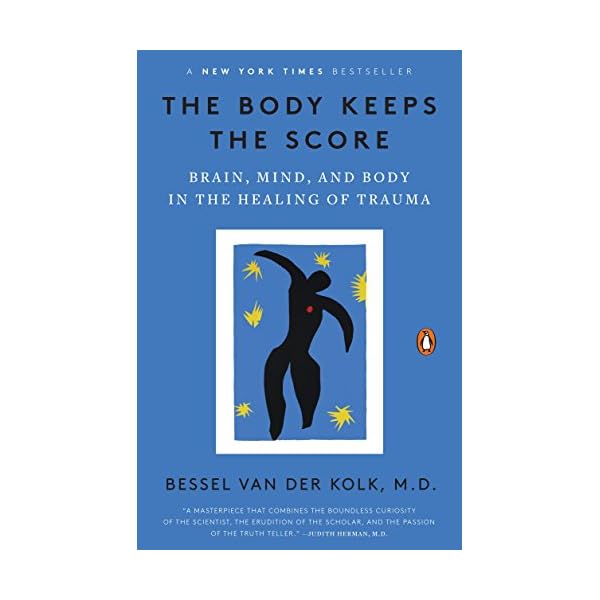
“Essential reading for anyone interested in understanding and treating traumatic stress and the scope of its impact on society.” —Alexander McFarlane, Director of the Centre for Traumatic Stress Studies A pioneering researcher transforms our understanding of trauma and offers a bold new paradigm for healing in this New York Times Science bestseller Trauma is a fact of life. Praise for The Body Keeps the Score “In this inspirational work which seamlessly weaves keen clinical observation, neuroscience, historical analysis, the arts, and personal narrative, Dr. van der Kolk has created an authoritative guide to the effects of trauma, and pathways to recovery. A must read for mental health and other health care professionals, trauma survivors, their loved ones, and those who seek clinical, social, or political solutions to the cycle of trauma and violence in our society.” —Rachel Yehuda, Ph.D., professor of psychiatry and neuroscience, director of the Traumatic Stress Studies Division at the Mount Sinai School of Medicine, New York, NY “This is an absolutely fascinating and clearly written book by one of the nation’s most experienced physicians in the field of emotional trauma. “Breathtaking in its scope and breadth, The Body Keeps the Score is a seminal work by one of the preeminent pioneers in trauma research and treatment. Van der Kolk, the eminent impresario of trauma treatment, who has spent a career bringing together diverse trauma scientists and clinicians and their ideas, while making his own pivotal contributions, describes what is arguably the most important series of breakthroughs in mental health in the last thirty years. Here we see not only how psychological trauma also breaks connections within the brain, but also between mind and body, and learn about the exciting new approaches that allow people with the severest forms of trauma to put all the parts back together again.” —Norman Doidge, author of The Brain That Changes Itself. “ The Body Keeps the Score articulates new and better therapies for toxic stress based on a deep understanding of the effects of trauma on brain development and attachment systems. Bessel van der Kolk may focus on the body and trauma, but what a mind he must have to have written this book.”. Its deeply empathic, insightful, and compassionate perspective promises to further humanize the treatment of trauma victims, dramatically expand their repertoire of self-regulatory healing practices and therapeutic options, and also stimulate greater creative thinking and research on trauma and its effective treatment. The body does keep the score, and Van der Kolk’s ability to demonstrate this through compelling descriptions of the work of others, his own pioneering trajectory and experience as the field evolved and him along with it, and above all, his discovery of ways to work skillfully with people by bringing mindfulness to the body (as well as to their thoughts and emotions) through yoga, movement, and theater are a wonderful and welcome breath of fresh air and possibility in the therapy world.”. “In The Body Keeps the Score we share the author’s courageous journey into the parallel dissociative worlds of trauma victims and the medical and psychological disciplines that are meant to provide relief. “Bessel van der Kolk is unequaled in his ability to synthesize the stunning developments in the field of psychological trauma over the past few decades. —Ruth A. Lanius, MD, PhD, Harris-Woodman chair in Psyche and Soma, professor of psychiatry, and director PTSD research at the University of Western Ontario; author of The Impact of Early Life Trauma on Health and Disease. Interspersed with that narrative are clear and understandable descriptions of the neurobiology of trauma; explanations of the ineffectiveness of traditional approaches to treating trauma; and introductions to the approaches that take patients beneath their cognitive minds to heal the parts of them that remained frozen in the past. “When it comes to understanding the impact of trauma and being able to continue to grow despite overwhelming life experiences, Bessel van der Kolk leads the way in his comprehensive knowledge, clinical courage, and creative strategies to help us heal. Dr. Van der Kolk offer a brilliant synthesis of clinical cases, neuroscience, powerful tools and caring humanity, offering a whole new level of healing for the traumas carried by so many.”. Bessel van der Kolk, M.D., is the founder and medical director of the Trauma Center in Brookline, Massachusetts.
Reviews
Find Best Price at Amazon"Frankly, nothing really worked until I discovered - and applied - the somatic (body) techniques espoused by van der Kolk, and other luminaries such as Peter Levine, Pat Ogden, and Eugene Gendlin. The only way to ‘communicate’ with this pre-verbal system is through the body, which can signal to the brain stem that it is OK to begin the process of unfreezing the emotional paralysis that has plagued us for decades. UPDATE 2018: One of the treatments that Bessel van der Kolk mentions in his book - MDMA - was recently granted ‘Breakthrough Therapy’ status by the FDA for phase 3 trials. This is because the phase 1 and 2 trials were so successful, that nearly 70% of participants no longer had PTSD after just 3 MDMA sessions (most of these participants had suffered PTSD for decades)."
"Psychiatrist, professor, world-class researcher, and traumatologist Bessel van der Kolk MD requires no introduction to trauma psychotherapists. Familiar with major reviews of PTSD psychotherapy outcomes research, I know that research support for body-oriented approaches to treating psychological trauma psychopathology is thin at best, and such treatment models simply do not have the research validation of either EMDR (Eye Movement Desensitization and Reprocessing) and PE (Prolonged Exposure), neither of which are especially body-focused. J. Interlandi's excellent article anticipating publication of this book - "A Revolutionary Approach to Treating PTSD" (New York Times Magazine, 2014.05.22 - available online) - initially supported my fears that for some inexplicable reason van der Kolk was now promoting some treatment model for which we have little confirming research. Yet the account of van der Kolk's therapy work in Interlandi's article is gripping. (I've been here before, reading van der Kolk's own accounts of his work.). Van der Kolk's critique of CBT (cognitive behavioral therapy - a general class of therapies) and PE (E. Foa's exposure therapy model) is withering and correct: neither really work. Because as a trauma treatment professional I'm well aware of what the trauma treatment outcomes research actually says. Van der Kolk's new book has many virtues. Parts One and Two (102 pp) provide a substantial review of the neuropsychology of trauma's impact on a person. I've long thought that much writing on treating psychological trauma seems to miss the point: trauma memory is what causes the problem. As he does throughout the book, van der Kolk offers fine stories about clients who have experienced exactly what I've seen happen in my clients, making excellent use of what cognitive research tells us: people understand things best through narratives. Psychological trauma therapy is complex, but we are now well prepared to launch into the book's core content - Part Five (154 pp), "Paths to Recovery". Van der Kolk tells an amusing and self-deprecating story about his advanced training experience, in which Puk was able to provide a strong corrective to his approach to clients. Van der Kolk's thoughts on self-empowerment for those in recovery from psychological trauma will be invaluable to any trauma psychotherapy client. Van der Kolk shows us how. Organization -. * 6 pp: prefatory praise by peers and related luminaries (interesting comments from some important people in the field); * 2 pp: Table of Contents; * 356 pp: actual text; * 4 pp: Appendix: Consensus proposed criteria for developmental trauma disorder. * 3 pp: Resources. * 4 pp: Further reading. * 51 pp: Notes. * 21 pp: Index."

From stroke patients learning to speak again to the remarkable case of a woman born with half a brain that rewired itself to work as a whole, The Brain That Changes Itself will permanently alter the way we look at our brains, human nature, and human potential. “Brilliant...Doidge has identified a tidal shift in basic science...The implications are monumental.”. -The London Times. Doidge’s book is a remarkable and hopeful portrait of the endless adaptability of the human brain.”. -Oliver Sacks, MD. “The most readable and best general treatment of this subject to date.”. - Michael M. Merzenich, Ph.D., Keck Center for Integrative Neurosciences University of California at San Francisco. [And]….our response to the world around us is not only a social or psychological phenomenon, but often a lasting neurological process.”. — Montreal Gazette, Liam Durcan, MD, Neurologist & Novelist. “A rich banquet of brain-mind plasticity, communicated in a brilliantly clear writing style.”. -Jaak Panksepp, Ph.D., Head, Affective Neuroscience Research, Falk Center for Molecular Therapeutics, Northwestern University; “A masterfully guided tour through the burgeoning field of neuroplasticity research.”. - Discover Magazine. “Beautifully written and brings life and clarity to a variety of neuropsychiatric problems that affect children and adults... It reads a bit like a science detective story and -you do not need a Ph.D. to benefit from the wisdom imparted here.”. - Barbara Milrod, M.D. “Norman Doidge has written a fascinating, highly readable account of the new brain science.”. -John Cornwell, Literary Review, England. “A remarkable book ... a highly readable exploration of a branch of science that has the potential to change all our lives.”. -Hobart Mercury. The recognition that the brain in plastic and can actually change itself with exercise and understanding is a huge leap in the history or mankind, far greater than landing on the moon.”. - Jane S. Hall, International Psychoanalysis. Here he describes in fascinating personal narratives how the brain, far from being fixed, has remarkable powers of changing its own structure and compensating for even the most challenging neurological conditions. Doidge’s book is a remarkable and hopeful portrait of the endless adaptability of the human brain.”. - Oliver Sack, MD, author of The Man Who Mistook His Wife for a Hat.
Reviews
Find Best Price at Amazon"He said it was impossible for me to play the violin because the right side of my brain did not function properly. I then told him he could come to a symphony rehearsal that following week, he did and was so shocked that he said that I had done the same thing as climbing Mt. Little did I know that the orthopedist that I saw suggested that I begin something like music for physical therapy for my left arm and hand."
"The book gave examples in the author's experience that showed and proved the plasticity of the brain."
"Love this book, very educational."
"The book meets my expectations 100%."
"Fascinating read."
"I loved this book."
"I am only a few pages in and I love it already!!"
"The idea of neuroplasticity - that the brain can keep on learning and make new neural pathways is an amazing breakthrough."
Best Medical Ethnopsychology
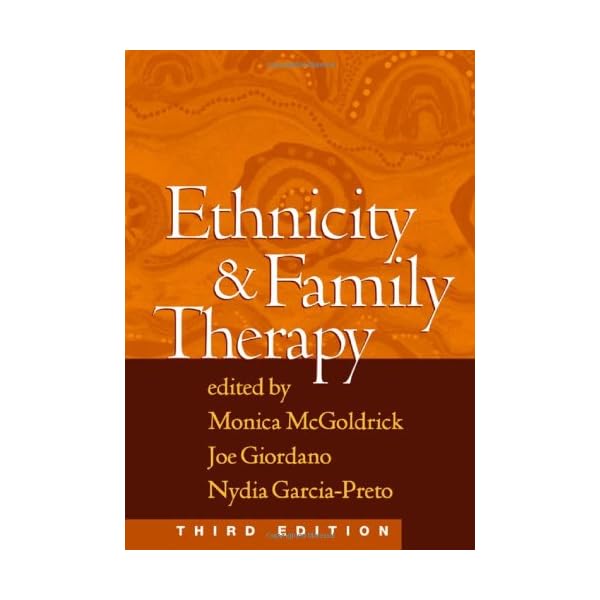
This widely used clinical reference and text provides a wealth of knowledge on culturally sensitive practice with families and individuals from over 40 different ethnic groups. Important themes resonate throughout, including the ways that religious and spiritual beliefs, historical circumstances, immigration histories, and experiences of racism and prejudice influence contemporary families' strengths and struggles. At the same time, this book wisely teaches us that our understanding of these cultural patterns must incorporate not only ethnicity, but also gender, socioeconomic status, geography, religion, race, and politics, among other factors. "Ethnicity is part of the lived experience of each of us every day, whether in the foods we like, our ways of expressing affection, religious and political views, gender roles, taboos and expectations, and so much more. Major strengths of this book are the range of groups considered, a highly readable writing style, consistency of format throughout the chapters, extensive documentation, and the relevance of context covered to typical clinical situations....A treasured resource that can serve to help explain behavior patterns that are seemingly idiosyncratic yet that may be rooted in history and culture....As a textbook, Ethnicity and Family Therapy is especially relevant to courses in cultural and ethnic diversity and could serve as a supplement to family therapy courses." ( The Family Psychologist 2005-08-20). "This well-edited and comprehensive volume should prove to be of great value to psychotherapists of all orientations....Most specific chapters begin with historical accounts and cultural overviews. These informative materials will help any psychotherapist appreciate the factors affecting individual patients and families as they strive to accept and adjust to American societal expectations....Clinicians would be wise to keep a copy of this volume available for consultation to enhance their ability to provide culturally competent assessment and treatment.
Reviews
Find Best Price at Amazon"This is a fantastic book!"
"This is a very helpful book when learning how to counsel people from different cultural backgrounds."
"It does not generalize all Asian, Latin or Middle Eastern cultures.It breaks it down into individual countries."
"Excellent source for counselors!"
"Highlighted pages and hardcover is separating from the pages."
"Pricey, but a great resource to have in the helping professions."
Best Medical General Psychology
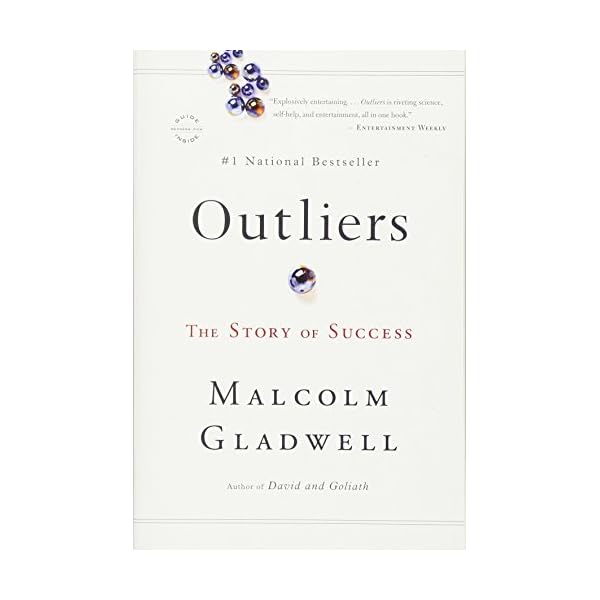
In this stunning new book, Malcolm Gladwell takes us on an intellectual journey through the world of "outliers"--the best and the brightest, the most famous and the most successful. "In the vast world of nonfiction writing, Malcolm Gladwell is as close to a singular talent as exists today... Outliers is a pleasure to read and leaves you mulling over its inventive theories for days afterward.
Reviews
Find Best Price at Amazon"I’ve read this book several times."
"Gladwell is always an interesting read/listen. I always grade up for personal narration by the author too. this provided some nice conversation fodder. but it left me feeling a bit: "so, what?""
"This is one of my favorite books."
"I found more than a few myths debunked in this book."
"What you realize after reading the book: individual success is fake - oftentimes it is the result of multiple factors contributing to a single outcome."
"I had to buy this book for a college course and I didn't have any idea what it was about but after just getting through the first 10 pages I was hooked!!"
"Chapter 7 on commercial airplane pilots was fascinating...thinking outside the box."
"The path to perceived success follows many stones."
Best Medical Child Psychology
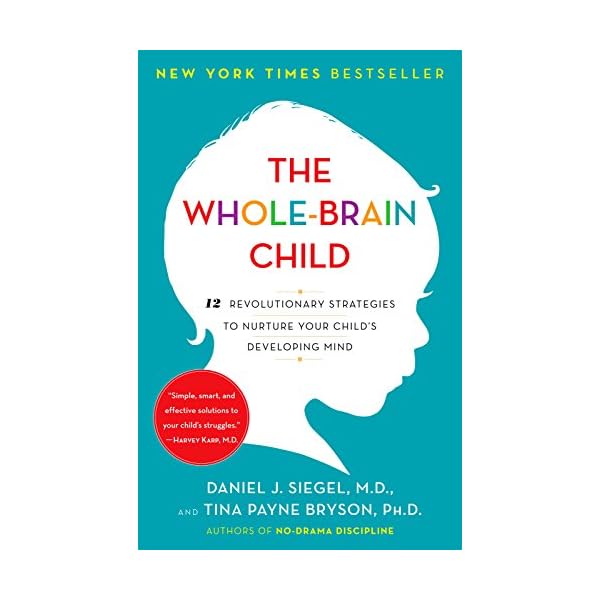
In this pioneering, practical book, Daniel J. Siegel, neuropsychiatrist and author of the bestselling Mindsight , and parenting expert Tina Payne Bryson offer a revolutionary approach to child rearing with twelve key strategies that foster healthy brain development, leading to calmer, happier children. By applying these discoveries to everyday parenting, you can turn any outburst, argument, or fear into a chance to integrate your child’s brain and foster vital growth. The authors include a fair amount of brain science, but they present it for both adult and child audiences.” —Kirkus Reviews “Strategies for getting a youngster to chill out [with] compassion.” —The Washington Post “This erudite, tender, and funny book is filled with fresh ideas based on the latest neuroscience research. With illustrations, charts, and even a handy ‘Refrigerator Sheet,’ the authors have made every effort to make brain science parent-friendly.”— Publishers Weekly “Daniel Siegel and Tina Payne Bryson have created a masterful, reader-friendly guide to helping children grow their emotional intelligence. Daniel Siegel and Tina Payne Bryson turn leading brain science into simple, smart—and effective—solutions to your child's struggles.”—Harvey Karp, M.D., bestselling author of The Happiest Baby on the Block and The Happiest Toddler on the Block “This erudite, tender, and funny book is filled with fresh ideas based on the latest neuroscience research. Most of all, The Whole-Brain Child helps parents teach kids about how their brain actually works, giving even very young children the self-understanding that can lead them to make good choices and, ultimately, to lead meaningful and joyful lives.”—Christine Carter, Ph.D., author of Raising Happiness “In their dynamic and readable new book, Daniel Siegel and Tina Payne Bryson sweep aside the old models of ‘good’ and ‘bad’ parenting to offer a scientific focus: the impact of parenting on brain development.
Reviews
Find Best Price at Amazon"Dan Siegel and Tina Payne Bryson's "The Whole Brain Child" fails to deliver on the titular promise of "revolutionary" parenting strategies to "truly help your kids be happier, healthier, and more fully themselves"; it does, however, provide innovative and effective explanations, packaging, and delivery of many tried-and-true parenting techniques that turn out to be neuroscientifically based. The first four chapters are the love child of the Johns - Medina's "Brain Rules for Baby" and Gottman's "Raising an Emotionally Intelligent Child." The following seven strategies result: (1) "Connect and Redirect: [Helping Kids Learn to Surf] Emotional Waves"; (2) "Name It to Tame It: Telling Stories to Calm Big Emotions"; (3) "Engage, Don't Enrage: Appealing to the Upstairs Brain"; (4) "Use It or Lose It: Exercising the Upstairs Brain"; (5) "Move It or Lose It: Moving the Body to Avoid Losing the Mind"; (6) "Use the Remote of the Mind: Replaying Memories"; and (7) "Remember to Remember: Making Recollection a Part of Your Family's Daily Life." The fifth and sixth chapters, however, throw a little of Susan Stiffelman's "Parenting Without Power Struggles" into the mix, offering child therapy techniques and explaining why they work through the prism of brain science. "By helping our kids connect left [brain] and right [brain]" - as well as their "upstairs" and "downstairs" brains and implicit and explicit memories - "we give them a better chance of [finding] . Finally, I want to share two interesting tidbits from "The Whole Brain Child" approach that contradict standard parenting advice but perfectly align with my parenting instincts: "An upstairs tantrum occurs when a child essentially decides to throw a fit. On the "eh" side of the scale, "The Whole Brain Child" is more useful for older children than younger ones, is often redundant and long-winded (darned brain scientists trying to make information stick), and isn't as comprehensive as "Parenting with Love & Logic." Though Spiegel and Bryson don't offer much that's new in the realm of what parents ought to do, "The Whole Brain Child" adds value to the genre in providing the why and organizing the what into an easily understood, memorable, and, yes, at one point even "revolutionary," how."
"I'm a social worker who works with young children."
"Everyone parent, guardian and early childhood caregiver should have a copy of this work."
"My 7yo has SPD and ADHD and this book is helpful in understanding how to parent her and how her brain works."
"For the educational community, it is a great addition to the popular "Love & Logic" series of books on how to deal effectively with children who are struggling."
"Great book."
"After over a half century of experience in the fields of education and mental health, this is the book I highly recommend to all parents, teachers, ministers, counselors and everyone who is motivated to learn ways to help us all transform our interactions with each other for increased responsibility, compassion and well-being."
"Very well written."
Best Medical Applied Psychology
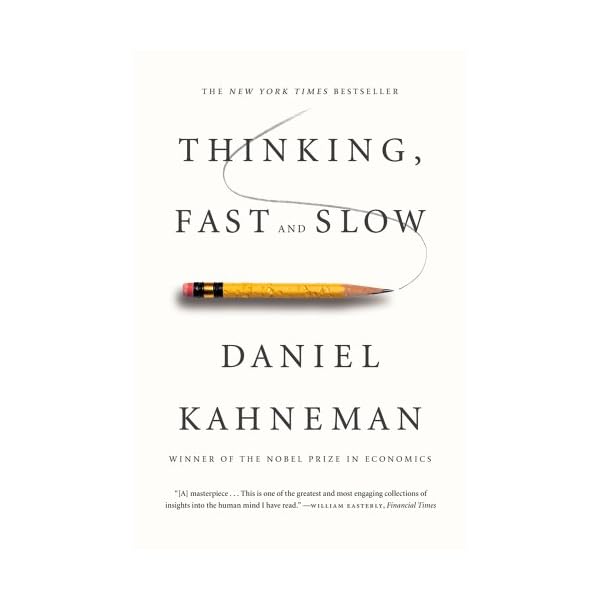
Major New York Times bestseller. Winner of the National Academy of Sciences Best Book Award in 2012. Selected by the New York Times Book Review as one of the ten best books of 2011. A Globe and Mail Best Books of the Year 2011 Title. One of The Economist 's 2011 Books of the Year. One of The Wall Street Journal 's Best Nonfiction Books of the Year 2011. 2013 Presidential Medal of Freedom Recipient. Kahneman's work with Amos Tversky is the subject of Michael Lewis's The Undoing Project: A Friendship That Changed Our Minds. “Daniel Kahneman demonstrates forcefully in his new book, Thinking, Fast and Slow , how easy it is for humans to swerve away from rationality.” ― Christopher Shea, The Washington Post. Arguably the most important psychologist in history, Kahneman has reshaped cognitive psychology, the analysis of rationality and reason, the understanding of risk and the study of happiness and well-being . A magisterial work, stunning in its ambition, infused with knowledge, laced with wisdom, informed by modesty and deeply humane. Arguably the most important psychologist in history, Kahneman has reshaped cognitive psychology, the analysis of rationality and reason, the understanding of risk and the study of happiness and well-being . A magisterial work, stunning in its ambition, infused with knowledge, laced with wisdom, informed by modesty and deeply humane. So impressive is its vision of flawed human reason that the New York Times columnist David Brooks recently declared that Kahneman and Tversky's work ‘will be remembered hundreds of years from now,' and that it is ‘a crucial pivot point in the way we see ourselves.'. But for those who are merely interested in Kahenman's takeaway on the Malcolm Gladwell question it is this: If you've had 10,000 hours of training in a predictable, rapid-feedback environment--chess, firefighting, anesthesiology--then blink. It now seems inevitable that Kahneman, who made his reputation by ignoring or defying conventional wisdom, is about to be anointed the intellectual guru of our economically irrational times.” ― Evan R. Goldstein, The Chronicle of Higher Education. As Copernicus removed the Earth from the centre of the universe and Darwin knocked humans off their biological perch, Mr. Kahneman has shown that we are not the paragons of reason we assume ourselves to be.” ― The Economist. But Mr. Kahneman's simple experiments reveal a very different mind, stuffed full of habits that, in most situations, lead us astray.” ― Jonah Lehrer, The Wall Street Journal. “[A] tour de force of psychological insight, research explication and compelling narrative that brings together in one volume the high points of Mr. Kahneman's notable contributions, over five decades, to the study of human judgment, decision-making and choice . Thanks to the elegance and force of his ideas, and the robustness of the evidence he offers for them, he has helped us to a new understanding of our divided minds--and our whole selves.” ― Christoper F. Chabris, The Wall Street Journal. “With Kahneman's expert help, readers may understand this mix of psychology and economics better than most accountants, therapists, or elected representatives. “The mind is a hilariously muddled compromise between incompatible modes of thought in this fascinating treatise by a giant in the field of decision research. Kahneman uses this scheme to frame a scintillating discussion of his findings in cognitive psychology and behavioral economics, and of the ingenious experiments that tease out the irrational, self-contradictory logics that underlie our choices. We learn why we mistake statistical noise for coherent patterns; why the stock-picking of well-paid investment advisers and the prognostications of pundits are worthless; why businessmen tend to be both absurdly overconfident and unwisely risk-averse; and why memory affects decision making in counterintuitive ways. Kahneman's primer adds to recent challenges to economic orthodoxies about rational actors and efficient markets; more than that, it's a lucid, marvelously readable guide to spotting--and correcting--our biased misunderstandings of the world.” ― Publishers' Weekly (starred review). Before Malcolm Gladwell and Freakonomics, there was Daniel Kahneman who invented the field of behavior economics, won a Nobel…and now explains how we think and make choices. Before computer networking got cheap and ubiquitous, the sheer inefficiency of communication dampened the effects of the quirks of human psychology on macro scale events. In this absolutely amazing book, he shares a lifetime's worth of wisdom presented in a manner that is simple and engaging, but nonetheless stunningly profound. This book is a must read for anyone with a curious mind.” ― Steven D. Levitt, William B. Ogden Distinguished Service Professor of Economics at the University of Chicago; co-author of Freakonomics and SuperFreakonomics. “ Thinking, Fast and Slow is a masterpiece--a brilliant and engaging intellectual saga by one of the greatest psychologists and deepest thinkers of our time. Kahneman should be parking a Pulitzer next to his Nobel Prize.” ― Daniel Gilbert, Harvard University Professor of Psychology, author of Stumbling on Happiness, host of the award-winning PBS television series "This Emotional Life". “This is a landmark book in social thought, in the same league as The Wealth of Nations by Adam Smith and The Interpretation of Dreams by Sigmund Freud . His work has reshaped social psychology, cognitive science, the study of reason and of happiness, and behavioral economics, a field that he and his collaborator Amos Tversky helped to launch.
Reviews
Find Best Price at Amazon"The first observation, giving the title to the book, is that eons of natural selection gave us the ability to make a fast reaction to a novel situation. Thinking slow, applying human logic, we might reflect that it is probably Johnny coming back from the Girl Scout camp across the river bringing cookies, and that running might not be the best idea. Thinking is metabolically expensive; 20 percent of our energy intake goes to the brain. NB: Kahneman uses the example of multiplying two digit numbers in your head quite frequently. Whistling past the graveyard - we know full well that mental processes slow down after 65. We are inclined to expect more regularity than actually exists in the world, and we have poor intuition about the tail ends of the bell curve. It requires slow thinking to come up with the right answer - and the instinct to distrust your intuition. The larger the sample size, the more accurate the statistical inference from measuring them. For instance, the asking price of the house should have nothing to do with its value, but it does greatly influence bids. If I know somebody who got mugged last year, and you don't, my assessment of the rate of street crime will probably be too high, and yours perhaps too low. Newspaper headlines distort all of our thinking about the probabilities of things like in and terrorist attacks. Nonetheless, if you ask about Tom W, a sallow gloomy type of guy, people will ignore the statistics and guess he is in mortuary science. The most important aspect of this chapter is Bayesian analysis, which is so much second nature to Kahneman that he doesn't even describe it. Given these numbers, most people will assume that the cab in the accident was blue because of the witness testimony. However, if we change the statement of the problem so that there is a 20% chance that the blue identification of the color was wrong, but 85% of the cabs involved in accidents are green, people will overwhelmingly say that the cab in the accident was a green madman. In other words, this witness could be expected to identify the cab as blue 29% of the time whether she was right or wrong. Recommend that you cut and paste this, because Bayes theorem is cited fairly often, and is kind of hard to understand. The chances are little bit of both, and if I take a test a second time I will get a lower score, not because I am any stupider but because your first observation of me wasn't exactly accurate. The probability of a smart grade school kid becoming a Rhodes scholar is a cumulative probability of passing a whole series of hurdles: studying hard, excelling in high school, avoiding drink and drugs, parental support and so on. We make judgments on the basis of the knowledge we have, and we are overconfident about the predictive value of that observation. We discount the many perils which could have totally derailed the company along the way, including the venture capitalist who could have bought it all for one million dollars but thought the price was too steep. The answer is, not really, because performance on the SAT depends quite a bit on prior education and previous exposure to standardized tests. The key anecdote here is about a formula for predicting the quality of a French wine vintage. The rule of thumb formula beat the best French wine experts. He would trust the expert intuition of a firefighter; there is some similarity among fires, and the firemen learns quickly about his mistakes. The key notion here is that people within an institution, project, or any endeavor tend to let their inside knowledge blind them to things an outsider might see. It should destroy the notion that there are CEOs who are vastly above average, and also the efficient markets theory. The guys in charge often don't understand, and more important, they are blind to their own lack of knowledge. Part four - choices. This is a series of chapters about how people make decisions involving money and risk. Pouring good money after bad, the sunk cost effect, is an example. We overestimate the visible ones, such as tsunamis and terrorist attacks, and ignore the ones of which we are unaware. As a policy, should we accept the supposedly lower risk of buying mutual funds, even given the management fees? The classic example is people who refuse to sell for a loss, whether shares of stock or a house. Mountain climbing or marathon running are sheer torture at the time, but the memories are exquisite. Lift decision: do we live life for the present experience, or the anticipated memories?"
"Content is interesting, but as other reviewers point out, do not buy the Kindle version, because links often don't work, and many images and footnotes seem to be lost."
"Back in 1994, Massimo Piattelli-Palmarini, Director of the Institute of San Raffaele in Milan, Italy, wrote a charming little book about common cognitive distortions called Inevitable Illusions. In it, he predicted that the two psychologists behind behavioral economics - Amos Tversky and Daniel Kahneman - would win the Nobel prize. Although Gladwell never says that snap judgments are infallible and cannot badly mislead us, many readers got a different message. As the Royal Statistical Society's Significance magazine put it "Although Gladwell's chronicle of cognition shows how quick thinking can lead us both astray and aright, for many readers Blink has become a hymn to the hunch." As a student, she was deeply concerned with the issues of discrimination and social justice, and she also participated in anti-nuclear demonstrations. Eighty-five percent of test subjects chose the second option, that Linda was a bank teller and active in the feminist movement. A more formal and theoretically better argued rebuttal of some of Kahneman's hypotheses can be found in the works of Gerd Gigerenzer. Kahneman notes that even top performers in business and sports tend to revert to the mean in the long run. While much of what we learnt can perhaps be extended to the real world, it is doubtful every generalization will work in practice. My cautionary comments probably have more to do with the distortions that might arise by those who uncritically generalize the findings to contexts for which they may not applicable. Nevertheless, Thinking Fast and Slow is a very valuable book by one of the most creative minds in psychology. After I published this review, I noticed an odd coincidence between Thinking Fast and Slow and Inevitable Illusions that I mentioned in my opening paragraph. Both books have white covers, with an image of a sharpened yellow pencil with an eraser top."
"Economics isn't especially appealing to me and I don't understand much beyond the basics, but the way we think is fascinating to me and an area where I do have good comprehension."
Best Medical Clinical Psychology
When you need advice on how to present information, including text, data, and graphics, for publication in any type of format--such as college and university papers, professional journals, presentations for colleagues, and online publication--you will find the advice you're looking for in the "Publication Manual."
Reviews
Find Best Price at Amazon"Is great to have as a reference for college classes."
"This manual got me through many research papers in undergrad, and it's coming with me to grad school, where it'll be put to the test."
"I bought the spiral version to write my dissertation."
"Recommended getting the physical book instead of the e-book, as I wrote a lot of notes and highlighted key areas in the book."
"I write in APA quite a bit, and this really helps with not just citing sources, but also with formatting your papers."
"It has all the info for writing APA you need."
"It includes updates to what you need to bring your reference section up to date, but it is so poorly explained and organized, it is driving me crazy."
"Get the paperback if you have windows 8 or a MS surface tablet."
Best Medical Forensic Psychology
Presenting a compelling portrait of these dangerous men and women based on 25 years of distinguished scientific research, Dr. Robert D. Hare vividly describes a world of con artists, hustlers, rapists, and other predators who charm, lie, and manipulate their way through life. --Hugh Aynesworth, author of Ted Bundy: Conversations with a Killer "Fascinating, chilling, and accurate....The world's most renowned psychopathy researcher has leavened sharp scientific insights with page-turning case descriptions in a rare publishing feat: a book that is both highly readable and highly reputable."
Reviews
Find Best Price at Amazon"Empowering information and advice from the foremost expert in the field of psychopaths."
"Robert Hare truly knows a psychopath inside and out but this book didn't always keep me engaged."
"Hare's book is particularly oriented around criminal psychopaths, rather than the ones we are most likely to encounter in daily life."
"Great read...made me realize I was with a psychopath!"
"but then again i suppose you could say that about almost any book."
"For instance I would like to know more about the psychopaths brain. It was interesting to learn that psychopaths were not all molested and abused in childhood.But I was still left wondering about the internal world of the psychopaths. This book will sure help you learn to be more selective and secure."
"A scary look inside the mind of psychopaths."
"Most of us don't believe that people without conscience exist."
Best Medical Cognitive Psychology
Major New York Times bestseller. Winner of the National Academy of Sciences Best Book Award in 2012. Selected by the New York Times Book Review as one of the ten best books of 2011. A Globe and Mail Best Books of the Year 2011 Title. One of The Economist 's 2011 Books of the Year. One of The Wall Street Journal 's Best Nonfiction Books of the Year 2011. 2013 Presidential Medal of Freedom Recipient. Kahneman's work with Amos Tversky is the subject of Michael Lewis's The Undoing Project: A Friendship That Changed Our Minds. “Daniel Kahneman demonstrates forcefully in his new book, Thinking, Fast and Slow , how easy it is for humans to swerve away from rationality.” ― Christopher Shea, The Washington Post. Arguably the most important psychologist in history, Kahneman has reshaped cognitive psychology, the analysis of rationality and reason, the understanding of risk and the study of happiness and well-being . A magisterial work, stunning in its ambition, infused with knowledge, laced with wisdom, informed by modesty and deeply humane. Arguably the most important psychologist in history, Kahneman has reshaped cognitive psychology, the analysis of rationality and reason, the understanding of risk and the study of happiness and well-being . A magisterial work, stunning in its ambition, infused with knowledge, laced with wisdom, informed by modesty and deeply humane. So impressive is its vision of flawed human reason that the New York Times columnist David Brooks recently declared that Kahneman and Tversky's work ‘will be remembered hundreds of years from now,' and that it is ‘a crucial pivot point in the way we see ourselves.'. But for those who are merely interested in Kahenman's takeaway on the Malcolm Gladwell question it is this: If you've had 10,000 hours of training in a predictable, rapid-feedback environment--chess, firefighting, anesthesiology--then blink. It now seems inevitable that Kahneman, who made his reputation by ignoring or defying conventional wisdom, is about to be anointed the intellectual guru of our economically irrational times.” ― Evan R. Goldstein, The Chronicle of Higher Education. As Copernicus removed the Earth from the centre of the universe and Darwin knocked humans off their biological perch, Mr. Kahneman has shown that we are not the paragons of reason we assume ourselves to be.” ― The Economist. But Mr. Kahneman's simple experiments reveal a very different mind, stuffed full of habits that, in most situations, lead us astray.” ― Jonah Lehrer, The Wall Street Journal. “[A] tour de force of psychological insight, research explication and compelling narrative that brings together in one volume the high points of Mr. Kahneman's notable contributions, over five decades, to the study of human judgment, decision-making and choice . Thanks to the elegance and force of his ideas, and the robustness of the evidence he offers for them, he has helped us to a new understanding of our divided minds--and our whole selves.” ― Christoper F. Chabris, The Wall Street Journal. “With Kahneman's expert help, readers may understand this mix of psychology and economics better than most accountants, therapists, or elected representatives. “The mind is a hilariously muddled compromise between incompatible modes of thought in this fascinating treatise by a giant in the field of decision research. Kahneman uses this scheme to frame a scintillating discussion of his findings in cognitive psychology and behavioral economics, and of the ingenious experiments that tease out the irrational, self-contradictory logics that underlie our choices. We learn why we mistake statistical noise for coherent patterns; why the stock-picking of well-paid investment advisers and the prognostications of pundits are worthless; why businessmen tend to be both absurdly overconfident and unwisely risk-averse; and why memory affects decision making in counterintuitive ways. Kahneman's primer adds to recent challenges to economic orthodoxies about rational actors and efficient markets; more than that, it's a lucid, marvelously readable guide to spotting--and correcting--our biased misunderstandings of the world.” ― Publishers' Weekly (starred review). Before Malcolm Gladwell and Freakonomics, there was Daniel Kahneman who invented the field of behavior economics, won a Nobel…and now explains how we think and make choices. Before computer networking got cheap and ubiquitous, the sheer inefficiency of communication dampened the effects of the quirks of human psychology on macro scale events. In this absolutely amazing book, he shares a lifetime's worth of wisdom presented in a manner that is simple and engaging, but nonetheless stunningly profound. This book is a must read for anyone with a curious mind.” ― Steven D. Levitt, William B. Ogden Distinguished Service Professor of Economics at the University of Chicago; co-author of Freakonomics and SuperFreakonomics. “ Thinking, Fast and Slow is a masterpiece--a brilliant and engaging intellectual saga by one of the greatest psychologists and deepest thinkers of our time. Kahneman should be parking a Pulitzer next to his Nobel Prize.” ― Daniel Gilbert, Harvard University Professor of Psychology, author of Stumbling on Happiness, host of the award-winning PBS television series "This Emotional Life". “This is a landmark book in social thought, in the same league as The Wealth of Nations by Adam Smith and The Interpretation of Dreams by Sigmund Freud . His work has reshaped social psychology, cognitive science, the study of reason and of happiness, and behavioral economics, a field that he and his collaborator Amos Tversky helped to launch.
Reviews
Find Best Price at Amazon"The first observation, giving the title to the book, is that eons of natural selection gave us the ability to make a fast reaction to a novel situation. Thinking slow, applying human logic, we might reflect that it is probably Johnny coming back from the Girl Scout camp across the river bringing cookies, and that running might not be the best idea. Thinking is metabolically expensive; 20 percent of our energy intake goes to the brain. NB: Kahneman uses the example of multiplying two digit numbers in your head quite frequently. Whistling past the graveyard - we know full well that mental processes slow down after 65. We are inclined to expect more regularity than actually exists in the world, and we have poor intuition about the tail ends of the bell curve. It requires slow thinking to come up with the right answer - and the instinct to distrust your intuition. The larger the sample size, the more accurate the statistical inference from measuring them. For instance, the asking price of the house should have nothing to do with its value, but it does greatly influence bids. If I know somebody who got mugged last year, and you don't, my assessment of the rate of street crime will probably be too high, and yours perhaps too low. Newspaper headlines distort all of our thinking about the probabilities of things like in and terrorist attacks. Nonetheless, if you ask about Tom W, a sallow gloomy type of guy, people will ignore the statistics and guess he is in mortuary science. The most important aspect of this chapter is Bayesian analysis, which is so much second nature to Kahneman that he doesn't even describe it. Given these numbers, most people will assume that the cab in the accident was blue because of the witness testimony. However, if we change the statement of the problem so that there is a 20% chance that the blue identification of the color was wrong, but 85% of the cabs involved in accidents are green, people will overwhelmingly say that the cab in the accident was a green madman. In other words, this witness could be expected to identify the cab as blue 29% of the time whether she was right or wrong. Recommend that you cut and paste this, because Bayes theorem is cited fairly often, and is kind of hard to understand. The chances are little bit of both, and if I take a test a second time I will get a lower score, not because I am any stupider but because your first observation of me wasn't exactly accurate. The probability of a smart grade school kid becoming a Rhodes scholar is a cumulative probability of passing a whole series of hurdles: studying hard, excelling in high school, avoiding drink and drugs, parental support and so on. We make judgments on the basis of the knowledge we have, and we are overconfident about the predictive value of that observation. We discount the many perils which could have totally derailed the company along the way, including the venture capitalist who could have bought it all for one million dollars but thought the price was too steep. The answer is, not really, because performance on the SAT depends quite a bit on prior education and previous exposure to standardized tests. The key anecdote here is about a formula for predicting the quality of a French wine vintage. The rule of thumb formula beat the best French wine experts. He would trust the expert intuition of a firefighter; there is some similarity among fires, and the firemen learns quickly about his mistakes. The key notion here is that people within an institution, project, or any endeavor tend to let their inside knowledge blind them to things an outsider might see. It should destroy the notion that there are CEOs who are vastly above average, and also the efficient markets theory. The guys in charge often don't understand, and more important, they are blind to their own lack of knowledge. Part four - choices. This is a series of chapters about how people make decisions involving money and risk. Pouring good money after bad, the sunk cost effect, is an example. We overestimate the visible ones, such as tsunamis and terrorist attacks, and ignore the ones of which we are unaware. As a policy, should we accept the supposedly lower risk of buying mutual funds, even given the management fees? The classic example is people who refuse to sell for a loss, whether shares of stock or a house. Mountain climbing or marathon running are sheer torture at the time, but the memories are exquisite. Lift decision: do we live life for the present experience, or the anticipated memories?"
"Content is interesting, but as other reviewers point out, do not buy the Kindle version, because links often don't work, and many images and footnotes seem to be lost."
"Back in 1994, Massimo Piattelli-Palmarini, Director of the Institute of San Raffaele in Milan, Italy, wrote a charming little book about common cognitive distortions called Inevitable Illusions. In it, he predicted that the two psychologists behind behavioral economics - Amos Tversky and Daniel Kahneman - would win the Nobel prize. Although Gladwell never says that snap judgments are infallible and cannot badly mislead us, many readers got a different message. As the Royal Statistical Society's Significance magazine put it "Although Gladwell's chronicle of cognition shows how quick thinking can lead us both astray and aright, for many readers Blink has become a hymn to the hunch." As a student, she was deeply concerned with the issues of discrimination and social justice, and she also participated in anti-nuclear demonstrations. Eighty-five percent of test subjects chose the second option, that Linda was a bank teller and active in the feminist movement. A more formal and theoretically better argued rebuttal of some of Kahneman's hypotheses can be found in the works of Gerd Gigerenzer. Kahneman notes that even top performers in business and sports tend to revert to the mean in the long run. While much of what we learnt can perhaps be extended to the real world, it is doubtful every generalization will work in practice. My cautionary comments probably have more to do with the distortions that might arise by those who uncritically generalize the findings to contexts for which they may not applicable. Nevertheless, Thinking Fast and Slow is a very valuable book by one of the most creative minds in psychology. After I published this review, I noticed an odd coincidence between Thinking Fast and Slow and Inevitable Illusions that I mentioned in my opening paragraph. Both books have white covers, with an image of a sharpened yellow pencil with an eraser top."
"Great book, basically Psychology 101."
"It has provided a robust framework for understanding, evaluating, and making decisions and understanding what guides others in their decisions such that the reader can avoid pitfalls and better guide others towards better decisions, or at least to mitigate large and potentially damaging fallacies."
"This is pretty much the life work of Daniel Kahneman placed inside an easily digested book."
"How glad I am that I have now become a little more aware of how my intuitive system overrides my decision making and thinking in so many ways, many of them being wrong."
Best Medical Psychopharmacology

The most comprehensive guide to the botany, history, distribution, and cultivation of all known psychoactive plants. • Examines 414 psychoactive plants and related substances. He offers a thorough discussion (including 20 full monographs) of psychoactive fungi, referred to in ancient times as the “food of the gods” and used by shamans in many cultures for entry to the spirit world. He then received a fellowship from the German academic service for foreign research, the Deutsche Akademische Auslandsdienst (DAAD), to realize his doctoral thesis on healing spells and incantations of the Lacandone-Maya at the University of Hamburg, Germany. In addition to his work in Mexico, his numerous fieldworks have included research in Thailand, Bali, the Seychelles, as well as a long-term study (18 years) on shamanism in Nepal combined with expeditions to Korea and the Peruvian and Colombian Amazon. Before becoming a full-time author and internationally renowned lecturer, Rätsch worked as professor of anthropology at the University of Bremen and served as consultant advisor for many German museums. A former member of the board of advisors of the European College for the Study of Consciousness (ECSC) and former president of the Association of Ethnomedicine, he lives in Hamburg, Germany.
Reviews
Find Best Price at Amazon"I have enjoyed the words and thoughts of the author and his exploratory nature to gain the insights he relays, it reminds me of my own curious mind as a younger person ready to explore psychoactive experiences."
"Huge book packed with information."
"You'll find things in here that you've never heard of and won't see anywhere else, even doing a deep internet search."
"Very professional, detailed, organized."
"Amazing detail and a great amount of knowledge!"
"As a researcher in this area, this particular book contains many different species and everything you can imagine."
"The most comprehensive and we'll written book on the subject I've seen."
"It is certainly an extension of the seminal book of the 70's "The Secret Lives of PLants.""
Best Medical Psychology History
Forty years ago, Israeli psychologists Daniel Kahneman and Amos Tversky wrote a series of breathtakingly original studies undoing our assumptions about the decision-making process. Amos Tversky was a brilliant, self-confident warrior and extrovert, the center of rapt attention in any room; Kahneman, a fugitive from the Nazis in his childhood, was an introvert whose questing self-doubt was the seedbed of his ideas. “Lewis is the ideal teller of [Tversky and Kahneman’s] story… You see his protagonists in three dimensions―deeply likable, but also flawed, just like most of your friends and family.”. - David Leonhardt, New York Times Book Review. “Brilliant… Lewis has given us a spectacular account of two great men who faced up to uncertainty and the limits of human reason.”. - William Easterly, Wall Street Journal.
Reviews
Find Best Price at Amazon"Thanks to works like Psychonomics: The Scientific Conquest of the Human Mind, we know that the field of Behavioral Economics is a kind of wild west of the sciences, filled with speculation, outlaws, and not a little shenanigans. With his characteristic accessibility and knack for turning the complex into palatable pieces, Lewis presents the foundations of the science by crafting a story about its two visionary scholars, Daniel Kahneman and the late Amos Tversky. How they came together from similar backgrounds, approached life from different angles, agreed to set off on their intellectual journey together, and collaborated on some of the greatest psychological studies of the 20th century sets us up for a classic buddy story—an intellectual Butch Cassidy and the Sundance Kid if you will."
"With no doubt, I had great fun reading “The Undoing Project.”. I was introduced to the work of Tversky and Kahneman as a college sophomore in 1988 by my teacher, hydrologist Joseph Harrington, who was a great admirer of their ideas. So I swallowed whole “Thinking About Thinking” within a week of having read the Michael Lewis review on Bloomberg. Chapters 1 and 8 should not have made it into the book, they ought to have been relegated to the pages of Vanity Fair, where the author regularly provides fantastic material. Even the title of the book, much as it has its roots in the work of Tversky and Kahneman, does not do justice to their contribution."
"Michael Lewis successfully blends two biographies, an intellectual love story (there really is no other way to describe the Kahneman/Tversky partnership), astute sketches of the work they did (in heuristics and biases), and how the partnership had ripple effects in a myriad of areas (from economics to psychology, from medicine to the military, and beyond)."
"This Michael Lewis book is just one of his very best."
Best Medicine & Psychology
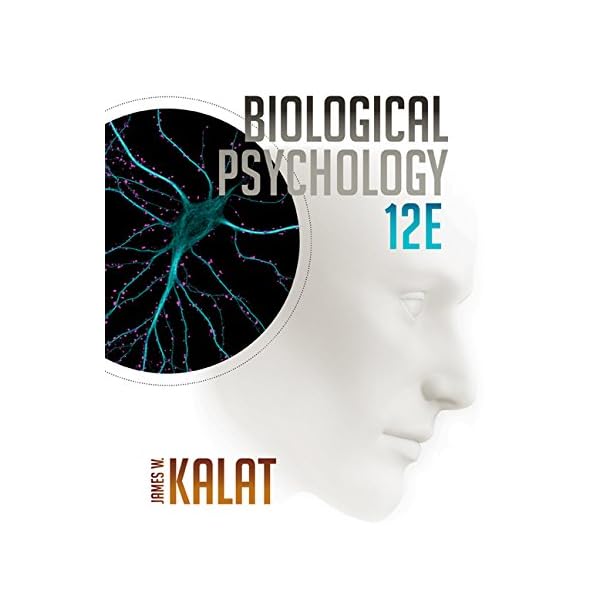
Dr. James W. Kalat's BIOLOGICAL PSYCHOLOGY is widely used for good reason: an extremely high level of scholarship, a clear writing style with amusing anecdotes, and precise examples. James W. Kalat is Professor Emeritus of Psychology at North Carolina State University, where he taught courses in introduction to psychology and biological psychology from 1977 through 2012.
Reviews
Find Best Price at Amazon"Renting books through Amazon is easy and the price is reasonable."
"There is so much mind blowing information provided that sometimes I would have to walk away and take some time to wrap my brain around it."
"This is clearly one of the best text books I have read, and I have read many."
"An awesome book for learning."
"Book was in very poor condition."
"It was easy to read and it was of good quality."
"Quality of the book is pretty good."
Best Medical Adolescent Psychology
Now, Dr. Leonard Sax delves into the scientific literature and draws on more than twenty years of clinical experience to explain why boys and young men are failing in school and disengaged at home. Dr. Sax has spoken on issues of child and adolescent development not only in the United States but also in Australia, Bermuda, Canada, England, Germany, Italy, Mexico, New Zealand, Scotland, Spain, and Switzerland. He has appeared on the TODAY Show, CNN, National Public Radio, Fox News, PBS, the Canadian Broadcasting Corporation, the British Broadcasting Corporation, the Australian Broadcasting Corporation, New Zealand Television, and many other national and international media.
Reviews
Find Best Price at Amazon"This book is a great book to understand some of the struggles our boys are facing."
"I am a mental health counselor that works with many adolescents and. Dr. Sax assaulted me with facts and data and truth that explains so much that I see in all of the boys I have the privilege to work with."
"Fantastic read, speaks well to many aspects of society and the environment and how they affect our growing boys."
"I love this book and I'm only beginning chapter 2!"
"I recommend this book for any parent with a boy."
"I was recommended this book by a family doctor."
"I liked this book a lot."
"Wish I had read when I was raising my son."
Best Medical Developmental Psychology
In the classic The Boy Who Was Raised as a Dog , Dr. Perry explains what happens to the brains of children exposed to extreme stress and shares their lessons of courage, humanity, and hope. Each child, from the seven-year-old who offered him sexual favors to the eponymous boy who spent his early years living in a dog cage, taught Perry something about the effects of early childhood trauma on brain development.
Reviews
Find Best Price at Amazon"This is a wonderful book to read if you are fostering or adopting a child and if you are working with children."
"It made me sad ,mad and happy I think we really need to look at our day cares and school system."
"The content is both heartbreaking and heartwarming, as it details trauma and recovery, and the role neuroplasticity plays in stress response and self healing."
"Great book."
"It is truly the most concise and understandable description of the impact of trauma on the growth and development of children I have every seen in my 32 years of family law practice."
"This book was recommended to me by a friend, and it is PHENOMENAL!"
"Yet, Dr. Perry reinforces the lessons of coming to understand how normal brain growth first happens, and then how it can be in part derailed during life's first 3 year as a starting point for so much dysfunction we read about, see, and sometimes experience in our families.. Time and again I found myself nodding my head and mumbling, "this makes so much sense."
"Great book, I will use it and refer back to it often in my school and career."
Best Medical Psychology Research
To package LaunchPad Solo free with A Pocket Style Manual , APA Version, use ISBN 978-1-319-04397-1. Nancy Sommers , who has taught composition and directed composition programs for thirty years, now teaches writing and mentors new writing teachers at Harvard s Graduate School of Education. Her articles "Revision Strategies of Student and Experienced Writers" and "Responding to Student Writing" are two of the most widely read and anthologized articles in the field of composition.
Reviews
Find Best Price at Amazon"It does the job, I've used it for papers to be delivered in this format, and have committed only relatively minor errors because of the examples provided in it."
"My product came in the mail quickly."
"A must have for any student."
"This is a good pocket reference."
"Worked well."
"My son paid over $30 for his at the college bookstore and it wasn't in as good a shape as this one for a much lower price."
"If you are an AP High School Student or a College student you need this book."
Best Medical Psychology Pathologies
This new edition of the American Psychiatric Association's Diagnostic and Statistical Manual of Mental Disorders (DSM-5), used by clinicians and researchers to diagnose and classify mental disorders, is the product of more than 10 years of effort by hundreds of international experts in all aspects of mental health.
Reviews
Find Best Price at Amazon"And on the eighth day God created this manual to help fix problems that humans would get themselves into after they ate the apple."
"The first half of the book is printed on glossy paper and the other half on regular stock perhaps 24lb or 32lb."
"I had to cut those pages to make it look like the rest of the pages."
"The color of the text varied from almost boded on some pages to light gray on others."
"I ordered this book, and the book I received had about 40 pages that were upside down."
"The price is too good to be true."
"I paid more to order from the "paperback" options that were not listed under the "mass-market paper back" versions which had terrible reviews."
"I got a knock off version!"
Best Medical Psychology Reference
This new edition of the American Psychiatric Association s Diagnostic and Statistical Manual of Mental Disorders (DSM-5), used by clinicians and researchers to diagnose and classify mental disorders, is the product of more than 10 years of effort by hundreds of international experts in all aspects of mental health.
Reviews
Find Best Price at Amazon"This 5th edition keeps up the tradition but goes well beyond as a clinical handbook and reference."
"Needed for a class, worked great, not too expensive."
"The DSM 5 is a required reading for my mental health and psychopathology."
"Yes so happy I was able to get this book really needed it for my abnormal behavior class I'm taking 🙏🏾."
"Great price."
"This is a pocket version!"
"I ordered this book, and the book I received had about 40 pages that were upside down."
Best Medical Psychology of Sexuality
How to disarm an attacker How to fell a tree and start a fire anywhere How a car engine works, and how to fix it How to use every tool in your toolbox What to wear on a first date and to a job interview How to lead a meeting and command the attention of a room How to dance, fight, shave, shake a hand, pick a lock, and fire a gun And other advice for when you're lost, in danger, or merely confronting a shirt that needs to be ironed. Brett McKay is the founder of The Art of Manliness, the internet's #1 independent men's lifestyle side.
Reviews
Find Best Price at Amazon"A fine and rare balance of useful, fun, and aesthetically pleasing."
"Amazing illustrations with fantastic information."
"Looking forward to reading this with my son."
"This is an excellent book."
"Got this as a gift for my teenage son."
"Brett has a easy going style to bring subjects to light in an easy going understandable style."
"A quick, but highly useful and meaningful read."
"This book is so phenomenal that I wanted to write a review."
Best Medical Counseling
With his trademark style, he shows students how to apply theories in practice, and helps them learn to integrate the theories into an individualized counseling style.
Reviews
Find Best Price at Amazon"The book arrived when my course was completed."
"If you have access to the accompanying videos, take advantage of them, they are great!"
"The Corey's write a bunch of different theory and practice books."
"Perfect "Cliff's Notes" version of the text book!"
"Corey does an excellent job of presenting the theories in this text."
"They just slapped on a label saying it was the manual, but since I also ordered the regular textbook, I compared the two and they are exactly the same."
Best Medical Physiological Aspects of Psychology
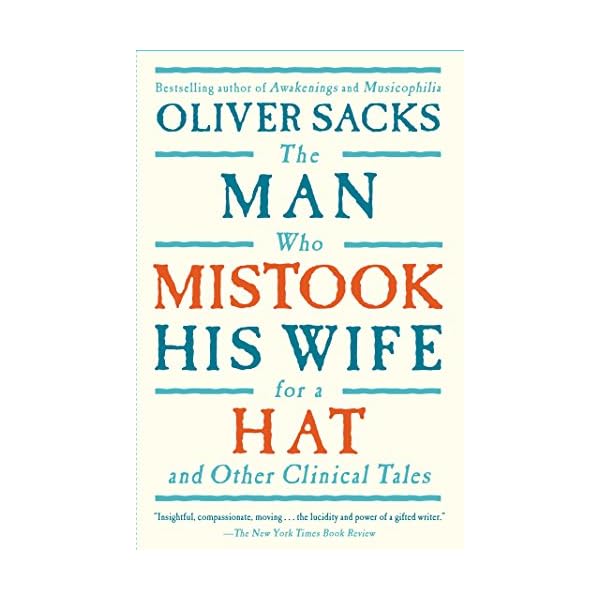
Oliver Sacks’s The Man Who Mistook His Wife for a Hat tells the stories of individuals afflicted with fantastic perceptual and intellectual aberrations: patients who have lost their memories and with them the greater part of their pasts; who are no longer able to recognize people and common objects; who are stricken with violent tics and grimaces or who shout involuntary obscenities; whose limbs have become alien; who have been dismissed as retarded yet are gifted with uncanny artistic or mathematical talents. Noel Perrin Chicago Sun-Times Dr. Sacks's best book.... One sees a wise, compassionate and very literate mind at work in these 20 stories, nearly all remarkable, and many the kind that restore one's faith in humanity.
Reviews
Find Best Price at Amazon"This book reads more of a story style but they are actual case studies that he partook in."
"He realises, for example, that if someone has had neurological deficits for a period of years then of course they will not be so obvious as it is human nature to find ways to compensate for these losses - something not many doctors seem to be able to understand. then it's more than just this image of a caring doctor that appeals in this book, it's also that some of the neurological problems described are part of M.E. I'm talking about the aphasia's (inability to understand speech), the vestibular problems, the proprioception problems, the facial agnosia (not being able to recognize faces) and the short-term memory loss. If you have some of these neurological problems you'll see so much to relate to in this book and if you don't, it is still very interesting reading."
"Product-wise the book is flawless the storyline is amazing Oliver Sacks really knows how to make learning about mental and medical diseases interesting it arrived fast and the cover art is absolutely beautiful in my opinion but I must give it a four star rating because my English Professor borrowed it and did not give it back for 3 months."
"the way Oliver Sacks tells the stories about his patients and explains the problems is unique."
"Often in the medical sciences it is easy to treat each patient as merely a problem to be solved, or a condition to be cured, but Sacks reminds us that beneath the condition each patient is still a human being, trying to live out their life and be happy and fulfilled."
"Endlessly fascinating series of essays about the incredible variety of mental illnesses or deficiencies or phenomenon experienced by a gifted, gracious practitioner."
"You learn so much from this book - it is so interesting and makes me appreciate that everything is functioning normally inside me."
"This is a great read- well paced, and manages to be both interesting and informative."
Best Medical Social Psychology & Interactions
In this stunning new book, Malcolm Gladwell takes us on an intellectual journey through the world of "outliers"--the best and the brightest, the most famous and the most successful. "In the vast world of nonfiction writing, Malcolm Gladwell is as close to a singular talent as exists today... Outliers is a pleasure to read and leaves you mulling over its inventive theories for days afterward.
Reviews
Find Best Price at Amazon"If the tale of the self made man is one extreme, then outliers is the other extreme as it basically attempts to discredit the successful and say it was all due to luck. He also mentions that there were only a handful of school at the time to have such a computer. You are correct that now I'd have a harder time creating my own operating system, that ship has sailed, I agree, but that is looking at success with a very narrow lense. The true story of success is that successful people will not let their story be changed by adding or removing a variable from their path, they will keep fighting and find something to replace that variable. That's why some of the most successful people have been declined or faced defeat (be it investors, agents, etc.). This is NOT personal development, or anything of the sort in case you think this is a book I read and learn to be successful... quite contrary the message appears to comfort those that don't have success and blame society, and poke those with success implying that whatever they have was not earned."
"BIG Fan of Malcolm Gladwell -and 1984- and this is a great read for anyone that wants a mind-blowing book."
"“No matter how talented you are, how hard you work and how much you practice, you can be successful only if you also have the right backing and luck.” This is a statement I have had heard from elders a thousand times over and this book statistically validates the point."
"I must call the reader to question the assertion that 10,000 hours or more will make you an expert and the inference that much of what brings about success is the sheer amount of time invested in learning a skill. It is important to realize we often stop short in learning something; yet, it is also important to realize that while you could spend tons of hours learning something that there may be a particular thing you simply enjoy doing more than another or that you're simply better at."
"It contained a lot of factual information that with a grain of salt, made a social theory on how and why people are successful/the way they are."
"Not only does this detail some methods of thinking that are outside of the box and beneficial to the reader, but it also going a long way to help inspire you to overcome difficulties in your own life."
"There is a reason behind any trend and phenomenon."
"Gladwell has once again used his unique writing style, his meticulous research and his ability to tell a story to produce an eye opening and thought provoking book."
Best Cognitive Neuroscience & Neuropsychology
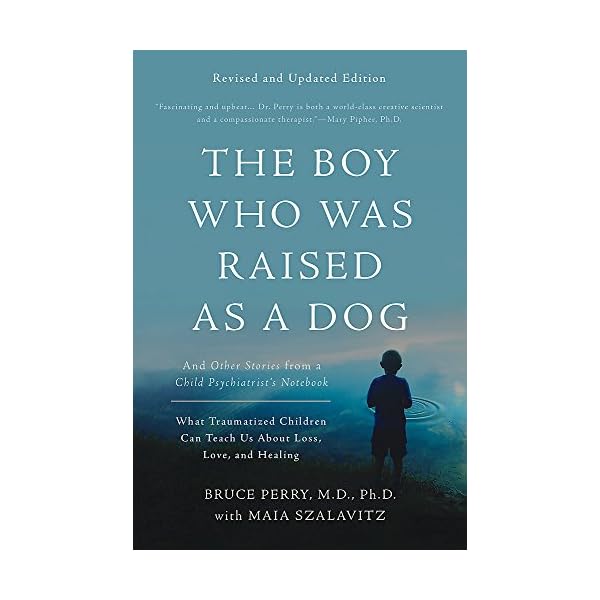
In the classic The Boy Who Was Raised as a Dog , Dr. Perry explains what happens to the brains of children exposed to extreme stress and shares their lessons of courage, humanity, and hope. Each child, from the seven-year-old who offered him sexual favors to the eponymous boy who spent his early years living in a dog cage, taught Perry something about the effects of early childhood trauma on brain development.
Reviews
Find Best Price at Amazon"I am a child advocate and found Dr Perry's book very helpful in understanding trauma and how relationship dynamics play a role in healing. I would love to see Dr Perry author a book specific to his lectures on how society plays a role and what we can do to make significant changes."
"Assisted by a talented science writer, child psychiatrist Bruce Perry presents a series of heartbreaking stories of children severely damaged by trauma. He presents compelling cases to illustrate how the child's age at the time of the abuse or neglect will determine the gaps in neurological development and how his interventions sequentially target those developmental gaps. He warns of the damage caused by well-intentioned but poorly trained therapists who push children to open up, or who administer punitive interventions in the guise of treatment."
"This book provides insight and understanding to the often confusing experiences and behaviors seen in pediatric trauma related behavioral disturbances."
"And I underlined, highlighted and took notes with all the great insight and learning about how to help heal the brain."
"I discovered this book of Dr.Perry as a recommended textbook for a "Families and Children Trauma" course in grad school.I sincerely admit that this text was the most interesting and easy that I have ever read."
"Fascinating stories of working with children who have suffered trauma and neglect."
"The stories in this book were compelling and gave me a little more insight into trauma’s impact on brain development."
"I also bought his other book.. Trauma informed and that was a well written book.."
Best Medical Psychology Testing & Measurement
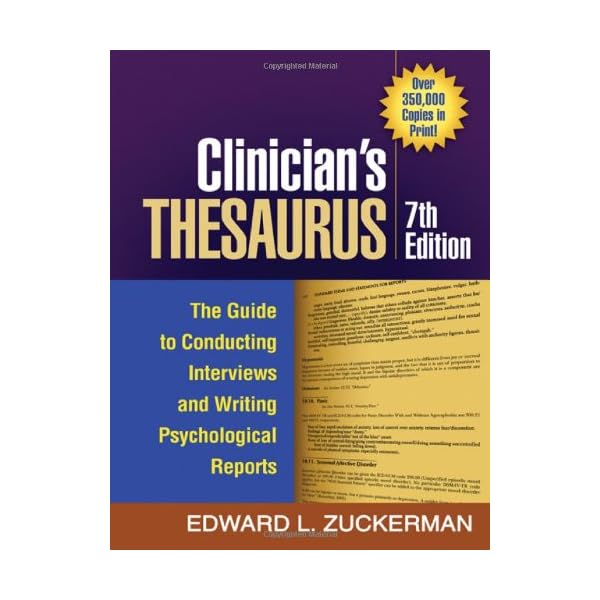
It presents thousands of standard words, phrases, clinical tips, and interview questions to help practitioners conduct thorough assessments, accurately describe nearly any clinical situation, and shape clinical observations into effective reports. "This book's title doesn't do it justice: in addition to offering lists of synonyms, the book provides a vast smorgasbord of the materials that mental health clinicians need to evaluate patients, write reports, and navigate the often confusing nuances of nomenclature. "The Clinician’s Thesaurus is a comprehensive reference for anyone working in the field of mental health: the student preparing for a clinical career, the seasoned professional fulfilling the myriad demands of the field, or the supervisor overseeing the performance of a broad range of professionals. "This comprehensive, easy-to-follow guide provides the ABCs of conducting interviews and writing reports in the mental health field. "Therapists from multiple mental health disciplines will find the Clinician’s Thesaurus a useful resource in their practice. The Clinician's Thesaurus is much more than a thesaurusit's more like a comprehensive guide for client assessment and report writing. ( Cognitive Behavioral Therapy Book Reviews 2010-08-11). "No ordinary thesaurus....By presenting the standard language of the mental health field in an organized fashion, this clinical tool allows professionals to concentrate on the nature of the problem by selecting the best descriptors....Essential.
Reviews
Find Best Price at Amazon"This book seems to contain every permutation for almost any question or situation that could come up in a clinical interview or during treatment."
"I have a very old edition of this thesaurus and when I saw this most recent edition, well I had to purchase it."
"Worth the money for a beginning mental heal professional or some one who wants to enhance thier clinical writing skills."
"This book has been helpful in writing assessments."
"this is a must for any clinician or school psychologist or social worker who wants to write quality and comprehensive reports."
"I don't really use it as much as I thought I would."
"The item arrived just as promised."
"For the price it is not worth it ,it's not up to date."
Best Experimental Psychology
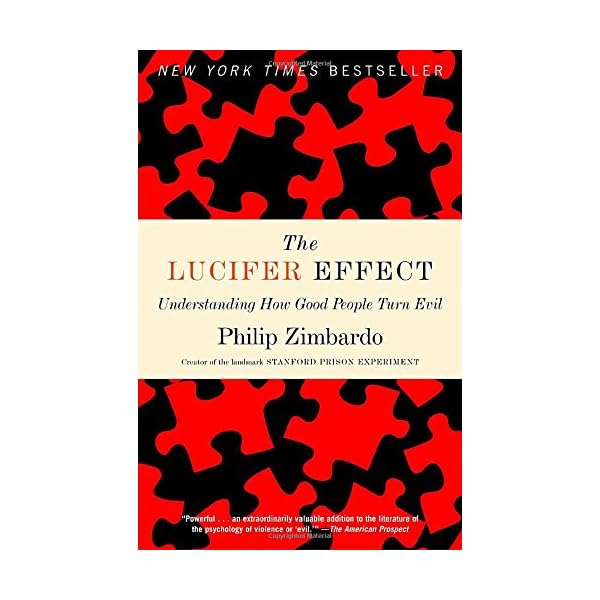
The definitive firsthand account of the groundbreaking research of Philip Zimbardo—the basis for the award-winning film The Stanford Prison Experiment Renowned social psychologist and creator of the Stanford Prison Experiment Philip Zimbardo explores the mechanisms that make good people do bad things, how moral people can be seduced into acting immorally, and what this says about the line separating good from evil. The Lucifer Effect explains how—and the myriad reasons why—we are all susceptible to the lure of “the dark side.” Drawing on examples from history as well as his own trailblazing research, Zimbardo details how situational forces and group dynamics can work in concert to make monsters out of decent men and women. Within a week the study was abandoned, as ordinary college students were transformed into either brutal, sadistic guards or emotionally broken prisoners. By illuminating the psychological causes behind such disturbing metamorphoses, Zimbardo enables us to better understand a variety of harrowing phenomena, from corporate malfeasance to organized genocide to how once upstanding American soldiers came to abuse and torture Iraqi detainees in Abu Ghraib. While forcing us to reexamine what we are capable of doing when caught up in the crucible of behavioral dynamics, though, Zimbardo also offers hope. Like Hannah Arendt’s Eichmann in Jerusalem and Steven Pinker’s The Blank Slate, The Lucifer Effect is a shocking, engrossing study that will change the way we view human behavior. Combining a dense but readable and often engrossing exposition of social psychology research with an impassioned moral seriousness, Zimbardo challenges readers to look beyond glib denunciations of evil-doers and ponder our collective responsibility for the world’s ills.” — Publishers Weekly. Social psychologist Zimbardo is best known as the father of the 1971 Stanford Prison Experiment, which used a simulated prison populated with student volunteers to illustrate the extent to which identity is situated within a social setting; student volunteers randomly chosen to play guards became cruel and authoritarian, while those playing inmates became rebellious and depressed.
Reviews
Find Best Price at Amazon"Zimbardo connects the dots that explains how heavenly dwellers can fall to hellish criminality given the right apparent rational."
"If you've ever wondered how humans can do the atrocities they do then this is a great insight."
"Now my junior of highschool, I got really interested in Psychology."
"However, from the standpoint of someone who prefers math to psychology his analyses were long, repetitive and drawn out."
"There are no monsters in the world only people who do monstrous deeds, this book looks into that world."
Best Medical Mental Illness
This new edition of the American Psychiatric Association's Diagnostic and Statistical Manual of Mental Disorders (DSM-5), used by clinicians and researchers to diagnose and classify mental disorders, is the product of more than 10 years of effort by hundreds of international experts in all aspects of mental health.
Reviews
Find Best Price at Amazon"I’m not reviewing the book."
"The DSM 5 is a required reading for my mental health and psychopathology."
"The only thing wrong with mine was that the cultural formulation section was upside down!"
"Is perpetually going through changes as we learn more and more about mental disorders."
"It's the DSM."
"This manual will be very helpful for many years to come."
"Yes so happy I was able to get this book really needed it for my abnormal behavior class I'm taking 🙏🏾."
Best Medical Occupational & Organizational Psychology
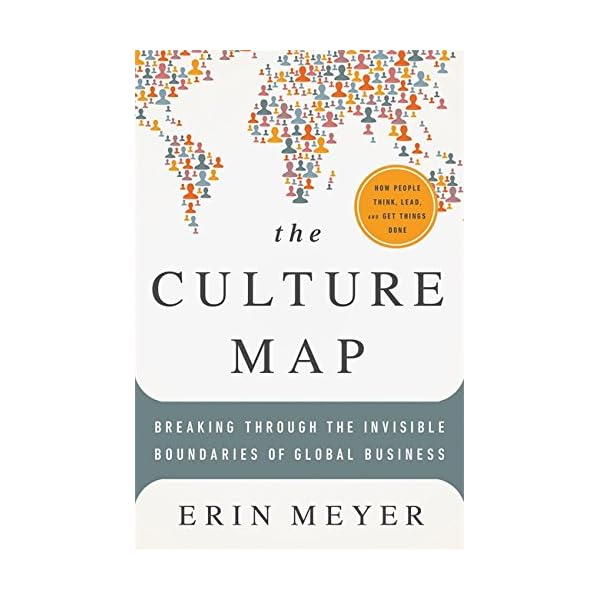
Whether you work in a home office or abroad, business success in our ever more globalized and virtual world requires the skills to navigate through cultural differences and decode cultures foreign to your own. The book abounds with well-chosen anecdotes to illustrate the misunderstandings that can arise from clashing cultural assumptions, making this enlightening book a pleasure to read.” Foreign Affairs Whether you're a corporate or traditional diplomat, global traveler, government official, or passionate world citizen, this is the one book you should not miss. If you only read one, make it INSEAD professor Erin Meyer's Skillfully blend[s] real-life examples.. with an analytical framework What brings this book to life are the numerous examples Meyer has encountered, both in her own life as an American living in Paris, and in her experience as running the Managing Virtual Teams module at INSEAD.
Reviews
Find Best Price at Amazon"This was one of the absolute best business reads I've had in recent years."
"Plenty of examples and stories to illustrate the points were provided for each section, and it opened my eyes to things I never explicitly learned or knew before yet felt familiar based on my experience in both my culture and others."
"This limits the reach of humanitarian impact that could have otherwise been realized, but you can't blame people for wanting to put food on the table for their french kids."
"For more experienced international travelers and employees, The Culture Map is a grand review of the basics but doesn't take one to the nuances of the variety of ways that culture manifests depending on the life experience, social class, age and stage of life of the people that will be encountered."
"This book has become a Bible for a multi-cultural communication for me."
"I liked the scale of cultures and also the peach vs coconut err explanation."
"The author provides clear framework to evaluate cultural differences between personalities and groups from various cultural backgrounds."
"Having lived and worked extensively in Japan, China, India, the U.K. And the US, I found this book the best source that I have ever seen for understanding, modeling and planning cross-nation projects or for preparing for assignments "abroad.""
Best Medical Psychotherapy TA & NLP
At the time of Frankl's death in 1997, Man's Search for Meaning had sold more than 10 million copies in twenty-four languages. The book begins with a lengthy, austere, and deeply moving personal essay about Frankl's imprisonment in Auschwitz and other concentration camps for five years, and his struggle during this time to find reasons to live. The second part of the book, called "Logotherapy in a Nutshell," describes the psychotherapeutic method that Frankl pioneered as a result of his experiences in the concentration camps.
Reviews
Find Best Price at Amazon"Read this book, read this book."
"Those that had developed purpose and meaning to the harsh conditions got out of bed every morning to face another unbearable day."
"How can we all survive the trials and sufferings life thows our way?"
"Profound insight."
"This is without a doubt the greatest self help book on the planet."
"A little twist of ideas as to why some people survive the worst and why others don't survive medium bad."
"I am just now to the place he talks about how thinking of his wife and having mental conversations with her gave him strength to stay alive!"
"A nice read about the importance of finding meaning in your life."
Best Psychology Movements
When you need advice on how to present information, including text, data, and graphics, for publication in any type of format--such as college and university papers, professional journals, presentations for colleagues, and online publication--you will find the advice you're looking for in the "Publication Manual."
Reviews
Find Best Price at Amazon"It's pretty comprehensive...has a lot of stuff about publication...and publishing...as well as the usual APA punctuation and grammar rules for the style."
"However, as it is unavoidable, I finally caved and bought the official manual as a replacement to my constant searching on the internet and coming up with inadequate and conflicting information."
"The APA could have done a better job stressing the fact that the work done behind an article needs to important and original, and the form of the writing needs to reflect that,"
"I don't know if I can trust this copy of my APA book that I received from NEWBOOKSWORLD to reference for my papers now."
"For example, this book was useless for citing a TED Talks video or a class syllabus."
"Worst of all, the Kindle edition does not work with Kindle's online reader (read.amazon.com), which is where most people using this book would probably use the Kindle edition."
"There are rub marks and dents all over the cover, there is a gouge mark along all of the pages that you can see when the book is closed, and the inside of the cover (where the blank white page is glued the the inside of the cover) looks like a first grader used a bottle of Elmer's glue to attach it. There is literally nothing professional looking about this book, from the dust cover to the page material."
"There are style guides that say everything that needs to be said without attempting to repeat the incredibly complex English grammar rules and conventions that are best left to the grammarians. As a result of its complexity, this handbook is easy to misinterpret for users and far too difficult to update without many errors, as the release of the latest edition demonstrates."
Best Psychology Education & Training
The culmination of master psychiatrist Dr. Irvin D. Yalom’s more than thirty-five years in clinical practice, The Gift of Therapy is a remarkable and essential guidebook that illustrates through real case studies how patients and therapists alike can get the most out of therapy. •Create a new therapy for each patient.
Reviews
Find Best Price at Amazon"If you are a therapist, I cannot recommend this book highly enough."
"Yalom writes this book in a way that is easy to read and keeps you interested."
"The first book I've read by the author, I now want to read the rest of his works."
"It is wonderful to have thirty years of expereince counseling and supporting clients in their therapy work and read thought-provoking and practical ideas that improve my practice."
"great read for both seasoned clinicians and newer ones as well."
"Very good book."
"An enjoyable read, somewhat difficult to digest as a student who prefers more structured and detailed information."