
Best Medieval Thought Philosophy

One of the most influential philosophers and theologians in history, St. Thomas Aquinas was the father of modern philosophy of religion, and is infamous for his "proofs" for God’s existence. Fulvio di Blasi, President, Thomas International. "Lucid, cogent, and compelling.
Reviews
Find Best Price at Amazon"Feser begins to remedy this problem by introducing us to Aquinas' view of the four causes (material formal, efficient, final) as well as his teaching on being and essence. Feser mentions that the Aqunas' full and thorough proofs for God's existence worked out in detail may be found in Aquinas' Summa Contra Gentiles. It is quite interesting because I too, unfortunately, had bought into the modern mindset that Aquinas' 5 ways were just sort of old hat, similar to intelligent design, not too deep, and all more or less the same. I was amazed at how careful and rigorous the proof from motion is when given in its full detail with all the necessray metaphysical background in place. Feser was also able to explain how Aquinas argued that even if the universe could have existed for an infinite amount of time, it would still require a first cause. Yet Feser looks a wide range of Aquinas' writings on these ways and argues that he had different things in mind and different properties of God that the arguments would deduce."
"Aquinas is an incredibly difficult thinker to grasp, so I was a little intimidated when a friend recommended I should read Aquinas's work."
"Someone without too much experience in philosophy will likely have problems with all the language he uses - form, matter, essence, existence, act, potency - since he doesn't offer a comprehensive introduction to these concepts."
"For someone looking to really get a better understanding into Aquinas/Aristotelian metaphysics this is a great intro."
"Great read in short bursts, lots to take in."
"An excellent introduction to Aquinas from a modern Thomist; everyone who wants to talk philosophy had best at least understand where Aquinas is coming from, and this certainly gets you started."
"I have picked up the summa theologica A few years prior, but I wasn't ready for it, I think Feser portrays Aquinas objectively and thoroughly in a brief introduction."
"Feser is a brilliant author and person and if you are. looking to expand your knowledge on his five. ways and what life is all about; this is the book."
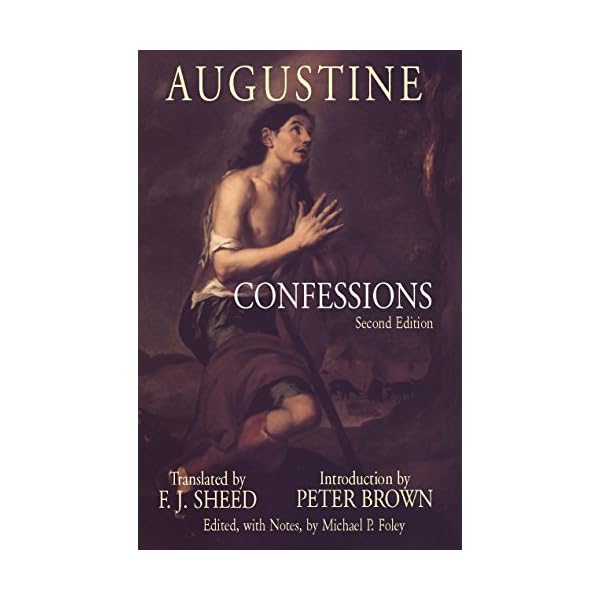
Like the first Hackett edition of the Augustine's Confessions , the second edition features F. J. Sheed's remarkable translation of this classic spiritual autobiography with an Introduction by noted historian of late antiquity Peter Brown. F. J. Sheed's ear for that music makes this translation a memorable opportunity to hear Augustine’s voice resonating down the years."
Reviews
Find Best Price at Amazon"What I especially enjoyed are the footnotes that refer the reader to the scriptures that reflect Augustine's words, fleshing out a deeper, more practical meaning to the scriptures contextualized with everyday life. The book binding is good for me as the inner margin seems slightly bigger than most paperback books easing the usual tendency of having to read on the curve of a book."
"In the late seventies as I worked on a master’s degree in agricultural economics, my best friend, who had just entered seminary, encouraged me to undertake study of classics in the faith and early on I read Augustine’s (1978) Confessions. When I undertook this year to write my own memoir, my friend encouraged me to return to the Confessions both because the Confessions provided a template for all memoirs to follow and because this time I also had seminary training. In the second part, I review the life of Augustine and sin, as he describes it. Background on Augustine. For those unfamiliar with church history, Augustine of Hippo (354-430 AD) , which was in modern-day Algeria, lived right after the time of Emperor Constantine the Great (272-337 AD) who made Christianity the official religion of the Roman Empire. Augustine supported himself teaching rhetoric, was heavily influenced by the writings of Plato, and wrote the Confessions to be read aloud. He prayed out of it every day, using especially the book of Psalms, which he believed to be the direct, personal prayers of King David, and so the model of all Christan, as they had been of all Jewish, prayer.” (xvii-xviii). The influence of the Bible on the confessions is obvious to any reader because Augustine frequently begins a particular section in prayer and cites scripture throughout, allusions to which the editor has conveniently footnoted. Less obvious to the reader is the definition that Augustine used for confession. As noted by the editor’s glossary, for Augustine confession could be: 1. a profession of faith, 2. praise of God, or. 3. an act of penance (self-accusation). In his book, Confessions, Augustine of Hippo describes his life before and after converting to Christianity as an adult. Augustine shamelessly lays out the sins of his life, saying: “Let the mind of my brethren love that in me which You teach to be worthy of love, and grieve for that in me which You teach to be worthy of grief.” (191). I take this statement to mean that Augustine proposes to be frankly forthright in confession so that he can be an example to others."
"Augustine begins as a true skeptic, raises a multitude of doubts about the Christian faith, and then systematically uses scientific, philosophical (he even draws up the ancient Greek philosophers), religious, and logical arguments to debunk alternative theories and finally reach the overriding conclusion—that there is only one truth and that truth is found in God. Everyone should read this book, and if you are involved in any form of Christian ministry, you absolutely must read this book—it will change how you view and interact with the world."
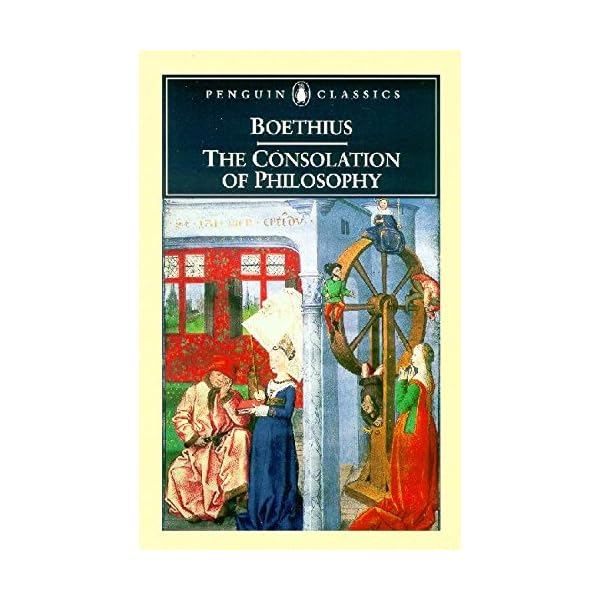
Readers trust the series to provide authoritative texts enhanced by introductions and notes by distinguished scholars and contemporary authors, as well as up-to-date translations by award-winning translators. Written in the period leading up to his brutal execution, it is a dialogue of alternating prose and verse between the ailing prisoner and his 'nurse' Philosophy, whose instruction on the nature of fortune and happiness, good and evil, fate and free will, restore his health and bring him to enlightenment.
Reviews
Find Best Price at Amazon"The books are chapter and verse, and the numbers clump together sometimes, so it's hard to find your place in a group setting."
"Throughout the entire book you find yourself amazed simply because Boethius was able to recognize these life tendencies and write them in a clear thought provoking way."
"Wisdom, compassion, beauty and inspiration are here in Boethius' profound words."
"Boethius was a sharp man and though his Consolation of Philosophy is the more famous I found his Theological Tractates much more enthralling, maybe the Consolation is more well known because it is poetic and its philosophical discussion more easily approachable than some of the more rigorous sections of the Theological Tractates."
"As far as books about philosophy go I would rate the The Consolation of Philosophy as a must read."
"A book that truly revolutionized my inner religious philosophy."
"Ordered this used for my daughter's freshman year Western Civ course."
Best Consciousness & Thought Philosophy

#1 NEW YORK TIMES BESTSELLER • PULITZER PRIZE FINALIST • This inspiring, exquisitely observed memoir finds hope and beauty in the face of insurmountable odds as an idealistic young neurosurgeon attempts to answer the question What makes a life worth living? At the age of thirty-six, on the verge of completing a decade’s worth of training as a neurosurgeon, Paul Kalanithi was diagnosed with stage IV lung cancer. When Breath Becomes Air chronicles Kalanithi’s transformation from a naïve medical student “possessed,” as he wrote, “by the question of what, given that all organisms die, makes a virtuous and meaningful life” into a neurosurgeon at Stanford working in the brain, the most critical place for human identity, and finally into a patient and new father confronting his own mortality. I’ll go on.’” When Breath Becomes Air is an unforgettable, life-affirming reflection on the challenge of facing death and on the relationship between doctor and patient, from a brilliant writer who became both. And part comes from the way he conveys what happened to him—passionately working and striving, deferring gratification, waiting to live, learning to die—so well.” —Janet Maslin, The New York Times. The book brims with insightful reflections on mortality that are especially poignant coming from a trained physician familiar with what lies ahead.” — The Boston Globe. As he wrote to a friend: ‘It’s just tragic enough and just imaginable enough.’ And just important enough to be unmissable.” —Janet Maslin, The New York Times “Paul Kalanithi’s memoir, When Breath Becomes Air, written as he faced a terminal cancer diagnosis, is inherently sad. It is, despite its grim undertone, accidentally inspiring.” — The Washington Post “Paul Kalanithi’s posthumous memoir, When Breath Becomes Air, possesses the gravity and wisdom of an ancient Greek tragedy. [Kalanithi] is so likeable, so relatable, and so humble, that you become immersed in his world and forget where it’s all heading.” — USA Today “It’s [Kalanithi’s] unsentimental approach that makes When Breath Becomes Air so original—and so devastating. “Rattling, heartbreaking, and ultimately beautiful, the too-young Dr. Kalanithi’s memoir is proof that the dying are the ones who have the most to teach us about life.” —Atul Gawande “Thanks to When Breath Becomes Air, those of us who never met Paul Kalanithi will both mourn his death and benefit from his life. Kalanithi strives to define his dual role as physician and patient, and he weighs in on such topics as what makes life meaningful and how one determines what is most important when little time is left. This deeply moving memoir reveals how much can be achieved through service and gratitude when a life is courageously and resiliently lived.” — Publishers Weekly “A moving meditation on mortality by a gifted writer whose dual perspectives of physician and patient provide a singular clarity . Kalanithi describes, clearly and simply, and entirely without self-pity, his journey from innocent medical student to professionally detached and all-powerful neurosurgeon to helpless patient, dying from cancer. Every doctor should read this book—written by a member of our own tribe, it helps us understand and overcome the barriers we all erect between ourselves and our patients as soon as we are out of medical school.” —Henry Marsh, author of Do No Harm: Stories of Life, Death, and Brain Surgery “A tremendous book, crackling with life, animated by wonder and by the question of how we should live. Paul Kalanithi lived and died in the pursuit of excellence, and by this testimonial, he achieved it.” —Gavin Francis, author of Adventures in Human Being.
Reviews
Find Best Price at Amazon"Ultimately there's not much triumph in it in the traditional sense but there is a dogged, quiet resilience and a frank earthiness that endures long after the last word appears. Dr. Kalanithi talks about his upbringing as the child of hardworking Indian immigrant parents and his tenacious and passionate espousal of medicine and literature. He speaks lovingly of his relationship with his remarkable wife - also a doctor - who he met in medical school and who played an outsized role in supporting him through everything he went through. He had a stunning and multifaceted career, studying biology and literature at Stanford, then history and philosophy of medicine at Cambridge, and finally neurosurgery at Yale. The mark of a man of letters is evident everywhere in the book, and quotes from Eliot, Beckett, Pope and Shakespeare make frequent appearances. Metaphors abound and the prose often soars: When describing how important it is to develop good surgical technique, he tells us that "Technical excellence was a moral requirement"; meanwhile, the overwhelming stress of late night shifts, hundred hour weeks and patients with acute trauma made him occasionally feel like he was "trapped in an endless jungle summer, wet with sweat, the rain of tears of the dying pouring down". The painful uncertainty which he documents - in particular the tyranny of statistics which makes it impossible to predict how a specific individual will react to cancer therapy - must sadly be familiar to anyone who has had experience with the disease. There are heartbreaking descriptions of how at one point the cancer seemed to have almost disappeared and how, after Dr. Kalanithi had again cautiously made plans for a hopeful future with his wife, it returned with a vengeance and he had to finally stop working."
"He says this, “The secret is to know that the deck is stacked, that you will lose, that your hands or judgment will slip, and yet still struggle to win …You can’t ever reach perfection, but you can believe in an asymptote toward which are ceaselessly striving. In the foreword by fellow doctor and writer Abraham Verghese, that doctor writes, “He (Paul) wasn’t writing about anything—he was writing about time and what it meant to him now, in the context of his illness.” And in the afterword by his wife Lucy, the meaning of that time becomes even clearer."
"Paul's account of his love for his work and his patients really struck a chord with me as did the integrity and dignity with which he faced the prospect of his death."
"Like when you go running and forget you are on a run, because you are one with the run; reading this I was so absorbed, it was like I was listening to Paul, hearing his words, versus reading them...."
"This book tells the heart wrenching story of a family and physician who had to face death."
Best Modern Philosophy
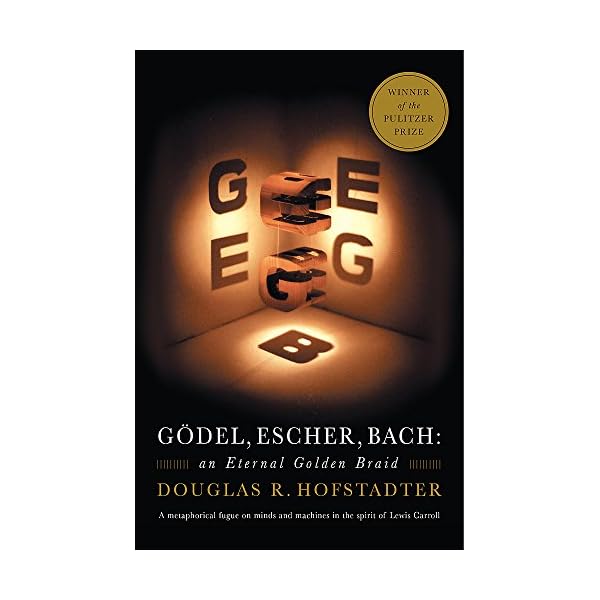
However, according to Hofstadter, the formal system that underlies all mental activity transcends the system that supports it. Besides being a profound and entertaining meditation on human thought and creativity, this book looks at the surprising points of contact between the music of Bach, the artwork of Escher, and the mathematics of Gödel. Hofstadter's great achievement in Gödel, Escher, Bach was making abstruse mathematical topics (like undecidability, recursion, and 'strange loops') accessible and remarkably entertaining. Escher, Kurt Gödel: biographical information and work, artificial intelligence (AI) history and theories, strange loops and tangled hierarchies, formal and informal systems, number theory, form in mathematics, figure and ground, consistency, completeness, Euclidean and non-Euclidean geometry, recursive structures, theories of meaning, propositional calculus, typographical number theory, Zen and mathematics, levels of description and computers; theory of mind: neurons, minds and thoughts; undecidability; self-reference and self-representation; Turing test for machine intelligence.
Reviews
Find Best Price at Amazon"Some of the topics explored: artificial intelligence, cognitive science, mathematics, programming, consciousness, zen, philosophy, linguistics, neuroscience, genetics, physics, music, art, logic, infinity, paradox, self-similarity. Inbetween chapters, he switches to a dialogue format between fantasy characters; here he plays with the ideas being discussed, and performs postmodern literary experiments. GEB combines the playful spirit of Lewis Carroll, the labyrinthine madness of Borges, the structural perfectionism of Joyce, the elegant beauty of mathematics, and the quintessential fascination of mind, all under one roof. The task of reducing mind to math, of connecting the nature of consciousness to an idea in formal systems, is such a lofty goal, that even if true, the author could never rigorously prove this thesis, only approach it from every conceivable direction. In the grand line of reductionism, where we in theory reduce consciousness to cognitive science to neuroscience to biology to chemistry to physics to math to metamath, GEB positions itself at the wraparound point at unsigned infinity, where the opposite ends of the spectrum meet."
"There is sooo much content in this book it's going to take my whole life to even begin to understand."
"For those of you who want to know about how things are this is a must read."
"So far a fantastic book."
"If you are interested in fractals, improbable harmonies, math recursion, puzzles, artistic illusionary impossibilities and strange loopy weirdness where life seems to look back at itself."
"Book in great shape."
"Condition of book was good, not great, slightly worse than described but totally acceptable."
"arrived safe and sound."
Best Social Philosophy
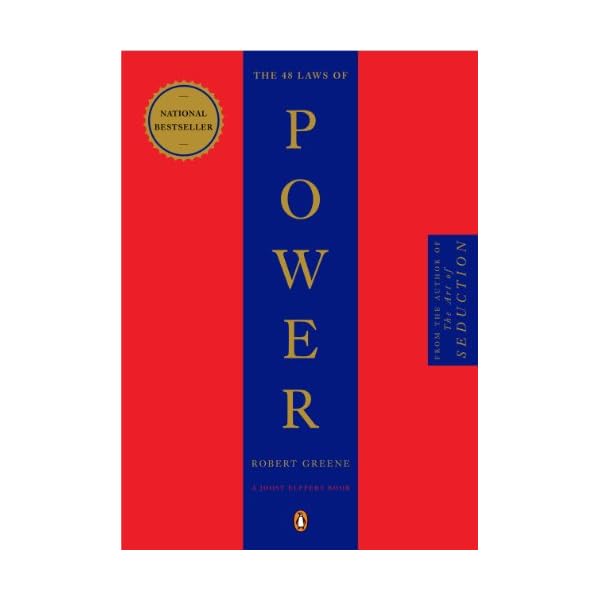
In the book that People magazine proclaimed “beguiling” and “fascinating,” Robert Greene and Joost Elffers have distilled three thousand years of the history of power into 48 essential laws by drawing from the philosophies of Machiavelli, Sun Tzu, and Carl Von Clausewitz and also from the lives of figures ranging from Henry Kissinger to P.T. Elffers's layout (he is identified as the co-conceiver and designer in the press release) is stylish, with short epigrams set in red at the margins. Each law, with such allusive titles as "Pose as a Friend, Work as a Spy," "Get Others to Do the Work for You, But Always Take the Credit," "Conceal Your Intentions," is demonstrated in four ways?using it correctly, failing to use it, key aspects of the law and when not to use it. Illustrations are drawn from the courts of modern and ancient Europe, Africa and Asia, and devious strategies culled from well-known personae: Machiavelli, Talleyrand, Bismarck, Catherine the Great, Mao, Kissinger, Haile Selassie, Lola Montes and various con artists of our century.
Reviews
Find Best Price at Amazon"This has become one of my favorite books in a short period of time, and it has given me a new way to perceive the world around me. I wouldn't necessarily recommend it to every single person in the world, because it is not for the faint of heart; but if you've ever been taken advantage of, shut out of someone's life, lost control of a situation, had someone feign authority over you (successfully), had relationship problems, problems in the workplace, etc, you deserve to give this a read-through at LEAST once."
"there seems to be a lot of love and hate surrounding this book, so if you are curious but unsure, this review should help you decide whether or not to buy the book, and how it will impact you. First, to understand the 48 laws of power, you must know two key ideas. 1. you CAN NOT escape the power game. you wil become exponentially more powerfull by knowing and understanding these laws. -CRYSTAL CLEAR. every law is clearly outlined with "transgression" of the law, "observance" of the law, keys to power, and a "reversal". -GREAT STORIES. the 48 laws are packed with mindblowing and sometimes humorous stories of people in history practicing these laws. OVERALL: If you want to have more power or a better understanding of why different situations turn out the the way they do, you should definitely read the 48 laws of power by Robert Greene."
"Next to the Bible, probably the best book ever written."
"Too bad I didn't read this when it was first released."
"If you're tired of a meager existence then purchase this book."
"very interesting and good read."
"Excellent book providing a list of Laws about power dynamics between people."
"Amazing book, great purchase."
Best Political Philosophy
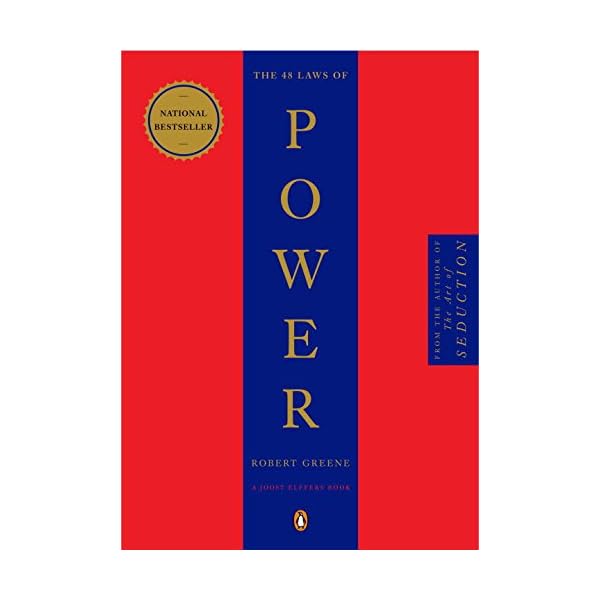
In the book that People magazine proclaimed “beguiling” and “fascinating,” Robert Greene and Joost Elffers have distilled three thousand years of the history of power into 48 essential laws by drawing from the philosophies of Machiavelli, Sun Tzu, and Carl Von Clausewitz and also from the lives of figures ranging from Henry Kissinger to P.T. THE BESTSELLING BOOK FOR THOSE WHO WANT POWER, WATCH POWER, OR WANT TO ARM THEMSELVES AGAINST POWER .
Reviews
Find Best Price at Amazon"This has become one of my favorite books in a short period of time, and it has given me a new way to perceive the world around me. I wouldn't necessarily recommend it to every single person in the world, because it is not for the faint of heart; but if you've ever been taken advantage of, shut out of someone's life, lost control of a situation, had someone feign authority over you (successfully), had relationship problems, problems in the workplace, etc, you deserve to give this a read-through at LEAST once."
"there seems to be a lot of love and hate surrounding this book, so if you are curious but unsure, this review should help you decide whether or not to buy the book, and how it will impact you. First, to understand the 48 laws of power, you must know two key ideas. 1. you CAN NOT escape the power game. you wil become exponentially more powerfull by knowing and understanding these laws. -CRYSTAL CLEAR. every law is clearly outlined with "transgression" of the law, "observance" of the law, keys to power, and a "reversal". -GREAT STORIES. the 48 laws are packed with mindblowing and sometimes humorous stories of people in history practicing these laws. OVERALL: If you want to have more power or a better understanding of why different situations turn out the the way they do, you should definitely read the 48 laws of power by Robert Greene."
"Complaint: I try to follow a story, then the author cuts it off and interjects a completely different story before completing the original one. Praise: in a world of humans full of ego, the author gives valuable insight into human behavior. Still I'm fascinated by human behavior so even these crazier stories were interesting to me."
"Some of them are a bit worrying, as they are about real events in history and you think about some of the horrible things that have happened to people... but in that light, following the rules in the book could help you avoid some of those more tragic fates, or at least take a more introspective approach at the behavior of others and yourself so that you might make better, or wiser decisions regarding certain situations."
Best Religious Philosophy
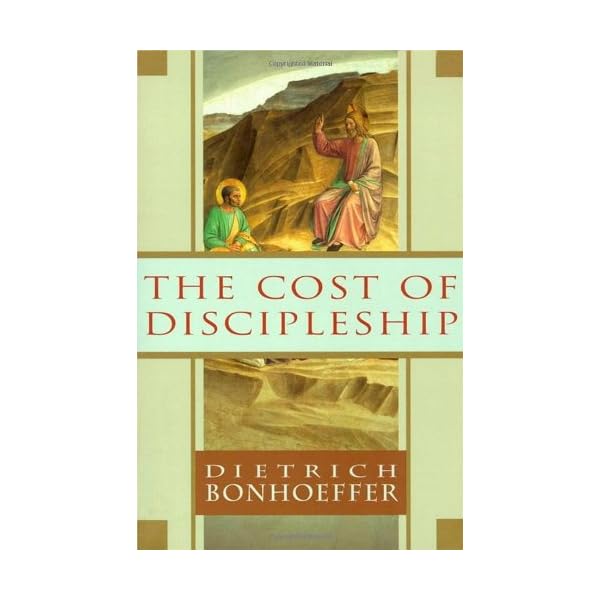
"Cheap grace," Bonhoeffer wrote, "is the grace we bestow on ourselves...grace without discipleship....Costly grace is the gospel which must be sought again and again, the girl which must be asked for, the door at which a man must know....It is costly because it costs a man his life, and it is grace because it gives a man the only true life." The Cost of Discipleship , first published in German in 1937, was Bonhoeffer's answer to the questions, "What did Jesus mean to say to us?
Reviews
Find Best Price at Amazon"While he waited for death to come he wrote about what it means to live for Christ and Christ alone."
"Not just from the deeply theological material covered, but from a personal convicting point of view."
"It's difficult, not just to take in (although you may sometimes need to read a paragraph two or three times to really comprehend its meaning), but to accept, because it's hard to imagine who can really live up to what Bonhoeffer shows us Christ is really asking of us."
"Being authentically christian is not always easy or lacking in peril."
"Understanding the simple command to "Follow Me" is something very mysterious and difficult to the carnal nature of man."
"Dietrich was the only speaking voice for Christianity in Nazi Germany and it cost him his life ,but not his soul."
"I reference this frequently and will for the remainder of my life."
"Bonhoffer was blessed and is an example for Christians today and always."
Best Epistemology Philosophy
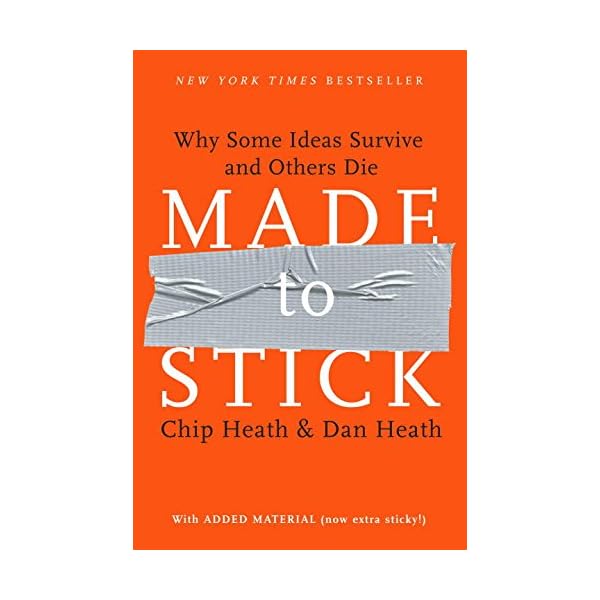
The authors credit six key principles: simplicity, unexpectedness, concreteness, credibility, emotions and stories. They illustrate these principles with a host of stories, some familiar (Kennedy's stirring call to "land a man on the moon and return him safely to the earth" within a decade) and others very funny (Nora Ephron's anecdote of how her high school journalism teacher used a simple, embarrassing trick to teach her how not to "bury the lead").
Reviews
Find Best Price at Amazon"For example urban myths... stories about people having their kidneys stolen, the "fact" that humans only use 10% of their brains, or stories of people poisoning Halloween candy. All of these are myths- there is not a band of organ harvesters that steals kidneys, humans actually use 100% of their brains in a given day, and there have only been 2 true cases of poisoned Halloween candy and both cases were done by the children's own family. The answer: sticky stories need to have 6 attributes. News casters do this with their 10 second commercials telling you what the news stories will be at the "9 o'clock news"- they will say something like "A gorilla escaped from the zoo and ended up at a children's birthday party, find out more at 9." My favorite way of presenting this was the Mother Teresa principle: If I look at the one, I will act. 2. (A video of a young girl sitting in the dirt) With your donation you could help Cindy... your donation would help feed Cindy, put a roof over Cindy's head, and help send Cindy to school. Stories: Get people to act. It's difficult to find these stories, but when you find them you have a gold mine. There are so many great stories and insights within the pages. I would be more than happy to help anyone that wants it."
"Complete it, and you'd have more chances to create or spot this next sticky story."
"Chip and Dan cite people and companies who succeed by making good "stories" stick."
"Overall, I really enjoyed the concepts and the stories in this book, but I felt like some of the information could have been pared down a little bit because it seemed very repetitive."
"I know a book has had an impact on me when I find myself quoting it several months later ."
"A Must read for: Teachers/Trainers, Sales/Marketing, Managers, Leaders, Business Owners, Politicians, Parents, or anyone who needs to make a point or deliver a message."
"I read this book for an online class, but I plan to put the principles into action in my elementary classroom starting Monday."
""You can't have five North Stars.""
Best Analytic Philosophy
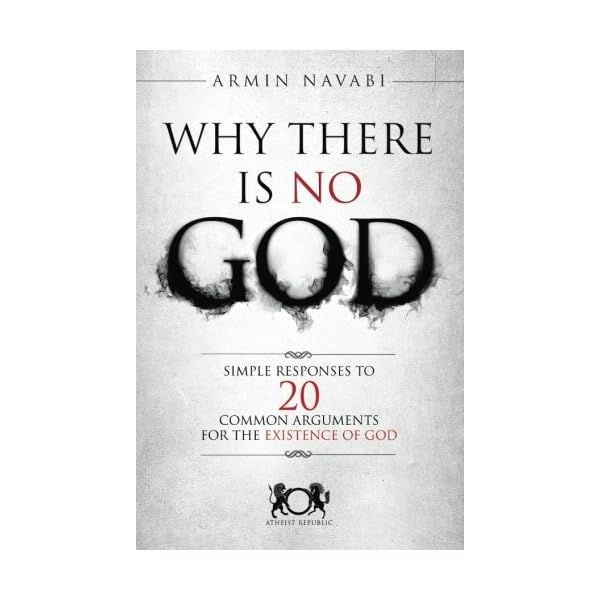
Each chapter presents a concise explanation of the argument, followed by a response illustrating the problems and fallacies inherent in it. Whether you're an atheist, a believer or undecided, this book offers a solid foundation for building your own inquiry about the concept of God. Armin Navabi is a former Muslim from Iran and the founder of Atheist Republic, a non-profit organization with over one million fans and followers worldwide that is dedicated to offering a safe community for atheists around the world to share their ideas and meet like-minded individuals.
Reviews
Find Best Price at Amazon"I completed 5 years of theological training and I served as a minister for some 17 years. I have found so much help and support in Armin Navabi's book, "Why There Is No God"."
"I thought this book looked interesting and since religion is a common hot topic of conversation I thought it would be best to educate myself on some of the reasons why I am an Athiest."
"Nicely thought out, and well presented material."
"well written book, I can relate and respond to questions like this when they arise."
"A good quick read to prepare yourself and your arguments."
"If you have thought about these issues, there probably won't be that much that is completely new to you, but regardless, it's still a nice, and easily digestible summaries of the arguments for non-belief."
"Great book to read, I would really recommend this book to people who are beginning to feel skeptical.."
"Good read."
Best Eastern Philosophy
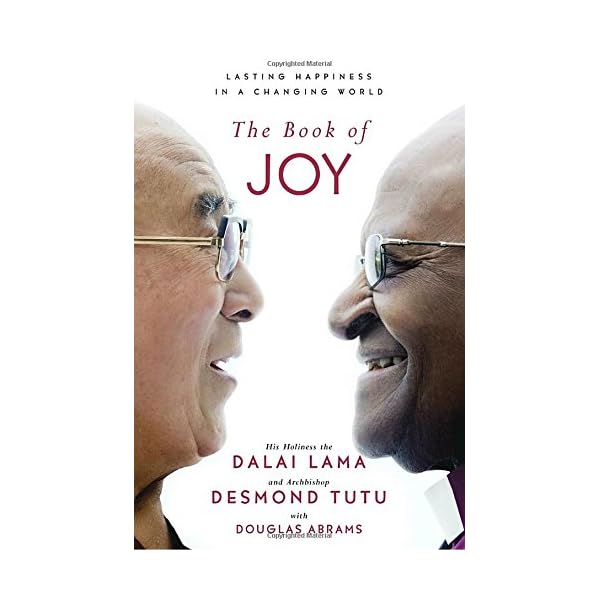
Nobel Peace Prize Laureates His Holiness the Dalai Lama and Archbishop Desmond Tutu have survived more than fifty years of exile and the soul-crushing violence of oppression. In April 2015, Archbishop Tutu traveled to the Dalai Lama's home in Dharamsala, India, to celebrate His Holiness's eightieth birthday and to create what they hoped would be a gift for others. By the end of a week filled with laughter and punctuated with tears, these two global heroes had stared into the abyss and despair of our time and revealed how to live a life brimming with joy. For over three decades the Dalai Lama has maintained an ongoing conversation and collaboration with scientists from a wide range of disciplines, especially through the Mind and Life Institute, an organization that he co-founded. The Dalai Lama travels extensively, promoting kindness and compassion, interfaith understanding, respect for the environment, and, above all, world peace. In 1994, Tutu was appointed chair of South Africa’s Truth and Reconciliation Commission by Nelson Mandela, where he pioneered a new way for countries to move forward after experiencing civil conflict and oppression. He is the founder and president of Idea Architects, a creative book and media agency helping visionaries to create a wiser, healthier, and more just world.
Reviews
Find Best Price at Amazon"The Book of Joy lives up to its title and goes much further."
"Both the Dalai Lama and Desmond Tutu have risen beyond their respective religions to reach out to all humans regardless of their location."
"The best book that I read in 2016."
"In these controversial times, how wonderful to be offered the chance to sit in on the respectful and insightful dialogue between these two spiritual leaders, who give us all hope that their messages will be spread far and wide."
"The Dalai Lama and Archbishop."
"Wonderful book that we used for our book group."
"The writing is primarily dialog and the Dalai Lama and Bishop Tutu are surprisingly informal and chummy."
"Many wonderful thoughts, gives unique perspectives , as well as reinforces many established perspectives."
Best Individual Philosophers
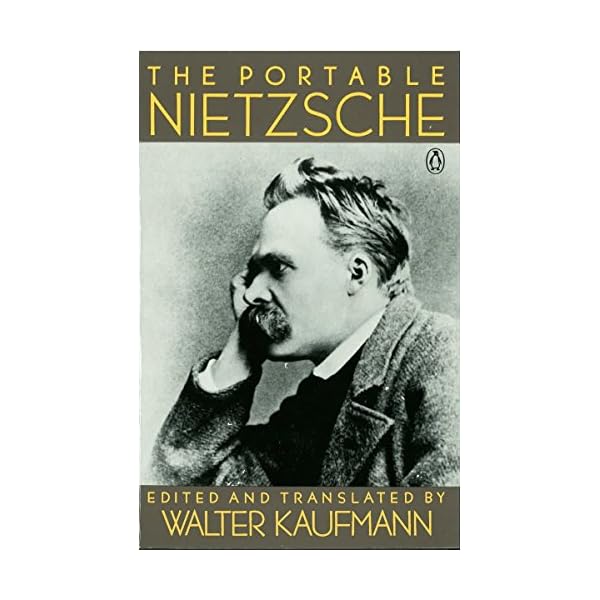
As Walter Kaufmann, one of the world’s leading authorities on Nietzsche, notes in his introduction, “Few writers in any age were so full of ideas,” and few writers have been so consistently misinterpreted. The philosopher Friedrich Nietzsche was born in Prussia in 1844.
Reviews
Find Best Price at Amazon"This anthology of works by Nietzsche includes "Thus Spake Zarathustra", "The Antichrist", "Twilight of the Idols" and "Nietzsche contra Wagner" in there entirety, as well as many letters, excerpts, notes and insights from translator/editor Walter Kaufmann. Whether taking on the state, Christianity, German philosophers and theologians, or Richard Wagner, Nietzsche exudes passion and intelligence that the translation effectively transmits to the reader."
"I absolutely enjoy the Portable Nietzsche and do take it with me and read it frequently to work and college."
"Includes Thus Spoke Zarathustra, which is a dazzlingly brilliant thing of literature."
"A must have for any lover of Nietzsche...I personally enjoyed twilight of the idols and the very interesting anti-christ."
"A great collection of Nietzche's philosophies."
"Kaufmann is by far the best translator of Nietzsche."
"Good translation."
Best Greek & Roman Philosophy
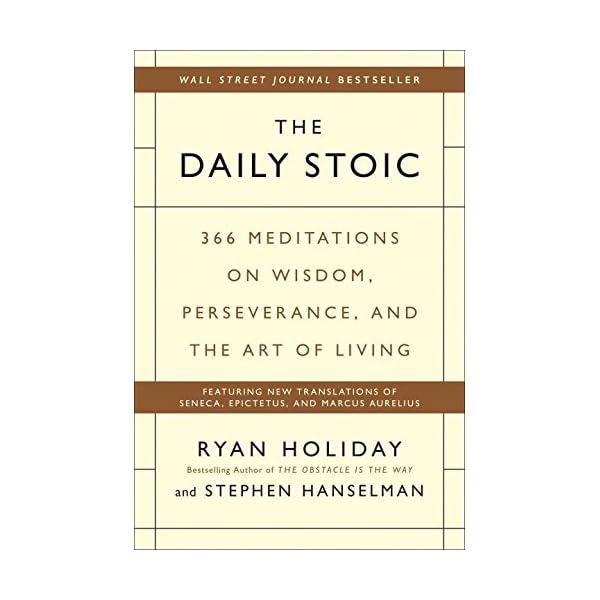
The Daily Stoic offers 366 days of Stoic insights and exercises, featuring all-new translations from the Emperor Marcus Aurelius, the playwright Seneca, or slave-turned-philosopher Epictetus, as well as lesser-known luminaries like Zeno, Cleanthes, and Musonius Rufus. — Maria Popova , editor of Brain Pickings "A richly rewarding spring of practical wisdom to help you focus on what's in your control, eliminate false and limiting beliefs, and take more effective action. — Jack Canfield , co-author of The Success Principles ™. and the Chicken Soup for the Soul ®. series. " The Daily Stoic is a treasure for managing our choices, overcoming self-deception, and learning to act according to the true worth of things while keeping the common good always in view.
Reviews
Find Best Price at Amazon""The Daily Stoic: 366 Meditations on Wisdom, Perseverance, and the Art of Daily Living" is the meditation book my son will remember, the one I'll read every day. The Daily Stoic isn’t simply a book to make me think, it’s an action guide, a “prescription for handling ourselves and our actions in the world.” The great Stoics remind me never to be satisfied with learning--I must always be doing."
"I became aware of Holliday when I read and reviewed his thoughtful and helpful book “The Obstacle is the Way.” It is a book about stoicism, the ancient Greek philosophy and its principles, which has sold more than 100,000 copies and has been translated into 17 languages. It is a collection of spiritual exercises designed to help people through the difficulty of life by managing emotion; specifically, non-helpful emotion.”. In “Daily Stoic,” Holiday provides 366 daily meditations on wisdom, perseverance, and the art of living. The meditations are organized under three primary topics (similar to those in “The Obstacle is…”) “The Discipline of Perception,” “The Discipline of Action,” and the “Discipline of Will.” Each topic is further divided into monthly themes: “Clarity,” “Passions and Emotions,” “Awareness,” “Unbiased Thought,” “Right Action,” “Problem Solving,” “Duty”“Pragmatism,” “Fortitude and Resilience,” “Virtue and Kindness,” “Acceptance,” and “Meditations on Mortality.”. Paul Tillich noted that Stoicism is “the only real alternative to Christianity in the Western world.” It came to many of the same conclusions about how to think and live. The meditations of the “Daily Stoic” can be a help in overcoming adversity, practicing self-control, being conscious of our impulses, realizing how short life is and making the most of it. The principles within Stoicism are, perhaps, the most relevant and practical sets of rules for those who choose to embrace the obstacles of life."
"I am a former mental health counselor and sadl had not heard that much of cognitive behavioral therapy parallels or originates from concepts of stoicism."
"This book is amazing."
"Awesome book."
"I read each day as the year progressed."
"My favorite daily reader, I love the philosophy expressed."
Best Modern Renaissance Philosophy

In The Prince he does not explain what he thinks the best ethical or political goals are, except the control of one's own fortune, as opposed to waiting to see what chance brings. And that more virtue meant less reliance on chance was a classically influenced "humanist commonplace" in Machiavelli's time, as Fischer says, even if it was somewhat controversial. He used the words "virtue" and "prudence" to refer to glory-seeking and spirited excellence of character, in strong contrast to the traditional Christian uses of those terms, but more keeping with the original pre-Christian Greek and Roman concepts from which they derived. Machiavelli's descriptions in The Prince encourage leaders to attempt to control their fortune gloriously, to the extreme extent that some situations may call for a fresh "founding" (or re-founding) of the "modes and orders" that define a community, despite the danger and necessary evil and lawlessness of such a project. Machiavelli justifies this position by explaining how if "a prince did not win love he may escape hate" by personifying injustice and immorality; therefore, he will never loosen his grip since "fear is held by the apprehension of punishment" and never diminishes as time goes by. Niccolò di Bernardo dei Machiavelli (3 May 1469 – 21 June 1527) was a Florentine historian, politician, diplomat, philosopher, humanist, and writer.
Reviews
Find Best Price at Amazon"This is definitely a book you can read over and over again."
"It was enlightening the effect Napoleon had in ousting Austrian troops from Italy with troops lacking appropriate footwear."
"Observations about power, strategy, and leadership that made for very interesting reading and some re-thinking and review of some of my own views about some of them."
"Have you ever heard someone say "That's a machiavellian point of view"??"
"Enjoyed every single page."
"One of those classics that's a must for a library."
"There is nothing false about Niccolo Machiavelli."
"It is immediately followed by this passage…. "Within our own time it does not appear that fortresses have been of service to any Prince, unless to the Countess of Forlì after her husband Count Girolamo was murdered; for by this means she was able to escape the first onset of the insurgents, and awaiting succour from Milan, to recover her State; the circumstances of the times not allowing any foreigner to lend assistance to the people. But afterwards, when she was attacked by Cesare Borgia, and the people, out of hostility to her, took part with the invader, her fortresses were of little avail. All which considerations taken into account, I shall applaud him who builds fortresses, and him who does not; but I shall blame him who, trusting in them, reckons it a light thing to be held in hatred by his people.""
Best Philosophy Methodology
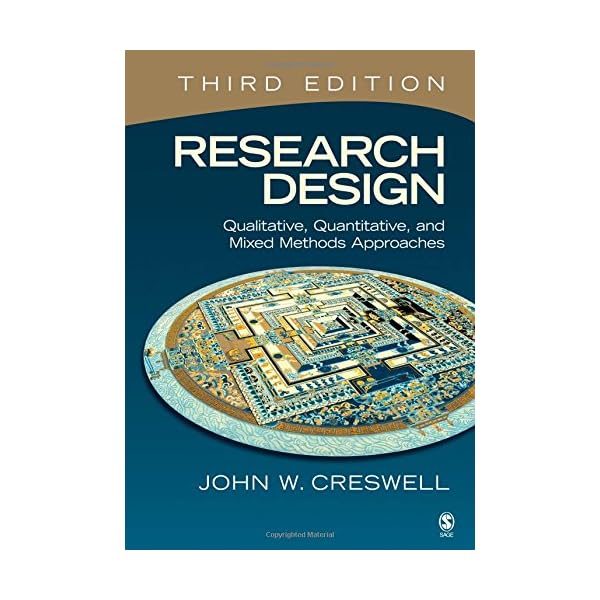
The Third Edition of the bestselling text Research Design by John W. Creswell enables readers to compare three approaches to research—qualitative, quantitative, and mixed methods—in a single research methods text. Written in a user-friendly manner, Creswell's text does not rely on technical jargon. Presents the preliminary steps of using philosophical assumptions in the beginning of the book Provides an expanded discussion on ethical issues Emphasizes new Web-based technologies for literature searches Offers updated information about mixed methods research procedures Contains a glossary of terms Highlights “research tips” throughout the chapters incorporating the author’s experiences over the last 35 years. He teaches courses on mixed methods research, qualitative inquiry, and general research design. He also co-founded the SAGE journal, the Journal of Mixed Methods Research , and has been a popular speaker on mixed methods and qualitative research in the US and abroad.
Reviews
Find Best Price at Amazon"This book is absolutely required to develop a clear understanding of the research process!"
"Creswell does a good job reducing worldviews (paradigms, ontologies...) to 4 options, and in connecting them to 3 general strategies (quantitative, qualitative, mixed)."
"One of the study modules highly recommended the purchase of the APA Publication manual. I've referred to it on numerous occasions and I can cite and reference sources like it's cool."
"Needed it for School and it worked."
"This was our text-book in a research class, and I found it to be very helpful."
"Good book about market research."
"It was a required read for an Art Education class I took and it lays out different types of research well but it can be a bit boring."
"Comprehensive and clear, Creswell provides a scientifically useful and extremely well written guide to research design. If you are contemplating a career in research, either academic or practitioner, get this book."
Best Philosophy Metaphysics
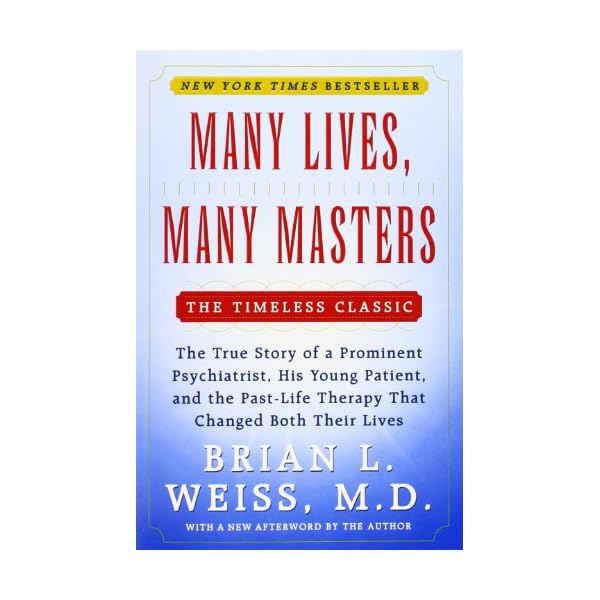
As featured on Oprah’s “Super Soul Sunday,” the classic bestseller on a true case of past-life trauma and past-life therapy from author and psychotherapist Dr. Brian Weiss—now featuring a new afterword by the author. However, it is hard to dispute that this well-respected graduate of Columbia University and Yale Medical School has discovered a personal truth that has led him to be an enormously popular speaker, author, and leader in the field of past-life therapy.
Reviews
Find Best Price at Amazon"This book prompted me to read all of Brian's books and many more books about reincarnation and life selection."
"Influential and interesting book if you are open to the concept of past lives, and you believe that through hypnotherapy/hypnotism a therapist can access memories stored in a persons mind."
"I read this book years ago at the suggestion of a friend after my daughter (who was four at the time) began talking to me about past lives."
"I couldn't put this book down and look forward to reading it again."
"If you are searching for answers to why we seem to keep repeating mistakes or what happens when we die or just the why of life, this is a great book."
"Some may find it easier to dismiss as hokum, but it has a feeling of validity to it, especially considering that the writer had to face (and knew he would have to face) the inevitable dismissal and disapproval of his peers."
"He presents statements by his patient - about himself (her treating psychiatrist) - as evidence that his patient was credible in experiencing past lives. He states that his patient was persuasive in part because she was not being reincarnated as someone special or famous ---- but then presents stories in which she was a German fighter pilot in WWII (how many people alive during WWII were fighter pilots), an assistant in the house of the pharoh, etc. Oh, and his patient relates that he ---- her treating psychiatrist ---- lived previously and was Diogenes!"
Best Philosophy Movements
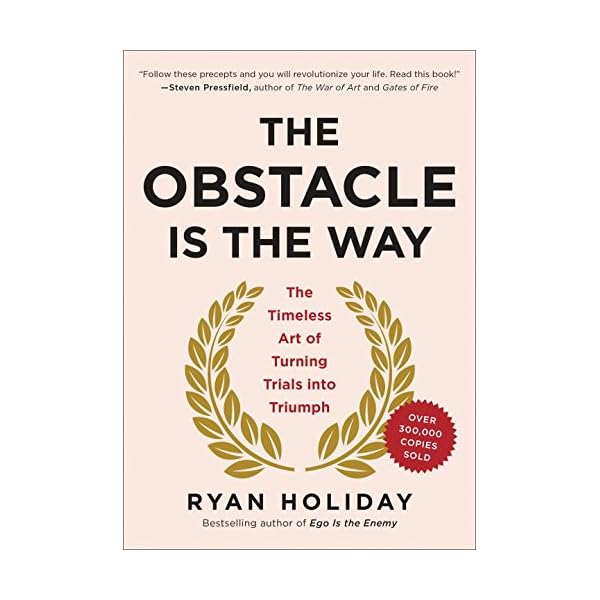
Its many fans include a former governor and movie star (Arnold Schwarzenegger), a hip hop icon (LL Cool J), an Irish tennis pro (James McGee), an NBC sportscaster (Michele Tafoya), and the coaches and players of winning teams like the New England Patriots, Seattle Seahawks, Chicago Cubs, and University of Texas men’s basketball team. Ryan Holiday shows us how some of the most successful people in history—from John D. Rockefeller to Amelia Earhart to Ulysses S. Grant to Steve Jobs—have applied stoicism to overcome difficult or even impossible situations. Read this book!”. — Steven Pressfield , author of The War of Art and Gates of Fire. This surprising book shows you how to craft a life of wonder by embracing obstacles and challenges.”. — Chris Guillebeau , author of The $100 Startup "A very, very good book with lots of examples about people who had to overcome great obstacles to have success." Ryan’s book is a how-to guide for just that.”. — James Altucher , investor and author of Choose Yourself “Ryan Holiday has written a brilliant and engaging book, well beyond his years. “Even though I was familiar with the basis for this book — the ancient philosophy of stoicism: overcoming obstacles through the practice of wisdom, courage, self-control, and mindfulness — it felt like a revelation when I read it.” —Allison K. Hill , Los Angeles Daily News.
Reviews
Find Best Price at Amazon"However, the tone is very focused on promoting modern busy culture instead of stepping back from it."
""Whatever we face, we have a choice: Will we be blocked by obstacles, or will we advance through and over them? Plenty of people have answered this question in the affirmative. And a rarer breed still has shown that they not only have what it takes, but they thrive and rally at every such challenge. ~ Ryan Holiday from The Obstacle Is the Way. Learning to turn our biggest challenges into our biggest opportunities is what this book is all about--"The timeless art of turning trials into triumph." Ryan Holiday is a brilliant writer (and guy) and this book is a *really* smart, lucid, compelling, inspiring manual on the art of living invincibly. Ryan masterfully integrates ancient Stoic wisdom from Marcus Aurelius + Seneca + Epictetus and brings that wisdom to life via inspiring stories featuring everyone from John D. Rockefeller, Ulysses S. Grant and Theodore Roosevelt to Amelia Earhart and Steve Jobs."
"Each year, at the end of the year, I would take about 20 minutes to write a list of all of the "bad" things that happened that year. Now, I make the same list, but instead of burning it, I go back over the list and beside each "bad" thing, I write a positive development that came from it."
"This is a nice summary of the basic teachings of Marcus Aurelius, Epictetus, and the other Stoic philosophers."
"I loved how it focuses on perception of obstacles and how none of the greats of the world actually viewed themselves as philosophers."
"Even though it's not practical to me, i did like to nourish the ideas and it led me to the current book that i'm reading which is the Meditations of Marcus Aurelius, which i was aware of before but this book pushed me to actually start reading more about Stoicism in general."
"This book is excellent as well as inspiring."
"Also although its based on stoicism and famous stoics Holidays writes in a way thats much easier to read then what ive read of Seneca and other stoics."
Best Philosophy Aesthetics
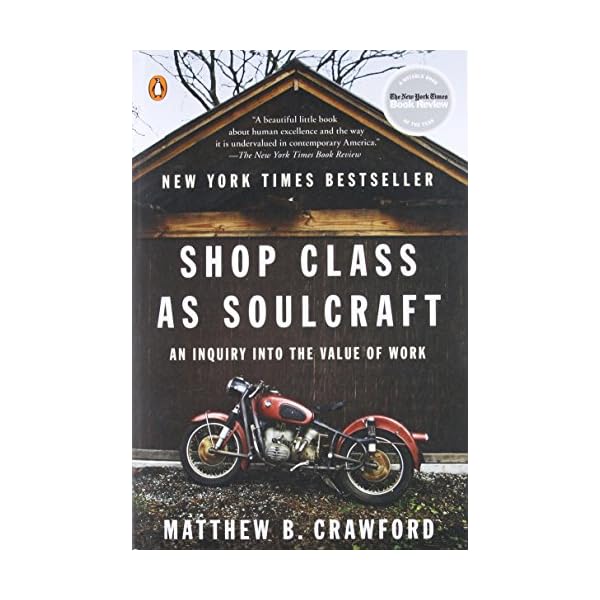
A philosopher/mechanic's wise (and sometimes funny) look at the challenges and pleasures of working with one's hands Called "the sleeper hit of the publishing season" ( The Boston Globe ), Shop Class as Soulcraft became an instant bestseller, attracting readers with its radical (and timely) reappraisal of the merits of skilled manual labor. But most critics, while praising the book's overall premise, seemed a little hesitant about fully embracing Shop Class as Soulcraft , perhaps because, as the New York Times reviewer observed, many of the author's personal preferences and quirks, such as Crawford's defense of dirty jokes, seem to impede his argument.
Reviews
Find Best Price at Amazon"this guy speaks to anyone who sees value in learning how to do things yourself, and working with your hands."
"I enjoyed the deep thoughtful into some everyday activities and into some I am now motivated to pursue for new purposes."
"Then the social character of his work isn't separate from its internal or "engineering" standards; the work is improved through relationships with others."
"'Soulcraft' is about the deep satisfaction of sitting back after building or repairing something with your own hands that's difficult to describe but this book does a good job of it."
"I'd be interested to see this book as a springboard for a larger awareness-building movement... live talks, magazine articles, online forums, graphic novels, etc... What the author is saying is important to so many more people than might initially pick up and stick with the book."
"Okay but definitely not as good as the original Zen and the Art of Motorcycle Maintenance."
"I am enjoying this book."
"The idea of these kind of works, which have existed for centuries, is to tie philosophical problems down to real-life experiences, making fundamental questions accessible to the layperson willing to work a little bit, or the philosopher wanting to come down from the clouds. Crawford presents his own (in my opinion interesting) experiences and (genuine) philosophical reflections to explain how has the (industrial/commercial/capitalistic) process which enables us to not worry about our many material items affects our view of the world and even our view of ourselves."
Best Philosophy Criticism
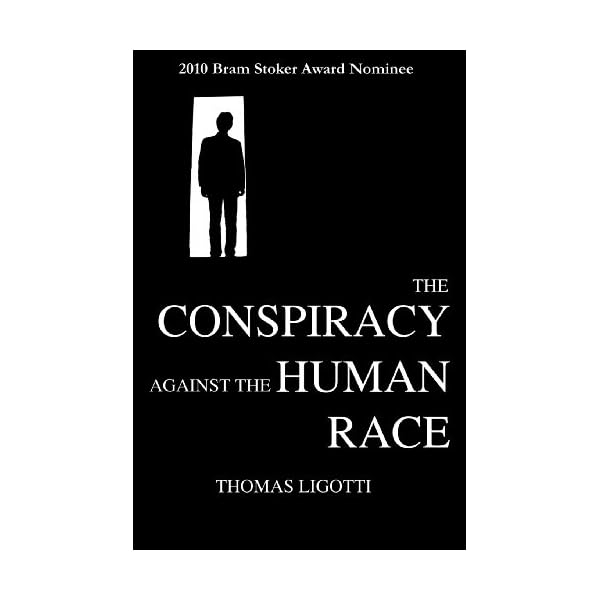
The Conspiracy against the Human Race is renowned horror writer Thomas Ligotti's first work of nonfiction. Should the human race voluntarily put an end to its existence? Do we even know what it means to be human?
Reviews
Find Best Price at Amazon"A must-read for anyone struggling with thoughts of existantialism and/or a fan of horror."
"Much of what is explained here is very interesting and I would say I responded to it, agreed with it, or saw his point...but didn't buy in all the way."
"Post-existential philosophy by a so-called weird fiction writer."
"I felt that Ligotti made interesting points and a strong case, while going through all the possible arguments and counter-arguments for the most basic questions about the nature of consciousness, life and reality."
"Whether Pizzolatto did rip Ligotti off is an important question, but either way, this book is an enjoyable companion to the show (or vice versa)."
"Any repulsion I experienced, any resitance, denial or refutation to what I read was instantly exposed as the very conspiracy I was being confronted with in reading this zen like arrow to the heart of my own convoluted quasi-existence. Human conscousness is a double dead ended cul de sac, a disater, a blunder of nature so horrifying that only it's demise is a valid decision for the most ruthlessly altruistic and reasonable."
"I am having a hard time deciding my opinion of this book."
Best Philosophy Reference
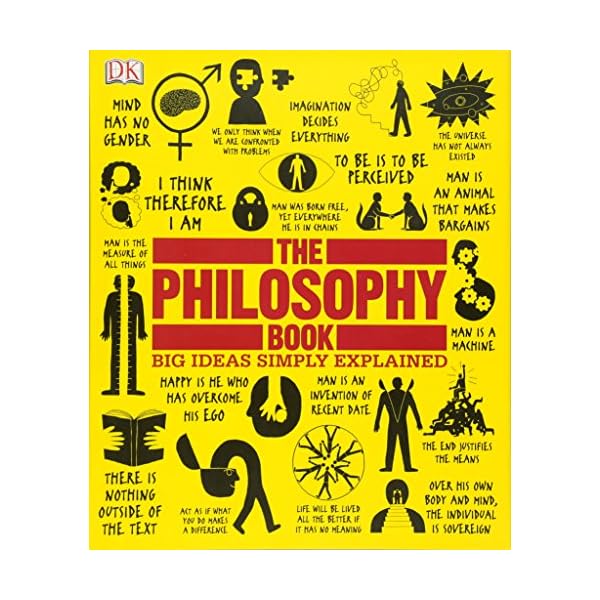
Cutting through the haze of academia and untangling complicated theories to show how our social, political, and ethical ideas are formed, The Philosophy Book contextualizes the information around time periods, innovative thinkers, method, and philosophical approach. DK's aim is to inform, enrich, and entertain readers of all ages, and everything DK publishes, whether print or digital, embodies the unique DK design approach. DK acts as the parent company for Alpha Books, publisher of the Idiot's Guides series and Prima Games, video gaming publishers, as well as the award-winning travel publisher, Rough Guides.
Reviews
Find Best Price at Amazon"This book is very appealing visually."
"Entertaining book for those who are beginning to get into philosophy."
"The Philosophy Book by Will Buckingham and collabators and published by DK is an excellent overview of philosophy from the time of the ancient Greeks; Eastern philosophy is covered, too."
"Every once in a while the author misses the main points of an important philosopher."
"Philosophy is reason that still drives and guides our moral compass and this book is an excellent addition to someone who is knew to Philosophizing. As for myself, this book brought back some good old memories I had in High School during my Junior year."
"This overview helps by not only clearly defining each persons contribution, but listing both previous and future philosophers who contributed to similar insights."
"You won't find scientists in this book unless they made an impression on philosophical insights."
"I gave it two stars mainly because I do like the book itself, but the inability to read this as true ebook is a huge frustration."
Best Free Will & Determinism Philosophy
In this classic book on thinking, the book describes how each of us shapes the events around us, creating our own lives. in abundance. As himself Allen describes, “ It shows how, in his own thought-world, each man holds the key to every condition, good or bad, that enters into his life, and that, by working patiently and intelligently upon his thoughts, he may remake his life, and transform his circumstances. EFFECT OF THOUGHT ON CIRCUMSTANCES 7.
Reviews
Find Best Price at Amazon"I am well educated by modern western standards - I have a masters degree in electrical engineering, and a masters degree in business (MBA)...I am middle-aged so I have had plenty of time to witness life on earth...I was also in the US Navy at an early age...I hope this gives you a context for my review........I have to honestly say, without any reservation, from the bottom of my heart - that this is the single MOST IMPORTANT book - rather EDUCATION - of my entire life...Nothing else comes close....If you are seeking true happiness, inner peace, would like to really internalize "why you are here", this is the best work around....If you want to learn how to deal with your resentment, prejudices, and maybe most-importantly, ego - this book will do it for you."
"The first time I was able to put the knowledge I learned from this book into practice was a emotionally explosive moment as I realized that I finally was able to control my thoughts and take a hold of my mind."
"If one can afford, I feel it is worth owning both versions: FIP version for classes; and the Original Edition for a greater understanding of the first eight or so chapters which are the bedrock for an in depth understanding of ACIM. It is the ACIM URTEXT Manuscripts (also available on Amazon) that contains personal information, not the ACIM Original Edition. I believe anyone that reads both the ACIM Original Edition and the ACIM FIP version will come to the same conclusion that I have, that being the ACIM Original Version is superior. I've been studying with the ACIM Original Edition for well over a year now and have just in the past few days purchased another copy of ACIM Original Edition for my wife who is now desiring a better understanding than her ACIM FIP version offers."
Best Philosophy of Good & Evil

While warning against the encroachment of organized religion into world politics, Harris draws on insights from neuroscience, philosophy, and Eastern mysticism to deliver a call for a truly modern foundation for ethics and spirituality that is both secular and humanistic. Sam Harris cranks out blunt, hard-hitting chapters to make his case for why faith itself is the most dangerous element of modern life. Interestingly, Harris is not just focused on debunking religious faith, though he makes his compelling arguments with verve and intellectual clarity.
Reviews
Find Best Price at Amazon"This book should be read by all believers, will help you with your faith !"
"Harris's use of logic provides examples for resisting the temptations of personal bias, groupthink and a lazy consideration of dissenting perspectives."
"Instead of a Bible this book should be read by all of us."
"He discusses all of the pertinent points I wanted addressed in a conversation on Faith: Belief, Sprituality, 'knowing', and how perception, language, and action go into and result from these topics."
"Item arrived on time and as described."
"I enjoyed reading this book."
"Directives from both the Qur'an and the literature of the Hadith advocate the killing of all who do not obey Islamic law or sharia. In a recent poll taken in Islamic countries concerning suicide bombers in defense of Islam, most respondents said it would be justifiable, except in countries closely allied to the West, like Turkey."
Best Philosophy History & Survey
Among the philosophers considered are: Pythagoras, Heraclitus, Parmenides, Empedocles, Anaxagoras, the Atomists, Protagoras, Socrates, Plato, Aristotle, the Cynics, the Sceptics, the Epicureans, the Stoics, Plotinus, Ambrose, Jerome, Augustine, Benedict, Gregory the Great, John the Scot, Aquinas, Duns Scotus, William of Occam, Machiavelli, Erasmus, More, Bacon, Hobbes, Descartes, Spinoza, Leibniz, Locke, Berkeley, Hume, Rousseau, Kant, Hegel, Schopenhauer, Nietzsche, the Utilitarians, Marx, Bergson, James, Dewey, and lastly the philosophers with whom Lord Russell himself is most closely associated—Cantor, Frege, and Whitehead, coauthor with Russell of the monumental Principia Mathematica. They invented mathematics and science and philosophy; they first wrote history as opposed to mere annals; they speculated freely about the nature of the world and the ends of life, without being bound in the fetters of any inherited orthodoxy. What occurred was so astonishing that, until very recent times, men were content to gape and talk mystically about the Greek genius. Philosophy begins with Thales, who, fortunately, can be dated by the fact that he predicted an eclipse which, according to the astronomers, occurred in the year 585 B.C. The early development of civilization in Egypt and Mesopotamia was due to the Nile, the Tigris, and the Euphrates, which made agriculture very easy and very productive. The Egyptians were preoccupied with death, and believed that the souls of the dead descend into the underworld, where they are judged by Osiris according to the manner of their life on earth. They left no permanent mark on Egypt, but their presence there must have helped to spread Egyptian civilization in Syria and Palestine. When Greek colonists in Asia Minor found temples to her, they named her Artemis and took over the existing cult. Christianity transformed her into the Virgin Mary, and it was a Council at Ephesus that legitimated the title "Mother of God" as applied to Our Lady. A rich priestly caste elaborated the ritual and the theology, and fitted together into a pantheon the several divinities of the component parts of the empire. Magic, divination, and astrology, though not peculiar to Babylonia, were more developed there than elsewhere, and it was chiefly through Babylon that they acquired their hold on later antiquity. Weapons, until about 1000 B.C., were made of bronze, and nations which did not have the necessary metals on their own territory were obliged to obtain them by trade or piracy. Piracy was a temporary expedient, and where social and political conditions were fairly stable, commerce was found to be more profitable. What survives of Cretan art gives an impression of cheerfulness and almost decadent luxury, very different from the terrifying gloom of Egyptian temples. The centre of the Cretan civilization was the so-called "palace of Minos" at Knossos, of which memories lingered in the traditions of classical Greece. The palaces of Crete were very magnificent, but were destroyed about the end of the fourteenth century B.C., probably by invaders from Greece. The bull-fights were religious celebrations, and Sir Arthur Evans thinks that the performers belonged to the highest nobility. Before the destruction of the Minoan culture, it spread, about 1600 B.C., to the mainland of Greece, where it survived, through gradual stages of degeneration, until about 900 B.C. This mainland civilization is called the Mycenaean; it is known through the tombs of kings, and also through fortresses on hill- tops, which show more fear of war than had existed in Crete. The older art products in the palaces are either actually of Cretan workmanship, or closely akin to those of Crete. The Mycenaean civilization, which had been weakened by the warfare of the Ionians and Achaeans, was practically destroyed by the Dorians, the last Greek invaders. Both during the later part of the Mycenaean age and after its end, some of the invaders settled down and became agriculturists, while some pushed on, first into the islands and Asia Minor, then into Sicily and southern Italy, where they founded cities that lived by maritime commerce. It was in these maritime cities that the Greeks first made qualitatively new contributions to civilization; the supremacy of Athens came later, and was equally associated, when it came, with naval power. In these valleys little separate communities grew up, living by agriculture, and centering round a town, generally close to the sea. In such circumstances it was natural that, as soon as the population of any community grew too great for its internal resources, those who could not live on the land should take to seafaring. In Sparta, a small aristocracy subsisted on the labour of oppressed serfs of a different race; in the poorer agricultural regions, the population consisted mainly of farmers cultivating their own land with the help of their families. The kings were not absolute, like those of Egypt and Babylonia; they were advised by a Council of Elders, and could not transgress custom with impunity. The early tyrants, like the Medici, acquired their power through being the richest members of their respective plutocracies. Often the source of their wealth was the ownership of gold and silver mines, made the more profitable by the new institution of coinage, which came from the kingdom of Lydia, adjacent to Ionia. One of the most important results, to the Greeks, of commerce or piracy -- at first the two are scarcely distinct -- was the acquisition of the art of writing. They learnt the art from the Phoenicians, who, like the other inhabitants of Syria, were exposed to both Egyptian and Babylonian influences, and who held the supremacy in maritime commerce until the rise of the Greek cities of Ionia, Italy, and Sicily. In the fourteenth century, writing to Ikhnaton (the heretic king of Egypt), Syrians still used the Babylonian cuneiform; but Hiram of Tyre (969-936) used the Phoenician alphabet, which probably developed out of the Egyptian script. The Greeks, borrowing from the Phoenicians, altered the alphabet to suit their language, and made the important innovation of adding vowels instead of having only consonants. There can be no doubt that the acquisition of this convenient method of writing greatly hastened the rise of Greek civilization. From his time onward, the Athenian youth learnt Homer by heart, and this was the most important part of their education. The Homeric poems, like the courtly romances of the later Middle Ages, represent the point of view of a civilized aristocracy, which ignores as plebeian various superstitions that are still rampant among the populace. Guided by anthropology, modern writers have come to the conclusion that Homer, so far from being primitive, was an expurgator, a kind of eighteenth-century rationalizer of ancient myths, holding up an upper-class ideal of urbane enlightenment. There were other darker and more savage elements in popular religion, which were kept at bay by the Greek intellect at its best, but lay in wait to pounce in moments of weakness or terror. In the time of decadence, beliefs which Homer had discarded proved to have persisted, half buried, throughout the classical period. Certain rites were performed, which were intended, by sympathetic magic, to further the interests of the tribe, especially in respect of fertility, vegetable, animal, and human. The winter solstice was a time when the sun had to be encouraged not to go on diminishing in strength; spring and harvest also called for appropriate ceremonies. These were often such as to generate a great collective excitement, in which individuals lost their sense of separateness and felt themselves at one with the whole tribe. All over the world, at a certain stage of religious evolution, sacred animals and human beings were ceremonially killed and eaten. Fertility rites without such cruel aspects were common throughout Greece; the Eleusinian mysteries, in particular, were essentially agricultural in their symbolism. Fate exercised a great influence on all Greek thought, and perhaps was one of the sources from which science derived the belief in natural law. They fight, and feast, and play, and make music; they drink deep, and roar with laughter at the lame smith who waits on them. "Tantalos, the Asiatic founder of the dynasty, began its career by a direct offence against the gods; some said, by trying to cheat them into eating human flesh, that of his own son Pelops. He won his famous chariot-race against Oinomaos, king of Pisa, by the connivance of the latter's charioteer, Myrtilos, and then got rid of his confederate, whom he had promised to reward, by flinging him into the sea. The curse descended to his sons, Atreus and Thyestes, in the form of what the Greeks called ate, a strong if not actually irresistible impulse to crime. Atreus in turn secured his brother's banishment, and recalling him under pretext of a reconciliation, feasted him on the flesh of his own children. The curse was now inherited by Atreus' son Agamemnon, who offended Artemis by killing a sacred stag, sacrificed his own daughter Iphigenia to appease the goddess and obtain a safe passage to Troy for his fleet, and was in his turn murdered by his faithless wife Klytaimnestra and her paramour Aigisthos, a surviving son of Thyestes. Homer as a finished achievement was a product of Ionia, i.e. of a part of Hellenic Asia Minor and the adjacent islands. The rest of Greece succeeded in preserving its independence at the battles of Salamis and Plataea, after which Ionia was liberated for a time. Greece was divided into a large number of small independent states, each consisting of a city with some agricultural territory surrounding it. Then there were purely agricultural rural communities, such as the proverbial Arcadia, which townsmen imagined to be idyllic, but which really was full of ancient barbaric horrors. The inhabitants worshipped Pan, and had a multitude of fertility cults, in which, often, a mere square pillar did duty in place of a statue of the god. This was connected, not with the Olympians, but with Dionysus, or Bacchus, whom we think of most naturally as the somewhat disreputable god of wine and drunkenness. The way in which, out of his worship, there arose a profound mysticism, which greatly influenced many of the philosophers, and even had a part in shaping Christian theology, is very remarkable, and must be understood by anyone who wishes to study the development of Greek thought. Respectable matrons and maids, in large companies, would spend whole nights on the bare hills, in dances which stimulated ecstasy, and in an intoxication perhaps partly alcoholic, but mainly mystical. Like all communities that have been civilized quickly, the Greeks, or at least a certain proportion of them, developed a love of the primitive, and a hankering after a more instinctive and passionate way of life than that sanctioned by current morals. To the man or woman who, by compulsion, is more civilized in behaviour than in feeling, rationality is irksome and virtue is felt as a burden and a slavery. This habit began to be important with the rise of agriculture; no animal and no savage would work in the spring in order to have food next winter, except for a few purely instinctive forms of action, such as bees making honey or squirrels burying nuts. True forethought only arises when a man does something towards which no impulse urges him, because his reason tells him that he will profit by it at some future date. Hunting requires no forethought, because it is pleasurable; but tilling the soil is labour, and cannot be done from spontaneous impulse. The institution of private property brings with it the subjection of women, and usually the creation of a slave class. In intoxication, physical or spiritual, he recovers an intensity of feeling which prudence had destroyed; he finds the world full of delight and beauty, and his imagination is suddenly liberated from the prison of every-day preoccupations. In one of them, Bacchus is the son of Zeus and Persephone; while still a boy, he is torn to pieces by Titans, who eat his flesh, all but the heart. Orphic tablets have been found in tombs, giving instructions to the soul of the dead person as to how to find his way in the next world, and what to say in order to prove himself worthy of salvation. He has no respect for the coldly self-righteous well-behaved man, who, in his tragedies, is apt to be driven mad or otherwise brought to grief by the gods in resentment of his blasphemy. At Eleusis, where the Eleusinian mysteries formed the most sacred part of Athenian State religion, a hymn was sung, saying: In the Bacchae of Euripides, the chorus of Maenads displays a combination of poetry and savagery which is the very reverse of serene. The dance of the Maenads on the mountain side was not only fierce; it was an escape from the burdens and cares of civilization into the world of non-human beauty and the freedom of wind and stars. We are bound to a wheel which turns through endless cycles of birth and death; our true life is of the stars, but we are tied to earth. Only by purification and renunciation and an ascetic life can we escape from the wheel and attain at last to the ecstasy of union with God. Their prototype in mythology is not Olympian Zeus, but Prometheus, who brought fire from heaven and was rewarded with eternal torment. "But the Greek nation was too full of youthful vigour for the general acceptance of a belief which denies this world and transfers real life to the Beyond. A full millennium was to pass before these ideas -- in a quite different theological dress, it is true -- achieved victory in the Greek world." It seems probable that educated Athenians; even in the best period, however rationalistic they may have been in their explicitly conscious mental processes, retained from tradition and from childhood a more primitive way of thinking and feeling, which was always liable to prove victorious in times of stress. The most balanced statement known to me is in John Burnet's Early Greek Philosophy, especially Chapter II, "Science and Religion." A conflict between science and religion arose, he says, out of "the religious revival which swept over Hellas in the sixth century B.C.," together with the shifting of the scene from Ionia to the West. In particular, the worship of Dionysus, which came from Thrace, and is barely mentioned in Homer, contained in germ a wholly new way of looking at man's relation to the world. "The new religion -- for in one sense it was new, though in another as old as mankind -- reached its highest point of development with the foundation of the Orphic communities. The poems which contained their theology were ascribed to the Thracian Orpheus, who had himself descended into Hades, and was therefore a safe guide through the perils which beset the disembodied soul in the next world." Burnet goes on to state that there is a striking similarity between Orphic beliefs and those prevalent in India at about the same time, though he holds that there cannot have been any contact. The Orphics, unlike the priests of Olympian cults, founded what we may call "churches," i.e. religious communities to which anybody, without distinction of race or sex, could be admitted by initiation, and from their influence arose the conception of philosophy as a way of life.
Reviews
Find Best Price at Amazon"My father and my best friend refused to believe his history with T. S. Elliot and his wife, but I feel this has no place in judging a man of Russell's quality."
"From the pre-Socratics to John Dewey, Russell chronicles Western philosophy with inimitable analysis, wit and passion. Russell abhorred the orthodoxy of higher education as a system reserved only for the arcane and the privileged; philosophy was something to be cherished and openly exchanged, free from impunity and social barriers. This is an excellent one volume treatment of Western philosophy written by a brilliant man, who clearly respected his readers enough not to cloak his work in impenetrable prose."
"A statue (substance + form) is said to have form conferred upon it by the artist. In "Aristotle" I found that in man and animals the soul is what creates form (sort of like DNA)."
"Although an atheist himself, he does show the necessary formal reverence to religious matters as avoid offending anyone (in fact, he even uses the appropriate jargon regarding heathens, heretics and the such, although I believe most of it is tongue in cheek). Speaking of thoroughness, I'm quite happy that I happened upon it in digital format, because I later realized how thick the paper version must be, and that I would most likely have been intimidated by it to the point of not buying the book in the first place. So I suggest that, if your reading habits allow it, you might want to jot down a few words about each philosopher IMMEDIATELY after finishing each chapter; you probably wouldn't need more that two or three phrases with what you found most distinctive about that person, so you can later remember more about each of them at a glance."
Best Philosophy of Ethics & Morality
In the book that People magazine proclaimed “beguiling” and “fascinating,” Robert Greene and Joost Elffers have distilled three thousand years of the history of power into 48 essential laws by drawing from the philosophies of Machiavelli, Sun Tzu, and Carl Von Clausewitz and also from the lives of figures ranging from Henry Kissinger to P.T. THE BESTSELLING BOOK FOR THOSE WHO WANT POWER, WATCH POWER, OR WANT TO ARM THEMSELVES AGAINST POWER .
Reviews
Find Best Price at Amazon"This has become one of my favorite books in a short period of time, and it has given me a new way to perceive the world around me. I wouldn't necessarily recommend it to every single person in the world, because it is not for the faint of heart; but if you've ever been taken advantage of, shut out of someone's life, lost control of a situation, had someone feign authority over you (successfully), had relationship problems, problems in the workplace, etc, you deserve to give this a read-through at LEAST once."
"there seems to be a lot of love and hate surrounding this book, so if you are curious but unsure, this review should help you decide whether or not to buy the book, and how it will impact you. First, to understand the 48 laws of power, you must know two key ideas. 1. you CAN NOT escape the power game. you wil become exponentially more powerfull by knowing and understanding these laws. -CRYSTAL CLEAR. every law is clearly outlined with "transgression" of the law, "observance" of the law, keys to power, and a "reversal". -GREAT STORIES. the 48 laws are packed with mindblowing and sometimes humorous stories of people in history practicing these laws. OVERALL: If you want to have more power or a better understanding of why different situations turn out the the way they do, you should definitely read the 48 laws of power by Robert Greene."
"Complaint: I try to follow a story, then the author cuts it off and interjects a completely different story before completing the original one. Praise: in a world of humans full of ego, the author gives valuable insight into human behavior. Still I'm fascinated by human behavior so even these crazier stories were interesting to me."
"Some of them are a bit worrying, as they are about real events in history and you think about some of the horrible things that have happened to people... but in that light, following the rules in the book could help you avoid some of those more tragic fates, or at least take a more introspective approach at the behavior of others and yourself so that you might make better, or wiser decisions regarding certain situations."
"These glasses are really nice quality, fit great on your face and the shipping was really fast I love it !!!!"
Best Philosophy of Logic & Language
Why do tall parents have shorter children? Ellenberg chases mathematical threads through a vast range of time and space, from the everyday to the cosmic, encountering, among other things, baseball, Reaganomics, daring lottery schemes, Voltaire, the replicability crisis in psychology, Italian Renaissance painting, artificial languages, the development of non-Euclidean geometry, the coming obesity apocalypse, Antonin Scalia’s views on crime and punishment, the psychology of slime molds, what Facebook can and can’t figure out about you, and the existence of God. Manil Suri, The Washington Post : “Brilliantly engaging.... Ellenberg’s talent for finding real-life situations that enshrine mathematical principles would be the envy of any math teacher. I am reminded of the great writer of recreational mathematics, Martin Gardner: Ellenberg shares Gardner’s remarkable ability to write clearly and entertainingly, bringing in deep mathematical ideas without the reader registering their difficulty.”. [Ellenberg]writes that, at its core, math is a special thing and produces a feeling of understanding unattainable elsewhere: ‘You feel you’ve reached into the universe’s guts and put your hand on the wire.’ Math is profound, and profoundly awesome, so we should use it well—or risk being wrong….Witty and expansive, Ellenberg’s math will leave readers informed, intrigued and armed with plenty of impressive conversation starters.”. Relying on remarkably few technical formulas, Ellenberg writes with humor and verve as he repeatedly demonstrates that mathematics simply extends common sense. Steven Pinker, Johnstone Family Professor of Psychology, Harvard University; author of How the Mind Works : “The title of this wonderful book explains what it adds to the honorable genre of popular writing on mathematics. Like Lewis Carroll, George Gamow, and Martin Gardner before him, Jordan Ellenberg shows how mathematics can delight and stimulate the mind. Steven Strogatz, Schurman Professor of Applied Mathematics, Cornell University, and author, The Joy of x : “With math as with anything else, there’s smart, and then there’s street smart. John Allen Paulos, author of Innumeracy and A Mathematician Reads the Newspaper : “Through a powerful mathematical lens Jordan Ellenberg engagingly examines real-world issues ranging from the fetishizing of straight lines in the reporting of obesity to the game theory of missing flights, from the relevance to digestion of regression to the mean to the counter-intuitive Berkson’s paradox, which may explain why handsome men don’t seem to be as nice as not so handsome ones. Ellenberg shows his readers how to magnify common sense using the tools usually only accessible to those who have studied higher mathematics.
Reviews
Find Best Price at Amazon"The fact that I finally made it to the end of the book, a gasping, sweaty, much improved human being, is down entirely to Jordan Ellenberg’s supreme skill as a teacher. How Not to Be Wrong shunts the reader smoothly and with refreshing humor between geometry, military history, computer science, politics, statistics, gambling, medicine, morality, and philosophy."
"Even Newspapers such as the Washington Post, the New York Times, Atlanta Constitution, LA Times, and many more run articles that are missing data to support their positions."
"E.g. I recently watched the documentary "What the Health" and I was stricken by the statistic that eating a lot of processed meats increased your potential for colon cancer by 20% but after looking into the statistic I realized that it only increased your "absolute" rate of cancer by 1% (from 5% to 6%), which would constitute a 20% increase 1 being 20% of 5, but vastly misleading in the way that it was presented."
"I highly recommend this book to anyone who is actively or passively interested in data visualization, collection, statistics, machine learning, and anything else where a reliance is placed upon numbers to either explain events or inform future decisions."
"There are several very good books that attempt, as this book does, to martial evidence, reason, and just plain common sense to convince people to actually think."
"These titles aren't directly related to this book, but they're just books I enjoy, and now this book is among them."
"I found it sort of like the mathematical version of You Are Now Less Dumb: How to Conquer Mob Mentality, How to Buy Happiness, and All the Other Ways to Ou tsmart Yourself. I admit I'm a bit of a math nerd, so I can appreciate what some people have said that if you don't find joy in the underpinnings of math, this book will probably bore you to tears."
"The book had some interesting stories and is presented in a mostly digestible manner."