
Best Nanostructures in Physics

**From the author of the phenomenal million copy bestseller Sapiens **. **The Sunday Times # 1 bestseller**. While Sapiens looked back at our evolutionary development, this new book examines where we might be headed ( Homo Deus is subtitled “A Brief History of Tomorrow”). His innovative new book blends science, history and philosophy to explore the future of humanity in the face of artificial intelligence and examine whether our species will be rendered completely redundant.” – Cambridge Network “Spellbinding. “ It’s a chilling prospect, but the AI we’ve created could transform human nature, argues this spellbinding new book by the author of Sapiens .” – The Guardian. “Nominally a historian, Harari is in fact an intellectual magpie who has plucked theories and data from many disciplines — including philosophy, theology, computer science and biology — to produce a brilliantly original, thought-provoking and important study of where mankind is heading.” – Evening Standard. He’s opened a portal for us to contemplate on what kind of relationships we are forming with our data-crunching machines and whether ‘right’ must be determined by empirical evidence or good old ‘gut instinct.’” – The Hindu “[Harari’s] propositions are well-developed, drawing upon a combination of science, philosophy and history. While the book offers a rather pessimistic and even nihilistic view of man’s future, it is written with wit and style and makes compelling reading.” – iNews.
Reviews
Find Best Price at Amazon"Yuval Noah Harari's "Homo Deus" continues the tradition introduced in his previous book "Sapiens": clever, clear and humorous writing, intelligent analogies and a remarkable sweep through human history, culture, intellect and technology. He starts with exploring the three main causes of human misery through the ages - disease, starvation and war - and talks extensively about how improved technological development, liberal political and cultural institutions and economic freedom have led to very significant declines in each of these maladies. Continuing his theme from "Sapiens", a major part of the discussion is devoted to shared zeitgeists like religion and other forms of belief that, notwithstanding some of their pernicious effects, can unify a remarkably large number of people across the world in striving together for humanity's betterment. As in "Sapiens", Mr. Harari enlivens his discussion with popular analogies from current culture ranging from McDonald's and modern marriage to American politics and pop music. Mr. Harari's basic take is that science and technology combined with a shared sense of morality have created a solid liberal framework around the world that puts individual rights front and center. Ranging from dating to medical diagnosis, from the care of the elderly to household work, entire industries now stand to both benefit and be complemented or even superseded by the march of the machines. For reading more about these aspects, I would recommend books like Nick Bostrom's "Superintelligence", Pedro Domingos's "The Master Algorithm" and John Markoff's "Machines of Loving Grace". As a proficient prognosticator Mr. Harari's crystal ball remains murky, but as a surveyor of past human accomplishments his robust and unique abilities are still impressive and worth admiring."
"And he claims that humanism believes that individuals always know best about their own needs (when in fact, many have emphasized the importance of education in our development--he does not even reference John Dewey). For most of the book, Harari appears to be adopting a materialistic perspective, and one which is also extremely unsentimental and discounts the significance of human morale and character. He also discusses how animals and people have consciousness and subjective experiences, and presumes that artificial intelligence will remain unconscious (the "weak AI" hypothesis of John Searle). And on the very last page, he makes us wonder if his hardcore materialistic perspective has just been a long, extended ruse: he asks us to question a worldview that would deny the significance of consciousness. So it seems likely that in a future book he will focus on the nature of consciousness, and argue for non-theistic Buddhism (an understated agenda in Harari's writing--perhaps he thinks that this is the way for humanity to avoid the grim fate predicted here?). The comment begins with "Harari indeed believes that developing an understanding of consciousness, a science of mind, or however else one wishes to phrase it is the best and perhaps the only way to avert the grim fate that threatens humanity in this century."
Professor Hibbeler’s concise writing style, countless examples, and stunning four-color photorealistic art program — all shaped by the comments and suggestions of hundreds of reviewers — help readers visualize and master difficult concepts. The Tenth Edition retains the hallmark features synonymous with the Hibbeler franchise, but has been enhanced with the most current information, a fresh new layout, added problem solving, and increased flexibility in the way topics are covered. This title is also available with MasteringEngineering, an online homework, tutorial, and assessment program designed to work with this text to engage students and improve results. Hibbeler graduated from the University of Illinois at Urbana with a BS in Civil Engineering (majoring in Structures) and an MS in Nuclear Engineering.
Reviews
Find Best Price at Amazon"Product arrived as advertised."
"Bought new."
"No tenía el platico de un libro nuevo."
"Typical Hibbeler book, great illustrations, good explanations, lots of solved fundamental problems and tons of practice problems."
"Great examples!!"
"Great textbook."
Best Biotechnology
**From the author of the phenomenal million copy bestseller Sapiens **. **The Sunday Times # 1 bestseller**. While Sapiens looked back at our evolutionary development, this new book examines where we might be headed ( Homo Deus is subtitled “A Brief History of Tomorrow”). His innovative new book blends science, history and philosophy to explore the future of humanity in the face of artificial intelligence and examine whether our species will be rendered completely redundant.” – Cambridge Network “Spellbinding. “ It’s a chilling prospect, but the AI we’ve created could transform human nature, argues this spellbinding new book by the author of Sapiens .” – The Guardian. “Nominally a historian, Harari is in fact an intellectual magpie who has plucked theories and data from many disciplines — including philosophy, theology, computer science and biology — to produce a brilliantly original, thought-provoking and important study of where mankind is heading.” – Evening Standard. He’s opened a portal for us to contemplate on what kind of relationships we are forming with our data-crunching machines and whether ‘right’ must be determined by empirical evidence or good old ‘gut instinct.’” – The Hindu “[Harari’s] propositions are well-developed, drawing upon a combination of science, philosophy and history. While the book offers a rather pessimistic and even nihilistic view of man’s future, it is written with wit and style and makes compelling reading.” – iNews.
Reviews
Find Best Price at Amazon"Yuval Noah Harari's "Homo Deus" continues the tradition introduced in his previous book "Sapiens": clever, clear and humorous writing, intelligent analogies and a remarkable sweep through human history, culture, intellect and technology. He starts with exploring the three main causes of human misery through the ages - disease, starvation and war - and talks extensively about how improved technological development, liberal political and cultural institutions and economic freedom have led to very significant declines in each of these maladies. Continuing his theme from "Sapiens", a major part of the discussion is devoted to shared zeitgeists like religion and other forms of belief that, notwithstanding some of their pernicious effects, can unify a remarkably large number of people across the world in striving together for humanity's betterment. As in "Sapiens", Mr. Harari enlivens his discussion with popular analogies from current culture ranging from McDonald's and modern marriage to American politics and pop music. Mr. Harari's basic take is that science and technology combined with a shared sense of morality have created a solid liberal framework around the world that puts individual rights front and center. Ranging from dating to medical diagnosis, from the care of the elderly to household work, entire industries now stand to both benefit and be complemented or even superseded by the march of the machines. For reading more about these aspects, I would recommend books like Nick Bostrom's "Superintelligence", Pedro Domingos's "The Master Algorithm" and John Markoff's "Machines of Loving Grace". As a proficient prognosticator Mr. Harari's crystal ball remains murky, but as a surveyor of past human accomplishments his robust and unique abilities are still impressive and worth admiring."
"And he claims that humanism believes that individuals always know best about their own needs (when in fact, many have emphasized the importance of education in our development--he does not even reference John Dewey). For most of the book, Harari appears to be adopting a materialistic perspective, and one which is also extremely unsentimental and discounts the significance of human morale and character. He also discusses how animals and people have consciousness and subjective experiences, and presumes that artificial intelligence will remain unconscious (the "weak AI" hypothesis of John Searle). And on the very last page, he makes us wonder if his hardcore materialistic perspective has just been a long, extended ruse: he asks us to question a worldview that would deny the significance of consciousness. So it seems likely that in a future book he will focus on the nature of consciousness, and argue for non-theistic Buddhism (an understated agenda in Harari's writing--perhaps he thinks that this is the way for humanity to avoid the grim fate predicted here?). The comment begins with "Harari indeed believes that developing an understanding of consciousness, a science of mind, or however else one wishes to phrase it is the best and perhaps the only way to avert the grim fate that threatens humanity in this century."
Best Biotechnology
**From the author of the phenomenal million copy bestseller Sapiens **. **The Sunday Times # 1 bestseller**. While Sapiens looked back at our evolutionary development, this new book examines where we might be headed ( Homo Deus is subtitled “A Brief History of Tomorrow”). His innovative new book blends science, history and philosophy to explore the future of humanity in the face of artificial intelligence and examine whether our species will be rendered completely redundant.” – Cambridge Network “Spellbinding. “ It’s a chilling prospect, but the AI we’ve created could transform human nature, argues this spellbinding new book by the author of Sapiens .” – The Guardian. “Nominally a historian, Harari is in fact an intellectual magpie who has plucked theories and data from many disciplines — including philosophy, theology, computer science and biology — to produce a brilliantly original, thought-provoking and important study of where mankind is heading.” – Evening Standard. He’s opened a portal for us to contemplate on what kind of relationships we are forming with our data-crunching machines and whether ‘right’ must be determined by empirical evidence or good old ‘gut instinct.’” – The Hindu “[Harari’s] propositions are well-developed, drawing upon a combination of science, philosophy and history. While the book offers a rather pessimistic and even nihilistic view of man’s future, it is written with wit and style and makes compelling reading.” – iNews.
Reviews
Find Best Price at Amazon"Yuval Noah Harari's "Homo Deus" continues the tradition introduced in his previous book "Sapiens": clever, clear and humorous writing, intelligent analogies and a remarkable sweep through human history, culture, intellect and technology. He starts with exploring the three main causes of human misery through the ages - disease, starvation and war - and talks extensively about how improved technological development, liberal political and cultural institutions and economic freedom have led to very significant declines in each of these maladies. Continuing his theme from "Sapiens", a major part of the discussion is devoted to shared zeitgeists like religion and other forms of belief that, notwithstanding some of their pernicious effects, can unify a remarkably large number of people across the world in striving together for humanity's betterment. As in "Sapiens", Mr. Harari enlivens his discussion with popular analogies from current culture ranging from McDonald's and modern marriage to American politics and pop music. Mr. Harari's basic take is that science and technology combined with a shared sense of morality have created a solid liberal framework around the world that puts individual rights front and center. Ranging from dating to medical diagnosis, from the care of the elderly to household work, entire industries now stand to both benefit and be complemented or even superseded by the march of the machines. For reading more about these aspects, I would recommend books like Nick Bostrom's "Superintelligence", Pedro Domingos's "The Master Algorithm" and John Markoff's "Machines of Loving Grace". As a proficient prognosticator Mr. Harari's crystal ball remains murky, but as a surveyor of past human accomplishments his robust and unique abilities are still impressive and worth admiring."
"And he claims that humanism believes that individuals always know best about their own needs (when in fact, many have emphasized the importance of education in our development--he does not even reference John Dewey). For most of the book, Harari appears to be adopting a materialistic perspective, and one which is also extremely unsentimental and discounts the significance of human morale and character. He also discusses how animals and people have consciousness and subjective experiences, and presumes that artificial intelligence will remain unconscious (the "weak AI" hypothesis of John Searle). And on the very last page, he makes us wonder if his hardcore materialistic perspective has just been a long, extended ruse: he asks us to question a worldview that would deny the significance of consciousness. So it seems likely that in a future book he will focus on the nature of consciousness, and argue for non-theistic Buddhism (an understated agenda in Harari's writing--perhaps he thinks that this is the way for humanity to avoid the grim fate predicted here?). The comment begins with "Harari indeed believes that developing an understanding of consciousness, a science of mind, or however else one wishes to phrase it is the best and perhaps the only way to avert the grim fate that threatens humanity in this century."
Best Nuclear Physics
Timeless and collectible, the lectures are essential reading, not just for students of physics but for anyone seeking an introduction to the field from the inimitable Feynman. Richard P. Feynman was Richard Chace Tolman Professor of Theoretical Physics at the California Institute of Technology.
Reviews
Find Best Price at Amazon"Here is my assessment of the quality of printing of the new Millennium edition putting is side by side with the 1966 edition. I love FLP but the printing quality of the Millennium edition does leave a bad taste in mouth. Below is the set this review is for. The Feynman Lectures on Physics, boxed set: The New Millennium Edition. The new edition can be fully read online legally for free. www dot feynmanlectures dot info. The errata for all editions can be found in the same website above. Below are the better printed edition (use errata from above). The Feynman Lectures on Physics: Commemorative Issue, Three Volume Set. The Feynman Lectures on Physics including Feynman's Tips on Physics: The Definitive and Extended Edition. The Feynman Lectures on Physics, Three Volume Set. The Feynman Lectures on Physics (3 Volume Set) (Set v). The Feynman Lectures on Physics (Three Volume Set). Basically any edition other than the Millennium hardcover or paperback edition should be good used with the errata posted above."
"Purchased in November 1998 and I have not found a better physics audio."
"Perfect gift set."
"It is really a rare thing to have upper division/grad level physics summerized in a beautiful way as a handy reference/refresher."
"This is from one of the stars in Physics and he lectures in High school and BS language."
"The greatest physics book ever."
"A Classic."
Best Engineering in Physics
The immense interest in wireless communications and the expected increase in wireless communications systems projects (antenna, microwave and wireless communication) points to an increase in the number of engineers needed to specialize in this field.
Reviews
Find Best Price at Amazon"This book is an exhaustive resource for all things electromagnetics - especially as applied to engineering."
"One of the first (if not the first) e/m texts to discuss, in detail, double-negative metamaterials, a topic which has caught my interest, Balanis is unique in covering a number of other topics: for instance reflection and transmission in layered media."
"This book offers a comprehensive collection of subjects (from very basic to advanced ones) to be used by engineers that work on EM, mainly on high frequency EM fields."
"This book develops topics in advanced EM very well."
"The item arrived on time and the quality of product is good."
"This book is difficult if you are using it to learn electromagnetics."
"Excellent textbook, I'm so lucky because our office is in the same building."
Best Dynamics Physics
Ranging from the basic principles of Newtonian physics through such formidable theories as general relativity and quantum mechanics, Feynman's lectures stand as a monument of clear exposition and deep insight. The late Richard P. Feynman was Richard Chace Tolman Professor of Theoretical Physics at the California Institute of Technology.
Reviews
Find Best Price at Amazon"Here is my assessment of the quality of printing of the new Millennium edition putting is side by side with the 1966 edition. I love FLP but the printing quality of the Millennium edition does leave a bad taste in mouth. Below is the set this review is for. The Feynman Lectures on Physics, boxed set: The New Millennium Edition. The new edition can be fully read online legally for free. www dot feynmanlectures dot info. The errata for all editions can be found in the same website above. Below are the better printed edition (use errata from above). The Feynman Lectures on Physics: Commemorative Issue, Three Volume Set. The Feynman Lectures on Physics including Feynman's Tips on Physics: The Definitive and Extended Edition. The Feynman Lectures on Physics, Three Volume Set. The Feynman Lectures on Physics (3 Volume Set) (Set v). The Feynman Lectures on Physics (Three Volume Set). Basically any edition other than the Millennium hardcover or paperback edition should be good used with the errata posted above."
"Purchased in November 1998 and I have not found a better physics audio."
"Perfect gift set."
"It is really a rare thing to have upper division/grad level physics summerized in a beautiful way as a handy reference/refresher."
"This is from one of the stars in Physics and he lectures in High school and BS language."
"The greatest physics book ever."
"A Classic."
Best Optics for Physics
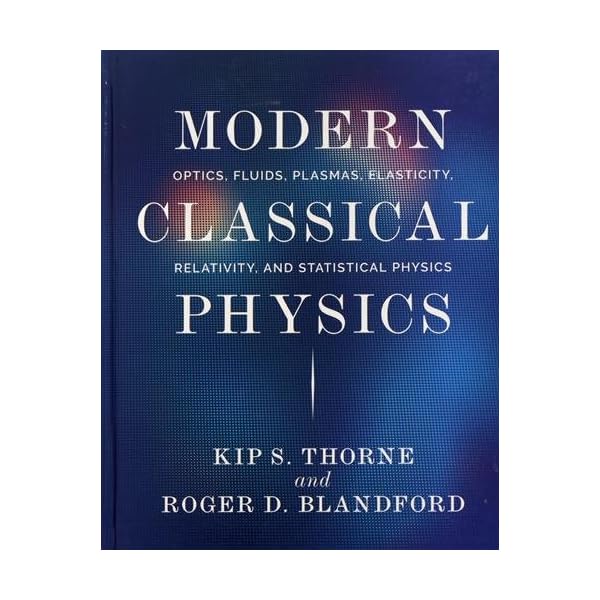
This first-year, graduate-level text and reference book covers the fundamental concepts and twenty-first-century applications of six major areas of classical physics that every masters- or PhD-level physicist should be exposed to, but often isn't: statistical physics, optics (waves of all sorts), elastodynamics, fluid mechanics, plasma physics, and special and general relativity and cosmology. "Remarkable for its scope and authority, this text offers a new vision of the 'theoretical minimum' of classical physics that all physicists should know, a vision that I hope will revitalize the curricula of many physics departments. "Comprehensive, concise, and coherent, this is a marvelous summary of the essence of classical physics, somewhat reminiscent of the classic texts of Landau and Lifshitz, and an essential part of any physicist's toolkit. Classical physics is not 'old' physics; it contains many of the most interesting challenges to our understanding of nature and it stands (as in this book) in consistent juxtaposition with quantum physics.
Reviews
Find Best Price at Amazon"Sold as a first-year graduate course in Physics, anyone who has browsed through it, would discover as I did, that this is certainly true if the graduate course in question is one of the caliber of a Cal Tech, Princeton or Stanford University. As a dilettante, and a Physicist wanna-be, I only wanted to get right to the sexy stuff, Relativity, Quantum Mechanics and Cosmology, but first Kip had to give us a little “Roo-Roo,” called optics, fluids, plasmas, statistical physics and elasticity. Indeed, only as an afterthought, does it all make complete sense, because at various points in my physics life, I too have had to grapple with each of these as a side issue while pursuing other topics. It helps too if you have been over this material before, in particular, the geometric paradigm, because prior knowledge will kick-in at the right time. Statistical Physics, Optics and Fluids, okay? But I will be the first to admit that even after reviewing every U-Tube lecture on Einstein’s field equations, and going over Richard Feynman’s two-volume “Lectures in Physics” for the third or fourth time, these authors’ treatment of the Field Equations were still scary."
"136 Applications of Classical Physics) at Caltech 33 years ago from Kip Thorne (I also had Roger Blandford as a professor for high energy astrophysics) - they are both top notch physicists and teachers as well."
"This volume is by no means a tote-around textbook, but rather an in-depth encyclopedic reference... And beware: it is massive enough to generate gravity waves easily detectable by LIGO..."
"What's very slightly smaller than a breadbox, weighs about as much as one of those armored Chevy Suburbans favored by the Secret Service, and packed with most known information about relativity, optics, statistical mechanics, fluid and plasma dynamics, and elasticity?"
"A bit of an odd book."
"For more, read the Princeton University Press Blog, which includes an interview with 2017 Nobel Prize Winner. Kip Thorne and Roger Blandford."
Best Molecular Physics

Chemistry is presented visually through multi-level images–macroscopic, molecular, and symbolic representations–helping students see the connections between the world they see around them (macroscopic), the atoms and molecules that compose the world (molecular), and the formulas they write down on paper (symbolic). Nivaldo Tro is Professor of Chemistry at Westmont College in Santa Barbara, California, where he has been a faculty member since 1990.
Reviews
Find Best Price at Amazon"An unfamiliar student may not be able to read this text and teach themselves - and perhaps Prof. Tro has overthought the material and made assumptions on a newbie's analytical understanding of the text - but from the first two chapters any new student could teach themselves chemistry without a professor guiding them."
"This is a used rental book, but the quality is okay isn’t the greatest."
"This is a comprehensive intro to chemistry."
"Brand new, great book."
"Fast Shipping."
"Fantastic deal!"
"I love saving money by renting books."
"I have just bought this brand new 3rd edition and compared it with my 1st edition."
Best Relativity Physics
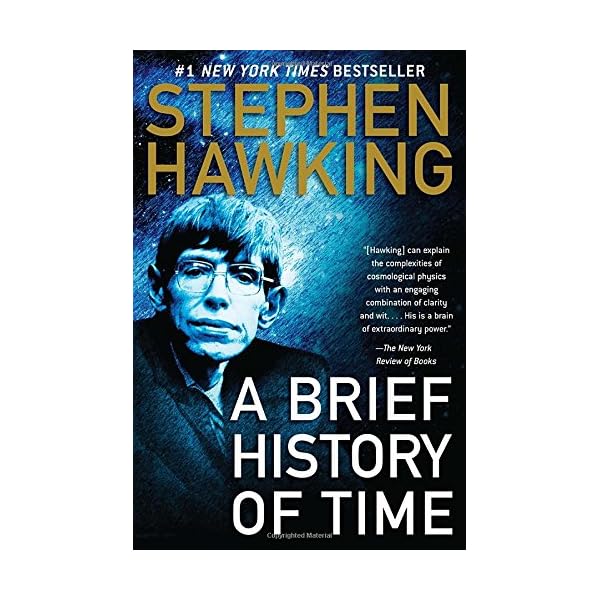
A landmark volume in science writing by one of the great minds of our time, Stephen Hawking’s book explores such profound questions as: How did the universe begin—and what made its start possible? We journey into Hawking’s universe while marvelling at his mind.”— The Sunday Times (London). “Masterful.”— The Wall Street Journal “Charming and lucid . Mr. Hawking clearly possesses a natural teacher’s gifts—easy, good-natured humor and an ability to illustrate highly complex propositions with analogies plucked from daily life.”— The New York Times “Even as he sits helpless in his wheelchair, his mind seems to soar ever more brilliantly across the vastness of space and time to unlock the secrets of the universe.”— Time.
Reviews
Find Best Price at Amazon"Excellent read, this was my first Hawking book and now I've gotten 2 more."
"Lucid, logical and even witty at times."
"Moreover, Professor Hawking explains a concise and coherent treatise on the subject of cosmology."
"It was hard for me because I could not understand the theories."
"It was an excellent presentation of some very extraordinary and complex topics made in a understandable way."
"Stephen Hawking is truly one of the most intelligent, cogent, readable scientists ever born."
"It is a study of the beginning of the universe and goes into the scientific background of chemical makeup of matter and how they evolved from the Big Bang and how it might end withe the Big Crunch."
"I'm not qualified to make any judgement."
Best Solid-State Physics

Full-color photos on flash cards present close-ups of a model demonstrating 500 American Sign Language (ASL) signs. Geoffrey S. Poor is Professor of ASL at the National Technical Institute for the Deaf, Rochester Institute of Technology, Rochester, NY.
Reviews
Find Best Price at Amazon"Flash cards are handy and can be taken on the go."
"This has been a great tool for learning ASL for our family!"
"I love everything virtual.. wish these were online and not actual physical cards."
"My granddaughter is teaching herself how to sign."
"The flash cards for sign language have been a big factor in my daughter. Learning sign language."
"Very useful, but sometimes signs are different than what we do in my area of the United States."
"I'm happy with this purchase."
"Much better than the animated or draw sign language note cards."
Best Mathematical Physics
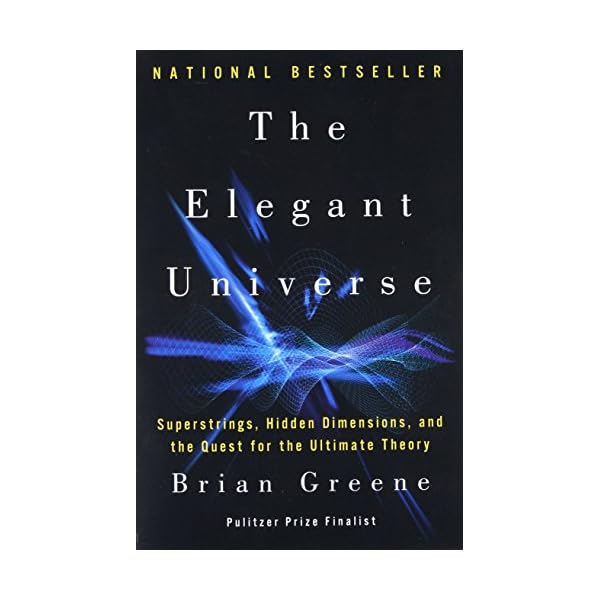
The Elegant Universe makes some of the most sophisticated concepts ever contemplated accessible and thoroughly entertaining, bringing us closer than ever to understanding how the universe works. “Sets a standard that will be hard to beat.”. - George Johnson, The New York Times Book Review. “Compulsively readable.
Reviews
Find Best Price at Amazon"I'm writing this review before finishing the book since I'm afraid at my pace, by the time I'm done, the theories, and these are theories only, discussed may have changed."
"I haven't read too much so far, but I will honestly say I love the history of science in this book and the reflections put forth inside, by different scientists Brian Greene includes to to get to his insights also."
"String theory may by capable of merging quantum mechanics with classical physics, and that simple idea demands respect."
"Il gives an extensive overview of the various theories that have emerged in the last century to describe the motions of the planetes and of the basic particles: from deep space to subatomic scale."
"Gives accurate explanation that could be in any scientific book, no pre-knowledge in this matter is needed even though I found having pre-knowledge of Newtonian rules to be helpful."
"The author is able to present science concepts with good everyday examples and that's why this book is not boring or confusing to read."
"Mr. Greene does an incredible job breaking down these un-heard of theories and facts of the universe to a understandable level."
Best Applied Physics
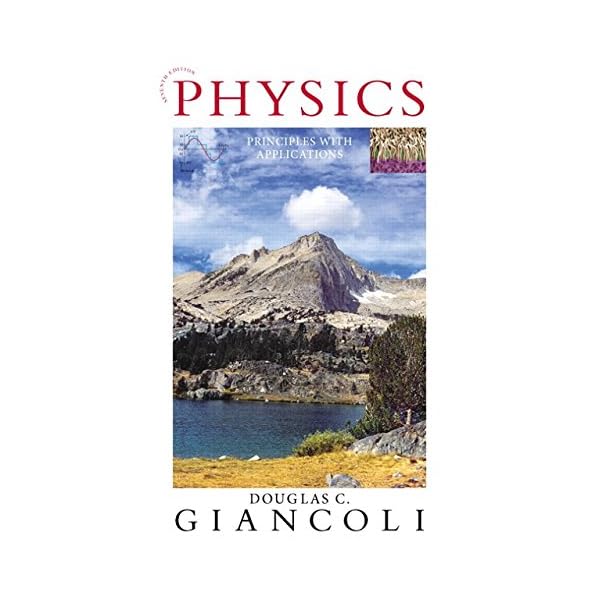
Using concrete observations and experiences you can relate to, the text features an approach that reflects how science is actually practiced: it starts with the specifics, then moves to the great generalizations and the more formal aspects of a topic to show you why we believe what we believe. Douglas C. Giancoli obtained his BA in physics (summa cum laude) from UC Berkeley, his MS in physics at MIT, and his PhD in elementary particle physics back at the UC Berkeley.
Reviews
Find Best Price at Amazon"Towards the end of chapters they often have real world application examples. There are many problems that get systematically more difficult and are rated by difficulty so that it is easy to find beginner, intermediate and advanced problems. Solutions are provided for the odd numbered problems. I find that I frequently turn to Giancoli for better problems and clearer examples to show the students. I don't find myself on guard for the next mistake or poor explanation or missing link in the thought chain. I find it has holes in the progression of the topic."
"The perfect physics book, thank you!"
"(although it just might be because I hate algebra's long methods as opposed to easy calc) Idk, but this saved me on every exam."
"The book itself was a decent read, with a few clear examples and a few not so clear examples."
"At the begining of this book it would be wonderful to have an introduction to the mathamatical procedures many students in college taking this class have had a summer or more away from the math required i am a A- student in advanced college alg & trig and the concepts are hard to grasp."
"When I received the book, the first thing I noticed was the water damage."
Best Physics of Mechanics
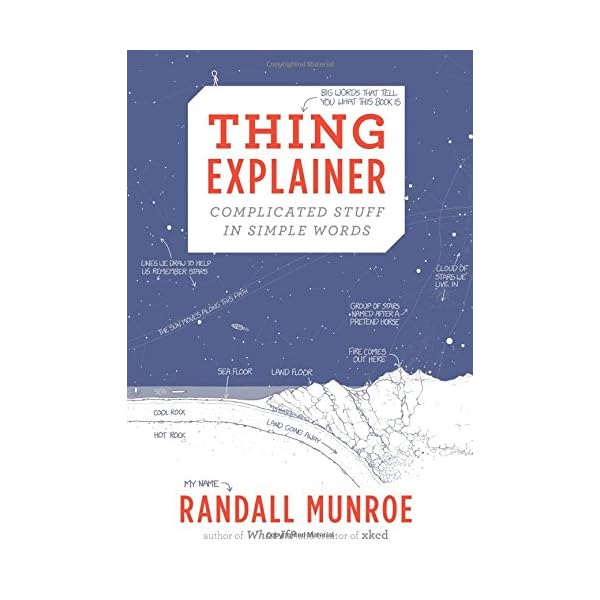
In Thing Explainer: Complicated Stuff in Simple Words, things are explained in the style of Up Goer Five, using only drawings and a vocabulary of the 1,000 (or "ten hundred") most common words.
Reviews
Find Best Price at Amazon"In doing so, it makes you consider when and why it's actually important to use a special name for some things, and think harder about what your words are really telling people. But I sometimes ask my students to try explaining complicated stuff using only simple words, because when you do that, you find out whether you really understand it. So, this book shows us a way to pay special attention to how our own thinking bag works."
"...because the details of the diagrams do not translate well to the smaller Kindle."
"The thing about this book is that it only uses the ten hundred most used words by people to tell you about things that are hard to understand."
"Thing Explainer writes without expectation of understanding, prior knowledge of language, or any prior knowledge; it is one of the closest things to a window into someones thoughts. I hope to clarify for many potential buyers that saw the early "Up Goes Five": this book is more focused on explaining things in paragraphs rather than the pure labelling style of that early prototype. This book is great for me and my family to make connections between what we already know and the book, but I believe it will also be great for kids to easily learn new things, and get a grasp of complex ideas. A Thought: I'd love to see this style of writing carried across to genres beyond science, because I think it has the potential to make generally interesting yet charm-less writing far more fun; history books, biopics, even short stories."
"Intelligent and quirky, this book is everything you want for a conversation starter or actually to explain something technical in an amusing way."
"Pretty funny, pretty cool, but also written in such simple language that at times it's actually harder to read than you'd think!"
"Complicated concepts explained only using the 1,000 most commonly used words in the American English language."
Best Physics of Light
Dr Isaac Asimov, famed science fiction writer and science popularizer, presents an introduction to the complexities of modern physics.
Reviews
Find Best Price at Amazon"My husband loves Asimov's books."
"Excellent collection of Asimov's work!"
"This book does just that."
"Isaac Asimov makes a previously complicated subject for me understandable."
"Great deal on an awesome book."
Best Physics of Gravity
The book teaches students to: Grasp the laws of physics in flat and curved spacetime Predict orders of magnitude Calculate using the principal tools of modern geometry Understand Einstein's geometric framework for physics Explore applications, including neutron stars, Schwarzschild and Kerr black holes, gravitational collapse, gravitational waves, cosmology, and so much more. " Gravitation has been a very influential book in the field, and it gives a remarkably thorough treatment of what's relevant in general relativity today."
Reviews
Find Best Price at Amazon"Its a classic and the digital version is as easy to read as the paper version and doesn't weight 6 pounds!"
"Probably the best physics book I have ever seen."
"This is what you must refer to in order to understand the the theory and the issues."
"The best book for a serious introduction to general relativity and gravitation - after trying many other."
"If you are not yet a master, study this book (MTW) in pieces while simultaneously studying the following works: Electrodynamics by Melvin Schwartz, Classical Theory of Fields by Landau & Lifshitz, An Elementary Primer for Gauge Theory by Moriyasu, and especially the three paperbacks containing Einstein's papers (Relativity by Einstein himself, The Meaning of Relativity published by Princeton U. Don't expect to learn quickly; despite a typical university program of study, 2-3 years of this is not enough to truly get it; additionally, one needs large breaks in between to digest and mull over the material. Excellent companions to the subject are: The Variational Principles of Mechanics by Lanczos (another treasure), Emmy Noether's Wonderful Theorem by Neuenschwandwer, Geometry & Light by Leonhardt (the latter 2 being simple narrative approaches) and the truly legendary Mechanics by Landau & Lifshitz. Anyone who attempts to understand this subject without studying multiple texts over multiple years is committing the worst kind of folly: mental laziness**."
"In summary, for a prospective purchaser of this monumental classic, this new 2017 Princeton University Press edition is the runaway top choice for quality AND price."
"So one can see the physical theory, the Einstein notation and the modern manifold presentation all connected, and all describing the same thing."
Best Physics of Entropy
From the celebrated author of the best-selling Physics for Future Presidents comes “a provocative, strongly argued book on the fundamental nature of time” (Lee Smolin). Some physicists have given up trying to understand, and call the flow of time an illusion, but the eminent experimentalist physicist Richard A. Muller protests. With his usual clarity and wit, he proceeds from solidly established principles―each a fascinating story in its own right―but when he gets to the meaning of the flow of time and now, he forges a new path. Richard Muller thinks it can, making his case in this clear, evocative, and wide-reaching investigation of how nature may generate the flow of time. “The strength of this book lies in Muller’s experience as a lecturer and teacher, which has enabled him to describe and explain difficult concepts with simplicity.… [ Now ] provides a concise master class in understanding the essentials of physics.”. - Science.
Reviews
Find Best Price at Amazon"The main goal of the book is to provide an overview of a new theory of the generation of time that Muller has proposed. The rest of the book is devoted to building up to the theory and then indulging rather superficially in philosophical concepts that don't really seem to have much of a connection to the main thesis. But as he says, teacups can also be built up, and even this event - which involves a decrease and not increase in entropy - is correlated with an increase in time. Overall I think this book is valuable and at times even highly provocative for its presentation of the uncertain connection between entropy and the 'arrow of time' and for its novel idea of the creation of new time."
"I find it ironic that the naturalist is more willing to rely on intuition and suggestion, while the anti-physicalist is rigorous about measurement and quantities. These latter points concentrate on what I consider the easy part; how non-physical forces could affect the physical universe; not the hard part; what the non-physical forces are). But if there is structure to the non-physical forces, like consciousness and free will, then I think few people would have difficulty with the idea that they affect the physical world through manipulating quantum effects that appear random in experiments. I have a problem with conceptualizing a non-physical computer capable of not only choosing actions, but of manipulating wave function collapses in order to affect atoms in molecules in neurons in a brain with a predictable macro result, like a person pulling a trigger or not. Nevertheless, until consciousness and free will (or their illusions) are explained, there is room for antiphysicalists. Carroll argues that the things Muller wants to preserve, like virtue and beauty, are emergent properties; real and important even though they are not reducible to physical measurement (but Carroll cannot save free will, which matters a lot to Muller, although he does not claim to know whether or not it exists). I do have one technical gripe. We have no reason to believe that ordinary mathematics contains physically important non-provable truths, or even if it does, that we can't easily get by with two or a few different mathematical schemes. For example, you can demonstrate physically that if you have two identical squares made up of uniform square tiles, and you try to arrange the tiles into one large square, you will always have at least one tile left over, or be at least one tile short. I don't see how mathematical statements with no physical referents are any different from other consistent arbitrary rules made up by people."
Best Physics of Acoustics & Sound
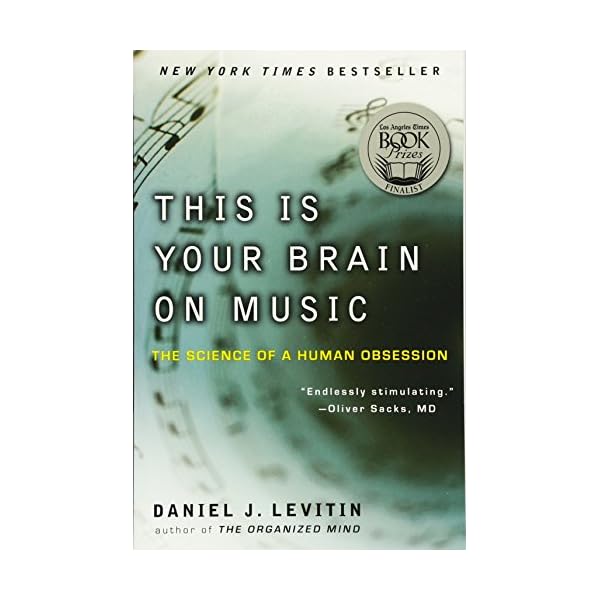
• How composers produce some of the most pleasurable effects of listening to music by exploiting the way our brains make sense of the world. • Why we are so emotionally attached to the music we listened to as teenagers, whether it was Fleetwood Mac, U2, or Dr. Dre. • That practice, rather than talent, is the driving force behind musical expertise. • How those insidious little jingles (called earworms) get stuck in our head. In this textbook for those who don't like textbooks, he discusses neurobiology, neuropsychology, cognitive psychology, empirical philosophy, Gestalt psychology, memory theory, categorization theory, neurochemistry, and exemplar theory in relation to music theory and history in a manner that will draw in teens.
Reviews
Find Best Price at Amazon"Found it interesting and informative, even for a non-musician like myself."
"This book taught me alot of the fundamentals that I knew, but didn't understand."
"It clearly explains the basics, and goes deeper into our neurological basis for music."
"Fantastic!"
"The first few chapters can be tough to follow if you are not familiar with most of the terms, but the book become more interesting as you read on."
"Incredible book - highly recommended!"
"I was very intrigued to not only learn this information but to pass it on to others."
"This is a simple book on the basics of music."
Best Waves & Wave Mechanics
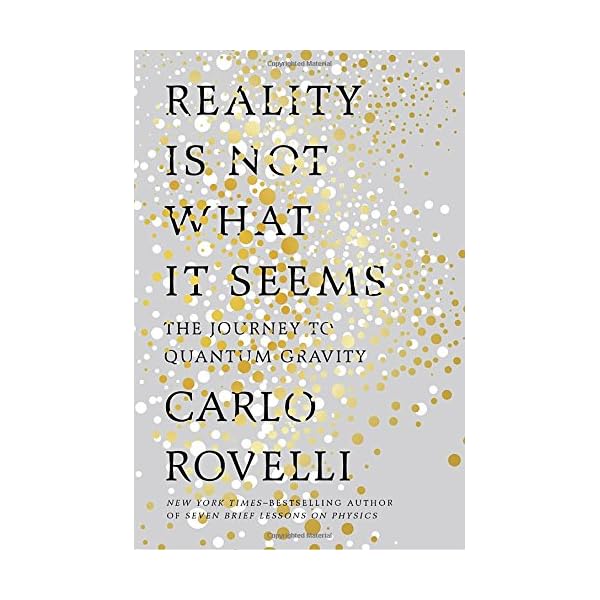
Do time and space exist? And what exactly is reality? It's a pleasure to read, full of wonderful analogies and imagery and, last but not least, a celebration of the human spirit.” —NPR Cosmos & Culture “If your desire to be awestruck by the universe we inhabit needs refreshing, theoretical physicist Carlo Rovelli…is up to the task.” — Elle. “With its warm, enthusiastic language and tone, [ Seven Brief Lessons on Physics ] is also deeply humanistic in approach, using words like elegant and beauty about a subject…that can seem impenetrably dense and abstract… Reality Is Not What It Seems takes much the same approach.” — New York Magazine. “Rovelli’s lyrical language, clarity of thought, and passion for science and its history make the title a pleasure to read (albeit slowly), and his diagrams and footnotes will allow readers to understand the material better and tackle a more expert level of insight.” —Booklist. “Science buffs will admire Rovelli's lucid writing…Cutting-edge theoretical physics for a popular audience that obeys the rules (little math, plenty of drawings), but it's not for the faint of heart.”— Kirkus Reviews.
Reviews
Find Best Price at Amazon"Rovelli's book is a game changer The title of my review refers to the shining of light in dark places because that's how I felt when I read it. Concepts and theories that I'd struggled with through many of those previous books suddenly made sense."
"Review of: “REALITY IS NOT WHAT IT SEEMS” by Carlo Rovelli. For those who have an even casual interest in modern physics or “science” this is a truly remarkable book. Rovelli is able to take highly complex problems and express them in a way which can make them accessible to even those who think that mathematics is simply something you use to figure out how much change you should get at the supermarket or doing the highly difficult calculation of how much to tip on a restaurant bill. As most readers are aware Einstein’s theories of both general and special relativity are remarkably accurate and have passed every test to which they have been subjected as long as they apply to very large things. Quantum mechanics, the strange physics of the very small, is also exceedingly accurate in its predictions as long as it stays within its “range.” However these two great theories fail miserably when combined. Now, unfortunately, I start thinking; how many half ways are there from the point I have reached to that elusive bathroom? I had until recently mistakenly believed that the concept of space time was an invention of Einstein. The rational for this is highly complex but if this postulate had a bearing on reality could time itself actually be quantized. Thus we have removed from the equations of physics the two things that have always been considered infinite and make them finite. I doubt this will change anything in my life or yours except that I sleep better since I no longer have to worry about not being able to get to the bathroom the next morning."
"Carlo Rovelli continues the tradition from his earlier book, "Seven Brief Lessons on Physics" of combining sparkling descriptions of physical phenomena with a sensitive understanding for the form of physics and the greatness of its practitioners. As in his previous book, Rovelli has elegant descriptions of the two great pillars of physics: quantum mechanics and general relativity. This sets up the book for the second part, which is a theory of quantum gravity called loop quantum gravity. After explaining how quantum mechanics and general relativity disagree with each other in situations where it matters, Rovelli leads us through the main concepts of loop quantum gravity. According to Rovelli, the finiteness of this division enables the theory of loop quantum gravity to escape some of the ugly infinite solutions that results when one tries to combine the mathematics of standard quantum mechanics with that of general relativity. I also find it interesting that string theory which is loop quantum gravity's main rival gets little more than a paragraph, so it's still not clear why one would clearly prefer loop quantum gravity over string theory."
Best Quantum Theory
Timeless and collectible, the lectures are essential reading, not just for students of physics but for anyone seeking an introduction to the field from the inimitable Feynman. Richard P. Feynman was Richard Chace Tolman Professor of Theoretical Physics at the California Institute of Technology.
Reviews
Find Best Price at Amazon"Here is my assessment of the quality of printing of the new Millennium edition putting is side by side with the 1966 edition. I love FLP but the printing quality of the Millennium edition does leave a bad taste in mouth. Below is the set this review is for. The Feynman Lectures on Physics, boxed set: The New Millennium Edition. The new edition can be fully read online legally for free. www dot feynmanlectures dot info. The errata for all editions can be found in the same website above. Below are the better printed edition (use errata from above). The Feynman Lectures on Physics: Commemorative Issue, Three Volume Set. The Feynman Lectures on Physics including Feynman's Tips on Physics: The Definitive and Extended Edition. The Feynman Lectures on Physics, Three Volume Set. The Feynman Lectures on Physics (3 Volume Set) (Set v). The Feynman Lectures on Physics (Three Volume Set). Basically any edition other than the Millennium hardcover or paperback edition should be good used with the errata posted above."
"Purchased in November 1998 and I have not found a better physics audio."
"Perfect gift set."
"It is really a rare thing to have upper division/grad level physics summerized in a beautiful way as a handy reference/refresher."
"This is from one of the stars in Physics and he lectures in High school and BS language."
"The greatest physics book ever."
"A Classic."
Best Chaos Theory
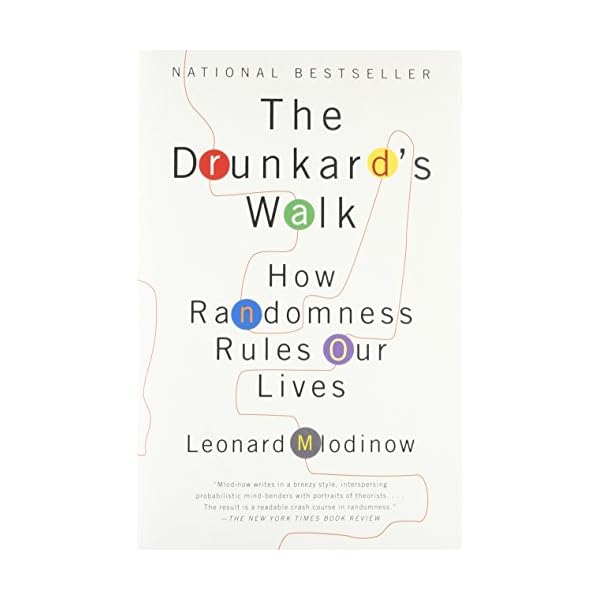
With the born storyteller's command of narrative and imaginative approach, Leonard Mlodinow vividly demonstrates how our lives are profoundly informed by chance and randomness and how everything from wine ratings and corporate success to school grades and political polls are less reliable than we believe. Mlodinow, a visiting lecturer at Caltech and coauthor with Stephen Hawking of A Briefer History of Time, leads readers on a walk through the hills and valleys of randomness and how it directs our lives more than we realize.
Reviews
Find Best Price at Amazon"Technical people will find this book mildly boring, but I doubt they won't find some interesting jewels in it. Mlodinow's biggest merit is explaining a very complex concept to anyone interested in spending some time to reflect on it: The fact that the causality we find or want to find in our lives seldom exists, or that as humans we tend to attribute to our actions the results we see."
"This is a fantastic book that I highly recommend to everybody."
"Does a good job helping the reader to understand the nature of randomness and how it affects many things in everyday life."
"Mlodinow provides lots of different examples from Let's Make a Deal to stock trading to cancer clusters to illustrate concepts many deem too complicated to think about relative to every day events."
"Telling a well-read and highly numerate friend that I was going to read Nate Silver's "The Signal and the Noise," he told me to get this book instead."
"This book does an excellent job of introducing us to randomness."
"This book gives a history of how we humans have gradually advanced from assuming that there is no pattern to life events and that god must have control of what happens, to the point that we now know that many events can be predicted within reason."
"Many examples are given to clarify the concepts, which together with the author's witty style, make the book an interesting read."
Best System Theory
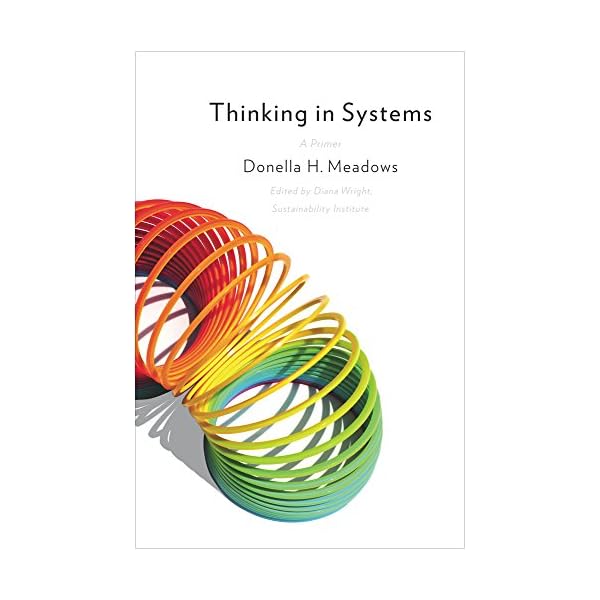
In the years following her role as the lead author of the international bestseller, Limits to Growth ―the first book to show the consequences of unchecked growth on a finite planet― Donella Meadows remained a pioneer of environmental and social analysis until her untimely death in 2001. Just before her death, scientist, farmer and leading environmentalist Meadows (1941-2001) completed an updated, 30th anniversary edition of her influential 1972 environmental call to action, Limits to Growth , as well as a draft of this book, in which she explains the methodology-systems analysis-she used in her ground-breaking work, and how it can be implemented for large-scale and individual problem solving. An invaluable companion piece to Limits to Growth , this is also a useful standalone overview of systems-based problem solving, "a simple book about a complex world" graced by the wisdom of a profound thinker committed to "shaping a better future. "Dana Meadows' exposition in this book exhibits a degree of clarity and simplicity that can only be attained by one who profoundly and honestly understands the subject at hand--in this case systems modeling. This is modestly called a primer, and indeed it is, but unlike most books with that title, this one quickly takes one from the elementary into deep systems thinking about issues as critical today as they were when Dana wrote these words. As the book moves from the 'mechanics' of systems dynamics to Dana's more philosophical perspective, we are treated to her inherent belief in human values that consider the good of all, and how much more effective considering the needs of others is likely to be in solving larger, complex problems. The universe and our society may be very complex and operate in counterintuitive, non-liner fashion, but following the insights of this book and applying them will provide for far more effective solutions to the challenges of a 7 billion person planet than current incremental, linear responses by governments, corporations and individuals." For her systems thinking included the expected things like recognizing patterns, connections, leverage points, feedback loops and also the human qualities of judgment, foresight, and kindness. To live sustainably on our planet, we must learn to understand human-environment interactions as complex systems marked by the impact of human actions, the prominence of nonlinear change, the importance of initial conditions, and the significance of emergent properties. "An inspiring sequel to Dana Meadows' lifetime of seminal contributions to systems thinking, this highly accessible book should be read by everyone concerned with the world's future and how we can make it as good as it possibly can be."
Reviews
Find Best Price at Amazon"I really enjoyed the relationships the author tied and weaved into the chapters and as she stated in the beginning, hopefully it changes a person's mind to see how many systems are in your daily life."
"The highly complex subject is covered in such a lucid manner, easily accessible to the lay person."
"Even though I knew a good deal about systems before reading this, I found “Thinking in Systems” a refreshing and enlightening read."
"I expected something more specific, more scientific, some reasoning tools for dealing with systems."
"This work provides an enlightening introduction to a creative and useful way of looking at the world."
"Not the normal textbook written by a giant corporation looking to update it every year and steal your money."
"High level view of systems."
"This book was recommended as the pioneer of System Thinking by a Sociology course I watched on Coursea. I thought this book would be more intuitive with good examples that we would be able to apply in the real world."
Best Electromagnetism
Choose the proper tools and set up your workbench Ensure personal safety and use proper eye and ear protection Understand how electrical components work and why they fail Perform preliminary diagnoses based on symptoms Use test equipment, including digital multimeters, ESR meters, frequency counters, and oscilloscopes Interpret block, schematic, and pictorial diagrams Disassemble products and identify sections Analyze circuits, locate faults, and replace dead parts Re-establish connections and reassemble devices. His involvement in ham radio led to his writing career, first with articles for ham radio magazines, and then with general technology features in Electronic Engineering Times, Desktop Engineering, IEEE Spectrum, and The Envisioneering Newsletter. Along with building and repairing electronic circuitry, he enjoys table tennis, restoring antique mopeds, ice skating, bicycling, and banging out a jazz tune on his harpsichord.
Reviews
Find Best Price at Amazon"I NEVER thought of circuits this way and the author was able to explain that the active elements are the players in the story and everything else is a supporting cast. Bottom line, this is the book that I couldn't put down...and it is about some of the driest material you can find. I cannot recommend this book enough and I would pay triple just for the section where the author walks through a couple sample circuits, describes each component's function, and what would happen if that component failed."
"So far, there are many helpful tips and information to help me further the hobby along."
"Well written and organized."
"Read it slowly and use it as a reference."
"B&W pictures of some of the older devices are understandable but most of the pictures could've easily been replaced with new coloured ones."
"Good book that gives some insight to those new to troubleshooting."
"the Item Excellent and the seller is good thank you."
"Informative!"