
Best Popular Psychology Reference
This new edition of the American Psychiatric Association s Diagnostic and Statistical Manual of Mental Disorders (DSM-5), used by clinicians and researchers to diagnose and classify mental disorders, is the product of more than 10 years of effort by hundreds of international experts in all aspects of mental health.
Reviews
Find Best Price at Amazon"I’m not reviewing the book."
"The DSM 5 is a required reading for my mental health and psychopathology."
"The only thing wrong with mine was that the cultural formulation section was upside down!"
"Is perpetually going through changes as we learn more and more about mental disorders."
"It's the DSM."
"This manual will be very helpful for many years to come."
"Yes so happy I was able to get this book really needed it for my abnormal behavior class I'm taking 🙏🏾."
This new edition of the American Psychiatric Association's Diagnostic and Statistical Manual of Mental Disorders (DSM-5), used by clinicians and researchers to diagnose and classify mental disorders, is the product of more than 10 years of effort by hundreds of international experts in all aspects of mental health.
Reviews
Find Best Price at Amazon"I’m not reviewing the book."
"The DSM 5 is a required reading for my mental health and psychopathology."
"The only thing wrong with mine was that the cultural formulation section was upside down!"
"Is perpetually going through changes as we learn more and more about mental disorders."
"It's the DSM."
"This manual will be very helpful for many years to come."
"Yes so happy I was able to get this book really needed it for my abnormal behavior class I'm taking 🙏🏾."
When you need advice on how to present information, including text, data, and graphics, for publication in any type of format--such as college and university papers, professional journals, presentations for colleagues, and online publication--you will find the advice you're looking for in the "Publication Manual."
Reviews
Find Best Price at Amazon"Though it should be noted they need to update it to discuss multiple mediums like songs, albums, movies on disc or blu-ray, videos on websites like Vimeo and DailyMotion."
"I needed this for a doctoral class."
"I'm in nursing school so I can't imagine how helpful this would be for students in programs that require more papers."
"Who doesn't love APA formatting."
"Even allowed a download to be burned to CD. A new download should be allowed for previous purchasers, at least with a discount."
"I would suggest using this book!"
"The content is great but it looks like the printer was low on ink... at first I thought I got a counterfeit but I think it's just the way the book is printed."
"This book is a must for any student whose school requires APA Format 6th edition."
Best Medical Mental Illness
This new edition of the American Psychiatric Association's Diagnostic and Statistical Manual of Mental Disorders (DSM-5), used by clinicians and researchers to diagnose and classify mental disorders, is the product of more than 10 years of effort by hundreds of international experts in all aspects of mental health.
Reviews
Find Best Price at Amazon"I’m not reviewing the book."
"The DSM 5 is a required reading for my mental health and psychopathology."
"The only thing wrong with mine was that the cultural formulation section was upside down!"
"Is perpetually going through changes as we learn more and more about mental disorders."
"It's the DSM."
"This manual will be very helpful for many years to come."
"Yes so happy I was able to get this book really needed it for my abnormal behavior class I'm taking 🙏🏾."
Best Medicine
This new edition of the American Psychiatric Association's Diagnostic and Statistical Manual of Mental Disorders (DSM-5), used by clinicians and researchers to diagnose and classify mental disorders, is the product of more than 10 years of effort by hundreds of international experts in all aspects of mental health.
Reviews
Find Best Price at Amazon"I’m not reviewing the book."
"The DSM 5 is a required reading for my mental health and psychopathology."
"The only thing wrong with mine was that the cultural formulation section was upside down!"
"Is perpetually going through changes as we learn more and more about mental disorders."
"It's the DSM."
"This manual will be very helpful for many years to come."
"Yes so happy I was able to get this book really needed it for my abnormal behavior class I'm taking 🙏🏾."
Best Popular Psychology Research
The culmination of master psychiatrist Dr. Irvin D. Yalom’s more than thirty-five years in clinical practice, The Gift of Therapy is a remarkable and essential guidebook that illustrates through real case studies how patients and therapists alike can get the most out of therapy. •Create a new therapy for each patient.
Reviews
Find Best Price at Amazon"The first book I've read by the author, I now want to read the rest of his works."
"It is wonderful to have thirty years of expereince counseling and supporting clients in their therapy work and read thought-provoking and practical ideas that improve my practice."
"great read for both seasoned clinicians and newer ones as well."
"Very good book."
"An enjoyable read, somewhat difficult to digest as a student who prefers more structured and detailed information."
"For the therapist - beginning or seasoned, this is a great book full of shared experiences that one can add to their toolbox for working with clients."
"As a young soon-to-be clinician, this book is an absolute must."
Best Popular Psychology History
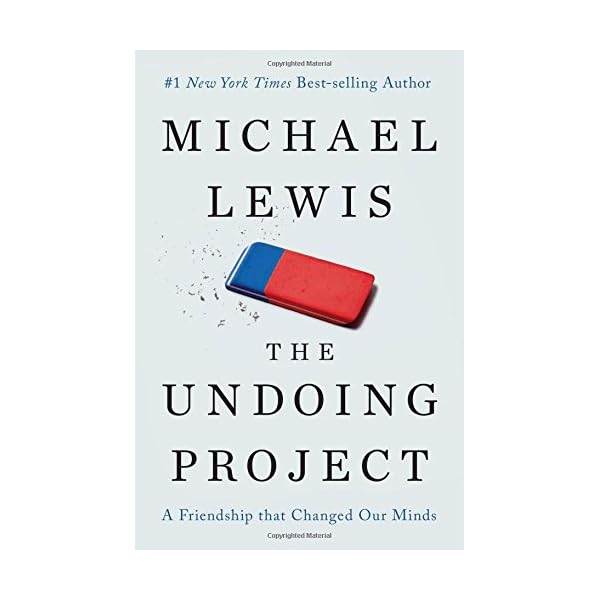
Forty years ago, Israeli psychologists Daniel Kahneman and Amos Tversky wrote a series of breathtakingly original studies undoing our assumptions about the decision-making process. Amos Tversky was a brilliant, self-confident warrior and extrovert, the center of rapt attention in any room; Kahneman, a fugitive from the Nazis in his childhood, was an introvert whose questing self-doubt was the seedbed of his ideas. “Lewis is the ideal teller of [Tversky and Kahneman’s] story… You see his protagonists in three dimensions―deeply likable, but also flawed, just like most of your friends and family.”. - David Leonhardt, New York Times Book Review. “Brilliant… Lewis has given us a spectacular account of two great men who faced up to uncertainty and the limits of human reason.”. - William Easterly, Wall Street Journal.
Reviews
Find Best Price at Amazon"Thanks to works like Psychonomics: The Scientific Conquest of the Human Mind, we know that the field of Behavioral Economics is a kind of wild west of the sciences, filled with speculation, outlaws, and not a little shenanigans. With his characteristic accessibility and knack for turning the complex into palatable pieces, Lewis presents the foundations of the science by crafting a story about its two visionary scholars, Daniel Kahneman and the late Amos Tversky. How they came together from similar backgrounds, approached life from different angles, agreed to set off on their intellectual journey together, and collaborated on some of the greatest psychological studies of the 20th century sets us up for a classic buddy story—an intellectual Butch Cassidy and the Sundance Kid if you will."
"With no doubt, I had great fun reading “The Undoing Project.”. I was introduced to the work of Tversky and Kahneman as a college sophomore in 1988 by my teacher, hydrologist Joseph Harrington, who was a great admirer of their ideas. So I swallowed whole “Thinking About Thinking” within a week of having read the Michael Lewis review on Bloomberg. Chapters 1 and 8 should not have made it into the book, they ought to have been relegated to the pages of Vanity Fair, where the author regularly provides fantastic material. Even the title of the book, much as it has its roots in the work of Tversky and Kahneman, does not do justice to their contribution."
"Michael Lewis successfully blends two biographies, an intellectual love story (there really is no other way to describe the Kahneman/Tversky partnership), astute sketches of the work they did (in heuristics and biases), and how the partnership had ripple effects in a myriad of areas (from economics to psychology, from medicine to the military, and beyond)."
"I started with having read "Thinking Fast and Slow" several years ago - and using ideas from the book in my Psychology class."
"Brilliant and very interesting mixture of the story of how psychology has become a paramount component of economics and of just about every other science, and of a unique friendship between two outstanding brains, further spiced by the explanation of the many fallacies we are subject to in our judgement and decisions, and not only us but the people we most trust to make them for us!"
Best Popular Psychology & Medicine
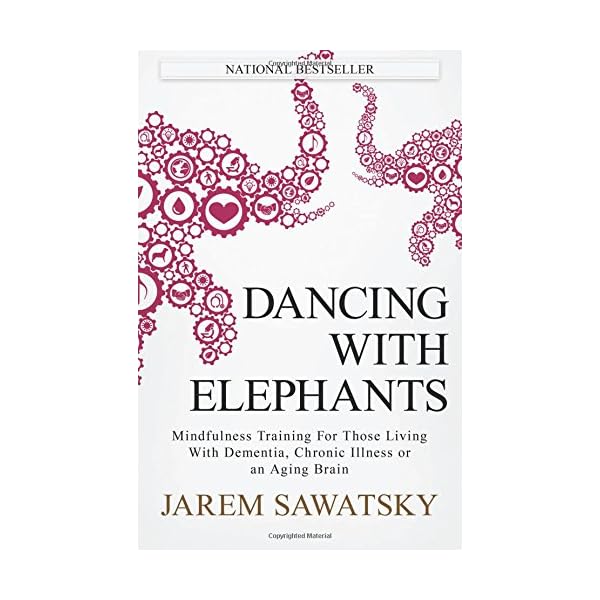
--Lana Philips "Sawatsky beautifully models a way to dance in the gale of full catastrophe, to celebrate life, to laugh with it and at himself." Simple practices to bring healing to your heart and life to your new outlook Humorous (and occasionally heart-wrenching) stories of Sawatsky's own journey Multiple ways to build confidence in yourself, even when you've been shaken to the core A new perspective to transform your pain and renew your spirit Practical tools to face your seemingly inescapable fears, and much, much more! Based on the popular blog of the same name, Dancing With Elephants includes insightful interviews with chronic disease experts Jon Kabat-Zinn, Lucy Kalanithi, and Patch Adams. --Jon Kabat-Zinn, national bestselling author of Full Catastrophe Living "...beautiful and inspiring book...full of humor and wisdom about the pain of loss in our life, by someone living with a debilitating disease." This inspiring story reminds us just how essential it is to bring lovingkindness into every step of life, no matter how difficult the path -Sharon Salzberg, New York Times bestselling author of. Real Happiness. ... forthright and inspiring... Peter V. Rabins , co-author of The 36-Hour Day When life seems to be falling apart, Jarem Sawatsky's interesting and entertaining book reminds us that laughter is what we need to not take ourselves too seriously.
Reviews
Find Best Price at Amazon"Since learning of the practice in the book, I've done it many times."
"Jarem interviewed Jon Kabat-Zinn, Patch Adams, Lucy Kalanthi (wife of Paul Kalanthi who wrote When Breath Becomes Air), Jean Paul Lederach, and Toni Bernhard about living with chronic illness. He comes from a Christian background, but is heavily influenced by the teachings of Thich Nhat Hanh. His story of living with Huntington's Disease as a family member (it is genetic) and after he received the diagnosis he had expected to get is not sad or sentimental in any way."
"Bought both hardback and digital copy of Dancing with Elephants, by Jarem Sawatsky, PhD; With my dementia symptoms, reading requires extra time and extra tools, so I have only completed the first six chapters."
"I have spoken very highly of this book to my support group and hope to see this become THE book to read for everyone who deals with chronic/terminal illness, whether personally or from the outside."
"Dancing with Elephants: Mindfulness Training For Those Living With Dementia, Chronic Illness or an Aging Brain (How to Die Smiling Book 1). By Jarem Sawatsky. WOW! (I’m told this is very normal at my age…but still…). I have read a few, more science-y books on Alzheimer’s and dementia. His humor and wit are woven all throughout this book in such a way that it never takes away from the seriousness of the topic and yet, you—the reader—are left with a smile on your face and hope in your heart. However, the other facet of this book is the fount of information just on aging in general. Though his background is in Christianity he also leans toward Buddhism and the teachings of Thich Nhat Hanh a Vietnamese monk. (While I personally do not follow Buddhism, and am a very conservative Christian—and all that entails—I am wise enough to know there are wiser men and women than I.). If I can find humor and joy, comfort and peace in all my circumstances, that’s what matters."
Best Popular Psychology Psychotherapy
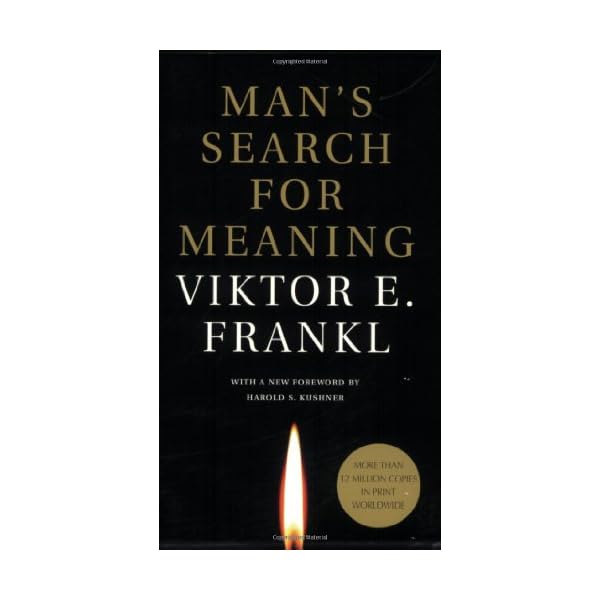
At the time of Frankl's death in 1997, Man's Search for Meaning had sold more than 10 million copies in twenty-four languages. Harold S. Kushner is rabbi emeritus at Temple Israel in Natick, Massachusetts, and the author of bestselling books including When Bad Things Happen to Good People, Living a Life That Matters, and When All You’ve Ever Wanted Isn’t Enough.
Reviews
Find Best Price at Amazon"Read this book, read this book."
"Those that had developed purpose and meaning to the harsh conditions got out of bed every morning to face another unbearable day."
"One of the best works you can take in."
"Life would have been easier if I had read this book sooner in life."
"A little twist of ideas as to why some people survive the worst and why others don't survive medium bad."
"The second part of the book is an analysis of logotherapy and a description of Frankl's studies on the subject."
"I am just now to the place he talks about how thinking of his wife and having mental conversations with her gave him strength to stay alive!"
"Part 1 was easier to read."
Best Popular Psychology Psychopharmacology
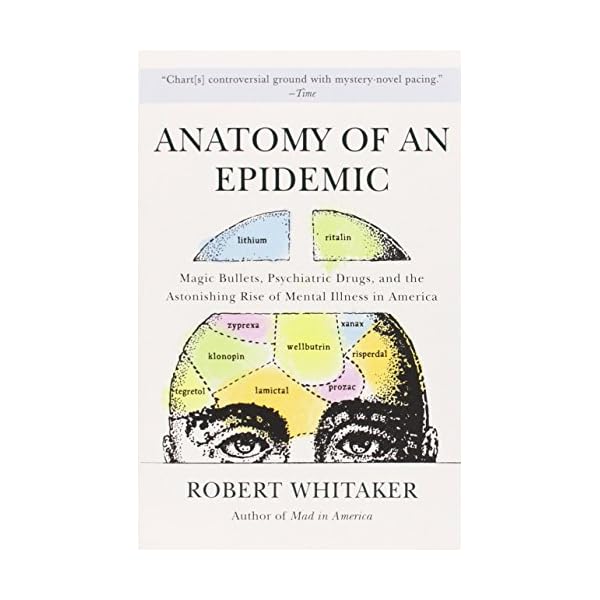
Now with bonus material, including a new foreword and afterword with updated research In this astonishing and startling book, award-winning science and history writer Robert Whitaker investigates a medical mystery: Why has the number of disabled mentally ill in the United States tripled over the past two decades? Every day, 1,100 adults and children are added to the government disability rolls because they have become newly disabled by mental illness, with this epidemic spreading most rapidly among our nation’s children. Or did they find that these medications, for some paradoxical reason, increase the likelihood that people will become chronically ill, less able to function well, more prone to physical illness? Our nation has been hit by an epidemic of disabling mental illness, and yet, as Anatomy of an Epidemic reveals, the medical blueprints for curbing that epidemic have already been drawn up. In Anatomy of an Epidemic investigative reporter Robert Whitaker cuts through flawed science, greed and outright lies to reveal that the drugs hailed as the cure for mental disorders instead worsen them over the long term. Whitaker tenderly interviews children and adults who bear witness to the ravages of mental illness, and testify to their newly found “aliveness” when freed from the prison of mind-numbing drugs.” —Daniel Dorman, M.D., Clinical Assistant Professor of Psychiatry, UCLA School of Medicine and author of Dante’s Cure: A Journey Out of Madness “This is the most alarming book I’ve read in years. Relying on medical evidence and historical documentation, Whitaker builds his case like a prosecuting attorney.” —Carl Elliott, M.D., Ph.D., Professor, Center for Bioethics, University of Minnesota and author of Better than Well: American Medicine Meets the American Dream “ Anatomy of an Epidemic investigates a profoundly troubling question: do psychiatric medications increase the likelihood that people taking them, far from being helped, are more likely to become chronically ill? Robert Whitaker is a reliable, sensible, and persuasive, guide to the paradoxes and complexities of what we know about mental illness, and what we might be able to do to lessen the suffering it brings.” —Jay Neugeboren, author of Imagining Robert and Transforming Madness “Every so often a book comes along that exposes a vast deceit.
Reviews
Find Best Price at Amazon"There's a bunch of reviews on here that say this book is invalid, but when you dig into their reasons, they are cherry picking data and using disproven research. But gradual withdrawal does work, and many people have gotten their lives back by learning how to use psych drugs appropriately as a tool instead of as the entire solution. This book cites like 400 studies, works with all the best patient advocates in the industry, and is the best science has to offer to explain both problems and solutions."
"Many of the harshest reviews of this book seem to be coming from those who currently depend on psychiatric medications, and find the author's conclusions heartless, given their own distress. I had been told by well-respected psychiatrists at two major research universities that the only way to prevent recurring depressive episodes was to be on medication for life. As I looked around at my many, many friends and family members on psychiatric medications, it seemed to me that most of them were still pretty substantially depressed a lot of the time. I understand how doctors came to use that analogy to reassure patients who were alarmed at the prospect of being on mind-altering drugs for long periods of time. I did a very slow, careful taper off of my psych drugs, over a period of months (this part is absolutely crucial). I have found daily aerobic exercise to be a far more reliable way of mitigating depression than my former medications, and research in this book shows this to be true for a majority of people as well. The "medical model" of psychiatry saved that branch of medicine from dying out, given our insurance-based healthcare system, and Robert Whitaker does a great job of exposing the collusion between the pharmaceutical companies and the American Psychiatric Association, with its frightening consequences. I found the section of the book describing the way research evidence was "rewritten" for medical school textbooks truly alarming. There's a lot at stake here for the psychiatric profession; it's not surprising that so many psychiatrists turn from this research with alarm and denial."
"I purchased this book as part of a personal project and, the further I get in it, the more interested I am."
"A must read for anyone considering taking or prescribing psychoactive medication."
"this is a book everyone who is on or about to go on any medications for mental health."
"Great book and highly recommended!"
"Not every claim in it - I my opinion is accurate - but enough are and enough important questions are raised that every doctor and every patient should be familiar with questions it raises."
Best Popular Psychology Personality Study
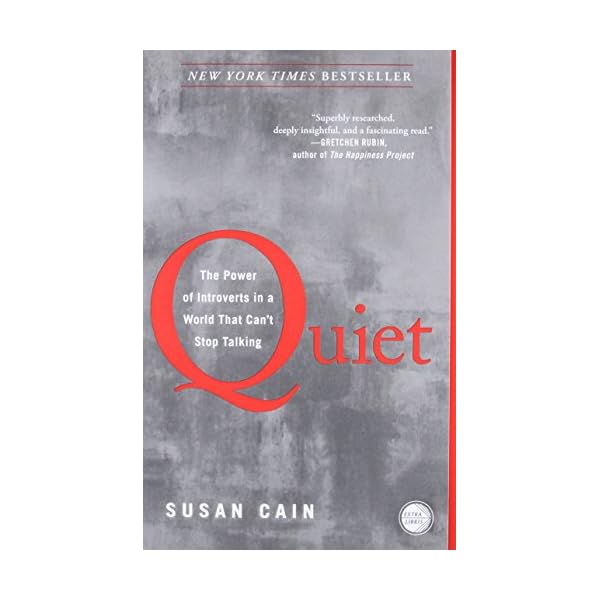
Passionately argued, superbly researched, and filled with indelible stories of real people, Quiet has the power to permanently change how we see introverts and, equally important, how they see themselves. NEW YORK TIMES BESTSELLER. NPR BESTSELLER. WASHINGTON POST. BESTSELLER. LOS ANGELES TIMES. BESTSELLER. USA TODAY. TOP 50 BESTSELLER. INDIEBOUND BESTSELLER. PUBLISHERS WEEKLY. BESTSELLER. Fast Company. ’s #1 Best Business book of 2012. INC Magazine’s. Best 2012 Books for Entrepreneurs. People. Magazine’s 10 Best Books of 2012. O, The Oprah Magazine. 10 Favorite Books of 2012. Christian Science Monitor. ’s Best Books of 2012. GoodReads Nonfiction Choice Award Winner. Audible’s #1 Non-Fiction book of 2012. Amazon’s Best Books of 2012. Barnes & Noble Best Books of 2012. Library Journal. ’s Best Books of 2012. Kirkus REVIEWS’. Best Books of 2012. Her diligence, research, and passion for this important topic has richly paid off.” —Publishers Weekly “This book is a pleasure to read and will make introverts and extroverts alike think twice about the best ways to be themselves and interact with differing personality types.” —Library Journal “An intelligent and often surprising look at what makes us who we are.” —Booklist “Charm and charisma may be one beau ideal, but backed by first-rate research and her usual savvy, Cain makes a convincing case for the benefits of reserve.” —Harper's Bazaar. “Those who value a quiet, reflective life will feel a burden lifting from their shoulders as they read Susan Cain's eloquent and well documented paean to introversion--and will no longer feel guilty or inferior for having made the better choice!” —MIHALY CSIKSZENTMIHALYI, author of Flow and Distinguished Professor of Psychology and Management, Claremont Graduate University “Superbly researched, deeply insightful, and a fascinating read, Quiet is an indispensable resource for anyone who wants to understand the gifts of the introverted half of the population.” —GRETCHEN RUBIN, author of The Happiness Project. Drawing on neuroscientific research and many case reports, Susan Cain explains the advantages and potentials of introversion and of being quiet in a noisy world.” —ANDREW WEIL, author of Healthy Aging and Spontaneous Happiness “Susan Cain has done a superb job of sifting through decades of complex research on introversion, extroversion, and sensitivity--this book will be a boon for the many highly sensitive people who are also introverts.” —ELAINE ARON, author of The Highly Sensitive Person.
Reviews
Find Best Price at Amazon"My entire life has been on hold since this started, I get home from work too exhausted to do anything except veg out for a couple hours and go to bed, and even weekends aren't much better. I learned that the job situation I'm currently in - the non-stop deadline demands, interruptions, never being able to work quietly or alone no matter how difficult a project was, phones ringing incessantly, people in my face all day long, etc. And as enlightening as it was to learn how many of the traits I've beat myself up for over the years are just a product of my introverted temperament (being highly sensitive, shutting down when subjected to stimulation overload, preferring to think a thing through before I speak - something I never get to do at work, as if it takes me more than 5 seconds to say something, I get interrupted and cut off), the most important thing I got from this book is that it's okay to be myself, it's okay to feel the way I do. I am not weak or a failure because I don't feel or behave like my extremely extroverted boss (who thrives in high-energy crisis mode, and is bored unless he's doing 10 things at once - and expects the rest of us to keep up). I also found the information on the history of the "rise of the Culture of Personality" completely fascinating, it really gave me a new insight as to just exactly how we 'grew' this tendency to value extroversion over introversion. I know I will meet resistance from my boss (I'd love for him to read this book, but unfortunately I know he won't), and I know I won't instantly fix everything in one day, and that I'll probably always need to be able to stretch myself a bit to do things that are not ideal for me ... but this book taught me that there are ways to make that work, too, if you understand and honor the need for recharging around such tasks, instead of trying to force yourself to do them 8 hours a day with no break. The wealth of information and insights in this book cannot be overstated - especially if you are an introverted type of person who has always felt there was something not quite right about you, or that you somehow needed to change to fit in or succeed. Thank you, Susan Cain, from the bottom of my heart (which is finally beating at a more normal speed because I'm not panicked about going to work for the first time in months)."
"As somebody who has been called at some point or another the gamut of terms associated with introversion, from "shy" (which I don't object) to "anti-social" (which I most certainly consider unfair), I found in Susan Cain's "Quiet," the validation and appreciation many introverts have been searching for. In "Quiet," Ms. Cain explains the rise of the Extrovert Ideal in the 1920s and how it is that today we associate talkative, risk-taking, and action-oriented people with intelligence, beauty, power and success. She interviews scientists who have conducted hundreds of studies to test different theories in an effort to determine how much of our temperament is a result of genetics and/or of our free will. For those still deciding on a career, the author reminds readers that research shows that introverts are not reward-seeking like extroverts, but rather motivated by the enjoyment they find in pursuing an activity; in other words, by being in what psychologist Mihaly Csikszentmihalyi calls the "flow"."
"Helped me understand a lot of tendencies in my life and in the lives of many others."
"As an introvert I found it very helpful, it explained who I am that the way I see the world and how I socialise is quite normal, not to judge myself against extroverts, that to limit my social contract is quite normal and that I can get overwhelmed by too much happening around me and that quiet time is important to my well-being."
"An engaging non-fiction book that doesn't just devolve into confirmation bias or a single note thesis."
"This book was not at all what I expected."
Best Popular Psychology Creativity & Genius
Passionately argued, superbly researched, and filled with indelible stories of real people, Quiet has the power to permanently change how we see introverts and, equally important, how they see themselves. NEW YORK TIMES BESTSELLER. NPR BESTSELLER. WASHINGTON POST. BESTSELLER. LOS ANGELES TIMES. BESTSELLER. USA TODAY. TOP 50 BESTSELLER. INDIEBOUND BESTSELLER. PUBLISHERS WEEKLY. BESTSELLER. Fast Company. ’s #1 Best Business book of 2012. INC Magazine’s. Best 2012 Books for Entrepreneurs. People. Magazine’s 10 Best Books of 2012. O, The Oprah Magazine. 10 Favorite Books of 2012. Christian Science Monitor. ’s Best Books of 2012. GoodReads Nonfiction Choice Award Winner. Audible’s #1 Non-Fiction book of 2012. Amazon’s Best Books of 2012. Barnes & Noble Best Books of 2012. Library Journal. ’s Best Books of 2012. Kirkus REVIEWS’. Best Books of 2012. Her diligence, research, and passion for this important topic has richly paid off.” —Publishers Weekly “This book is a pleasure to read and will make introverts and extroverts alike think twice about the best ways to be themselves and interact with differing personality types.” —Library Journal “An intelligent and often surprising look at what makes us who we are.” —Booklist “Charm and charisma may be one beau ideal, but backed by first-rate research and her usual savvy, Cain makes a convincing case for the benefits of reserve.” —Harper's Bazaar. “Those who value a quiet, reflective life will feel a burden lifting from their shoulders as they read Susan Cain's eloquent and well documented paean to introversion--and will no longer feel guilty or inferior for having made the better choice!” —MIHALY CSIKSZENTMIHALYI, author of Flow and Distinguished Professor of Psychology and Management, Claremont Graduate University “Superbly researched, deeply insightful, and a fascinating read, Quiet is an indispensable resource for anyone who wants to understand the gifts of the introverted half of the population.” —GRETCHEN RUBIN, author of The Happiness Project. Drawing on neuroscientific research and many case reports, Susan Cain explains the advantages and potentials of introversion and of being quiet in a noisy world.” —ANDREW WEIL, author of Healthy Aging and Spontaneous Happiness “Susan Cain has done a superb job of sifting through decades of complex research on introversion, extroversion, and sensitivity--this book will be a boon for the many highly sensitive people who are also introverts.” —ELAINE ARON, author of The Highly Sensitive Person.
Reviews
Find Best Price at Amazon"My entire life has been on hold since this started, I get home from work too exhausted to do anything except veg out for a couple hours and go to bed, and even weekends aren't much better. I learned that the job situation I'm currently in - the non-stop deadline demands, interruptions, never being able to work quietly or alone no matter how difficult a project was, phones ringing incessantly, people in my face all day long, etc. And as enlightening as it was to learn how many of the traits I've beat myself up for over the years are just a product of my introverted temperament (being highly sensitive, shutting down when subjected to stimulation overload, preferring to think a thing through before I speak - something I never get to do at work, as if it takes me more than 5 seconds to say something, I get interrupted and cut off), the most important thing I got from this book is that it's okay to be myself, it's okay to feel the way I do. I am not weak or a failure because I don't feel or behave like my extremely extroverted boss (who thrives in high-energy crisis mode, and is bored unless he's doing 10 things at once - and expects the rest of us to keep up). I also found the information on the history of the "rise of the Culture of Personality" completely fascinating, it really gave me a new insight as to just exactly how we 'grew' this tendency to value extroversion over introversion. I know I will meet resistance from my boss (I'd love for him to read this book, but unfortunately I know he won't), and I know I won't instantly fix everything in one day, and that I'll probably always need to be able to stretch myself a bit to do things that are not ideal for me ... but this book taught me that there are ways to make that work, too, if you understand and honor the need for recharging around such tasks, instead of trying to force yourself to do them 8 hours a day with no break. The wealth of information and insights in this book cannot be overstated - especially if you are an introverted type of person who has always felt there was something not quite right about you, or that you somehow needed to change to fit in or succeed. Thank you, Susan Cain, from the bottom of my heart (which is finally beating at a more normal speed because I'm not panicked about going to work for the first time in months)."
"As somebody who has been called at some point or another the gamut of terms associated with introversion, from "shy" (which I don't object) to "anti-social" (which I most certainly consider unfair), I found in Susan Cain's "Quiet," the validation and appreciation many introverts have been searching for. In "Quiet," Ms. Cain explains the rise of the Extrovert Ideal in the 1920s and how it is that today we associate talkative, risk-taking, and action-oriented people with intelligence, beauty, power and success. She interviews scientists who have conducted hundreds of studies to test different theories in an effort to determine how much of our temperament is a result of genetics and/or of our free will. For those still deciding on a career, the author reminds readers that research shows that introverts are not reward-seeking like extroverts, but rather motivated by the enjoyment they find in pursuing an activity; in other words, by being in what psychologist Mihaly Csikszentmihalyi calls the "flow"."
"As an introvert I found it very helpful, it explained who I am that the way I see the world and how I socialise is quite normal, not to judge myself against extroverts, that to limit my social contract is quite normal and that I can get overwhelmed by too much happening around me and that quiet time is important to my well-being."
"An engaging non-fiction book that doesn't just devolve into confirmation bias or a single note thesis."
"This book was not at all what I expected."
Best Popular Psychology Testing & Measurement
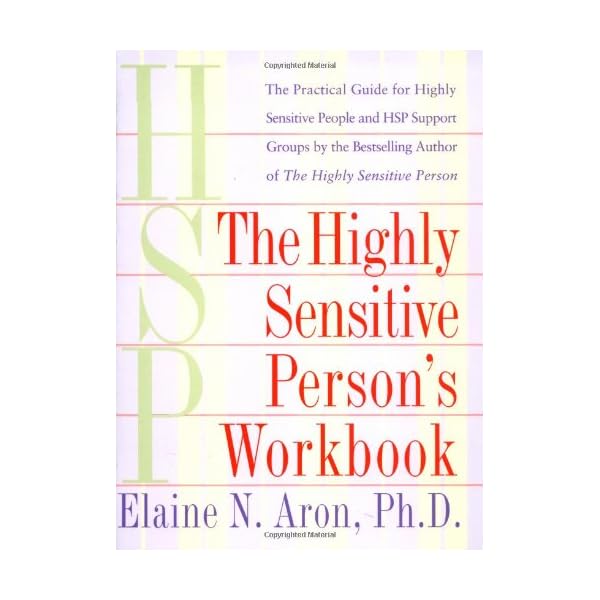
A collection of exercises and activities for both individuals and groups, this workbook will help you identify the HSP trait in yourself, nurture the new, positive self-image you deserve, and create a fuller, richer life. Identify your specific sensitivities with self-assessment tests. Reframe past experiences in a more positive light. Interpret dreams and relate them to your sensitivity. Cope with overarousal through relaxation, breathing, and visualization techniques. Describe your trait in a work interview or to an unsympathetic family member, new friend, doctor, or therapist. Can 1.2 billion exceptionally nervous nervous systems be wrong? There are plenty of blanks to fill in as you analyze your childhood, health concerns, work history, and psychic wounds, with plenty of guidance on how to do it--sample entries as intriguing as someone else's diary. She gives a quick course in dream analysis (Freud couldn't outdo her job on a dream about The A-Team 's Mr. T and a tiger), and rather boldly invites you to envision and prepare for your death.
Reviews
Find Best Price at Amazon"Instead I found a smart, astute, science-based book which explained to me why I was slowly dying at my job, why I could not sleep at night, and why I was so stressed at work that I literally could not stomach my sandwich at lunch but would almost throw it up every day (but I could eat at home) -- I was operating at a level of physical stress which was impossible for a highly sensitive person to sustain, and yet I was somehow sustaining it. Once I actually looked at myself, looked at my actual situation, stopped blaming myself for being "weak" and "broken" and "not tough enough" and stopped trying to be what I am not, I saw clearly that I was ignoring my physical body's symptoms of extreme stress and hurting myself bad. Reading this was a wake up call at a time in my life when I really needed it, and gave me enough confidence to finally stand up to my impossible to please, bullying, manipulative boss and just quit. I am going back to school and retraining to become a software developer so that I can work in an environment that won't kill me."
"I took her test on line at her site... highly sensitive person test, and answered yes to all the questions! I think you only need to answer yes to about 14 of the many questions. Because you might have a friend, partner, child who is highly sensitive and knowing how to treat them, can change both your relationships. It turns out not only are 15 - 20% of humans highly sensitive, so are animals and insects in the same percentages!"
"This is a really good book for those who are highly sensitive or having one in their family."
"This book helped me view my extra sensitivity as a gift to others by being conscientious, at the same time it has made me aware of over stimulating situations that may cause me restlessness."
"It is very good, but I thought it was more about sensory-overload...I haven't finished it ye3t."
"Very insightful!"
"Since I have identified myself as a highly sensitive person recently this book has helped me a lot to maneuver easily in a non-sensitive world."
"If you are highly sensitive or an empath this is an amazing read."
Best Popular Experimental Psychology
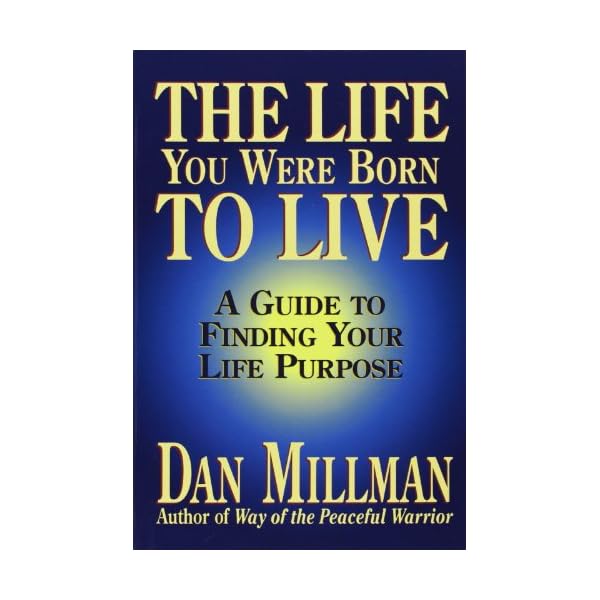
the thirty-seven paths of life how to determine your life path and the life paths of others core issues, inborn talents, and special needs of each path, including health, money, and sexuality guidelines for finding a career consistent with your innate drives and abilities the hidden dynamics of your relationships how to live in harmony with the cycles of life. To our readers: The books we publish are our contribution to an emerging world based on cooperation rather than on competition, on affirmation of the human spirit rather than on self-doubt, and on the certainty that all humanity is connected.
Reviews
Find Best Price at Amazon"This book has opened a new way of self discovery."
"Book was in great condition and I'm really happy with the quick shipping!"
"This book is a rare find and I recommend it to everyone who wants to remember why we are here, help in understanding the need to reflect on lifes purpose, and the reason for what we do and others actions."
"Terrific."
"Probably the most sensible book I've read on this subject."
"Interesting, like astrology."
"I have given 5/6 copies of this book to people."
Best Popular Social Psychology & Interactions
At the time of Frankl's death in 1997, Man's Search for Meaning had sold more than 10 million copies in twenty-four languages. Harold S. Kushner is rabbi emeritus at Temple Israel in Natick, Massachusetts, and the author of bestselling books including When Bad Things Happen to Good People, Living a Life That Matters, and When All You’ve Ever Wanted Isn’t Enough.
Reviews
Find Best Price at Amazon"Read this book, read this book."
"Those that had developed purpose and meaning to the harsh conditions got out of bed every morning to face another unbearable day."
"One of the best works you can take in."
"Life would have been easier if I had read this book sooner in life."
"A little twist of ideas as to why some people survive the worst and why others don't survive medium bad."
"The second part of the book is an analysis of logotherapy and a description of Frankl's studies on the subject."
"I am just now to the place he talks about how thinking of his wife and having mental conversations with her gave him strength to stay alive!"
"Part 1 was easier to read."
Best Occupational & Organizational Popular Psychology
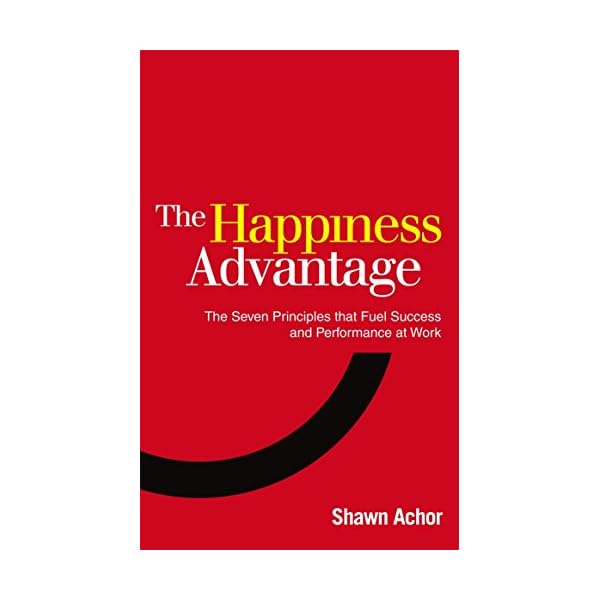
When it comes to the pursuit of success and happiness, most people assume the same formula: if you work hard, you will become successful, and once you become successful, then you'll be happy. Success does not beget happiness. He gives more than 150 lectures a year on the science of happiness and human potential, which have been covered in the New York Times, the Boston Globe, the Wall Street Journal, CNN, and NPR.
Reviews
Find Best Price at Amazon"I saw Shawn Anchor's presentation on PBS where he explained a simple 5 minute technique called 'The 3 Gratitudes'. I was brought up in a culture of pessimism and had 50 years of experience that was so deeply entrenched that I decided that I would be the perfect candidate for experimentation with such a simple exercise. I've never had much luck trying to change my 'default mode' of negative self-concept (no matter how much therapy I've had or how many self-help books I've read) so I was really on a mission to prove this man and his ideas wrong! I listened to the whole book on tape to make sure I was doing it as explained in the television presentation and this is what I did: It takes exactly 21 days to create a new neural pathway so you have to do the exercise everyday for 3 weeks. You want to find the part of your routine in the morning where you have a moment (well, 5 minutes) (when you're having a cup of tea or coffee for instance). THE FUN-15: This one is the optional one but will speed up the process: You want to get 15 minutes of fresh air and exercise...a lovely walk with some sunshine if possible (if you're NOT up to this yet, you can add it in after 21 days when you feel better). After 3 months I figured there was something to this neural construction thing (or whatever it's called) and I kept doing 'The 3 Gratitudes' straight through till August. In September I decided to experiment and I stopped doing the exercise just to see whether I would go back to default (after 7 months of being a happy, optimistic, creative and grateful person). The only time I've slipped back into feelings of real pessimism was one week when I had the flu but it lifted as soon as I started recovering."
"I loved the TED talk and wanted fyi learn more."
"So much goodness is packed in here."
"Interesting to read (never seemed like a slight) and I remind myself, daily, of the suggestions it provided."
"More productivity, more smarts, more cooperation, more accomplishment. This one goes next to other keepers like New Earth by Eckhart Tolle and some other really impressive books that I just can't think of now but surely would know if I was standing right in front of my bookshelf at home that holds all the 'bibles' i've collected over 30+ years. Marcianne Waters, avid reader and avid happiness promoter (I hope)."
"This should be a must read for everyone that works in an organization environment."
"One of the best books out there on happiness."
"Hard to use a highlighter on an audio book."
Best Physiological Aspects in Psychology
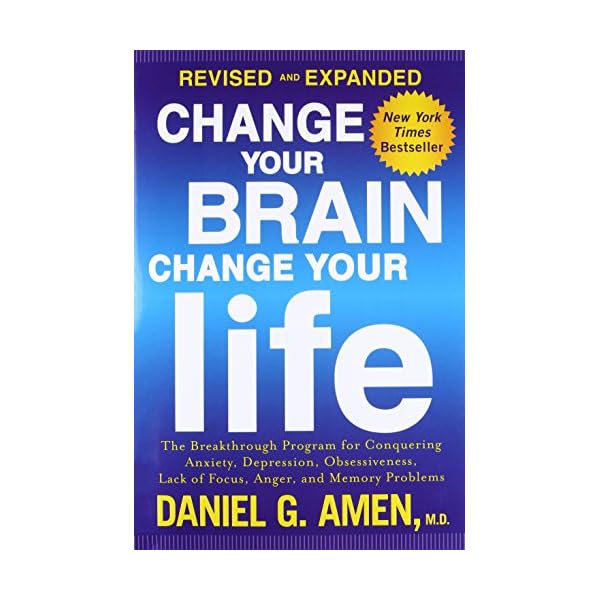
In this completely revised and updated edition of the breakthrough bestseller, neuropsychiatrist Dr. Daniel Amen includes effective "brain prescriptions" that can help heal your brain and change your life. Filled with "brain prescriptions" (among them cognitive exercises and nutritional advice) that are geared toward readers who've experienced anxiety, depression, impulsiveness, excessive anger or worry, and obsessive behavior, Change Your Brain, Change Your Life milks the mind-body connection for all it's worth.
Reviews
Find Best Price at Amazon"This book would be so much better if it focused purely on the science and what behaviors can be modified with actionable tasks/steps people can take (i.e. changing the questions they ask themselves, writing goals on paper, joining support groups). The authors concept is this: Spend thousands getting your brain scanned, then spend hundreds on supplements he sells for your special kind of brain, and join a church."
"it helps reduce guess work, and generalized treatments that sometimes cause more problems for people seeking help. I have been reducing alcohol for years, looking at Scan of Alcohol use has given me enough Reasons to Quit. In this Book Dr. Amen Identifies problems, causes, and potential Solutions and a ton of resources to help manage and treat bad behavior."
"Product came on time and was as described."
"Very informative."
"loved the book made me smarter on the function of the brain."
"Excellent..simple and easy to read."
Best Psychiatry
This new edition of the American Psychiatric Association's Diagnostic and Statistical Manual of Mental Disorders (DSM-5), used by clinicians and researchers to diagnose and classify mental disorders, is the product of more than 10 years of effort by hundreds of international experts in all aspects of mental health.
Reviews
Find Best Price at Amazon"This 5th edition keeps up the tradition but goes well beyond as a clinical handbook and reference."
"Very informative for professionals or those aspiring to be in the field."
"Needed for a class, worked great, not too expensive."
"Love it!"
"The DSM 5 is a required reading for my mental health and psychopathology."
"My copy is literally falling apart and I've only used it for class."
"I ordered this book, and the book I received had about 40 pages that were upside down."