
Best Privacy & Surveillance in Society
Longlisted for the National Book Award | New York Times Bestseller A former Wall Street quant sounds an alarm on the mathematical models that pervade modern life and threaten to rip apart our social fabric. Most troubling, they reinforce discrimination: If a poor student can’t get a loan because a lending model deems him too risky (by virtue of his zip code), he’s then cut off from the kind of education that could pull him out of poverty, and a vicious spiral ensues. A New York Times Book Review Notable Book of 2016. A Boston Globe Best Book of 2016. One of Wired 's Required Reading Picks of 2016. One of Fortune 's Favorite Books of 2016. A Kirkus Reviews Best Book of 2016. A Chicago Public Library Best Book of 2016. A Nature.com Best Book of 2016. An On Point Best Book of 2016 New York Times Editor's Choice. A Maclean 's Bestseller. Winner of the 2016 SLA-NY PrivCo Spotlight Award. “O’Neil’s book offers a frightening look at how algorithms are increasingly regulating people… Her knowledge of the power and risks of mathematical models, coupled with a gift for analogy, makes her one of the most valuable observers of the continuing weaponization of big data… [She] does a masterly job explaining the pervasiveness and risks of the algorithms that regulate our lives.”. — New York Times Book Review. " Weapons of Math Destruction is the Big Data story Silicon Valley proponents won't tell.... [It] pithily exposes flaws in how information is used to assess everything from creditworthiness to policing tactics.... a thought-provoking read for anyone inclined to believe that data doesn't lie.”. — Reuters. “Readable and engaging… succinct and cogent… Weapons of Math Destruction is The Jungle of our age… [It] should be required reading for all data scientists and for any organizational decision-maker convinced that a mathematical model can replace human judgment." “Indispensable… Despite the technical complexity of its subject, Weapons of Math Destruction lucidly guides readers through these complex modeling systems… O’Neil’s book is an excellent primer on the ethical and moral risks of Big Data and an algorithmically dependent world… For those curious about how Big Data can help them and their businesses, or how it has been reshaping the world around them, Weapons of Math Destruction is an essential starting place.”. — National Post. “Cathy O’Neil, a number theorist turned data scientist, delivers a simple but important message: Statistical models are everywhere, and they exert increasing power over many aspects of our daily lives… Weapons of Math Destruction provides a handy map to a few of the many areas of our lives over which invisible algorithms have gained some control. Weapons of Math Destruction should be required reading for anybody whose life will be affected by Big Data, which is to say: required reading for everyone. That’s why the catalogue of case studies in O’Neil’s book are so important; she’s telling us where to look.” —The Guardian “O’Neil is passionate about exposing the harmful effects of Big Data–driven mathematical models (what she calls WMDs), and she’s uniquely qualified for the task… [She] makes a convincing case that many mathematical models today are engineered to benefit the powerful at the expense of the powerless… [and] has written an entertaining and timely book that gives readers the tools to cut through the ideological fog obscuring the dangers of the Big Data revolution.” —In These Times. An unusually lucid and readable look at the daunting algorithms that govern so many aspects of our lives.”. — Kirkus Reviews (starred) “Even as a professional mathematician, I had no idea how insidious Big Data could be until I read Weapons of Math Destruction . O’Neil speaks from a place of authority on the subject… Unlike some other recent books on data collection, hers is not hysterical; she offers more of a chilly wake-up call as she walks readers through the ways the ‘big data’ industry has facilitated social ills such as skyrocketing college tuitions, policing based on racial profiling, and high unemployment rates in vulnerable communities… eerily prescient.”. — Publishers Weekly. — Paris Review “Through harrowing real-world examples and lively story-telling, Weapons of Math Destruction shines invaluable light on the invisible algorithms and complex mathematical models used by government and big business to undermine equality and increase private power. If you don’t want these algorithms to become your masters, read Weapons of Math Destruction by Cathy O’Neil to deconstruct the latest growing tyranny of an arrogant establishment.”. — Ralph Nader , author of Unsafe at Any Speed “In this fascinating account, Cathy O'Neil leverages her expertise in mathematics and her passion for social justice to poke holes in the triumphant narrative of Big Data.
Reviews
Find Best Price at Amazon"So here you are on Amazon's web page, reading about Cathy O'Neil's new book, Weapons of Math Destruction. If clicks on or sales of related items go down, Amazon will know, and can investigate and adjust the model accordingly. Take a look at Amazon's model above: while there are calculations (simple ones) embedded, it's people who decide what data to use, how to use it, and how to measure success. Math is not a final arbiter, but a tool to express, in a scalable (i.e., computable) way, the values that people explicitly decide to emphasize. She highlights that when we evaluate teachers based on students' test scores, or assess someone's insurability as a driver based on their credit record, we are expressing opinions: that a successful teacher should boost test scores, or that responsible bill-payers are more likely to be responsible drivers. Unable to measure quality directly, the magazine built a model based on proxies, primarily outward markers of success, like selectivity and alumni giving. Predictably, college administrators, eager to boost their ratings, focused on these markers rather than on education quality itself. To take a very simple example, imagine that Cathy is about to publish a sequel to Weapons of Math Destruction. The model is pretty easy to understand and audit, which builds confidence and also decreases the likelihood that it gets used to obfuscate. This makes it easier for wealthier candidates to find jobs than poorer ones, and perpetuates a cycle of inequality. It is short -- you can read it in an afternoon -- and it doesn't have time or space for either detailed data analysis (there are no formulas or graphs) or complete histories of the models she considers. As more and more aspects of our lives fall under the purview of automated data analysis, that's a hugely important undertaking."
"I don't know if O'Neil has personally ever had to take a psychology test to get a job, worked under the Kronos scheduling system, lived in a neighborhood with increased police presence due to crime rates, been victimized by insurance rates adjusted to zip codes, and endured corporate wellness programs. Despised by the rank and file of companies that I've worked for, Kronos software contains many aspects and automates things that previously were done by people, mostly managers. Well, say you have a workplace policy that mandates chronically-late employees be written up for tardiness and eventually fired if they don't shape up. What tended to happen at multiple companies I worked for was that managers would look the other way when their buddies were tardy, and write up people they didn't like. Kronos changed that, because the system automatically generated write-ups for any employee that clocked in late too many times. Well I have been poor, or at least this country's version of it, and I have lived in very high crime areas where if you didn't shut your window at night chances were good you would hear a murder. O'Neil argues that many crimes, like drug use by affluent college students, go unpunished because the police are busy in the poorer neighborhoods. I agree, but police resources are limited and for mercy's sake they should be sent where people are being killed, not where a college student is passed out in his living room. My current neighbors many be committing as many crimes as O'Neil implies, but I'm not terrified to walk down the street, so I don't mind the lack of police presence. I just would have liked acknowledgement that wellness programs really do have benefits for some people, instead of a chapter painting them as some sort of 1984-style nightmare where we are all forced to be thin. Despite winning multiple Employee and Student of the Year awards in my life, I can't pass those tests. Here O'Neil misses an opportunity to convince owners of companies that the tests can cost them highly desirable employees. Offering real, concrete ideas of how the tests could be improved to benefit both workers and company owners would have been a harder book to write, but a much more useful one. I hovered on the edge of a four star rating for this book, until a chance conversation with a Japanese woman a couple days ago. My friend was not complaining, she thought the reforms overall a good thing, though her family had lost a lot from it."
"The book takes a look at the rise of computer-generated approaches to the flood of personal data being gathered on us daily and takes a hard look at the unintended consequences of relying on them uncritically."
"PLEASE READ THIS BOOK!"
"Bought it for one of my daughters who is majoring in accounting and she loves it!"
"Thought the concept was great but unfortunately poorly executed by the author."
"I found the information to be fascinating, and important for everyone to understand."
"Gift."
Most troubling, they reinforce discrimination: If a poor student can’t get a loan because a lending model deems him too risky (by virtue of his zip code), he’s then cut off from the kind of education that could pull him out of poverty, and a vicious spiral ensues. — Longlist for National Book Award (Non-Fiction). — Goodreads, semi-finalist for the 2016 Goodreads Choice Awards (Science and Technology). — Kirkus, Best Books of 2016. — New York Times, 100 Notable Books of 2016 (Non-Fiction). — The Guardian , Best Books of 2016. — WBUR's "On Point," Best Books of 2016: Staff Picks. — Boston Globe, Best Books of 2016, Non-Fiction. A New York Times Book Review Notable Book of 2016. A Boston Globe Best Book of 2016. One of Wired 's Required Reading Picks of 2016. One of Fortune 's Favorite Books of 2016. A Kirkus Reviews Best Book of 2016. A Chicago Public Library Best Book of 2016. A Nature.com Best Book of 2016. An On Point Best Book of 2016 New York Times Editor's Choice. A Maclean 's Bestseller. Winner of the 2016 SLA-NY PrivCo Spotlight Award. “O’Neil’s book offers a frightening look at how algorithms are increasingly regulating people… Her knowledge of the power and risks of mathematical models, coupled with a gift for analogy, makes her one of the most valuable observers of the continuing weaponization of big data… [She] does a masterly job explaining the pervasiveness and risks of the algorithms that regulate our lives.”. — New York Times Book Review. " Weapons of Math Destruction is the Big Data story Silicon Valley proponents won't tell.... [It] pithily exposes flaws in how information is used to assess everything from creditworthiness to policing tactics.... a thought-provoking read for anyone inclined to believe that data doesn't lie.”. — Reuters. “Readable and engaging… succinct and cogent… Weapons of Math Destruction is The Jungle of our age… [It] should be required reading for all data scientists and for any organizational decision-maker convinced that a mathematical model can replace human judgment." “Indispensable… Despite the technical complexity of its subject, Weapons of Math Destruction lucidly guides readers through these complex modeling systems… O’Neil’s book is an excellent primer on the ethical and moral risks of Big Data and an algorithmically dependent world… For those curious about how Big Data can help them and their businesses, or how it has been reshaping the world around them, Weapons of Math Destruction is an essential starting place.”. — National Post. “Cathy O’Neil, a number theorist turned data scientist, delivers a simple but important message: Statistical models are everywhere, and they exert increasing power over many aspects of our daily lives… Weapons of Math Destruction provides a handy map to a few of the many areas of our lives over which invisible algorithms have gained some control. Weapons of Math Destruction should be required reading for anybody whose life will be affected by Big Data, which is to say: required reading for everyone. That’s why the catalogue of case studies in O’Neil’s book are so important; she’s telling us where to look.” —The Guardian “O’Neil is passionate about exposing the harmful effects of Big Data–driven mathematical models (what she calls WMDs), and she’s uniquely qualified for the task… [She] makes a convincing case that many mathematical models today are engineered to benefit the powerful at the expense of the powerless… [and] has written an entertaining and timely book that gives readers the tools to cut through the ideological fog obscuring the dangers of the Big Data revolution.” —In These Times. An unusually lucid and readable look at the daunting algorithms that govern so many aspects of our lives.”. — Kirkus Reviews (starred) “Even as a professional mathematician, I had no idea how insidious Big Data could be until I read Weapons of Math Destruction . O’Neil speaks from a place of authority on the subject… Unlike some other recent books on data collection, hers is not hysterical; she offers more of a chilly wake-up call as she walks readers through the ways the ‘big data’ industry has facilitated social ills such as skyrocketing college tuitions, policing based on racial profiling, and high unemployment rates in vulnerable communities… eerily prescient.”. — Publishers Weekly. — Paris Review “Through harrowing real-world examples and lively story-telling, Weapons of Math Destruction shines invaluable light on the invisible algorithms and complex mathematical models used by government and big business to undermine equality and increase private power. If you don’t want these algorithms to become your masters, read Weapons of Math Destruction by Cathy O’Neil to deconstruct the latest growing tyranny of an arrogant establishment.”. — Ralph Nader , author of Unsafe at Any Speed “In this fascinating account, Cathy O'Neil leverages her expertise in mathematics and her passion for social justice to poke holes in the triumphant narrative of Big Data.
Reviews
Find Best Price at Amazon"So here you are on Amazon's web page, reading about Cathy O'Neil's new book, Weapons of Math Destruction. If clicks on or sales of related items go down, Amazon will know, and can investigate and adjust the model accordingly. Take a look at Amazon's model above: while there are calculations (simple ones) embedded, it's people who decide what data to use, how to use it, and how to measure success. Math is not a final arbiter, but a tool to express, in a scalable (i.e., computable) way, the values that people explicitly decide to emphasize. She highlights that when we evaluate teachers based on students' test scores, or assess someone's insurability as a driver based on their credit record, we are expressing opinions: that a successful teacher should boost test scores, or that responsible bill-payers are more likely to be responsible drivers. Unable to measure quality directly, the magazine built a model based on proxies, primarily outward markers of success, like selectivity and alumni giving. Predictably, college administrators, eager to boost their ratings, focused on these markers rather than on education quality itself. To take a very simple example, imagine that Cathy is about to publish a sequel to Weapons of Math Destruction. The model is pretty easy to understand and audit, which builds confidence and also decreases the likelihood that it gets used to obfuscate. This makes it easier for wealthier candidates to find jobs than poorer ones, and perpetuates a cycle of inequality. It is short -- you can read it in an afternoon -- and it doesn't have time or space for either detailed data analysis (there are no formulas or graphs) or complete histories of the models she considers. As more and more aspects of our lives fall under the purview of automated data analysis, that's a hugely important undertaking."
"I don't know if O'Neil has personally ever had to take a psychology test to get a job, worked under the Kronos scheduling system, lived in a neighborhood with increased police presence due to crime rates, been victimized by insurance rates adjusted to zip codes, and endured corporate wellness programs. Despised by the rank and file of companies that I've worked for, Kronos software contains many aspects and automates things that previously were done by people, mostly managers. Well, say you have a workplace policy that mandates chronically-late employees be written up for tardiness and eventually fired if they don't shape up. What tended to happen at multiple companies I worked for was that managers would look the other way when their buddies were tardy, and write up people they didn't like. Kronos changed that, because the system automatically generated write-ups for any employee that clocked in late too many times. Well I have been poor, or at least this country's version of it, and I have lived in very high crime areas where if you didn't shut your window at night chances were good you would hear a murder. O'Neil argues that many crimes, like drug use by affluent college students, go unpunished because the police are busy in the poorer neighborhoods. I agree, but police resources are limited and for mercy's sake they should be sent where people are being killed, not where a college student is passed out in his living room. My current neighbors many be committing as many crimes as O'Neil implies, but I'm not terrified to walk down the street, so I don't mind the lack of police presence. I just would have liked acknowledgement that wellness programs really do have benefits for some people, instead of a chapter painting them as some sort of 1984-style nightmare where we are all forced to be thin. Despite winning multiple Employee and Student of the Year awards in my life, I can't pass those tests. Here O'Neil misses an opportunity to convince owners of companies that the tests can cost them highly desirable employees. Offering real, concrete ideas of how the tests could be improved to benefit both workers and company owners would have been a harder book to write, but a much more useful one. I hovered on the edge of a four star rating for this book, until a chance conversation with a Japanese woman a couple days ago. My friend was not complaining, she thought the reforms overall a good thing, though her family had lost a lot from it."
"The book takes a look at the rise of computer-generated approaches to the flood of personal data being gathered on us daily and takes a hard look at the unintended consequences of relying on them uncritically."
"PLEASE READ THIS BOOK!"
"Bought it for one of my daughters who is majoring in accounting and she loves it!"
"Thought the concept was great but unfortunately poorly executed by the author."
"I found the information to be fascinating, and important for everyone to understand."
"Gift."
Most troubling, they reinforce discrimination: If a poor student can’t get a loan because a lending model deems him too risky (by virtue of his zip code), he’s then cut off from the kind of education that could pull him out of poverty, and a vicious spiral ensues. — Longlist for National Book Award (Non-Fiction). — Goodreads, semi-finalist for the 2016 Goodreads Choice Awards (Science and Technology). — Kirkus, Best Books of 2016. — New York Times, 100 Notable Books of 2016 (Non-Fiction). — The Guardian , Best Books of 2016. — WBUR's "On Point," Best Books of 2016: Staff Picks. — Boston Globe, Best Books of 2016, Non-Fiction. A New York Times Book Review Notable Book of 2016A Boston Globe Best Book of 2016One of Wired 's Required Reading Picks of 2016One of Fortune 's Favorite Books of 2016A Kirkus Reviews Best Book of 2016A Chicago Public Library Best Book of 2016A Nature.com Best Book of 2016An On Point Best Book of 2016 New York Times Editor's ChoiceA Maclean 's BestsellerWinner of the 2016 SLA-NY PrivCo Spotlight Award “O’Neil’s book offers a frightening look at how algorithms are increasingly regulating people… Her knowledge of the power and risks of mathematical models, coupled with a gift for analogy, makes her one of the most valuable observers of the continuing weaponization of big data… [She] does a masterly job explaining the pervasiveness and risks of the algorithms that regulate our lives.”. — New York Times Book Review. " Weapons of Math Destruction is the Big Data story Silicon Valley proponents won't tell.... [It] pithily exposes flaws in how information is used to assess everything from creditworthiness to policing tactics.... a thought-provoking read for anyone inclined to believe that data doesn't lie.”. — Reuters. “Readable and engaging… succinct and cogent… Weapons of Math Destruction is The Jungle of our age… [It] should be required reading for all data scientists and for any organizational decision-maker convinced that a mathematical model can replace human judgment." “Indispensable… Despite the technical complexity of its subject, Weapons of Math Destruction lucidly guides readers through these complex modeling systems… O’Neil’s book is an excellent primer on the ethical and moral risks of Big Data and an algorithmically dependent world… For those curious about how Big Data can help them and their businesses, or how it has been reshaping the world around them, Weapons of Math Destruction is an essential starting place.”. — National Post. “O’Neil has become [a whistle-blower] for the world of Big Data… [in] her important new book… Her work makes particularly disturbing points about how being on the wrong side of an algorithmic decision can snowball in incredibly destructive ways.” — TIME. “Cathy O’Neil, a number theorist turned data scientist, delivers a simple but important message: Statistical models are everywhere, and they exert increasing power over many aspects of our daily lives… Weapons of Math Destruction provides a handy map to a few of the many areas of our lives over which invisible algorithms have gained some control. Weapons of Math Destruction should be required reading for anybody whose life will be affected by Big Data, which is to say: required reading for everyone. That’s why the catalogue of case studies in O’Neil’s book are so important; she’s telling us where to look.” —The Guardian “O’Neil is passionate about exposing the harmful effects of Big Data–driven mathematical models (what she calls WMDs), and she’s uniquely qualified for the task… [She] makes a convincing case that many mathematical models today are engineered to benefit the powerful at the expense of the powerless… [and] has written an entertaining and timely book that gives readers the tools to cut through the ideological fog obscuring the dangers of the Big Data revolution.” —In These Times. An unusually lucid and readable look at the daunting algorithms that govern so many aspects of our lives.”. — Kirkus Reviews (starred) “Even as a professional mathematician, I had no idea how insidious Big Data could be until I read Weapons of Math Destruction . O’Neil speaks from a place of authority on the subject… Unlike some other recent books on data collection, hers is not hysterical; she offers more of a chilly wake-up call as she walks readers through the ways the ‘big data’ industry has facilitated social ills such as skyrocketing college tuitions, policing based on racial profiling, and high unemployment rates in vulnerable communities… eerily prescient.”. — Publishers Weekly. — Paris Review “Through harrowing real-world examples and lively story-telling, Weapons of Math Destruction shines invaluable light on the invisible algorithms and complex mathematical models used by government and big business to undermine equality and increase private power. If you don’t want these algorithms to become your masters, read Weapons of Math Destruction by Cathy O’Neil to deconstruct the latest growing tyranny of an arrogant establishment.”. — Ralph Nader , author of Unsafe at Any Speed “In this fascinating account, Cathy O'Neil leverages her expertise in mathematics and her passion for social justice to poke holes in the triumphant narrative of Big Data. We need to reckon with technology.”. — Linda Tirado , author of Hand to Mouth: Living in Bootstrap America “Next time you hear someone gushing uncritically about the wonders of Big Data, show them Weapons of Math Destruction .
Reviews
Find Best Price at Amazon"So here you are on Amazon's web page, reading about Cathy O'Neil's new book, Weapons of Math Destruction. If clicks on or sales of related items go down, Amazon will know, and can investigate and adjust the model accordingly. Take a look at Amazon's model above: while there are calculations (simple ones) embedded, it's people who decide what data to use, how to use it, and how to measure success. Math is not a final arbiter, but a tool to express, in a scalable (i.e., computable) way, the values that people explicitly decide to emphasize. She highlights that when we evaluate teachers based on students' test scores, or assess someone's insurability as a driver based on their credit record, we are expressing opinions: that a successful teacher should boost test scores, or that responsible bill-payers are more likely to be responsible drivers. Unable to measure quality directly, the magazine built a model based on proxies, primarily outward markers of success, like selectivity and alumni giving. Predictably, college administrators, eager to boost their ratings, focused on these markers rather than on education quality itself. To take a very simple example, imagine that Cathy is about to publish a sequel to Weapons of Math Destruction. The model is pretty easy to understand and audit, which builds confidence and also decreases the likelihood that it gets used to obfuscate. This makes it easier for wealthier candidates to find jobs than poorer ones, and perpetuates a cycle of inequality. It is short -- you can read it in an afternoon -- and it doesn't have time or space for either detailed data analysis (there are no formulas or graphs) or complete histories of the models she considers. As more and more aspects of our lives fall under the purview of automated data analysis, that's a hugely important undertaking."
"I don't know if O'Neil has personally ever had to take a psychology test to get a job, worked under the Kronos scheduling system, lived in a neighborhood with increased police presence due to crime rates, been victimized by insurance rates adjusted to zip codes, and endured corporate wellness programs. Despised by the rank and file of companies that I've worked for, Kronos software contains many aspects and automates things that previously were done by people, mostly managers. Well, say you have a workplace policy that mandates chronically-late employees be written up for tardiness and eventually fired if they don't shape up. What tended to happen at multiple companies I worked for was that managers would look the other way when their buddies were tardy, and write up people they didn't like. Kronos changed that, because the system automatically generated write-ups for any employee that clocked in late too many times. Well I have been poor, or at least this country's version of it, and I have lived in very high crime areas where if you didn't shut your window at night chances were good you would hear a murder. O'Neil argues that many crimes, like drug use by affluent college students, go unpunished because the police are busy in the poorer neighborhoods. I agree, but police resources are limited and for mercy's sake they should be sent where people are being killed, not where a college student is passed out in his living room. My current neighbors many be committing as many crimes as O'Neil implies, but I'm not terrified to walk down the street, so I don't mind the lack of police presence. I just would have liked acknowledgement that wellness programs really do have benefits for some people, instead of a chapter painting them as some sort of 1984-style nightmare where we are all forced to be thin. Despite winning multiple Employee and Student of the Year awards in my life, I can't pass those tests. Here O'Neil misses an opportunity to convince owners of companies that the tests can cost them highly desirable employees. Offering real, concrete ideas of how the tests could be improved to benefit both workers and company owners would have been a harder book to write, but a much more useful one. I hovered on the edge of a four star rating for this book, until a chance conversation with a Japanese woman a couple days ago. My friend was not complaining, she thought the reforms overall a good thing, though her family had lost a lot from it."
"The book takes a look at the rise of computer-generated approaches to the flood of personal data being gathered on us daily and takes a hard look at the unintended consequences of relying on them uncritically."
"PLEASE READ THIS BOOK!"
"Bought it for one of my daughters who is majoring in accounting and she loves it!"
"Thought the concept was great but unfortunately poorly executed by the author."
"I found the information to be fascinating, and important for everyone to understand."
"Gift."
Best Colorado Travel Guides
Including hikes near Fort Collins, Boulder, and Colorado Springs, 60 Hikes Within 60 Miles: Denver and Boulder is the only guidebook that pinpoints great hikes that are also close to home.
Reviews
Find Best Price at Amazon"Some good hikes that I didn't know about!"
"Great book with so many great hikes!"
"It had lots of great options with varying degrees of skill for different hikes in and around Denver and Boulder."
"Very informative and well illustrated.very well pleased!"
"Can't wait to get some of these hikes in."
"This is a great book."
"Great great book!"
"This book has it all - from moderate to aggressive hikes, hikes for kids, dogs, horses, whatever your pleasure."
Best Denver Colorado Travel Books
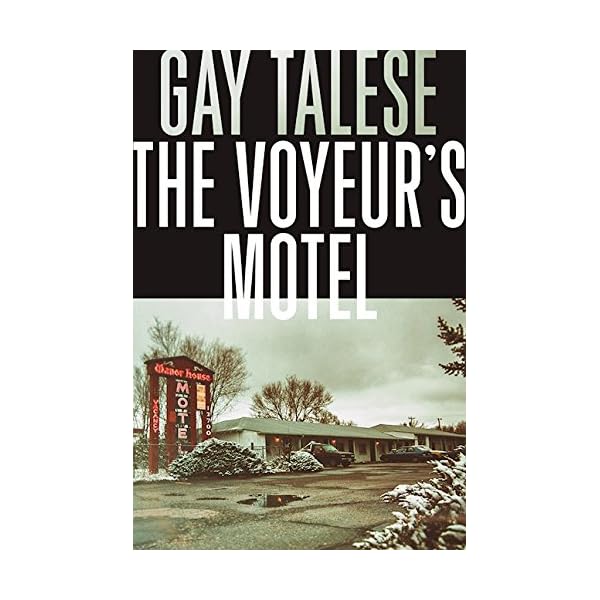
Unsure what to make of this confession, Talese traveled to Colorado where he met the manGerald Foosverified his story in person, and read some of his extensive journals, a secret record of America’s changing social and sexual mores. Praise for The Voyeur’s Motel : Named a Best Book of the Year by the Daily Mail (Event Critics’ Selection). The Voyeur is so fascinating a character―insightful, observant and amoral―that the reader becomes caught up in his story.” ― Providence Journal. Motel delves deeply into the taboo world with no holds barred and no excuses . The type of unflinching New Journalism that Talese helped found three decades ago.” ― Jackson Clarion Ledger. “Pioneering reporter Gay Talese tells the ultimate surveillance story in The Voyeur’s Motel . Talese―a master of elegant, understated prose―uses an objective reportorial style to tell the voyeur’s story, and it’s the right approach for a narrative that requires no extra spice . “Foos [is revealed] as a singularly pervy, grandiose, and strangely eloquent weirdo who would be irresistible to any writer, let alone one as talented, patient, and thoughtful as Talese . Those seeking a uniquely discomfiting journey couldn’t find a better pair of reprobates with whom to cast their lot.” ― Booklist. Not your typical beach book, perhaps, but you may want to read this compulsive page-turner―which raises all sorts of fascinating journalistic, moral and legal issues―under cover of an umbrella.” ― Barnes & Noble Review. “Talese is a master at finding and reporting intimate matters in a clean, fine prose style so that the pages fly by. Thus the odd subject of Talese’s book is transparently manifest, without a biased or judgmental eye, all the better to reveal what Foos has done.” ― Psychodynamic Psychiatry. Foos’s notes offer a long-term glimpse into the sex lives of Americans.” ― Maclean’s (Canada). It might make you lose your bearings, but at the same time it’s completely mesmerising, and often darkly funny, too.” ― Daily Mail (UK) (Event Critics’ Best Books of the Year). It is by turns fascinating and illuminating, very creepy and very funny, and will live in my memory long after many more doggedly accurate works have vanished into thin air.” ― Mail on Sunday (UK). Short and brisk, it tells a compellingly sordid story, and Foos is one fascinating dude .
Reviews
Find Best Price at Amazon"silly story, seems like a lot of it didn't add up, narcissistic ramblings of Gerald Foos."
"The "voyeur" is a creepy guy and his attempt to make his observations sound like serious sexual research are unconvincing."
"Talese, by letting so much of the story be told in the Voyeur's own words, by going into such intimate detail of the Voyeur's life, asks the question of us, the readers, Wouldn't we, if we could have gotten away with it, done the same? By including these stories, without passing judgment on their veracity, Talese lets the reader's own intuition decide to what extent Foos is credible."
"I also watched the documentary on Netflix (which was released recently) and it was nice to see the motel owner in "person" - haha."
"I was hoping for a more thorough exploration of Foos' psychology as well as some additional historical and social context, but they were nowhere to be found."
"I think if you had read the New Yorker review of this book you could have done without actually purchasing it."
"Unfortunately, the book itself was disappointing, and the article we had read was really just the best and most interesting bits presented in a streamlined fashion. He also kept bringing up anecdotes and unrelated background stories that I guess were meant to add to the story, but as much of it had nothing to do with the voyeur I ended up skimming these bits wondering when we would get back to him, and the juicy bits. After we shared the article we had a few people who wanted us to let them know how the book was, and whether they should get a copy or borrow ours..."
Best Customs & Traditions Social Sciences
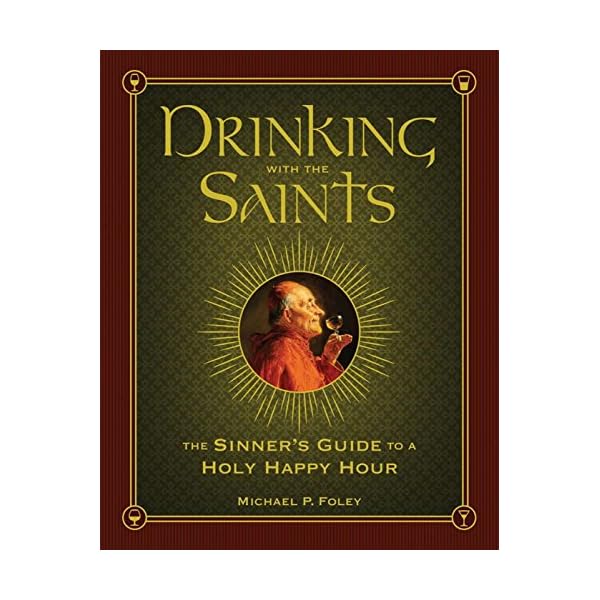
Pub crawl your way through the sacred seasons with this entertaining and useful collection of cocktail recipes, distilled spirits, beer, and wine for virtually every occasion on the Catholic liturgical calendar. Michael Foley offers the faithful drinker witty and imaginative instruction on the appropriate libations for the seasons, feasts, and saints' days of the Church year.
Reviews
Find Best Price at Amazon"The author's humor and obvious love of the Catholic tradition combine to make a genuine guide (and excuse) to celebrate the faith year round and do it in just the right way."
"It's a very large book and it looks nice sitting on the table."
"Humorous."
"But not before I order 3 more copies :-) ... excellent gift ... beautifully bound with everything from saint history to cocktail know-how tips and tricks."
"Funny book, but also had real history."
"I am having fun reading about various saints and getting into mixing my own drinks for dinner parties."
"We love this book for many reasons."
"Pick out your Saint's Day and have a ball."
Best Children's Studies Social Science
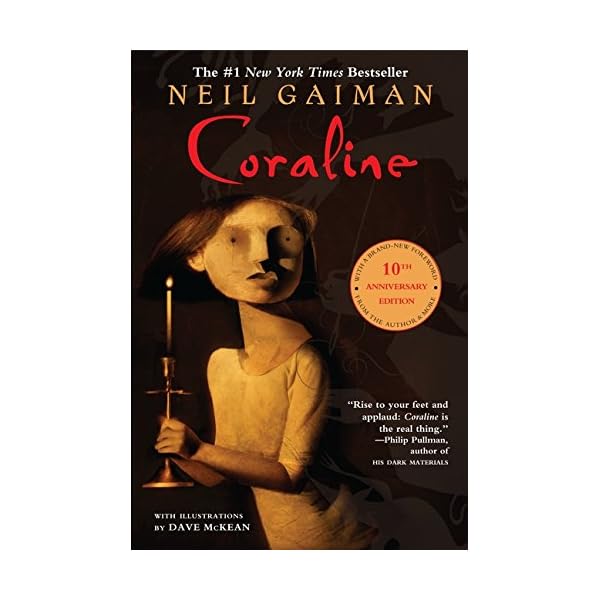
This edition of New York Times bestselling and Newbery Medal-winning author Neil Gaiman’s modern classic, Coraline —also an Academy Award-nominated film—is enriched with a foreword from the author, a reader's guide, and more. “Coraline is by turns creepy and funny, bittersweet and playful…can be read quickly and enjoyed deeply.” (San Francisco Chronicle Book Review). “Gaiman’s pacing is superb, and he steers the tension of the tale with a deft and practiced narrative touch.” (Bulletin of the Center for Children’s Books).
Reviews
Find Best Price at Amazon"Do not be deceived by the idea that Coraline is considered a " children book"."
"The issues I had with the book was that the middle just seemed to be there to make the book longer. The middle of the book seemed to repeat its self over and over which made the book get a little boring.The end of the book felt so rushed that it was hard to keep up with."
"Young Coraline is indeed a very brave young heroine, empowered and very clever in the face of what the dangers are and lurk furtively in fairy tales! Young readers will find the adaptation to a two-dimensional situation easier to digest than an older, less flexible reader where the blurred realities are more burdensome. "Fairy tales are more than true: not because they tell us that dragons exist, but because they tell us that dragons can be beaten.""
"I began to read Coraline with no expectations beyond a hope of being mildly entertained; it is, after all, a children's book, and I was checking it out to see if my son might enjoy the storyline."
"Coraline finds herself in a parallel world with a mom who wants her to stay."
"Movie great but graphic novel explains more and captures the complete story, spooky fun with very good graphics and colir."
Best Gerontology Social Sciences
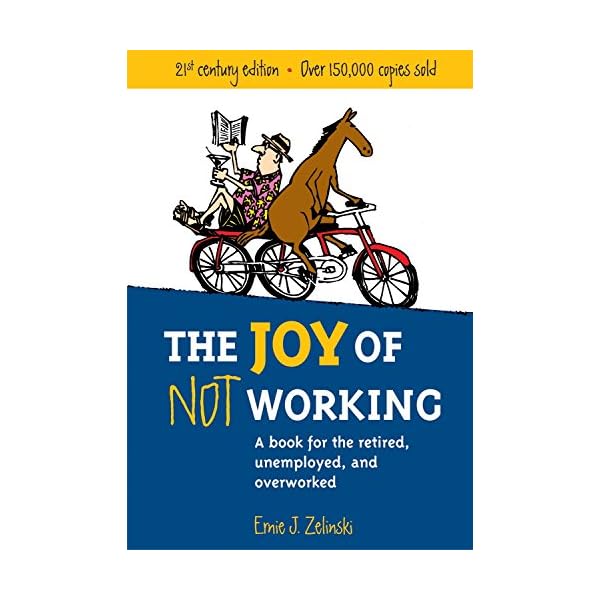
He has taught more than 300,000 people what The Joy of Not Working is about: learning to live every part of their lives - work and play, employment, and retirement alike - to the fullest. In this completely revised and expanded edition, you too can join the thousands of converts and learn how to thrive at both work and play. "In The Joy Of Not Working, Zelinski explains how to. combat boredom, develop motivation, live for today, rethink. the terms of financial independence, and redefine. the meaning of fulfillment."
Reviews
Find Best Price at Amazon"THE HANDS DOWN BEST BOOK I"VE EVER READ ON RETIREMENT,WELL BALANCED,FUNNY AND EDUCATIONAL GAVE ME REAL PEACE AFTER READING SO MANY BOOKS ABOUT THE GIZILLIONS YOU NEED OR !!!"
"Zelinski reminds us of what is really important in life - not just being productivity machines until we get to our deathbeds, disappointed that we didn't really live. Zelinksi encourages us to question the workaholic culture and gives excellent, concrete exercises and tips for creating engaged lives that we truly love, in retirement, unemployment or even while employed."
"America is becoming obsessed with work and money to the point where we lose what we really want in life."
"whether you're unemployed, working for a long time still or planning on retiring soon, read this!"
"Second, that of being in a long-term committed relationship where some degree of self-sacrifice for another is more than made-up for by love, companionship, and partnership; one can have freedom and independence "on the side" while also in a committed relationship."
"I have developed my "Get-a-Life Tree" and have started scheduling important, meaningful stuff to do when that magic day comes at the end of the month when I can walk away from my 34-year career into something exciting, and much more important."
"Light and entertaining but with a profound message."
"Lots of suggestions to prevent boredom (or depression) and fill up those extra 18 hours you now have available."
Best Philanthropy & Charity
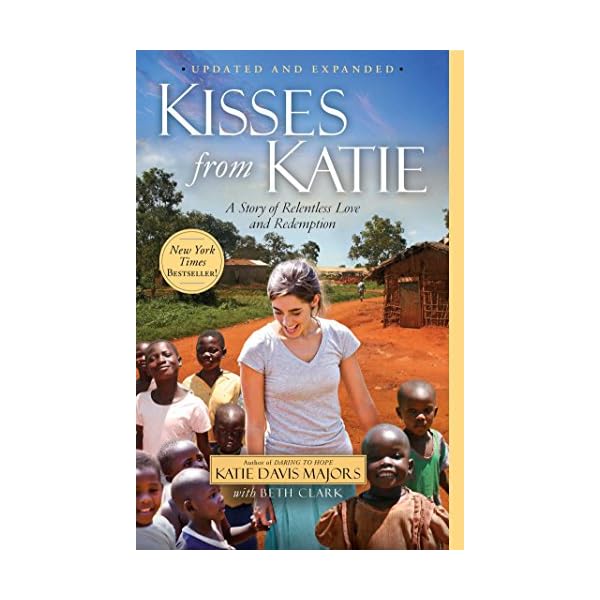
Katie, a charismatic and articulate young woman, adopted. thirteen children in Uganda and has established a ministry, Amazima, that feeds and sends hundreds more to school while teaching them the Word of Jesus Christ. "Kisses from Katie" is another wonderful reminder that 'big' things for the kingdom do not come from age or experience, but as an overflow of a deeper love within. "With reckless abandon, Katie Davis followed her heart to care for orphans living in extreme poverty in Uganda. "Katie Davis has the story that makes radio talk show hosts stop in their tracks and say with deep disbelief, 'No, she didn't.'. At the age of nineteen, Katie Davis left the upper-middle-class life to move to Uganda, start a nonprofit organization, and begin the adoption process for thirteen daughters who needed a mother. "I was profoundly moved, challenged, and convicted as I read "Kisses from K"atie, and I came away wanting to know Jesus the way that Katie does. This is an honest and compelling account of one young woman's journey of obedience to a Jesus who loves the whole world, especially the forgotten and the marginalized. But if you stand willing to act upon belief, here you will encounter the full heartache and joy that await any person who ventures near to God's heart through adoption and other ways of loving the orphan in distress." Her devotion to the Lord and her love for His children challenge me to give sacrificially, serve selflessly, and live out my salvation with radical abandon!"
Reviews
Find Best Price at Amazon"The story of a young woman following her heart to serve her Lord in. a far off land."
"Amazing adventure of a young woman who falls in love with kids in Uganda."
"One of my all time favorite books!"
"Katie is an inspiring woman of courage and faith."
"A religious Sister gave it to my wife and I before leaving to Kenya to help at a girls school, and this book really inspired us!"
"As a parent of young adults who went to college and started their lives by marrying and getting decent jobs, I was asking myself, what would I have done if my child would have chosen to do what Katie did?"
"Does that mean God wants me to leave behind everything that is familiar to me to care for the poor and the orphaned on another continent? But she is confident that she is firmly in the palm of God's hand as she builds her family through adopting these daughters. It is altogether real that God wants to use us right here, right now, in our own comfort zone....or maybe just stepping out of it a little."
"Great book that demonstrates how God works and gives new passions to those who are obedient and open to what He has for them."
Best Social Sciences Research
#1 NEW YORK TIMES BESTSELLER • A timely and important new book that challenges everything we think we know about cultivating true belonging in our communities, organizations, and culture, from the #1 bestselling author of Rising Strong, Daring Greatly, and The Gifts of Imperfection HELLO SUNSHINE BOOK CLUB PICK “True belonging doesn’t require us to change who we are. She writes, “True belonging requires us to believe in and belong to ourselves so fully that we can find sacredness both in being a part of something and in standing alone when necessary. “[Brown’s] research and work have given us a new vocabulary, a way to talk with each other about the ideas and feelings and fears we’ve all had but haven’t quite known how to articulate. “With a fresh perspective that marries research and humor, Brown offers compassion while delivering thought-provoking ideas about relationships—with others and with oneself.” — Publishers Weekly.
Reviews
Find Best Price at Amazon"I started working toward being an Amazon Top 1000 reviewer about a year ago. And I chose it, because sad though it is, my reviews on Amazon and Goodreads are the last place in this entire world where I am willing to communicate, in any capacity, with other human beings. So lonely that as I type this I feel like crying, even though I accepted this as my reality a long time ago. I struggle to call and make appointments because it requires talking to strangers, and for this reason I also can't go to the grocery store, or the gas station, or any other list of a hundred places that normal people go to have normal lives. You see, I decided five years ago that I was done with fitting in, and that I'd rather be lonely and alone, than to continue immersing myself in a world I found caustic. I saw people ripping each other down through the medium of social media because they didn't have to look that person in the face, and see how their comments hurt them. It seemed like a good idea at the time, but as the years have passed, I've cut myself so far off from humanity that it feels like I'm the only person left in my world. But I didn't know how else to express the impact this book had on me, without first talking about how much pain I've been in, and how nefarious my reasons for reading it in the first place. I expected to write an honest, clinical review discussing its contents from a dispassionate point of view. But instead, here I am, still clumsily attempting to convey my feelings in the hopes that some part of this review might encourage even one other person to read this book."
"This is the best of all of her books, as well as a prescription for being alive now, of being a citizen, a human being, a kind and caring and loving person--now--at this time in history. I read it yesterday and today in two sittings and am going back again and again to the writing, the ideas, and the inspiration to me to life more authentically and to be able to connect with others in deeper and braver ways."
"I've only listened to the first chapter of the book so far and I've been in tears three times."
"This is the book that I needed now."
"I could read and re read this author all day."
"We hate the idea that we are afraid to talk to our own children but don't want to lose our connection nor go against our deep beliefs."
"Her style is a simple, comical one - that brings simplicity to the complexity of the human condition."
Best Human Sexuality
• Key scientific discoveries in the fields of psychology, physiology, and sexology. • The Internet and couple-friendly pornography. • The importance of sex to our growth as people and partners. • Maintaining a fulfilling sex life as we get older. “[Succeeds] in bringing The Joy of Sex up to current standards.” — The New Yorker. “An intelligent sex manual that is serious without being solemn.” —Desmond Morris, author of People Watching and The Human Sexes: The Natural History of a Man and a Woman.
Reviews
Find Best Price at Amazon"I had this book when it originally came out about 40 years ago."
"Times are changing and this book reflects the changes of the past 40 years or so."
"Very informative- well written."
"A great gift for anyone to take to a bachelorette party that is far more useful than any silly party favors!"
"ok but less new information than I expected."
"Generic information that isn't helpful or useful."
Best Urban Planning and Development
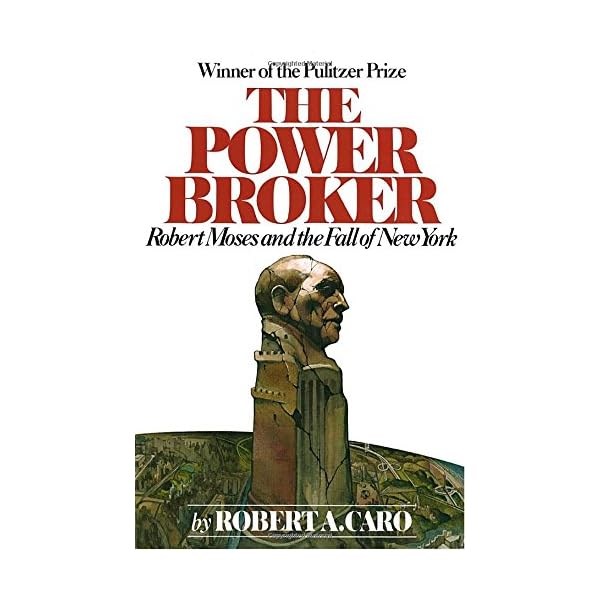
One of the most acclaimed books of our time, winner of both the Pulitzer and the Francis Parkman prizes, The Power Broker tells the hidden story behind the shaping (and mis-shaping) of twentieth-century New York (city and state) and makes public what few have known: that Robert Moses was, for almost half a century, the single most powerful man of our time in New York, the shaper not only of the city's politics but of its physical structure and the problems of urban decline that plague us today. "The most absorbing, detailed, instructive, provocative book ever published about the making and raping of modern New York City and environs and the man who did it, about the hidden plumbing of New York City and State politics over the last half-century, about the force of personality and the nature of political power in a democracy. This is a study of the corruption which power exerts on those who wield it to set beside Tacitus and his emperors, Shakespeare and his kings." "In the future, the scholar who writes the history of American cities in the twentieth century will doubtless begin with this extraordinary effort." "The feverish hype that dominates the merchandising of arts and letters in America has so debased the language that, when a truly exceptional achievement comes along, there are no words left to praise it. Important, awesome, compelling--these no longer summon the full flourish of trumpets this book deserves. "Required reading for all those who hope to make their way in urban politics; for the reformer, the planner, the politician and even the ward heeler." The most unlikely subjects--banking, ward politics, construction, traffic management, state financing, insurance companies, labor unions, bridge building--become alive and contemporary. It is like one of the great Russian novels, overflowing with characters and incidents that all fit into a vast mosaic of plot and counterplot.
Reviews
Find Best Price at Amazon"This was a tip from New York Magazine on "How to read 'The Power Broker'": Buy a cheap paperback version, tear it into thirds, read one third at a time."
"This was a monumental accomplishment as Moses controlled all municipal building in NYC for years and had a stranglehold on power even over numerous mayors. What I found fascinating was Moses’ expert manipulation of the system of government in NY which gave him a stranglehold on power for years. I would have liked more information about Moses’s family but it may have been trimmed since the book was whittled down considerably before publishing."
"As someone has lived in New York City for many, in a neighborhood Moses wanted to tear down to build a freeway, The Power Broker is a fascinating insight into the city in its current form. His editors at the time thought no body would read such a long book so they cut several chapters, including Moses's battles with Jane Jacobs."
"This book is a truly fascinating study for those interested in the urban history of New York, political power, or urban development."
Best Poverty
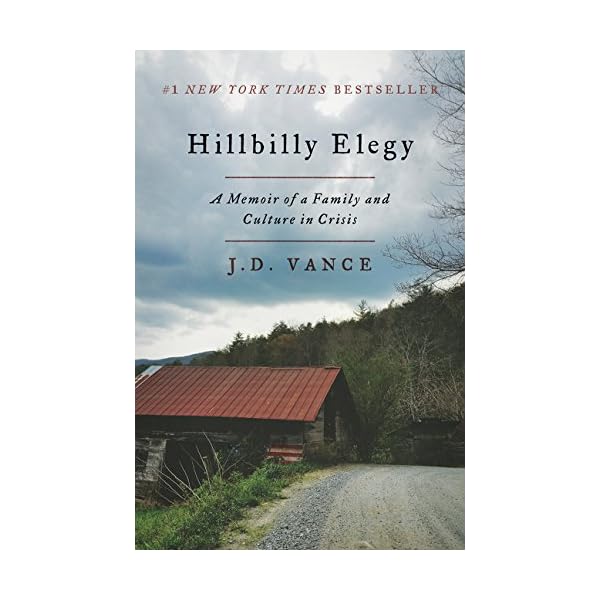
From a former marine and Yale Law School graduate, a powerful account of growing up in a poor Rust Belt town that offers a broader, probing look at the struggles of America’s white working class. They raised a middle-class family, and eventually their grandchild (the author) would graduate from Yale Law School, a conventional marker of their success in achieving generational upward mobility. Vance’s grandparents, aunt, uncle, sister, and, most of all, his mother, struggled profoundly with the demands of their new middle-class life, and were never able to fully escape the legacy of abuse, alcoholism, poverty, and trauma so characteristic of their part of America. “[A] compassionate, discerning sociological analysis…Combining thoughtful inquiry with firsthand experience, Mr. Vance has inadvertently provided a civilized reference guide for an uncivilized election, and he’s done so in a vocabulary intelligible to both Democrats and Republicans. [Vance] offers a compelling explanation for why it’s so hard for someone who grew up the way he did to make it…a riveting book.” ( Wall Street Journal ). “[ Hillbilly Elegy ] couldn’t have been better timed...a harrowing portrait of much that has gone wrong in America over the past two generations...an honest look at the dysfunction that afflicts too many working-class Americans.” ( National Review ). Vance’s memoir, “Hillbilly Elegy”, offers a starkly honest look at what that shattering of faith feels like for a family who lived through it.
Reviews
Find Best Price at Amazon"Drugs, crime, jail time, abusive interactions without any knowledge of other forms of interaction, children growing up in a wild mix of stoned mother care, foster care, and care by temporary "boyfriends," and in general, an image of life on the edge of survival where even the heroes are distinctly flawed for lack of knowledge and experience of any other way of living. Second, the author's growing realization, fully present by the end of the work, that while individuals do not have total control over the shapes of their lives, their choices do in fact matter—that even if one can't direct one's life like a film, one does always have the at least the input into life that comes from being free to make choices, every day, and in every situation. I hate to fall into self-analysis and virtue-signaling behavior in a public review, but in this case I feel compelled to say that the author really did leave with me a renewed motivation to make more of my life every day, to respect and consider the choices that confront me much more carefully, and to seize moments of opportunity with aplomb when they present themselves."
"I never heard of the author until I saw him on Morning Joe a few days ago but I looked him up and read several articles he wrote for various publications so I bought his book. He suggests that tribalism, mistrust of outsiders and "elites," violence and irresponsibility among family members, parents without ethics and a sense of responsibility, terrible work ethics, and an us-against-them mentality is dooming the people who live that way to becoming poorer, more addicted, and more marginalized."
"I grew up without running water in Boone County, WV, and wound up with a degree from Harvard Law School."
"I escaped inner city Baltimore (see The Wire) due to luck, the ability to do well in school and a few good teachers.Instead of trying to describe my early life to my family and friends, I will give them this book."
Best Folklore & Mythology Studies
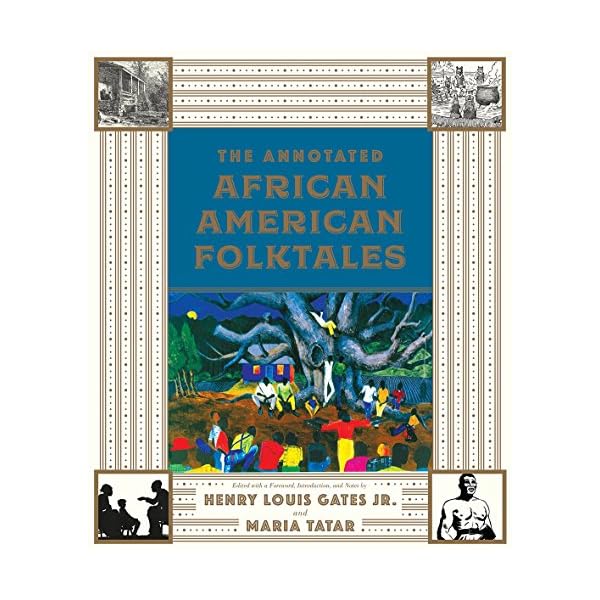
Following in the tradition of such classics as Arthur Huff Fauset’s “Negro Folk Tales from the South” (1927), Zora Neale Hurston’s Mules and Men (1935), and Virginia Hamilton’s The People Could Fly (1985), acclaimed scholars Henry Louis Gates Jr. and Maria Tatar assemble a groundbreaking collection of folktales, myths, and legends that revitalizes a vibrant African American past to produce the most comprehensive and ambitious collection of African American folktales ever published in American literary history. Introductory essays, nearly 150 African American stories, and 20 seminal African tales as historical background The familiar Brer Rabbit classics, as well as news-making vernacular tales from the 1890s’ Southern Workman An entire section of Caribbean and Latin American folktales that finally become incorporated into the canon Approximately 200 full-color, museum-quality images. Gates' and Tatar's introductions provide essential critical frameworks for understanding black folk culture's centrality to wider American culture, while the secondary sources shed light on the various methodologies and philosophies that have informed how scholars gather folklore. An exhaustive, informative, and entertaining survey of African-American folklore, its centrality to American culture, and the universality of myth.”. - Kirkus Reviews. Extensively sourced, this groundbreaking gathering redefines African American folklore, establishes a canon, and traces the influence of these stories on American history, society, and culture. A rigorous achievement and a worthy and fascinating addition to any folklore, African American studies, or American literature collection.”. - Booklist.
Reviews
Find Best Price at Amazon"This book is the size of a textbook and is filled with many wonderful stories and insights into Black history."
"Beautiful copy, great information and compilation!"
"I’m satisfied with this product."
"My book is bound upside down!"
"To know the origin of so many African American Folktales is such a gift."
"I bought 20 copies as gifts for Christmas!"
"Should be on every serious book collectors shelf."
Best Specific Demographic Studies
From a former marine and Yale Law School graduate, a powerful account of growing up in a poor Rust Belt town that offers a broader, probing look at the struggles of America’s white working class. They raised a middle-class family, and eventually their grandchild (the author) would graduate from Yale Law School, a conventional marker of their success in achieving generational upward mobility. Vance’s grandparents, aunt, uncle, sister, and, most of all, his mother, struggled profoundly with the demands of their new middle-class life, and were never able to fully escape the legacy of abuse, alcoholism, poverty, and trauma so characteristic of their part of America. “[A] compassionate, discerning sociological analysis…Combining thoughtful inquiry with firsthand experience, Mr. Vance has inadvertently provided a civilized reference guide for an uncivilized election, and he’s done so in a vocabulary intelligible to both Democrats and Republicans. [Vance] offers a compelling explanation for why it’s so hard for someone who grew up the way he did to make it…a riveting book.” ( Wall Street Journal ). “[ Hillbilly Elegy ] couldn’t have been better timed...a harrowing portrait of much that has gone wrong in America over the past two generations...an honest look at the dysfunction that afflicts too many working-class Americans.” ( National Review ). Vance’s memoir, “Hillbilly Elegy”, offers a starkly honest look at what that shattering of faith feels like for a family who lived through it.
Reviews
Find Best Price at Amazon"Drugs, crime, jail time, abusive interactions without any knowledge of other forms of interaction, children growing up in a wild mix of stoned mother care, foster care, and care by temporary "boyfriends," and in general, an image of life on the edge of survival where even the heroes are distinctly flawed for lack of knowledge and experience of any other way of living. Second, the author's growing realization, fully present by the end of the work, that while individuals do not have total control over the shapes of their lives, their choices do in fact matter—that even if one can't direct one's life like a film, one does always have the at least the input into life that comes from being free to make choices, every day, and in every situation. I hate to fall into self-analysis and virtue-signaling behavior in a public review, but in this case I feel compelled to say that the author really did leave with me a renewed motivation to make more of my life every day, to respect and consider the choices that confront me much more carefully, and to seize moments of opportunity with aplomb when they present themselves."
"I never heard of the author until I saw him on Morning Joe a few days ago but I looked him up and read several articles he wrote for various publications so I bought his book. He suggests that tribalism, mistrust of outsiders and "elites," violence and irresponsibility among family members, parents without ethics and a sense of responsibility, terrible work ethics, and an us-against-them mentality is dooming the people who live that way to becoming poorer, more addicted, and more marginalized."
"I grew up without running water in Boone County, WV, and wound up with a degree from Harvard Law School."
"I escaped inner city Baltimore (see The Wire) due to luck, the ability to do well in school and a few good teachers.Instead of trying to describe my early life to my family and friends, I will give them this book."
Best Demography Studies
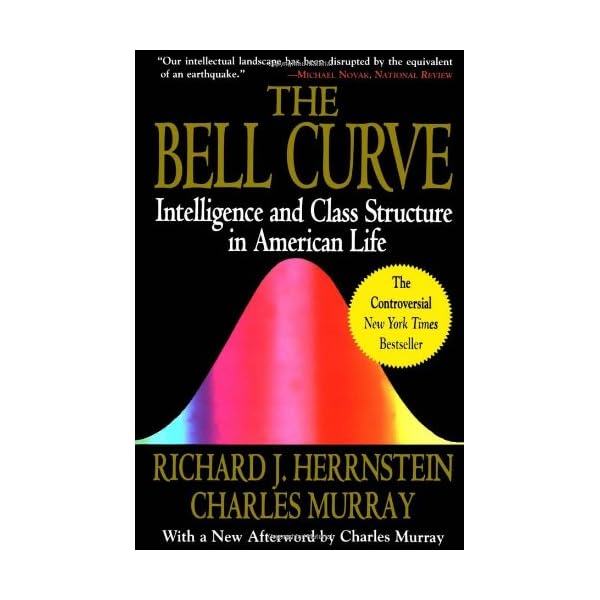
The controversial book linking intelligence to class and race in modern society, and what public policy can do to mitigate socioeconomic differences in IQ, birth rate, crime, fertility, welfare, and poverty. Herrnstein and Murray have written one of the most provocative social science books published in many years....This is a superbly written and exceedingly well documented book. Malcolme W. Browne The New York Times Book Review Mr. Murray and Mr. Herrnstein write that "for the last 30 years, the concept of intelligence has been a pariah in the world of ideas," and that the time has come to rehabilitate rational discourse on the subject. Prof. Eugene D. Genovese National Review Richard Herrnstein and Charles Murray might not feel at home with Daniel Patrick Moynihan and Lani Guinier, but they should....They have all [made] brave attempts to force a national debate on urgent matters that will not go away. In the second round of reaction, some commentators suggested that Herrnstein and Murray were merely bringing up facts that were well known in the scientific community, but perhaps best not discussed in public.
Reviews
Find Best Price at Amazon"Although you would not glean as much from the vicious attacks that have been leveled against this book since its publishing, the major thesis is that intelligence is highly correlated with success in America. This same kind of intelligence, needless to say, is valuable to employers and leads to success at work. There are enclaves of high income, highly intelligent people in Boston, New York, San Francisco and Washington DC. What they also find, but which does not excite controversy, is that Ashkenazi Jews average 115, Americans of Northeast Asian descent average about 107, American Indians average about 90, and Hispanic Americans about the same. They produce highly reproducible results – there are a wide range of intelligence tests available, and all of them will yield pretty much the same results for a given individual. In practical terms, a one standard deviation difference in population averages means that only one person in six in the lower population has an intelligence at or exceeding the average of the higher group. Only one white person in six is as smart as the average Ashkenazi Jew, and only one black and six is as intelligent as the average white. Intelligence is highly correlated with success in school, income, health and happiness. In round numbers, intelligence explains about 25% of the difference in levels of success. At the same time, as noted in Lynn's book above, the intelligence of nativeborn Americans is declining."
"The Bell Curve got so much positive attention as a revolutionary, critical review of issues so current and pressing within our society, at the time, and today that I felt I would really appreciate reading it and reviewing the authors scientific efforts. In fact, as you will find, upon studying the text, the Bell Curve IS about the relationship between "Intellect" and "One's ability to succeed in life". It is scary to me, but when I, a student of the Bell Curve, see these commentators on telivision or read of them in the papers.... speaking of "dirty little books", "racism disguised as science" etc..., I have the feeling that If this were not the 20th century, and if we did not have the constitution protecting our right to publish scientific findings, these very same negative commentators might just try to force Murray to renounce his scientific findings, keeping us all in the dark for as long as possible."
"Interesting book on the study of human cognition."
"It is not about what we want, but about what nature does with human nature and its most distinctive feature / evolutionary advantage. What really bothers many readers and many more opinionated none-readers of this book, is the fact that nature does not care what they think, and shall never consult with them."
"Everybody should read this controversial book."
"Fantastic reading combined with a good seller equals a satisfied customer."
Best Human Geography
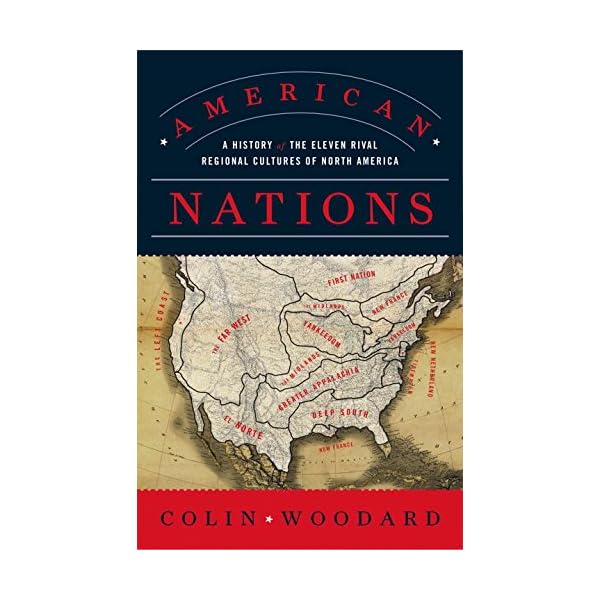
• A New Republic Best Book of the Year • The Globalist Top Books of the Year • Winner of the Maine Literary Award for Non-fiction • Particularly relevant in understanding who voted for who in this presidential election year, this is an endlessly fascinating look at American regionalism and the eleven “nations” that continue to shape North America. Colin Woodard, an award-winning writer and journalist, is currently the state and national affairs writer at the Portland Press Herald and Maine Sunday Telegram where he won a 2012 George Polk Award and was a finalist for the 2016 Pulitzer Prize for Explanatory Reporting A longtime foreign correspondent for The Christian Science Monitor , the San Francisco Chronicle , and The Chronicle of Higher Education , he has reported from more than fifty foreign countries and six continents.
Reviews
Find Best Price at Amazon"Whereas the first two-thirds were well-reasoned and well-supported, the last third devolved into stereotypes and generalities, and contained more than a few downright errors, particularly concerning the modern Deep South and Greater Appalachia. I could list at least a half-dozen factual errors in his presentation concerning the practice and influence of Evangelical Christianity in the Bible Belt, for instance, but would rather not bog down this review with nit-picking."
"Being from the area known as the "Far West" I felt that the author decided to spend virtually no time or effort in speaking to the El Norte, Far West and the Left Coast."
"One of the best books I've read on America and it's history."
"I have given it to at least 5 friends as a gift and the conversations it leads to are always fascinating."
"This is a fascinating, well-written book, introducing a conceptual framework that was completely new to me."
"The map on the "American Nations" cover showed me that I grew up roughly where the Deep South, Appalachia, and El Norte meet in eastern Texas. We said we were "Scotch-Irish" but seemed to have no knowledge of or interest in how we came to be there, nor did I ever know anyone who was aware that there were early Spanish missions in the pine woods of East Texas or that there had been a large Cherokee village not four miles from my home. Later I learned that my own family had entered the U.S. in South Carolina from Barbados in the 1680s; little is known about them except that they were poor whites, so now we know there is a good chance they were indentured servants to Barbadian slave lords. Now I have some insight into features of my county that have puzzled me for decades: why the tiny community where I attended school in the 1950s and 60s was clustered around its original plantation house, Cumberland Presbyterian church, and cotton fields (it was founded by a slave-holding family from Savannah, Georgia in the 1840s or 50s); why my neighbors had such casual contempt for blacks, Jews, Mexicans, Indians, Catholics, Chinese, and all other foreigners; why Ku Klux Klan actions were still fresh in older folks' memories; why blacks lived either in their own parts of town literally across the tracks or entirely separately in their own towns or isolated communities tucked away in the woods; why my parents were so puzzled that "our Negroes" seemed dissatisfied with our hand-me-down clothes and an occasional pig (I recall puzzled discussions of "What do they want?" ); why there was a deeply ingrained presumption that gentlemen rode horses and peasants walked, so any poor farmer that came into oil money bought horses immediately (Deep South cavaliers influence); why there was hardly any familiarity with or emphasis on attending college, and disdain for the (rare) "know it all college boy" (Appalachian ignorance and apathy influenced by Deep South resistance to education for the masses); why employers referred to employees as "hands"; why our relatives in far southwest Texas seemed to us to live in a different country (they did - El Norte), while relatives in Tennessee and business associates in Mississippi seemed to come from an earlier and more violent time; why Cajuns in south Louisiana and southeast Texas seemed like such an anomaly in the Deep South in their Catholicism and complete disregard of racial boundaries (New France egalitarianism); maybe even why some blacks in East Texas practiced a strange mixture of Southern Baptist services and voodoo lore - one local black church was even named the Voodoo Baptist Church, and the pastor roamed the area on foot wearing an animal skin cape and carrying a long shepherd's staff (West Africa via the West Indies). Lastly, I did not think Woodard unfairly favored the Yankees; his description showed the harsh, violent, and meddlesome parts of their Puritan cultural heritage along with the elements we still cherish (for much more detail see Fischer's "Albion's Seed"). The Deep South has been a reluctant participant in the U.S. federation and has routinely made threats to withdraw since the Articles of Confederation days; in the 2010 mid-term election we again heard southern politicians talk of secession."
Best Holidays
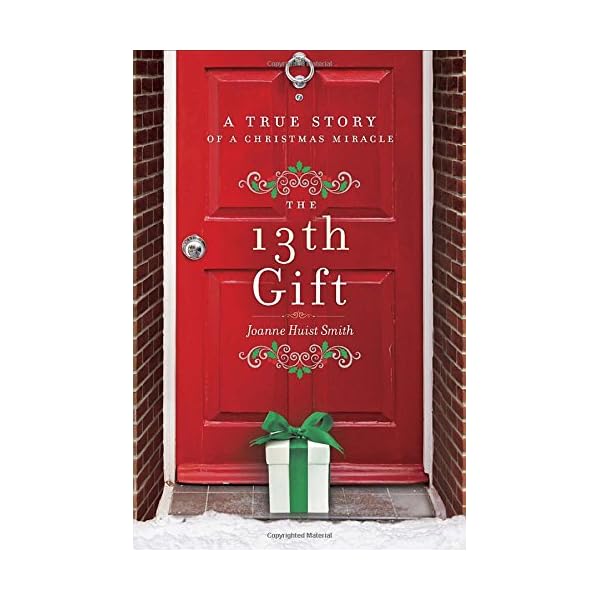
This true story about the power of random acts of kindness will warm the heart, a beautiful reminder of the miracles of Christmas and the gift of family during the holiday season. "The book's simple prose and profound message will fill even the Grinch-iest hearts with Christmas spirit while affirming the age-old adage, it really is the thought that counts." This memoir is written from the heart and for the heart.” -- Jason Wright, New York Times bestselling author of Christmas Jars. Joanne Smith deftly reconciles the difficult terrain that ranges between the Christmas we all want and the tragedies of life that sooner or later beset us all. As a veteran devourer of Christmas stories short and long, fictional and true, I mistakenly assumed I'd encountered every conceivable plot variant in the genre. Joanne Hurst Smith's wondrous story hit me from so many directions, playing on the strings of so many emotions, that it left me limp at the end Quite simply, it is a masterpiece .” -- Joe L. Wheeler, Ph.D., author of the bestselling Christmas in My Heart ® series. "For readers of Richard Paul Evans and Greg Kincaid comes The 13th Gift , a heartwarming Christmas memoir about how a random act of kindness transformed one of the bleakest moments in a family's history into a time of strength and love."
Reviews
Find Best Price at Amazon"However, the holiday season is upon them and Joanne is being pressured by her sister to “do” Christmas for the children. Megan is precocious and wise beyond her years, Nick is obsessed with video games (much to my daughter’s dismay, I never bought her video games), and Ben is angry and avoiding spending time with the family. When Joanne tries to purchase Christmas gifts for her children, but it ends in embarrassment and crying. The card has a lovely drawing a cute reference to the twelve days of Christmas."
"This book is a wonderful, heartwarming, true story of how the Lord and the generosity of others help a family in their time of need!"
"A straightforward, easy read that still manages to pull the heartstrings hard."
"I loved this book!"
"I try to read a Christmas book around the holidays each year, as I find it helps to put me in the Christmas Spirit."
"This book is a wonderful read and I would hope that Hallmark or someone would come out with a movie about this. I was extremely captivated and moved by this story and could not put the book down until I read all of it."
"Everyone deals with tragedy in their own way and this book does well at explaining how each of the family members were affected differently, and how they consciously or unconsciously used their own particular strengths to help each other."
"The author/ mother shares how these small gifts helped the family function better & how the "true friends" blessed them & made it possible for them to pull together as a family again."