
Best Business & Investing
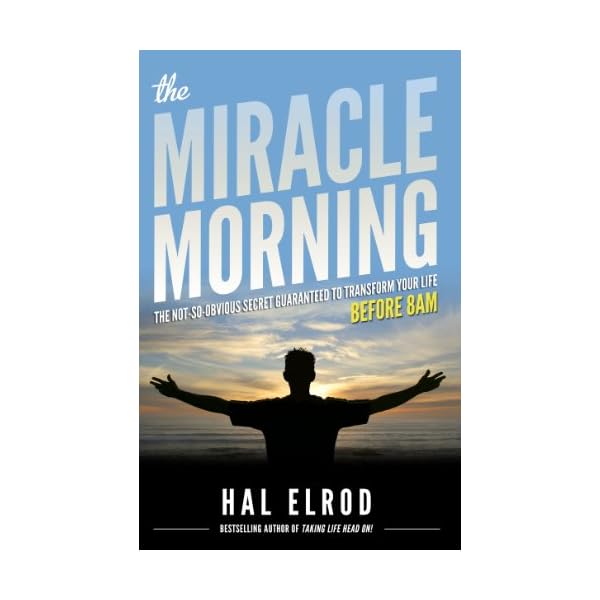
“Hal Elrod is a genius and his book The Miracle Morning has been magical in my life. What if you could wake up tomorrow and any—or EVERY—area of your life was beginning to transform? "The Miracle Morning(tm) is literally the ONE thing that will make immediate and profound changes in any-or every area of your life. -RUDY RUETTIGER, the Notre Dame football player who inspired the hit Hollywood movie RUDY. "To read The Miracle Morning is to give yourself the gift of waking up each day to your full potential. Hal gives us the blueprint for creating the success, happiness and prosperity that may be have eluded us, and he's made it so simple that anyone can turn their life around-no matter what their circumstances." When I implemented Hal's strategies I noticed an immediate difference in my personal and professional life.
Reviews
Find Best Price at Amazon"I almost didn't get the book because I read the 1 star reviews and they said it was a simplistic redo of the same messages many others had done. I heard Hal Elrod on a webinar and was excited to read the book based upon his presentation, there were a lot of 5 star reviews and I decided to get it. To exercise has been on my goals list for five years and I just couldn't get back to it until I read Miracle Morning."
"A few weeks ago I was exhausted in tears thinking I didn't have "me time". What time alone I had at the end of the day I just wasted watching tv."
"First off, there are a lot of good ideas outlined in the book that I'm looking forward to implementing to improve my mornings and be as productive as I can possibly be. "Thousands of people have reached their potential after utilizing The Miracle Morning." There was so much fluff and shameless self-promotion that had the book not been downloaded on my iPad I would've thrown the physical copy away after ripping out the pages that were actually useful."
"Once on the website, you need to register and get sucked into more commercial advertising and never get the information that was said to be there."
"Now if you're wondering why the book is almost 200 pages long- most of the book is author talking about himself, success stories( of course), and constantly being referred to the author's webpage to check or download something or join the community. Then to make this substance-lacking book as long as possible author constantly repeats himself and fills the pages with poorly chosen quotes that are supposed to inspire you. I've read some self-help books that weren't helpful but it's the first time ever I feel ripped off by buying a book."
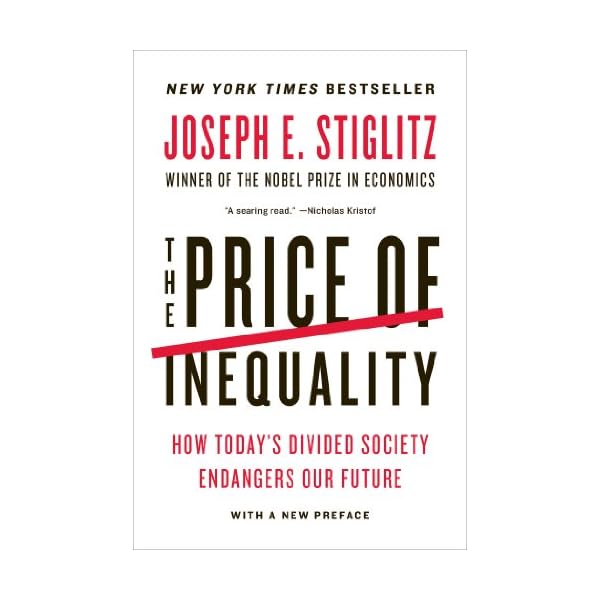
A forceful argument against America's vicious circle of growing inequality by the Nobel Prize–winning economist. “An important and smart new book... It’s a searing read.”. - Nicholas Kristof, New York Times.
Reviews
Find Best Price at Amazon"Given his nobel prize was related to information asymmetries, Stiglitz is extremely well positioned to discuss how market failures interfere with the marginal productivity of labour theory. Chapter 1- America's 1 pct problem presents the backgdrop of the distribution of wealth in the US how it has changed over the last 30 years, how the middle class is shrinking and how mean and median GDP are diverging. Chapter 2 - Rent Seeking and the Making of an Unequal Society discusses what is happening to the distribution of income through the recession and how the growing inquality has been created and is not the function of natural market forces. The author then discusse show wealth creates power and facilitates changes to the rules of the game to extract rents is an age old problem. It discusses how humans dont have rational expectations and respond to questions via framing and how money can change social norms through the shaping of debate to promote beliefs that benefit the 1% as natural outcomes of the most fair state. It gives accounts about how distribution of profits between labour and capital is a function of the institutional and legal regimes, it is not the natural consequence of economic order."
"The Price of Inequality is a wonderful treatise on the various effects, primary, secondary, and so on, of the wealth disparity that is currently plaguing America."
"The seemingly endless problems we've been experiencing in our country are directly related to discreetly changed policies and laws coupled with a lack of enforcement, all done for the financial benefit of a few, at the cost of our world, affecting us all in countless ways we're marginally aware of. Dr. Stiglitz does an excellent job of educating the average reader from the perspective of a former World Banker."
"Joseph Stigliz presents a strong case based on facts that the USA must reform its current economic rules or the Top 1% will continue to continue to control more and more wealth."

Most of the truly wealthy in the United States don’t live in Beverly Hills or on Park Avenue. Formerly a professor of marketing at Georgia State University, Dr. Stanley spent approximately 20 years interviewing America’s wealthy, starting in 1973—and focusing on people with a net worth of at least $1 million. In The Millionaire Next Door, read by Cotter Smith, Stanley (Marketing to the Affluent) and Danko (marketing, SUNY at Albany) summarize findings from their research into the key characteristics that explain how the elite club of millionaires have become "wealthy." Focusing on those with a net worth of at least $1 million, their surprising results reveal fundamental qualities of this group that are diametrically opposed to today's earn-and-consume culture, including living below their means, allocating funds efficiently in ways that build wealth, ignoring conspicuous consumption, being proficient in targeting marketing opportunities, and choosing the "right" occupation. In The Millionaire Mind, an excellent follow-up to the highly successful first analysis of how ordinary folks can accumulate wealth, Stanley interviews many more participants in a much more comprehensive study of the characteristics of those in this economic situation. The author structures these deeper details into categories that include the key success factors that define this group, the relationship of education to their success, their approach to balancing risk, how they located themselves in their work, their choice of spouse, how they live their daily lives, and the significant differences in the truth about this group vs. the misplaced image of high spenders.
Reviews
Find Best Price at Amazon"I bought this book for information on making the most of any extra income, learning more about investing strategies, options for generating passive income, and improving my personal finances. The book primarily focuses on interesting finds and anecdotes from the authors' years of research on millionaires in America. UAWs have a low net worth relative to income, and the opposite for PAWs and uses these terms throughout the book. His primary argument is that PAWs get to be wealthy by living well below their means - these are people who do not look like millionaires, they live in modest neighborhoods, drive domestic sedans, wear a Timex, and usually have a blue-collar job that does not come with an expensive lifestyle associated and as a result can accumulate a sizeable nest egg. On the other hand, UAWs are typically well-educated professionals with high paying and high profile jobs (doctors, attorneys), but due to societal pressures associated with their social standing are forced to squander all their money living in luxury neighborhoods, driving German cars, and sending their kids to private schools. Where the authors really lost my interest is that the rest of the book is chock full of anecdotes and some rather uninformative statistics to drive a few other points home. - First generation millionaires (often immigrants) tend to be succeeded by children with financial struggles, since the parent's desire to "give them a better life" pushes them into careers where they become UAWs, and their upbringing in our consumerist culture impedes their ability to live frugally. The authors devote an entire chapter to this while only coming to the following conclusions: no method of buying a car is the clear winner, but if you own a business you may benefit from your connections with the owners of car dealerships; and most millionaires drive unassuming domestic (and to a lesser extent, Japanese) cars purchased new or lightly used. I would hardly categorize it as a self-help book, it's more a retrospective on the authors' research and a collection of anecdotes and interesting conclusions about the countless Americans leading unglamorous lives while accumulating appreciable amounts of wealth. I would only recommend this book as an interesting overview of some good financial habits, or as an eye-opener for those with luxurious financial tendencies who struggle to save money despite their income level."
"This is such an inspiring read because it shows almost anyone can become a millionaire if you live below your means and invest well. I love that the majority of millionaires are people you'd never suspect because they don't live flashy lives in big houses with high-status toys abounding."
"Read full summary and review of this book on my blog: imeducatingmyself.com/the-millionaire-next-door-by-thomas-j-stanley-ph-d-book-review. What do I think about this book? There are so many things that you learn through life and experience, and there are many common sense things shared."
"I did find a work around for their size that I'll pass along. On a page with a tiny chart press the Table of Contents and when the page appears you may find it larger."
"This book gives awesome examples of "It does not matter how much money you make, you can be richer overall, by your spending habits.""
Best Computers & Technology
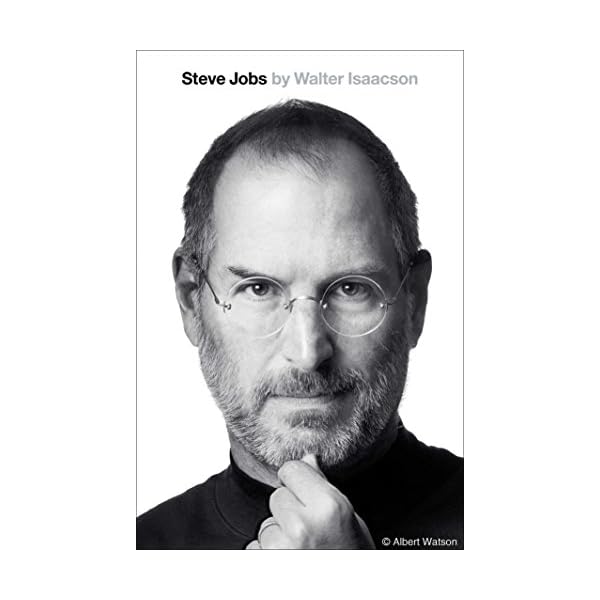
Based on more than forty interviews with Jobs conducted over two years—as well as interviews with more than a hundred family members, friends, adversaries, competitors, and colleagues—Walter Isaacson has written a riveting story of the roller-coaster life and searingly intense personality of a creative entrepreneur whose passion for perfection and ferocious drive revolutionized six industries: personal computers, animated movies, music, phones, tablet computing, and digital publishing. But his personality and products were interrelated, just as Apple’s hardware and software tended to be, as if part of an integrated system. Amazon Best Books of the Month, November 2011 : It is difficult to read the opening pages of Walter Isaacson’s Steve Jobs without feeling melancholic. Now, just weeks after his death, you can open the book that bears his name and read about his youth, his promise, and his relentless press to succeed. Few in history have transformed their time like Steve Jobs, and one could argue that he stands with the Fords, Edisons, and Gutenbergs of the world. This is a timely and complete portrait that pulls no punches and gives insight into a man whose contradictions were in many ways his greatest strength. Isaacson: Andy Hertzfeld, who worked with Steve on the original Macintosh team, said that even if you were aware of his Reality Distortion Field, you still got caught up in it. Fortunately, as people read the whole book, they saw the theme of the narrative: He could be petulant and rough, but this was driven by his passion and pursuit of perfection. Isaacson: He was a genius at connecting art to technology, of making leaps based on intuition and imagination. “A frank, smart and wholly unsentimental biography…a remarkably sharp, hi-res portrait… Steve Jobs is more than a good book; it’s an urgently necessary one.” — Time. “If you haven’t read the bestselling, superb biography and inspiring business book, Steve Jobs , by Walter Isaacson, do so. “For the generation that's grown up in a world where computers are the norm, smartphones feel like fifth limbs and music comes from the Internet rather than record and CD stores, Steve Jobs is must-read history…The intimate chapters, where Jobs' personal side shines through, with all his faults and craziness, leave a deep impression. It is on the one hand a history of the most exciting time in the age of computers, when the machines first became personal and later, fashionable accessories. And it is a gadget lover’s dream, with fabulous, inside accounts of how the Macintosh, iPod, iPhone and iPad came into being. What makes the book come alive, though, is Isaacson’s ability to shape the story as a kind of archetypal fantasy: the flawed hero, the noble quest, the holy grail, the death of the king.”— Booklist. “A nuanced, balanced portrait that is sure to become mandatory reading for anyone with an interest in big business and popular culture…Isaacson is to be commended for explaining the genius of Jobs in fascinating fashion, launching a discussion that could reach infinity and beyond.”— Christian Science Monitor. “Walter Isaacson's biography of Steve Jobs comes as a breath of fresh air…a reliable and captivating guide to a man who reshaped the computing industry and more.” — CNET.com. “It's a testament to Isaacson's skill as a biographer that readers can at last obtain the picture of Steve Jobs as a human being rather than a legend…anyone who's ever wondered how so very much about the technology landscape has changed so fundamentally in just 35 years, owes it to themselves to read this book.”— TUAW.com. “Isaacson's biography lives up to the hype, showing readers the private turbulence that spurred Jobs to public greatness”— ShelfAwareness.com (- ).
Reviews
Find Best Price at Amazon"Always knew that Jobs was an ego-maniac, but never realized the extent to which he disrespected certain industry peers, company employees and large numbers of people he crossed paths with."
"I would have to say in preface I feel the reader needs to have had some history with the Apple products as the book, while describing the personality of Steve Jobs, also goes into a chronological explanation of the development of both the hardware and software."
"Steve Jobs has given to the tech industry what no other individual could ever, or has ever, give it."
"I read the book on my Kindle and wished it was on my iPad. I now appreciate Jobs for that."
"if you saw the truly awful movie that purports to be based on this book, you must read the book."
"He had poor leadership qualities and he was smart enough to have learned how to improve himself without sacrificing his work."
"Walter Isaacson did not interview the one living person, adopted sister Patty Jobs, who could enlighten him more about interactions in the Jobs household that helped form Steve Jobs. Research shows that she is still living and works at De Anza College in the payroll department, a position similar to that of her late mother."
"I actually almost wish it was longer, but at the same time can see how that might lower the quality and make it too long for a lot of people. I have a huge interest in Steve Jobs and Apple and have been a long time fan of Sorkin so I had high expectations and I was not let down."
Best Humor & Entertainment
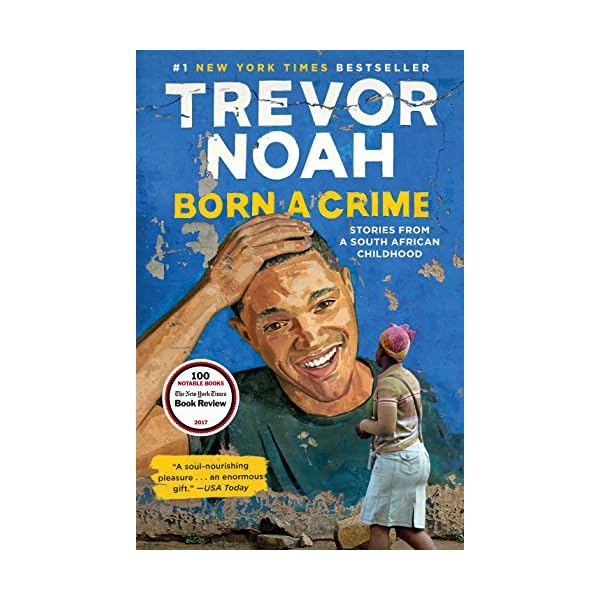
Trevor was born to a white Swiss father and a black Xhosa mother at a time when such a union was punishable by five years in prison. Living proof of his parents’ indiscretion, Trevor was kept mostly indoors for the earliest years of his life, bound by the extreme and often absurd measures his mother took to hide him from a government that could, at any moment, steal him away. Finally liberated by the end of South Africa’s tyrannical white rule, Trevor and his mother set forth on a grand adventure, living openly and freely and embracing the opportunities won by a centuries-long struggle. It is also the story of that young man’s relationship with his fearless, rebellious, and fervently religious mother—his teammate, a woman determined to save her son from the cycle of poverty, violence, and abuse that would ultimately threaten her own life. Whether subsisting on caterpillars for dinner during hard times, being thrown from a moving car during an attempted kidnapping, or just trying to survive the life-and-death pitfalls of dating in high school, Trevor illuminates his curious world with an incisive wit and unflinching honesty. His stories weave together to form a moving and searingly funny portrait of a boy making his way through a damaged world in a dangerous time, armed only with a keen sense of humor and a mother’s unconventional, unconditional love. Born a Crime is not just an unnerving account of growing up in South Africa under apartheid, but a love letter to the author’s remarkable mother.” —Michiko Kakutani, The New York Times. “[An] unforgettable memoir.” — Parade “What makes Born a Crime such a soul-nourishing pleasure, even with all its darker edges and perilous turns, is reading Noah recount in brisk, warmly conversational prose how he learned to negotiate his way through the bullying and ostracism. In the end, Born a Crime is not just an unnerving account of growing up in South Africa under apartheid, but a love letter to the author’s remarkable mother.” —Michiko Kakutani, The New York Times “[An] unforgettable memoir.” — Parade. “You’d be hard-pressed to find a comic’s origin story better than the one Trevor Noah serves up in Born a Crime . [He] developed his aptitude for witty truth telling [and]…every hardscrabble memory of helping his mother scrape together money for food, gas, school fees, and rent, or barely surviving the temper of his stepfather, Abel, reveals the anxious wellsprings of the comedian’s ambition and success. If there is harvest in spite of blight, the saying goes, one does not credit the blight-but Noah does manage to wring brilliant comedy from it.” — O: The OprahMagazine “What makes Born a Crime such a soul-nourishing pleasure, even with all its darker edges and perilous turns, is reading Noah recount in brisk, warmly conversational prose how he learned to negotiate his way through the bullying and ostracism. “This isn't your average comic-writes-a-memoir: It’s a unique look at a man who is a product of his culture—and a nuanced look at a part of the world whose people have known dark times easily pushed aside.” —Refinery29. told through stories and vignettes that are sharply observed, deftly conveyed and consistently candid. Growing organically from them is an affecting investigation of identity, ethnicity, language, masculinity, nationality and, most of all, humanity—all issues that the election of Donald Trump in the United States shows are foremost in minds and hearts everywhere. What the reader gleans are the insights that made Noah the thoughtful, observant, empathic man who wrote Born a Crime . Here is a level-headed man, forged by remarkable and shocking life incidents, who is quietly determined and who knows where home and the heart lie. “A gifted storyteller, able to deftly lace his poignant tales with amusing irony.” — Entertainment Weekly. Among the many virtues of Born a Crime is a frank and telling portrait of life in South Africa during the 1980s and ’90s. Born a Crime offers Americans a second introduction to Trevor Noah, and he makes a real impression.” — Newsday. Noah is quick with a disarming joke, and he skillfully integrates the parallel narratives via interstitial asides between chapters. Perhaps the most harrowing tales are those of his abusive stepfather, which form the book’s final act (and which Noah cleverly foreshadows throughout earlier chapters), but equally prominent are the laugh-out-loud yarns about going to the prom, and the differences between ‘White Church’ and ‘Black Church.’” — Publishers Weekly (starred review). Incisive, funny, and vivid, these true tales are anchored to his portrait of his courageous, rebellious, and religious mother who defied racially restrictive laws to secure an education and a career for herself—and to have a child with a white Swiss/German even though sex between whites and blacks was illegal. and his candid and compassionate essays deepen our perception of the complexities of race, gender, and class.” — Booklist (starred review). Trevor Noah is the most successful comedian in Africa and is the host of the Emmy and Peabody Award–winning The Daily Show on Comedy Central.
Reviews
Find Best Price at Amazon"Trevor Noah is a superb storyteller, and this memoir is his eloquent and touching account of growing up as the mixed race child of a single mother, living in poverty in deeply racist and sexist South Africa. Reminiscent of The Glass Castle by Jeannette Walls, it is a superbly written story of a perceptive and resilient child thriving in very difficult circumstances, and it beautifully captures these circumstances seen through the eyes of a child."
"I have to love a guy who finds comedy in tragedy and who gleefully spins yarns about experiences that would keep most of us in therapy for a lifetime. The heroine of the book is Noah's mother, a feisty lady with a solid rock faith, a gal who snubs her nose at things that don't make sense. He learned to navigate Apartheid society's complex system that divided people in to three groups: black, white, and colored. Noah was 'colored' with a 'black' Xhosa African mother and a 'white' Swiss father, his very existence implicating his parent's crime. He spoke multiple languages, Xhosa and Zulu and Afrikaans, and English, could fit into most groups, but felt affiliated to black culture."
"As a long time viewer of the Daily Show, I started watching as Trevor took over from Jon Stewart and while I've always thought he does a good job, I had no idea the depth of character and experiences that were below the surface of those cute dimples! He is a wonderful story teller, finding the right balance between relaying his experiences, weaving in the social atmosphere around it and doing it in such a way that even as an American reader, I was able to visualize the communities he was describing in rich detail."
"The Trevor tome is written without anger at the system but the love and devotion of his mother."
"What this book does do is describe life growing up during Apartheid in ways that probably most readers are not familiar with."
Best Science & Math

From a renowned historian comes a groundbreaking narrative of humanity’s creation and evolution—a #1 international bestseller—that explores the ways in which biology and history have defined us and enhanced our understanding of what it means to be “human.”. From examining the role evolving humans have played in the global ecosystem to charting the rise of empires, Sapiens integrates history and science to reconsider accepted narratives, connect past developments with contemporary concerns, and examine specific events within the context of larger ideas. Tackling evolutionary concepts from a historian’s perspective, Sapiens: A Brief History of Humankind , describes human development through a framework of three not-necessarily-orthodox “Revolutions”: the Cognitive, the Agricultural, and the Scientific. His ideas are interesting and often amusing: Why have humans managed to build astonishingly large populations when other primate groups top out at 150 individuals? Because our talent for gossip allows us to build networks in societies too large for personal relationships between everyone, and our universally accepted “imagined realities”--such as money, religion, and Limited Liability Corporations—keep us in line. Though the concepts are unusual and sometimes heavy (as is the book, literally) Harari’s deft prose and wry, subversive humor make quick work of material prone to academic tedium. He’s written a book of popular nonfiction (it was a bestseller overseas, no doubt in part because his conclusions draw controversy) landing somewhere in the middle of a Venn diagram of genetics, sociology, and history. An engrossing read.” (Dan Ariely, New York Times Bestselling author of Predictably Irrational, The Upside of Irrationality , and The Honest Truth About Dishonesty ). “Yuval Noah Harari’s celebrated Sapiens does for human evolution what Stephen Hawking’s A Brief History of Time did for physics.… He does a superb job of outlining our slow emergence and eventual domination of the planet.” ( Forbes ). “Writing with wit and verve, Harari…attempts to explain how Homo sapiens came to be the dominant species on Earth as well as the sole representative of the human genus.… Provocative and entertaining.” ( Publishers Weekly ). “In this sweeping look at the history of humans, Harari offers readers the chance to reconsider, well, everything, from a look at why Homo sapiens endured to a compelling discussion of how society organizes itself through fictions.” ( Booklist Best Books of the Year).
Reviews
Find Best Price at Amazon"Parts of it were downright fascinating such as "imagination" being a keystone to human activity, e.g. corporations, money, and religion. Finally he keeps touching on the fact that animals have paid a terrible price for the rise of sapiens. Incidentally our family has a farm background and I eat no chicken, turkey, pork, or beef. Now I didn't give the book five stars because he makes positive references to the misguided but widely read Jared Diamond. Let me emphasize that on this snowy March day the cat and I are both glad we don't need to go out and scavenge something off the frozen earth."
"A standard history of the human race begins with Paleolithic proto-humans, traces the development of modern man or homo sapiens sapiens, then chronicles the beginnings and expansions of human civilization from agriculture to the present. He asks how "An Animal of No Significance" managed to become the dominant life form, and whether that animal's learning to produce his own food and then to further harness the natural world to his will through science were boons or setbacks, both for that animal and for the rest of the biosphere."
"An interesting book and very enjoyable to read."
"And at least for me, a fresh set of insights about the Agricultural Revolution - it was an accident, we can't go back, and if it hadn't happened we'd lack anything we call civilization. Also, our entire economic system - money, capitalism, et al, is another delusion that requires our faith in order to survive. The book can be generously called a set of personal meditations of history and human nature, but done with little research and even scanter evidence."
Best Professional & Technical
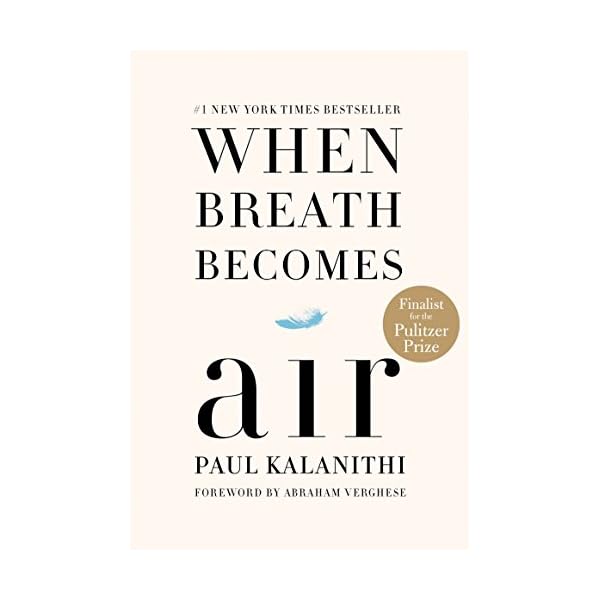
#1 NEW YORK TIMES BESTSELLER • PULITZER PRIZE FINALIST • This inspiring, exquisitely observed memoir finds hope and beauty in the face of insurmountable odds as an idealistic young neurosurgeon attempts to answer the question What makes a life worth living? At the age of thirty-six, on the verge of completing a decade’s worth of training as a neurosurgeon, Paul Kalanithi was diagnosed with stage IV lung cancer. When Breath Becomes Air chronicles Kalanithi’s transformation from a naïve medical student “possessed,” as he wrote, “by the question of what, given that all organisms die, makes a virtuous and meaningful life” into a neurosurgeon at Stanford working in the brain, the most critical place for human identity, and finally into a patient and new father confronting his own mortality. I’ll go on.’” When Breath Becomes Air is an unforgettable, life-affirming reflection on the challenge of facing death and on the relationship between doctor and patient, from a brilliant writer who became both. And part comes from the way he conveys what happened to him—passionately working and striving, deferring gratification, waiting to live, learning to die—so well.” —Janet Maslin, The New York Times. The book brims with insightful reflections on mortality that are especially poignant coming from a trained physician familiar with what lies ahead.” — The Boston Globe. When Paul Kalanithi is given his diagnosis he is forced to see this disease, and the process of being sick, as a patient rather than a doctor--the result of his experience is not just a look at what living is and how it works from a scientific perspective, but the ins and outs of what makes life matter. As he wrote to a friend: ‘It’s just tragic enough and just imaginable enough.’ And just important enough to be unmissable.” —Janet Maslin, The New York Times “Paul Kalanithi’s memoir, When Breath Becomes Air, written as he faced a terminal cancer diagnosis, is inherently sad. It is, despite its grim undertone, accidentally inspiring.” — The Washington Post “Paul Kalanithi’s posthumous memoir, When Breath Becomes Air, possesses the gravity and wisdom of an ancient Greek tragedy. [Kalanithi] is so likeable, so relatable, and so humble, that you become immersed in his world and forget where it’s all heading.” — USA Today “It’s [Kalanithi’s] unsentimental approach that makes When Breath Becomes Air so original—and so devastating. Its only fault is that the book, like his life, ends much too early.” — Entertainment Weekly “[ When Breath Becomes Air ] split my head open with its beauty.” —Cheryl Strayed. “Rattling, heartbreaking, and ultimately beautiful, the too-young Dr. Kalanithi’s memoir is proof that the dying are the ones who have the most to teach us about life.” —Atul Gawande “Thanks to When Breath Becomes Air, those of us who never met Paul Kalanithi will both mourn his death and benefit from his life. Kalanithi strives to define his dual role as physician and patient, and he weighs in on such topics as what makes life meaningful and how one determines what is most important when little time is left. This deeply moving memoir reveals how much can be achieved through service and gratitude when a life is courageously and resiliently lived.” — Publishers Weekly “A moving meditation on mortality by a gifted writer whose dual perspectives of physician and patient provide a singular clarity . Every doctor should read this book—written by a member of our own tribe, it helps us understand and overcome the barriers we all erect between ourselves and our patients as soon as we are out of medical school.” —Henry Marsh, author of Do No Harm: Stories of Life, Death, and Brain Surgery “A tremendous book, crackling with life, animated by wonder and by the question of how we should live.
Reviews
Find Best Price at Amazon"Ultimately there's not much triumph in it in the traditional sense but there is a dogged, quiet resilience and a frank earthiness that endures long after the last word appears. Dr. Kalanithi talks about his upbringing as the child of hardworking Indian immigrant parents and his tenacious and passionate espousal of medicine and literature. He speaks lovingly of his relationship with his remarkable wife - also a doctor - who he met in medical school and who played an outsized role in supporting him through everything he went through. He had a stunning and multifaceted career, studying biology and literature at Stanford, then history and philosophy of medicine at Cambridge, and finally neurosurgery at Yale. The mark of a man of letters is evident everywhere in the book, and quotes from Eliot, Beckett, Pope and Shakespeare make frequent appearances. Metaphors abound and the prose often soars: When describing how important it is to develop good surgical technique, he tells us that "Technical excellence was a moral requirement"; meanwhile, the overwhelming stress of late night shifts, hundred hour weeks and patients with acute trauma made him occasionally feel like he was "trapped in an endless jungle summer, wet with sweat, the rain of tears of the dying pouring down". The painful uncertainty which he documents - in particular the tyranny of statistics which makes it impossible to predict how a specific individual will react to cancer therapy - must sadly be familiar to anyone who has had experience with the disease. There are heartbreaking descriptions of how at one point the cancer seemed to have almost disappeared and how, after Dr. Kalanithi had again cautiously made plans for a hopeful future with his wife, it returned with a vengeance and he had to finally stop working."
"He says this, “The secret is to know that the deck is stacked, that you will lose, that your hands or judgment will slip, and yet still struggle to win …You can’t ever reach perfection, but you can believe in an asymptote toward which are ceaselessly striving. In the foreword by fellow doctor and writer Abraham Verghese, that doctor writes, “He (Paul) wasn’t writing about anything—he was writing about time and what it meant to him now, in the context of his illness.” And in the afterword by his wife Lucy, the meaning of that time becomes even clearer."
"The beautifully written epilogue, which was written by his wife Lucy, will break your heart, and give you hope at the same time. It never occurred to me that you could love someone the same way after he was gone, that I would continue to feel such love and gratitude alongside the terrible sorrow, the grief so heavy that at times I shiver and moan under the weight of it.""
Best Crafts, Hobbies & Home
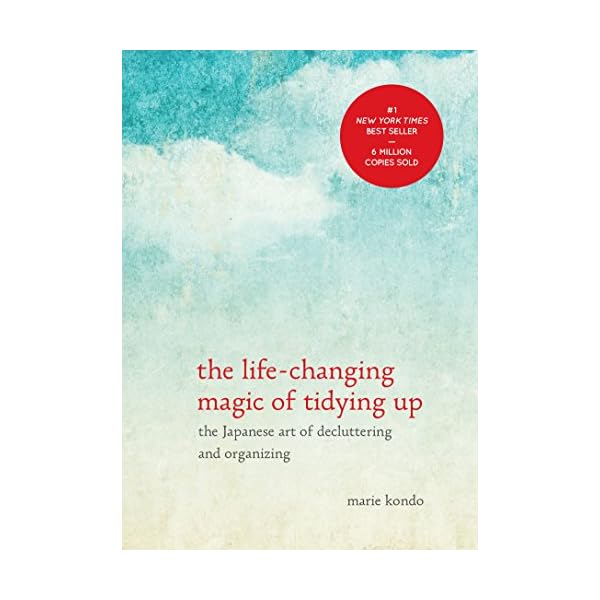
This #1 New York Times best-selling guide to decluttering your home from Japanese cleaning consultant Marie Kondo takes readers step-by-step through her revolutionary KonMari Method for simplifying, organizing, and storing. #1 New York Times Best SellerAmazon's Best Book of 2014 in Crafts, Home & Garden. "Ms. Kondo delivers her tidy manifesto like a kind of Zen nanny, both hortatory and animistic." a literal how-to-heave-ho, and I recommend it for anyone who struggles with the material excess of living in a privileged society. A totally reasonable, scary cult that works, doesn’t kill people (a bonus), but does drastically change your life. the Japanese expert’s ode to decluttering is simple and easy to follow." "Reading it, you glimpse a glittering mental freedom from the unread/uncrafted/unworn, buyer’s remorse, the nervous eyeing of real estate listings. "All hail the new decluttering queen Marie Kondo, whose mess-busting bestseller has prompted a craze for tidying in homes across the world . "How could this pocket-sized book, which has already sold over 2 million copies and sits firmly atop the New York Times Best Seller list, make such a big promise? Marie “KonMari” Kondo runs an acclaimed consulting business in Tokyo helping clients transform their cluttered homes into spaces of serenity and inspiration. With a three-month waiting list, her KonMari Method of decluttering and organizing has become an international phenomenon. The Life-Changing Magic of Tidying Up is a best seller in Japan, Germany, and the UK, with more than two million copies sold worldwide, and has been turned into a television drama for Japanese TV. She has been named one of the 100 most influential people in the world by Time , featured on more than thirty major Japanese television and radio programs, and profiled in the Sunday Times , Red magazine, You magazine, the New York Times , USA Today , NPR's Here & Now , Slate , Family Circle , and the London Times, who has deemed her “Japan’s preeminent guru of tidiness, a warrior princess in the war on clutter.”.
Reviews
Find Best Price at Amazon"I grew up in a cluttered house and married the King of Clutter (he's the type of person who'll open a credit card bill, pay it online, and then just leave the empty envelope, inserts, and bill itself randomly strewn on whatever surface happens to be nearby). It's a breath of fresh air and positive energy that brings real joy to the process of "tidying up." My clothes are all mine (which also means that they're in nowhere near as terrible a state as other things in my house), so going through them affects only me and involves only my own feelings. Her advice may sound silly at first, but if your belongings inspire feelings of unhappiness, guilt, etc., her anthropomorphism of them can really help you change your viewpoint in a positive direction. That is likely to carry a different level of meaning for someone in Japan than in the U.S. Other references to spiritual practice and feng-shui are not likely to resonate the same way for an American audience. There is a lot of discussion of travel toiletries, but very little about kitchen utensils, toys, or other items found most often in a family home. I'm now a week in, and 6 months seems like hardly enough time to tackle all the junk in my house, but I can fully see how this can be a life-changing process."
"I was browsing Pinterest one day and stumbled upon the "konmari method" and was intrigued, so I bought this book for kindle and read it in about an hour. I always thought I was a very organized person (because everything I owned had a designated, labelled place and my house was always super clean), but after reading this book I realized I was nothing more than a skilled hoarder. I probably discarded well over 100 bags of clutter in that 6 weeks and earned over $400 selling the big-ticket items via social media, which I used to make my house prettier."
Best Read & Listen for Less
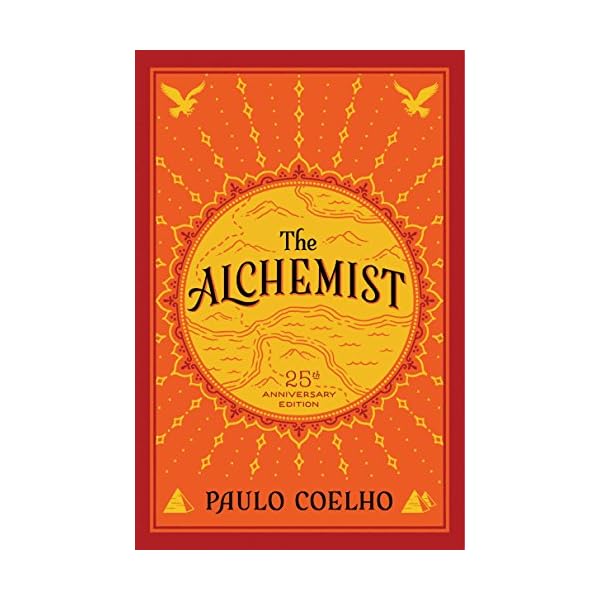
A special 25th anniversary edition of the extraordinary international bestseller, including a new Foreword by Paulo Coelho. "My heart is afraid that it will have to suffer," the boy confides to the alchemist one night as they look up at a moonless night. "And that no heart has ever suffered when it goes in search of its dreams, because every second of the search is a second's encounter with God and with eternity." The charming tale of Santiago, a shepherd boy, who dreams of seeing the world, is compelling in its own right, but gains resonance through the many lessons Santiago learns during his adventures.
Reviews
Find Best Price at Amazon"After deciding to travel to a Romani fortune-teller in a nearby town to discover its meaning, a gypsy woman tells him that there is a treasure in the Pyramids in Egypt. Everyone, when they are young, knows what their Personal Legend is.”. The Alchemist Physical CoverAlong the journey, Santiago meets an Englishman who is in search of an Alchemist and together they continue their search for treasure. The essential message is that treasure is more worthy than gold."
"I purchased and began reading this book 2 years ago and, for whatever reason, I couldn't get into it."
"I knew I would love this book."
"Sometimes - I ask myself whether the "magical" moments in the book were symbolic or literal --- I would venture out to say that Paulo intended for those moments to be perceived and interpreted by his readers as both symbolic and real."
"The boy makes connections with various people and nature and the ebb and flow of life learning to listen to omens or signs as well as his heart."
"Perhaps I am dense but I did not see such profound things there."
"Reading this a couple weeks after I moved to a new state for the first time really opened my eyes."
Best History
From a renowned historian comes a groundbreaking narrative of humanity’s creation and evolution—a #1 international bestseller—that explores the ways in which biology and history have defined us and enhanced our understanding of what it means to be “human.”. From examining the role evolving humans have played in the global ecosystem to charting the rise of empires, Sapiens integrates history and science to reconsider accepted narratives, connect past developments with contemporary concerns, and examine specific events within the context of larger ideas. Tackling evolutionary concepts from a historian’s perspective, Sapiens: A Brief History of Humankind , describes human development through a framework of three not-necessarily-orthodox “Revolutions”: the Cognitive, the Agricultural, and the Scientific. His ideas are interesting and often amusing: Why have humans managed to build astonishingly large populations when other primate groups top out at 150 individuals? Because our talent for gossip allows us to build networks in societies too large for personal relationships between everyone, and our universally accepted “imagined realities”--such as money, religion, and Limited Liability Corporations—keep us in line. Though the concepts are unusual and sometimes heavy (as is the book, literally) Harari’s deft prose and wry, subversive humor make quick work of material prone to academic tedium. He’s written a book of popular nonfiction (it was a bestseller overseas, no doubt in part because his conclusions draw controversy) landing somewhere in the middle of a Venn diagram of genetics, sociology, and history. An engrossing read.” (Dan Ariely, New York Times Bestselling author of Predictably Irrational, The Upside of Irrationality , and The Honest Truth About Dishonesty ). “Yuval Noah Harari’s celebrated Sapiens does for human evolution what Stephen Hawking’s A Brief History of Time did for physics.… He does a superb job of outlining our slow emergence and eventual domination of the planet.” ( Forbes ). “Writing with wit and verve, Harari…attempts to explain how Homo sapiens came to be the dominant species on Earth as well as the sole representative of the human genus.… Provocative and entertaining.” ( Publishers Weekly ). “In this sweeping look at the history of humans, Harari offers readers the chance to reconsider, well, everything, from a look at why Homo sapiens endured to a compelling discussion of how society organizes itself through fictions.” ( Booklist Best Books of the Year).
Reviews
Find Best Price at Amazon"Parts of it were downright fascinating such as "imagination" being a keystone to human activity, e.g. corporations, money, and religion. Finally he keeps touching on the fact that animals have paid a terrible price for the rise of sapiens. Incidentally our family has a farm background and I eat no chicken, turkey, pork, or beef. Now I didn't give the book five stars because he makes positive references to the misguided but widely read Jared Diamond. Let me emphasize that on this snowy March day the cat and I are both glad we don't need to go out and scavenge something off the frozen earth."
"A standard history of the human race begins with Paleolithic proto-humans, traces the development of modern man or homo sapiens sapiens, then chronicles the beginnings and expansions of human civilization from agriculture to the present. He asks how "An Animal of No Significance" managed to become the dominant life form, and whether that animal's learning to produce his own food and then to further harness the natural world to his will through science were boons or setbacks, both for that animal and for the rest of the biosphere."
"The very meaningful moment to look back my ancestors life style as well as my life style through this book is my most appreciation to the author, therefore."
"An amazing book which gives great insight into the history of human beings for our entire 200,000 years of existence from a 30,000 feet level."
"A fascinating read that clarified many ideas I had on how our species has come to dominate and systematically destroy much of this wonderful planet."
"Every chapter had mind-bending insights into our history."
Best Romance

The book is divided into four chapters, and each chapter serves a different purpose. (USA Today). “Rupi Kaur has vision beyond her years … Her work is simply but powerfully expressed, and viscerally captures both universal human experience and the particular struggles of a young woman today." Rupi Kaur's first book, Milk and Honey is the poetry collection every woman needs on her nightstand or coffee table. Rupi Kaur’s writing echoes of artistry and wisdom which is seen in the work of those that have been writing for years. rupi kaur is a bestselling author and illustrator of two collections of poetry. while studying at the university of waterloo rupi self-published her first collection milk and honey in 2014. milk and honey became an international phenomenon that's been translated into over 30 languages and sold over 2.5 million copies. through her poetry rupi explores a variety of themes ranging from love.
Reviews
Find Best Price at Amazon"I would've maybe given it two stars if I checked it out at the local library for free, but I'm annoyed I invested my hard earned American dollars into this book. I seriously don't understand if everyone is just reading into the completely non-thought provoking "poems" in this book and making up their own deep meaning or if I'm just totally missing the boat on this one. If you told me my 9-year-old nephew and 6-month-old niece collabed on this book, with him covering the poetry while she handled the artwork, I would fully believe you. If you're a 10th grader who just got dumped by Jimmy from home room and you wanna post a snapchat of one of these heart wrenching break up poems to express how angsty you are, you'll love it."
"I found Rupi Kaur (after hearing her name drifting about) when I saw a breathtaking piece by her (starting with "let me tell you about a selfish person..."). I love poetry. I love traditional poetry, struxtured poetry, unstructured poetry, modern poetry, stand up poetry, you name it. My shelves are lined with just as much edgy, modern, is-this-even-poetry books from up-and-coming poets as they are lined with TS Elliot and Tennyson."
"I have been seeing this at all of the bookstores and decided to give it a read based on the brilliant cover design and book description. It has been a while since I have read a book of poetry, but I have to say I don't feel like I just read one."
"This is some of the most trite poetry I have ever read, and exemplifies zero skill of poetic craft."
"I had so much hope for this book since it had become so popular so I was of course eager to read it."
Best Travel
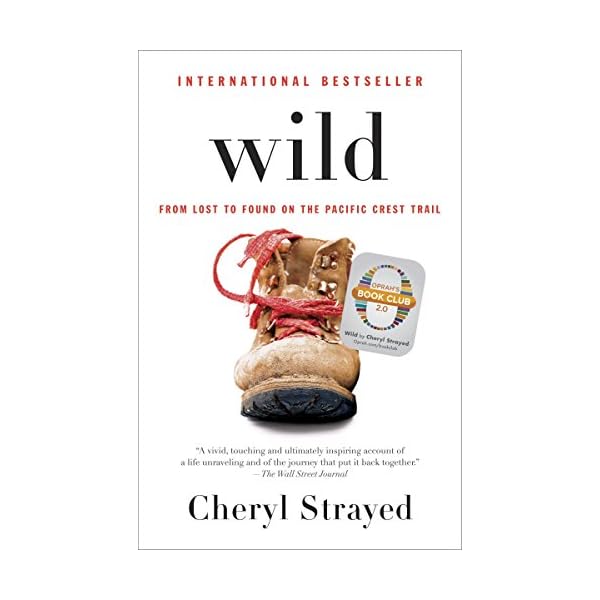
Oprah’s Book Club 2.0 selection: This special eBook edition of Cheryl Strayed’s national best seller, Wild ,features exclusive content, including Oprah’s personal notes highlighted within the text, and a reading group guide. Amazon Best Books of the Month, March 2012: At age 26, following the death of her mother, divorce, and a run of reckless behavior, Cheryl Strayed found herself alone near the foot of the Pacific Crest Trail--inexperienced, over-equipped, and desperate to reclaim her life. While readers looking for adventure or a naturalist's perspective may be distracted by the emotional odyssey at the core of the story, Wild vividly describes the grueling life of the long-distance hiker, the ubiquitous perils of the PCT, and its peculiar community of wanderers. But Strayed doesn't want sympathy, and her confident prose stands on its own, deftly pulling both threads into a story that inhabits a unique riparian zone between wilderness tale and personal-redemption memoir. Two months before Wild was published I stood on a Mexican beach at sunset with my family assisting dozens of baby turtles on their stumbling journey across the sand, then watching as they disappeared into the sea. Echoing the ever-popular search for wilderness salvation by Chris McCandless (Back to the Wild, 2011) and every other modern-day disciple of Thoreau, Strayed tells the story of her emotional devastation after the death of her mother and the weeks she spent hiking the 1,100-mile Pacific Crest Trail. As her family, marriage, and sanity go to pieces, Strayed drifts into spontaneous encounters with other men, to the consternation of her confused husband, and eventually hits rock bottom while shooting up heroin with a new boyfriend. Woefully unprepared (she fails to read about the trail, buy boots that fit, or pack practically), she relies on the kindness and assistance of those she meets along the way, much as McCandless did.
Reviews
Find Best Price at Amazon"Being an avid reader of true life adventures,this is definitely one of my favorites.I think what I loved about this story, is it is so honest, and primal.We all have times in our lives when we want to just leave everything behind, and go on an essential walkabout.Yet, we don't really know how many people are required to be involved in a singular journey."
"Some of the events that she recalls are very sad, yet it's in the sadness, her happy moments, the scenes that she describes and her "radical aloneness" that I strangely felt empowered, just from reading her story. Hers' is not just one of a woman braving it through the wild of the PCT alone, but the story of a human being on their journey to save themselves."
"Her inner mental battles, the unique people she meets along the way, the beauty and majestic world that is put for you to see (or imagine seeing) is a journey I enjoyed taking with her."
"Although I did not hike the PCT I did backpack in Yosemite."
"I have an acquaintance who also hiked this trail, writing in a moleskin book and drawing beautiful line. illustrations. Having also lost my Mother recently, lived and hiked in No CA, gave me reference points. And when noted - and her feet, body was ravaged, why not contact Paul to, at least, get new boots, proper weight in. backpack? I took it to the northern woods of Michigan - where it's raw and unpopulated, to read - when I was scattering my own Mother's ashes."
Best Children's eBooks
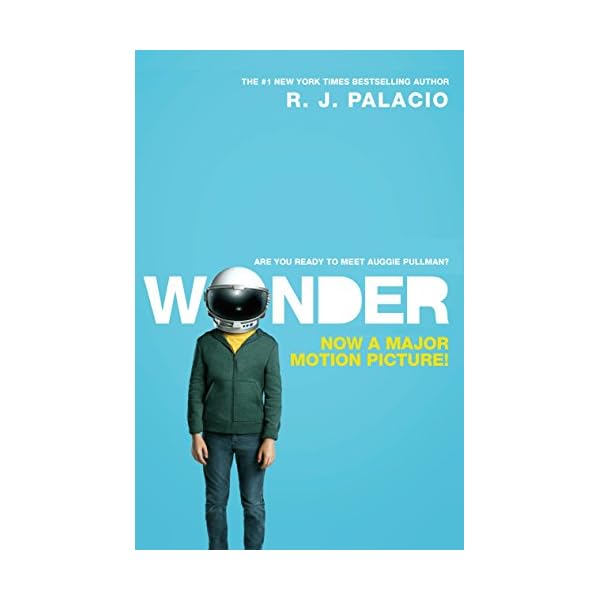
Over 6 million people have read the #1 New York Times bestseller WONDER and have fallen in love with Auggie Pullman, an ordinary boy with an extraordinary face. "Wonder is the best kids' book of the year," said Emily Bazelon, senior editor at Slate.com and author of Sticks and Stones: Defeating the Culture of Bullying and Rediscovering the Power of Character and Empathy . Homeschooled all his life, August heads to public school for fifth grade and he is not the only one changed by the experience--something we learn about first-hand through the narratives of those who orbit his world. What is essential is invisible to the eye.” From The Little Prince and R.J. Palacio’s remarkable novel, Wonder .-- Seira Wilson August, nicknamed Auggie, is a 10-year-old with a facial deformity that causes others to avoid and even shun him.
Reviews
Find Best Price at Amazon"I'm a 54 year old grandfather who served in the Marine Corps (just for a little context). Palacio...I can't believe how she so accurately and consistently pegs human nature."
"The most emotional moment for me came toward the end of the book when Auggie's father tells him that he loves the way Auggie looks, because that it exactly how my husband and I feel about our son."
"Author R.J. Palacio writes the book in multiple voices -- Auggie's, some of his friends', his sister's -- and the different points of view are mostly very well-realized and show the inner feelings of the different characters."
"I would recommend all young children to read this book and I would certainly recommend adults to read it because it will certainly change that "judgement of others" into "an acceptance of others.""
"Friends said to read the book before seeing the movie."
"I have told everyone I know that this is a must read."
"The story was heartwarming and showed positive ways to deal with disabilities."
"I could think of a lot more substance for a book to show this story."
Best Self-Help
-Six ways to make people like you. -Twelve ways to win people to your way of thinking. -Nine ways to change people without arousing resentment. Financial success, Carnegie believed, is due 15 percent to professional knowledge and 85 percent to "the ability to express ideas, to assume leadership, and to arouse enthusiasm among people." You learn how to make people like you, win people over to your way of thinking, and change people without causing offense or arousing resentment.
Reviews
Find Best Price at Amazon"The realization that my marriage was being effected by my nearly empty toolbox of social skills promoted me to take personal responsibility and shoulder the blame myself for once instead of blaming everyone around me for everything. I grew up with a hypercritical Mother so I think I had promised myself that I would never be criticized again, even if that meant writing people off the instant I felt like I had made myself vulnerable enough to be hurt by them. The strategies are applicable to and helpful in all aspects of my life so far, from my marriage to my job, and even to the way I interact with clerks in gas stations."
"I did think several of the principles explained in the book are common sense, but I found that it could be easy for a person to react quickly to conflicts. The first principle emphasizes the importance of avoiding criticism and he describes working with people as: working with people of logic. With this principle, he describes the importance of self-expression and connects it to the importance of thinking in terms of the other person, so that they come up with your ideas on their own, which they will like more. Dale then describes the importance to recall a person's name in the third principle. He further explains this point in principle five: Talk in terms of the other person's interests. Dale describes in the third part of the book the steps to have a person think in terms of your own thoughts. He then explains the importance of agreement and having the person say "yes," at least twice. If all else fails, he explains the importance of competition and how it drives people to feel important and empowered to work efficiently and effectively. He then explains the importance of asking questions that direct the person you’re speaking to, to obtain your idea on their own. He emphasizes the importance of having the person be saved from embarrassment, and then explains the importance of praise again, even if it is small."
"This book is a MUST read for anyone, but particularly if you are in management or sales."
"If anything it is even more applicable today as society becomes more technology focused and less human interaction focused."
"Such a great book that everyone should read!!"
"By reading this book, you will learn to 'handle" people."
Best $0.99 Classics
--This text refers to an alternate Kindle Edition edition. This 100th-anniversary edition includes not only the complete authoritative text of the novel with illuminating footnotes, but also four contextual essays, five reviews from the time of publication, five articles on dramatic and film variations, and seven selections from literary and academic criticism. The selection of criticism includes essays on how Dracula deals with female sexuality, gender inversion, homoerotic elements, and Victorian fears of "reverse colonization" by politically turbulent Transylvania.
Reviews
Find Best Price at Amazon"Better than some other vampire books I could name *cough*Twilight*cough*. Some of the dialogue can be cheesy to modern ears but when he set a scene he certainly set a scene! Mina is an odd character for the time she was written in. Then in other parts of the book (like when they're really going after Dracula in London) they decide to leave her out because she might get nightmares and be afraid."
"The story unfolds through diary entries from Mina and Jonathan, you can feel the emotion throughout the book; the fear, the love."
"No doubt the book established the norm for Vampires and Gothic literature to which it deserves it's high standing, but is weak in it's repetitive verbiage regarding the constant praising of the main women characters of the story, Lucy and Mina."
"On a recent trip to Romania, I decide to finally go back and read Dracula (had to get tips for how to protect myself). Rather, I had been indoctrinated by decades of movies and TV series that all put their own unique spin on vampires and those have so enmeshed with popular culture that nobody knows about the original."
"I love the romantic language and the chaste, Victorian attitudes. I love the way the horror and terror of Count Dracula is gradually revealed, the frustration and tragic pain of his pursuers, the cat-and-mouse game they play."
"The plot lags at times, especially during lengthy discourses by Van Helsing, but it's an interesting look into the period (late 19th century) and the mindsets and interactions of men and women of that time."
Best Read & Listen for $14.99 or Less
Lewis, the most important writer of the 20th century, explores the common ground upon which all of those of Christian faith stand together. In 1943 Great Britain, when hope and the moral fabric of society were threatened by the relentless inhumanity of global war, an Oxford don was invited to give a series of radio lectures addressing the central issues of Christianity. He describes those doctrines that the four major denominations in Britain (Anglican, Methodist, Presbyterian, and Roman Catholic) would have in common, e.g., original sin, the transcendent Creator God, and the divinity of Jesus as well as his atonement and bodily resurrection.
Reviews
Find Best Price at Amazon"It is a timeless classic that is as true today as when it was originally penned by Lewis as a series of talks given in London over the BBC during the challenging days of WW2. As you work through this great book take some time to digest the material in each chapter and reflect upon the material that Lewis covers and the thoroughness of his argument and perspectives."
"He expertly (and extensively) uses metaphor to help mere humans understand the incomprehensible facts about God. Lewis's explanation of Christian doctrine from the ground up helps the Christian fill in the blank parts of their theological understanding."
"Dr. Lewis covers important Christian teachings and avoids getting bogged down with controversies and esoteric theological language."
"Lewis wrote this book, he was oblivious to how couples behaved /dealt with each other as he had not been in a serious relationship or marriage."
"This book is a very interesting read for Christians, regardless of your religious background."
"A health issue, which was misdiagnosed, made reading nearly impossible for the last twenty five years, though life has it's own way of taking up time in any case. I didn't know if these were novels, theological texts, apologetic tomes, or... just what to expect."
"Rereading it now I see that this is still an excellent and relevant book for those who are exploring, or new to, following Christ today."
"Mere Christianity is a GREAT book, but DO NOT BUY THIS VERSION."
Best Read-Along Books for Kids

Now, with the opportunity to spy for the Allies inside the German High Command, Pino endures the horrors of the war and the Nazi occupation by fighting in secret, his courage bolstered by his love for Anna and for the life he dreams they will one day share. “Sprawling, stirring, like the richest of stories, and played out on a canvas of heroism and tragedy, Beneath a Scarlet Sky is like one of those iconic World War II black and white photos: a face of hope and tears, the story of a small life that ended up mattering in a big way.” —Andrew Gross, New York Times bestselling author of The One Man. “Action, adventure, love, war, and an epic hero—all set against the backdrop of one of history's darkest moments—Mark Sullivan's Beneath a Scarlet Sky has everything one can ask for in an exceptional World War II novel.” —Tess Gerritsen, New York Times bestselling author of Playing with Fire. Mark has received numerous awards for his writing, including the WHSmith Fresh Talent Award, and his works have been named a New York Times Notable Book and a Los Angeles Times Best Book of the Year.
Reviews
Find Best Price at Amazon"It is a gripping story of resilience, the indomitable spirit of a young man that knew no boundaries and courage that sustained him during dark hours. The action intensified throughout the remainder of the book, and one is allowed a rare glimpse into the mind of Il Duce - Benito Mussolini - plus the inner workings of the German High Command. Pino Lello witnesses atrocities he wishes he could forget but keeps soldiering on...wisely... Just a gripping and harrowing Kindle First selection which I feel is the best one I have read."
"He takes us deep inside the love story of his discovery, the unknown hero, Pino Lella, and he crafts an epic tale set against the backdrop of Nazi-occupied Milan and the Italian Alps during World War II that is as intimate and tragic as it is thought-provoking and triumphant."
"I cannot add more to the excellent reviews previously posted other than to say I read this book in one sitting not being able to put it down until 4:00 AM!"
"An amazing epic story of Pino Lella, a true war hero whose story was forgotten and marginalized by history."
"thankdfully, the novel does not leave us in despair and misery, but through the main character Pino Lella, we witness the good still left in people and the human ability to survive and thrive out of the worst conditions."
"Amazing book with a plot line made only better because it is based on a true story during events that changed the world."
"This is compelling story that is beautifully written."
"There was so much substance to the character, that his life became very dear to me: his adventures, his loves, his losses made me grateful for the box of tissue close by!"
Best Add Narration for $3.99 or Less
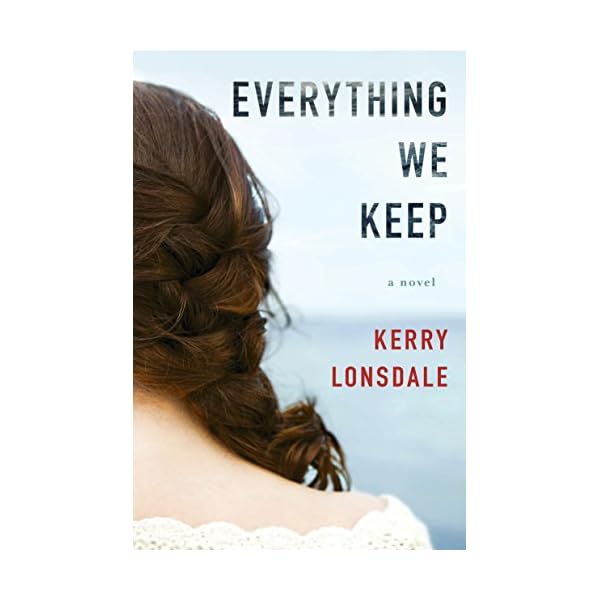
A luminous debut with unexpected twists, Everything We Keep explores the devastation of loss, the euphoria of finding love again, and the pulse-racing repercussions of discovering the truth about the ones we hold dear and the lengths they will go to protect us. “You’ll need an ample supply of tissues and emotional strength for this one...From Northern California author Kerry Lonsdale comes a heart-wrenching story about fate sweeping away life in an instant.” — Sunset Magazine. Depicting grief and loss, but also healing and hope in their rawest forms, this novel will capture hearts and minds, keeping readers up all night, desperate to learn the truth.” — RT Book Reviews. “Heartfelt and suspenseful, Everything We Keep beautifully navigates the deep waters of grief, and one woman’s search to reconcile a past she can’t release, and a future she wants to embrace. With a good dose of drama, a heart-wrenching love story, and the suspense of unanswered questions, Lonsdale’s layered and engrossing debut is a captivating read.” —Karma Brown, bestselling author of Come Away With Me. She graduated from California Polytechnic State University, San Luis Obispo, and is a founder of the Women’s Fiction Writers Association, an online community of authors located across the globe.
Reviews
Find Best Price at Amazon"This results in an usually fast-paced story (at least for women's fiction) of a woman struggling to overcome the grief of losing her childhood sweetheart - who was meant to be her husband - and figure out who she is in the wake of such terrible tragedy. Speaking of characters, Kerry's cast is incredibly well-developed and they feel like real people with virtues, weaknesses and plausible back story. I also want to say something about the epilogue because so many people have cited it as a reason for giving the book a low rating."
"This review is written by Bob Boze on behalf of Truth About Books. I’m always pleased to give a good review: Especially when it comes on the heels of two, not so good, reviews. So, two years after his purported death, Ian joins her, as she travels to Mexico to find her fiancée, who she is now certain is not dead. As she and Ian search for James, and the truth; secrets from their past and James’ family surface, along with her feelings for Ian and realization of what her life with James was really like. Everything We Keep not only has a unique plot, it is full of twists and turns that will keep you guessing, especially toward the end as she and Ian seek the truth in Mexico."
"I give it 4 stars out of 5 because the women are potty-mouths and the number of f-bombs increased as the story moved forward."
"It can't possibly be because everyone loves cliched writing (tell me again about her Caribbean-blue eyes), super boring lead characters who make really weird life choices, or terrible plot resolutions that make zero sense. What I want to focus on, though, is the fact that Aimee is RAPED by her boyfriends cousin/brother, and then said boyfriend is baskcally like "here, let me fix your makeup because you have to forget how he just raped you in order to help me set things straight with my family business.""