
Best Popular Developmental Psychology
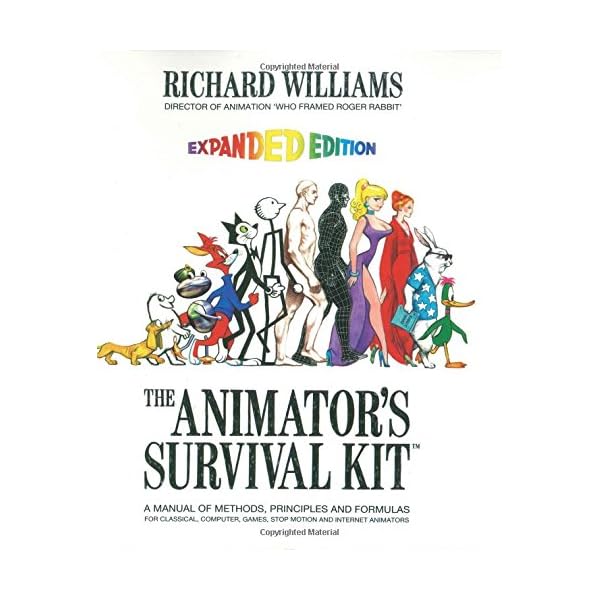
In this book, based on his sold-out master classes in the United States and across Europe, Williams provides the underlying principles of animation that every animator--from beginner to expert, classic animator to computer animation whiz --needs. Richard Williams has won more than 250 international awards for his animation.
Reviews
Find Best Price at Amazon"One of the best well written art books I have read in a long time, Mr. Williams is full of knowledge, which he generously shares with others."
"This is a must have for everyone learning animation, it could be used by yourself or by teachers to teach about animation principles, and the amount of knowlege in the content of the book and animation exercises is amazing."
"It has so much detail to it that it still blows my mind every time I. open it."
"If you are getting into animation this is the book for you; in depth information on all the necessary topics that you need."
"An excellent book."
"Bought this as a gift for a friend when she started her Animation degree."
"This is one of the most useful animation books I have every purchased."
"One of the most detailed animating books I have purchased so far, it is really helpful."
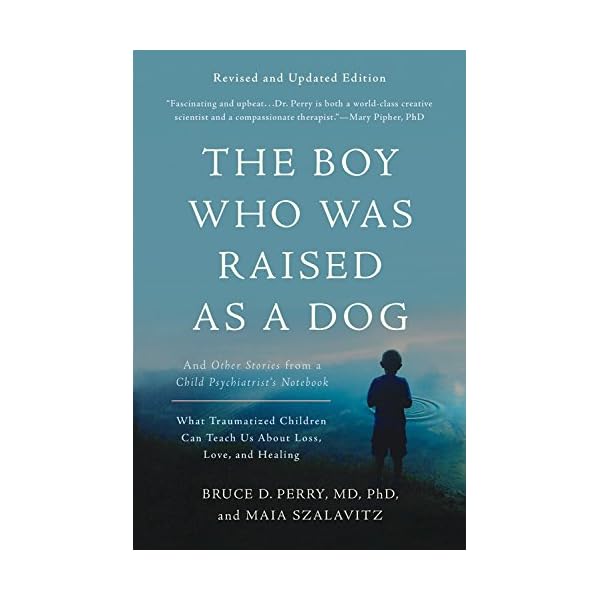
In the classic The Boy Who Was Raised as a Dog , Dr. Perry explains what happens to the brains of children exposed to extreme stress and shares their lessons of courage, humanity, and hope. Each child, from the seven-year-old who offered him sexual favors to the eponymous boy who spent his early years living in a dog cage, taught Perry something about the effects of early childhood trauma on brain development.
Reviews
Find Best Price at Amazon"This book provides insight and understanding to the often confusing experiences and behaviors seen in pediatric trauma related behavioral disturbances."
"I also bought his other book.. Trauma informed and that was a well written book.."
"It really underscores the importance of proper parenting skills, better understanding of problem children, and the importance of lots of love and hugs in the home and schools."
"The stories in this book were compelling and gave me a little more insight into trauma’s impact on brain development."
"I absolutely loved this book."
"This is a wonderful book to read if you are fostering or adopting a child and if you are working with children."
"So if we are to be successful human adults, we must first learn all the mental and emotional skills that are ideally learned by human children during "normal" development, and usually in roughly the same order that most children learn them in, since the skills that older children typically learn frequently depend on skills that they previously learned in addition to physical and mental development. The part about human societies developing the leisure to develop language and government is my own addition of what I see as the logical next step in the human story, and I hope to find that book if it has been written, or encourage someone to write it some day as a logical extension of this author's work on human development."
"It made me sad ,mad and happy I think we really need to look at our day cares and school system."
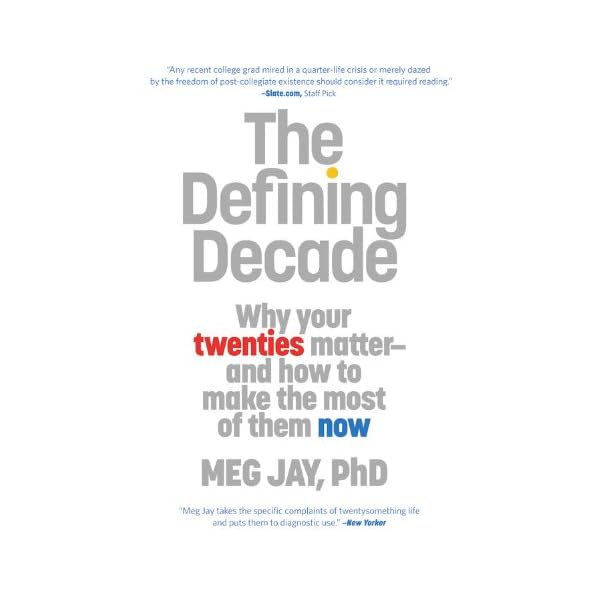
Drawing from a decade of work with hundreds of twentysomething clients and students, THE DEFINING DECADE weaves the latest science of the twentysomething years with behind-closed-doors stories from twentysomethings themselves. "Any recent college grad mired in a quarter-life crisis or merely dazed by the freedom of post-collegiate existence should consider it required reading. "The professional and personal angst of directionless twentysomethings is given a voice and some sober counsel in this engaging guide. While Jay maintains that facing difficulties in one's 20s 'is a jarring--but efficient and often necessary--way to grow,' the author is sincere and sympathetic, making this well-researched mix of generational sociology, psychotherapy, career counseling, and relationship advice a practical treatise for a much-maligned demographic. "A clinical psychologist issues a four-alarm call for the 50 million 20-somethings in America.... A cogent argument for growing up and a handy guidebook on how to get there. Now that I do, I could worry myself into paralysis, or, as Meg Jay suggests, grab life by the helm--even if I still have no idea in hell where I'm going.
Reviews
Find Best Price at Amazon"She interweaves research, stories, and counseling sessions with her patients to make a thought provoking but easy book to read. Instead, this is a thought provoking book aimed against the popular twenty something zeitgeist today that, "we can do anything", "there's always time", and "I have until 30 to get my life together." They are paradigm shifting books that sweep away the false assumptions and beliefs we acquired from our childhood and culture and replace them with solid, real principles on how reality works. Work talks about increasing your identity capital, the value of "weak ties", that you know what you want even though you think you don't, the unhelpful prevalence of Facebook comparisons, and seeing a career as the first step in a unique, customized life versus settling down. Love goes into the importance of taking dating seriously in your 20s, compatibility with possible in-laws, how to make sure "living together" isn't harmful, and choosing the right partner. Or, the frontal cortex that controls a lot of our mature responses such as regulating emotions is still developing for most people in their 20s. Besides the physical brain, Dr. Jay also talks about the mind such as learning how to calm yourself down, how to develop confidence (rather than believing it's fixed), and that you can radically alter how you feel by changing parts of your life. It seems common for many young people to talk about getting their career in order or going to graduate school eventually, getting married, and having kids but not all at the same time. I found myself agreeing and sharing the same POV as the patient many times but through the counseling session, it was almost like I was sitting there and seeing my own assumptions fall apart and seeing the truth for what it really is. For most people, the late night parties, pointless jobs, and random hookups won't be what build your identity, what you care about or remember in the future. If anything, as Billy in the book says, you will probably feel betrayed that you wasted the best years of your life doing all the meaningless things that culture and others mislead you to believe most important. So, start preparing now because the investments (or lack thereof) that you do in your twenties will have the greatest impact in your career, marriage, and overall happiness."
"I'm 21 now and this book gave me a ton of things to look out for in my future."
"The one thing she said that I simply couldn't see eye-to-eye with was the idea that it's nearly impossible to feel confident about your ability or skill or potential in something until you've spent 10,000 hours mastering it. She essentially went on to say that that in your twenties you're probably incapable of feeling confident in your abilities of things because you haven't had this massive amount of hours in which you would build your confidence and hone your skill(s). You can feel confident in your current ability to do something to the best of your ability or feel confident knowing you that your potential ability is much more."
"I majored in psychology, and this book is great because Dr. Meg Jay uses current psychological research and anecdotal evidence to make her points. I had this book for so long and am grateful to have had it at just the right time."
"This wonderful book was assigned to to twenty-ish son in a college career planning course."
Best Medical Mental Illness
This new edition of the American Psychiatric Association's Diagnostic and Statistical Manual of Mental Disorders (DSM-5), used by clinicians and researchers to diagnose and classify mental disorders, is the product of more than 10 years of effort by hundreds of international experts in all aspects of mental health.
Reviews
Find Best Price at Amazon"I’m not reviewing the book."
"The DSM 5 is a required reading for my mental health and psychopathology."
"The only thing wrong with mine was that the cultural formulation section was upside down!"
"Is perpetually going through changes as we learn more and more about mental disorders."
"It's the DSM."
"This manual will be very helpful for many years to come."
"Yes so happy I was able to get this book really needed it for my abnormal behavior class I'm taking 🙏🏾."
Best Child Abuse
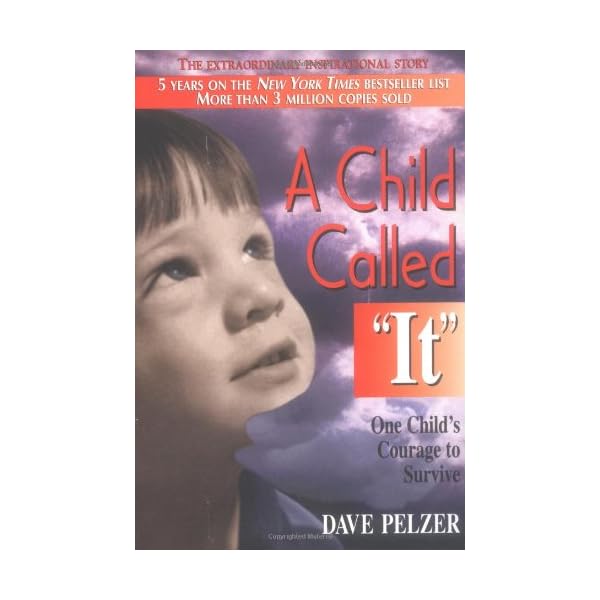
It is the story of Dave Pelzer, who was brutally beaten and starved by his emotionally unstable, alcoholic mother: a mother who played tortuous, unpredictable games--games that left him nearly dead. This book is a brief, horrifying account of the bizarre tortures she inflicted on him, told from the point of view of the author as a young boy being starved, stabbed, smashed face-first into mirrors, forced to eat the contents of his sibling's diapers and a spoonful of ammonia, and burned over a gas stove by a maniacal, alcoholic mom.
Reviews
Find Best Price at Amazon"This book has started an inner healing process.As I started reading, I started crying, crying so loudly that I started wailing."
"This book helped know that I was never alone in what I went through as a child."
"A girl I worked with told me about this book one day, and I decided I wanted to check it out."
"This book is a healing power to me, since I never have the mind to open up to Any body what i suffered during my stay with My aunty."
"I read this book years ago."
"Love this book."
"The child in the story had a good life for his first four years and then the abuse started. To have had a good life with loving parents then allo of a sudden you start being abused."
"I had read all of the Dave Pelzer books."
Best Popular Experimental Psychology
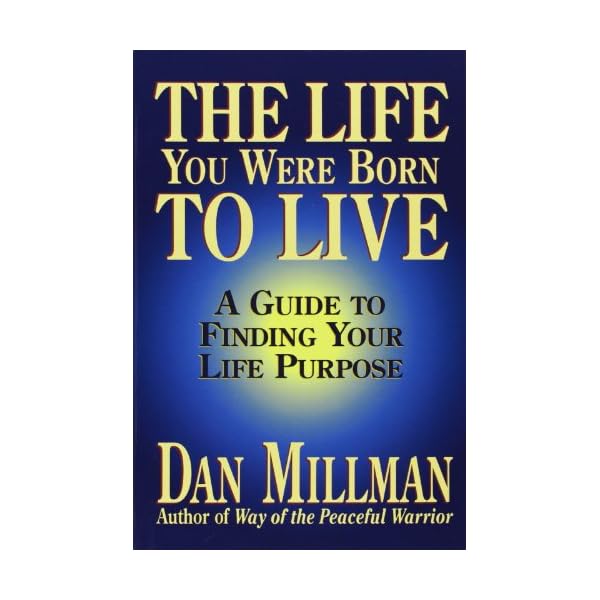
the thirty-seven paths of life how to determine your life path and the life paths of others core issues, inborn talents, and special needs of each path, including health, money, and sexuality guidelines for finding a career consistent with your innate drives and abilities the hidden dynamics of your relationships how to live in harmony with the cycles of life. To our readers: The books we publish are our contribution to an emerging world based on cooperation rather than on competition, on affirmation of the human spirit rather than on self-doubt, and on the certainty that all humanity is connected.
Reviews
Find Best Price at Amazon"This book has opened a new way of self discovery."
"Book was in great condition and I'm really happy with the quick shipping!"
"This book is a rare find and I recommend it to everyone who wants to remember why we are here, help in understanding the need to reflect on lifes purpose, and the reason for what we do and others actions."
"Terrific."
"Probably the most sensible book I've read on this subject."
"Interesting, like astrology."
"I have given 5/6 copies of this book to people."
Best Popular Adolescent Psychology
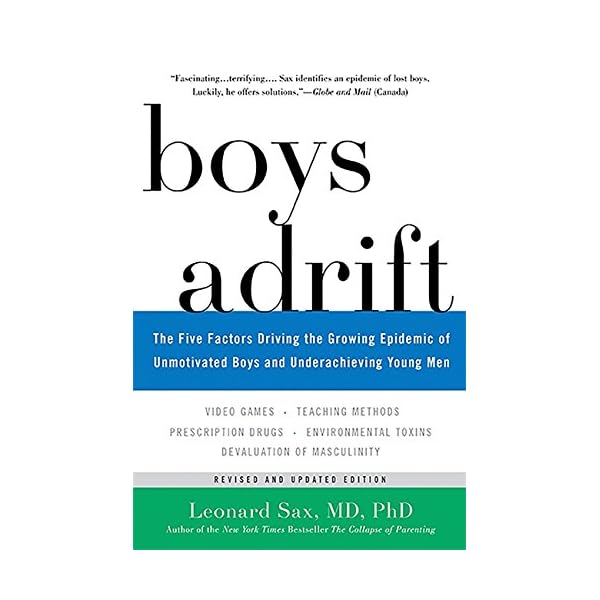
Now, Dr. Leonard Sax delves into the scientific literature and draws on more than twenty years of clinical experience to explain why boys and young men are failing in school and disengaged at home. Dr. Sax has spoken on issues of child and adolescent development not only in the United States but also in Australia, Bermuda, Canada, England, Germany, Italy, Mexico, New Zealand, Scotland, Spain, and Switzerland. He has appeared on the TODAY Show, CNN, National Public Radio, Fox News, PBS, the Canadian Broadcasting Corporation, the British Broadcasting Corporation, the Australian Broadcasting Corporation, New Zealand Television, and many other national and international media.
Reviews
Find Best Price at Amazon"This book is a great book to understand some of the struggles our boys are facing."
"I am a mental health counselor that works with many adolescents and. Dr. Sax assaulted me with facts and data and truth that explains so much that I see in all of the boys I have the privilege to work with."
"Fantastic read, speaks well to many aspects of society and the environment and how they affect our growing boys."
"I love this book and I'm only beginning chapter 2!"
"I recommend this book for any parent with a boy."
"I was recommended this book by a family doctor."
"I liked this book a lot."
"Wish I had read when I was raising my son."
Best Popular Forensic Psychology
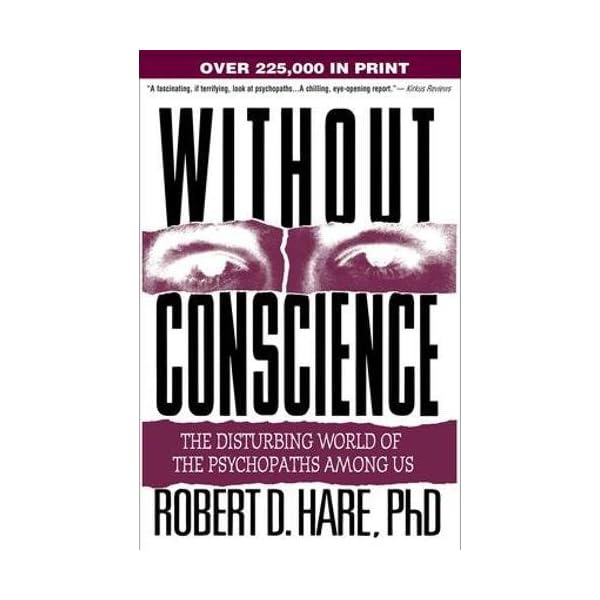
Presenting a compelling portrait of these dangerous men and women based on 25 years of distinguished scientific research, Dr. Robert D. Hare vividly describes a world of con artists, hustlers, rapists, and other predators who charm, lie, and manipulate their way through life. --Hugh Aynesworth, author of Ted Bundy: Conversations with a Killer "Fascinating, chilling, and accurate....The world's most renowned psychopathy researcher has leavened sharp scientific insights with page-turning case descriptions in a rare publishing feat: a book that is both highly readable and highly reputable."
Reviews
Find Best Price at Amazon"Although many of us will not encounter a criminal psychopath, there are plenty of us who have lived with them and experienced their crazymaking and destructive behavior behind closed doors."
"Great resource for Therapists, Counselors and anyone who needs to know whom they are dealing with in sensitive areas."
"Fabulous book about antisocial personality DO."
"I couldn't put this book down, it was a fantastic read."
"Book came within 2 days through Prime, looks just like the picture, and packed properly with no bends or folds."
"I love this book, because it describes a personal situation I had been dealing with...a real Sociopath."
"I've been doing research on psychopath's for a book I'm writing."
"Since I'm researching Pyschopaths for a story, this book really helped me understand what is going on in their heads...and also to understand that you may not have any idea whats going on in their heads!"
Best Popular Child Psychology
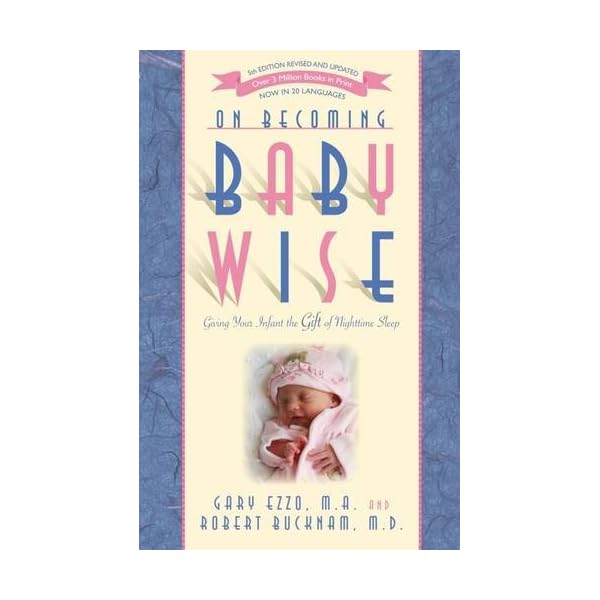
For over 20 years, On Becoming Babywise has been the de facto newborn parenting manual for naturally synchronizing your baby's feeding time, waketime and nighttime sleep cycles, so the whole family can sleep through the night. Practical discussions then focus on broad and niche topics including feeding philosophies, baby sleep problems, baby scheduling challenges, nap routines, sleep training multiples, baby sleeping props, Colic and Reflux and many other dimensions which impact breast feeding schedules, bottle feeding tips and baby sleep training. 1) Taking care of baby and mom. 2) A timeline of what to expect and when. 3) Baby Sleep Training Problems and Solutions. 4) Monitoring Your Baby's Growth. 5) Healthy Baby Growth Charts. It can help any parent develop a plan that meets both the needs of a new baby and of the entire family. Instead of being in baby bondage, I was liberated to be the mother God wanted me to be. We highly recommend ONLY purchasing the newest and most current version of On Becoming Babywise (isbn 1932740139). In becoming one of America's leading infant management guides, On Becoming Babywise has continued to improve its methods and practices throughout its 24 years and this latest version is the result of all the best over the last two decades. and co-author Gary Ezzo in this book helps parents successfully and naturally synchronize their baby's feeding time, waketime and nighttime cycles. Happy, healthy and contented babies who sleep through the night on average between seven and nine weeks of age. The best evaluation of any parenting philosophy, including Babywise, is not found in the reasoning or the logic of the hypothesis. Rather, our larger objective is to help prepare minds for the incredible task of raising a child. Your baby will not care if his head rests on designer sheets or beside Disney characters, nor is your success tied to his wardrobe or bedroom accessories, but rather to the beliefs and convictions that will eventually shape your parenting experience. It is our opinion that the achievements of healthy growth, contented babies, good naps, and playful wake times, as well as the gift of nighttime sleep, are too valuable to be left to chance. We realize there are a number of parenting theories being marketed today, most of which come gift-wrapped with unrealistic promises and unnecessary burdens. Spend time with relatives and friends who follow the Attachment Parenting style of infant care. The principles contained within the pages can help parents develop workable strategies that meet the needs of their babies and the rest of the family. However, your pediatrician or family practitioner should always be consulted when questions arise about the health and welfare of your baby. Because the principles of On Becoming Babywise are so effective, I consider it part of my extended health care for the family. They consistently produce babies who are healthy, content, and who sleep through the night at an early age. ". As family physicians and a husband-wife team, we are often asked questions related to parenting and the general care of children.
Reviews
Find Best Price at Amazon"On Becoming Babywise taught me to tap into my God-given parental instincts while providing me medically-sound advice to equip me in teaching my infant to sleep through the night."
"My baby was sleeping 8 hours at night at 8 weeks old thanks to this book."
"Does he look like he's dehydrated, depraved, abused, malnourished or in a dangerous environment as what a majority of the downright idiotic 1-star reviews and their preposterous claims that would like you to believe to be the end result of following this book? I seldom write lengthy reviews, buts if I come across a product that I am passionate about because it affected our life positively, then I take the time to do so. I do this while I commute to work 100 miles round trip M-F. Needless to say, my blood pressure was at 206 mmHg at its peak during the first 6 weeks, waking up every 2 - 2.5 hours to feed baby with each feeding session lasting 30 minutes, then commuting 50 miles to work at 6:30 AM and returning home at 6:30 PM to cook for the family. I need to mention that it is imperative that you wake up your little one at set schedule to feed before he gets hungry and start crying. Sleep training, preemptively waking up your baby to feed or following a set schedule does NOT make you the devil incarnate, nor does choosing to feed your infant formula, and if you are one of those 1-star reviewers that feel this way, you need to go back to the freezer with your mother's guilt because your snowflake a$$ is probably melting just from reading my review. During this transition, we did not experience any attachment or neediness from him, thanks to Baby Wise's "Parent Directed Feeding" concept (PDF). He began taking in solid food, starting with baby cereal, pureed fruits and vegetables (we use BEABA Babycook 4 in 1 Steam Cooker and Blender, 4.5 cups, Dishwasher Safe, Cherry to steam and puree fresh fruits and vegetablee, then freeze them in Infantino Squeeze Pouches, 4-Fl Oz using the Infantino Squeeze Station). He enjoys sitting in his 5-10 minutes in Bumbo infant seat but loves his Graco high chair more - this at age 4.5 month. By 5 months, our son is fully engaged in the "Early Reading Program for Baby, Toddler, Preschool, Kindergarten- Alphabet, Vowel Phonics & 200+ Sight Words - Little Champion Reader 9 DVD, Flash card, Book Kit" DVDs. Our son, born at 37 weeks via scheduled C section, a miracle in itself, is outpacing our friends' babies in terms of mental, physical and cognitive development by a mile and I sincerely believe sleep plays a large role in it all. We never force our baby to go on long distance road trip with us, rather, we only go as far as he is ready to handle, starting with 50 miles, then 100, 250 then 300+. The book repeatedly reminds the reader to make adjustments and be flexible based on the cues exhibited by baby! I absolutely refuse to believe this and we attribute our well behaved son to the steps we've followed as outlined in Baby Wise. The same pundits "predicted" our future by saying we won't be going on road trips or eating dinner at restaurants once our baby is born. That is, while we strictly follow the BabyWise guideline (with flexibility), we still showered our son with love, stimulation, appreciation, engaging interaction, encouragement and positive re-enforcement. Who's to say that you and your spouse can't enjoy life and need to be locked in the house feeling miserable and eating TV dinner the minute you give birth to baby? Some parents overcompensate their fear of having their freedom "taken away" by taking their newborn and infants to places like Las Vegas and other trendy locations to "prove" that they can still "hang", all the while their baby is fussy overnight and throughout their trip and the parents are exhausted to the core, defeating the purpose of a family vacation altogether. The concept may or may not work as smoothly in all situation for a variety of reasons, particularly if your baby has a medical condition such as colic or gastroesophageal reflux disease (GERD) which the book addresses. Follow the guidelines outlined in BabyWise, but be ready to be flexible and make adjustments or changes to accommodate the personality of your little one!"
"This was on a baby gift registry, and it seems to have sensible advice."
"Good read- great scheduling ideas."
"Baby wise was helpful for sleep training."
"The book was good and has good ideas."
"And if crying-it-out works for you then great I've tried their method to a T. I just did not know at the time that it was considered their method."
Best Popular Applied Psychology
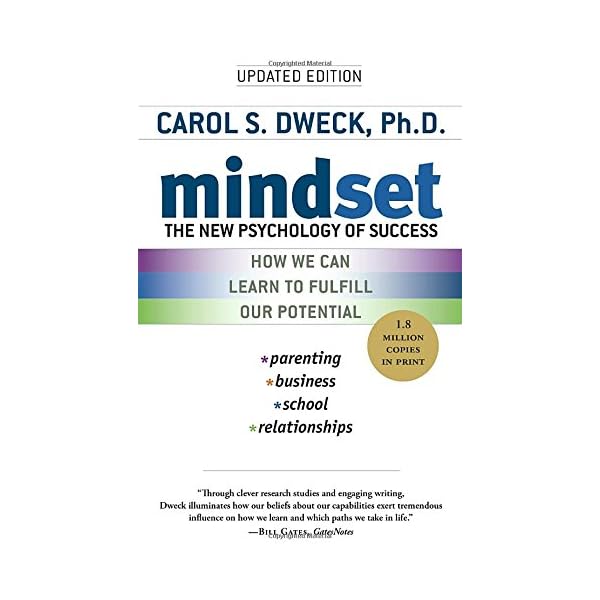
People with a fixed mindset —those who believe that abilities are fixed—are less likely to flourish than those with a growth mindset —those who believe that abilities can be developed. She introduces a phenomenon she calls false growth mindset and guides people toward adopting a deeper, truer growth mindset. “If you manage people or are a parent (which is a form of managing people), drop everything and read Mindset .” —Guy Kawasaki, author of The Art of the Start 2.0. Dweck proposes that everyone has either a fixed mindset or a growth mindset. In other words, you are who you are, your intelligence and talents are fixed, and your fate is to go through life avoiding challenge and failure.
Reviews
Find Best Price at Amazon"The book is valuable for its conceit: that there are two types of mind-sets; the growth and the fixed. It's an informational book, but not a great book."
"However, most of the book seems to focus on discussing the difference between "fixed mindset" and "growth mindset" applied to different fields. It is like the author uses the entire book to emphasize how important "growth mindset" is but doesn't really offer much help."
"I was forced to but this book as requirement to read for my Spring semester, my professor that asked for this book believe she has great mindset and can affect us, but in reality she sucks."
"Explaining how to change was well worth the time to read it."
"The book started by effectively comparing competing mindsets and then referenced examples of those mindsets by comparing the specific mindsets of famous people in business and in sports."
"It is a compilation of a century of studying patterns of attitudes that have created champions and happiness in lives from every sector of life."
"The gist of the book is very important and mind blowing BUT the book reiterates the same message time and time again to the point I just skipped ahead entire examples because I already understood where it was going."
"This book had a good message, but it wasted a lot of potential with the topic and the author did not really convey the power of her message very well."
Best Popular Neuropsychology
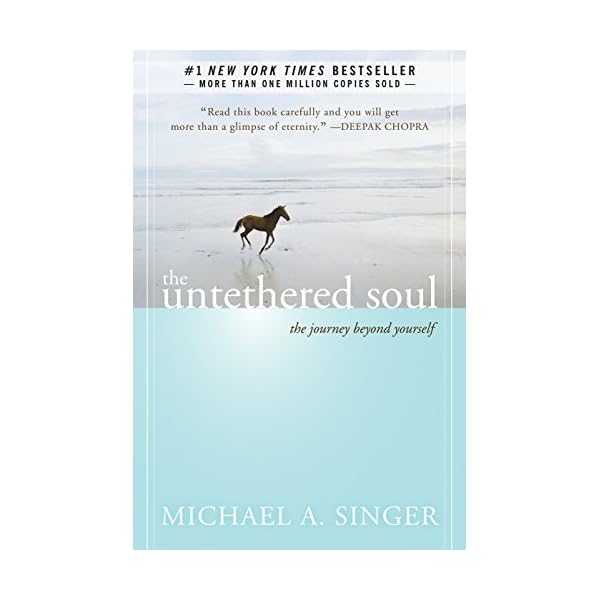
Singer shows how the development of consciousness can enable us all to dwell in the present moment and let go of painful thoughts and memories that keep us from achieving happiness and self-realization. Copublished with the Institute of Noetic Sciences (IONS) The. Untethered Soul begins by walking you through your relationship with your thoughts and emotions, helping you uncover the source and fluctuations of your inner energy. The accuracy and simplicity of this work is a measure of its pure mastery.”. James O’Dea , past president of the Institute of Noetic Sciences (IONS). It is the clearest statement I know of who we are and what we face in our emerging humanity.”. Jean Houston , philosopher, psychologist, and author of A Mythic Life and Passion for the Possible. It may take more than one reading and many hours of introspection, but The Untethered Soul is a must-read for anyone in search of greater understanding of themselves and of the truth.”. Louis Chiavacci , senior vice-president of Merrill Lynch, ranked in Barron’s top fifteen US Investment Advisors. This publication has released boundless joy for the hungry souls of the world.”. Ma Yoga Shakti Saraswati, founder of Yogashakti International Mission and recipient of Hinduism Today’s Hindu of the Year 2000 award. With great eloquence, wit, and compelling logic, Singer’s brilliant book completes this thought by showing them to be two poles of the same selfless devotion.”. — Ray Kurzweil , National Medal of Technology recipient and author of The Singularity Is Near. Singer takes the reader on a journey that begins with consciousness tethered to the ego and ends having taken us beyond our myopic, contained self-image to a state of inner freedom and liberation. Michael A. Singer’s book is a priceless gift to all who have futilely searched and yearned for a richer, more meaningful, creative life.”. — Yogi Amrit Desai , internationally recognized pioneer of modern yoga.
Reviews
Find Best Price at Amazon"I read the audio version of this book multiple times, bought copies of it for clients, and shared it with friends. After reading Michael's book, I simply allowed irrelevant, erroneous, totally made up thoughts to just float on by without attaching my emotions to them. It means you're no longer an emotional puppet on the string of everyone else's behavior, attitudes, decisions, choices, etc. I LOVED the audio version of the book because the person who read it was perfect for the content. I've read TONS of other books on similar topics but the way Michael conveyed the material was unique and different and I really GOT IT!"
"Some of the points made in The Untethered Soul are: 1. Learn to relax and stay open no matter what. Do not identify with the experiences you are observing. Facing the fact of bodily death can help you to realize that all of the observed is temporary. Do not allow painful experiences from the past to influence the present. If you want a life full of joy and love you must make a commitment to having a life full of joy and love. Learn how to live from your heart, not from your ego. The Untethered Soul is my second most favorite book on the subject of how to transcend the ego and how to realize the true Self and directly experience that perfect infinite consciousness that has only joy and love and has no suffering. My most favorite book on that subject is THE SEVEN STEPS TO AWAKENING which is a collection of quotes by these seven authors: 1."
"I see life and the spiritual journey differently, and though I do believe we all should strive for a happier life and a more peaceful spirit, I don't believe it is desirable to live without some unhappiness, some worries, some fears. The author contradicts himself many times, but more importantly doesn't indicate any awareness that he has contradicted himself. Thus, while the author makes many statements throughout that I agree with, he also constantly is making other statements that contradict previous ones, giving me the impression that he is just writing a stream of consciousness of statements cherry-picked to resonate with a broad range of spiritual-enlightenment-seekers, without much regard to whether those statements gel together to form a cohesive whole. Structure. I would not want to take that away from anyone, but sadly, it is not the book for me."
Best Popular Psychology Pathologies
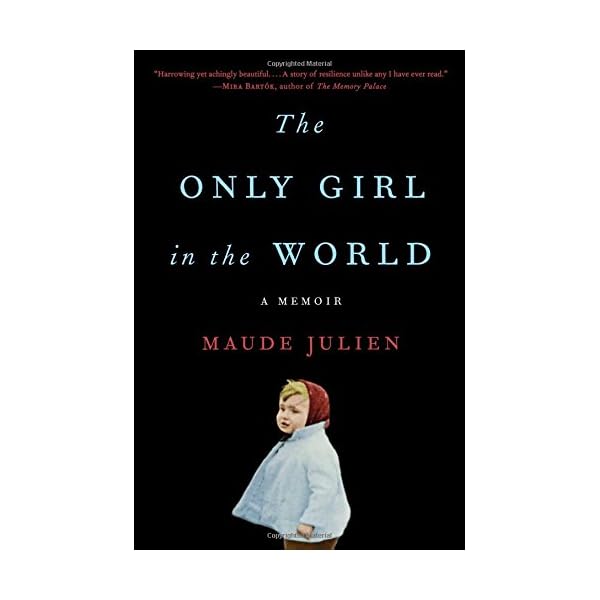
Maude Julien's parents were fanatics who believed it was their sacred duty to turn her into the ultimate survivor--raising her in isolation, tyrannizing her childhood and subjecting her to endless drills designed to "eliminate weakness." "At once fascinating, mystifying and distressing...The story takes on the energy of a thriller, building on the reader's hectic desire for [Julien's] escape. "A harrowing yet achingly beautiful tale of a girl imprisoned by her brutal, fanatic family, but whose yearning for wonder and love ultimately drives her toward the improbable light of the world. "― Mira Bartók, author of the National Book Critics Circle Award Winner The Memory Palace. A tale of hope and profound courage, The Only Girl in the World illustrates how trusting ourselves and following our hearts can save us from the most oppressive and cruel conditions. Her brave spirit shines as a bright reminder that what lies within us is stronger and more powerful than our circumstances. "― Ruth Wariner, New York Times. bestselling author of. The Sound of Gravel. "The year's most harrowing memoir...At times the book, in form, resembles the beginnings of Emma Donoghue's Room , but this text is necessarily more graphic and frightening...My multiple audible gasps while working through The Only Girl in the World were partly a result of its author's ability to so artfully capture the meaning and depth of her survival. You wonder how anyone who went through what she did could come out functioning on the other side...That The Only Girl in the World exists as it does is a most persuasive argument for Julien's remarkable willpower.
Reviews
Find Best Price at Amazon"When she was three years old, Maude’s father, Louis Didier liquidated his assets and bought a house near Cassel where he took his wife and daughter to live in virtual isolation from the world around them. Thereafter, Maude’s upbringing was strictly regimented, physically demanding and devoid of human love and affection, in accordance with her father’s grand plan to raise a superhuman being. A host of sinister noises, little animals moving around in the dark, scurrying, running, stopping, rummaging and scuttling off again. I also have to cope without any of life’s pleasures, starting with delights for the tastebuds, which are the surest route to weakness. As the reader progresses through Maude’s account of her childhood and adolescence, it becomes patently clear that her father is delusional, but still manages to wield great power over his wife and daughter, indoctrinating them both with his bizarre ideas. The text is flawlessly translated from French by Adriana Hunter, and the author’s note to her English readers forms an important endnote."
"I was privileged enough to receive an advanced reader's copy of this book, and I just need to say up front that if there has ever been a book I've wanted to write a good review for, it's this one. Such as the family I’ve been blessed with, and the relationships I’ve taken for granted, and how the mountains I had yesterday are really just molehills. And I kept having to put the book down, because my throat hurt too much. It’s a book about the beauty of the human spirit."
"The Only Girl in the World by Maude Julien is a highly recommended memoir about a woman's abusive childhood - and her escape. Maude Julien's parents were fanatics and the torture she experienced under their supervision was supposedly done to strengthen her. He designed the education and cruel tasks Maude had to do and his wife helped him carry his plans out. The abusive things Maude was forced to do in order to strengthen her character are painful to read about. There isn't a lot of reflection or analysis by Maude as she relates what she had to endure and at times it feels just too unflinching in the recounting of the horror. It is also satisfying to know that an outsider, a music teacher, assessed what was going on and put a plan into action that would eventually help Maude escape her insane, controlling father."
"I persevered to the end because I heard the author on an ABC podcast in Australia last week."
Best Popular Psychology Psychotherapy
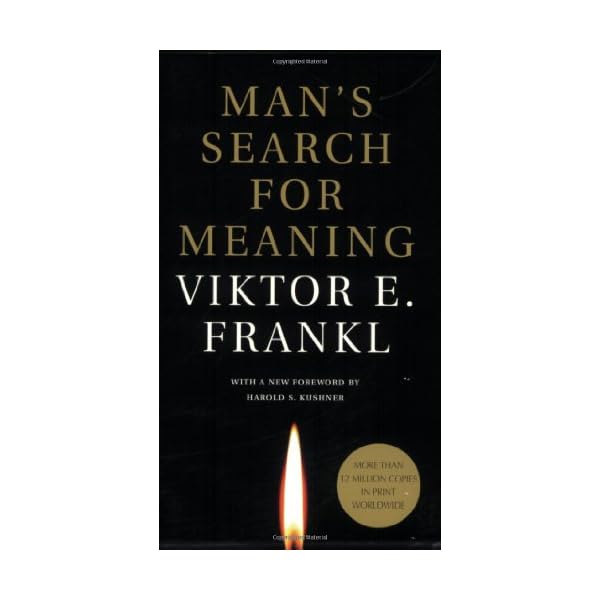
At the time of Frankl's death in 1997, Man's Search for Meaning had sold more than 10 million copies in twenty-four languages. Harold S. Kushner is rabbi emeritus at Temple Israel in Natick, Massachusetts, and the author of bestselling books including When Bad Things Happen to Good People, Living a Life That Matters, and When All You’ve Ever Wanted Isn’t Enough.
Reviews
Find Best Price at Amazon"Read this book, read this book."
"Those that had developed purpose and meaning to the harsh conditions got out of bed every morning to face another unbearable day."
"One of the best works you can take in."
"Life would have been easier if I had read this book sooner in life."
"A little twist of ideas as to why some people survive the worst and why others don't survive medium bad."
"The second part of the book is an analysis of logotherapy and a description of Frankl's studies on the subject."
"I am just now to the place he talks about how thinking of his wife and having mental conversations with her gave him strength to stay alive!"
"Part 1 was easier to read."
Best Popular Psychology History
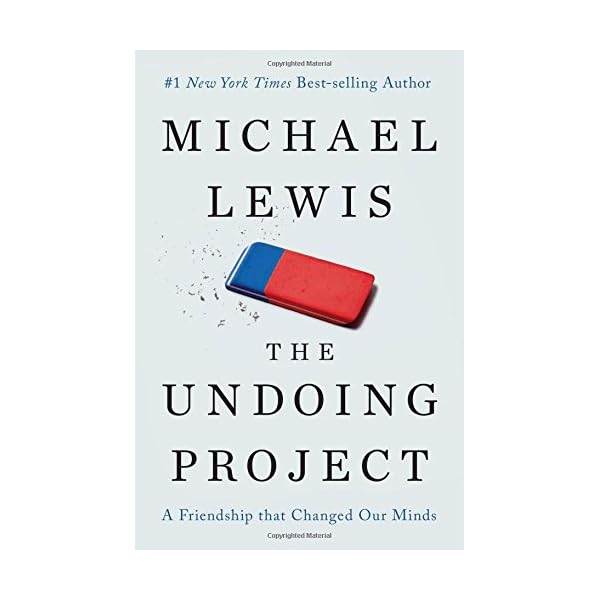
Forty years ago, Israeli psychologists Daniel Kahneman and Amos Tversky wrote a series of breathtakingly original studies undoing our assumptions about the decision-making process. Amos Tversky was a brilliant, self-confident warrior and extrovert, the center of rapt attention in any room; Kahneman, a fugitive from the Nazis in his childhood, was an introvert whose questing self-doubt was the seedbed of his ideas. “Lewis is the ideal teller of [Tversky and Kahneman’s] story… You see his protagonists in three dimensions―deeply likable, but also flawed, just like most of your friends and family.”. - David Leonhardt, New York Times Book Review. “Brilliant… Lewis has given us a spectacular account of two great men who faced up to uncertainty and the limits of human reason.”. - William Easterly, Wall Street Journal.
Reviews
Find Best Price at Amazon"Thanks to works like Psychonomics: The Scientific Conquest of the Human Mind, we know that the field of Behavioral Economics is a kind of wild west of the sciences, filled with speculation, outlaws, and not a little shenanigans. With his characteristic accessibility and knack for turning the complex into palatable pieces, Lewis presents the foundations of the science by crafting a story about its two visionary scholars, Daniel Kahneman and the late Amos Tversky. How they came together from similar backgrounds, approached life from different angles, agreed to set off on their intellectual journey together, and collaborated on some of the greatest psychological studies of the 20th century sets us up for a classic buddy story—an intellectual Butch Cassidy and the Sundance Kid if you will."
"With no doubt, I had great fun reading “The Undoing Project.”. I was introduced to the work of Tversky and Kahneman as a college sophomore in 1988 by my teacher, hydrologist Joseph Harrington, who was a great admirer of their ideas. So I swallowed whole “Thinking About Thinking” within a week of having read the Michael Lewis review on Bloomberg. Chapters 1 and 8 should not have made it into the book, they ought to have been relegated to the pages of Vanity Fair, where the author regularly provides fantastic material. Even the title of the book, much as it has its roots in the work of Tversky and Kahneman, does not do justice to their contribution."
"Michael Lewis successfully blends two biographies, an intellectual love story (there really is no other way to describe the Kahneman/Tversky partnership), astute sketches of the work they did (in heuristics and biases), and how the partnership had ripple effects in a myriad of areas (from economics to psychology, from medicine to the military, and beyond)."
"I started with having read "Thinking Fast and Slow" several years ago - and using ideas from the book in my Psychology class."
"Brilliant and very interesting mixture of the story of how psychology has become a paramount component of economics and of just about every other science, and of a unique friendship between two outstanding brains, further spiced by the explanation of the many fallacies we are subject to in our judgement and decisions, and not only us but the people we most trust to make them for us!"
Best Popular Psychology Psychoanalysis
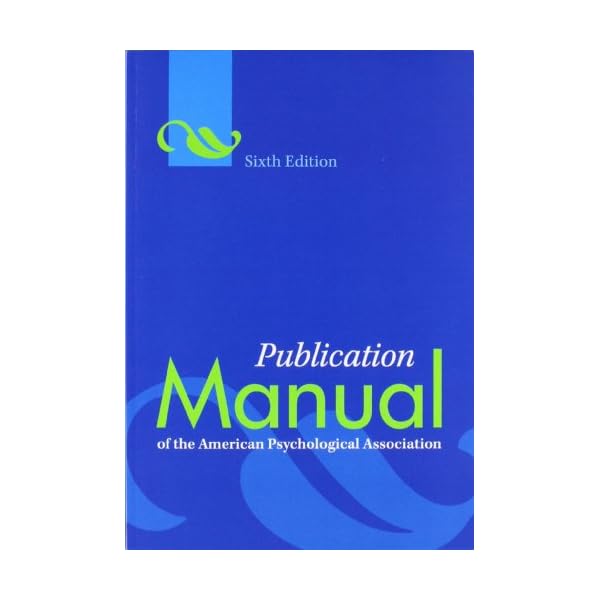
When you need advice on how to present information, including text, data, and graphics, for publication in any type of format--such as college and university papers, professional journals, presentations for colleagues, and online publication--you will find the advice you're looking for in the "Publication Manual."
Reviews
Find Best Price at Amazon"Is great to have as a reference for college classes."
"This manual got me through many research papers in undergrad, and it's coming with me to grad school, where it'll be put to the test."
"I bought the spiral version to write my dissertation."
"Recommended getting the physical book instead of the e-book, as I wrote a lot of notes and highlighted key areas in the book."
"I write in APA quite a bit, and this really helps with not just citing sources, but also with formatting your papers."
"It has all the info for writing APA you need."
"It includes updates to what you need to bring your reference section up to date, but it is so poorly explained and organized, it is driving me crazy."
"Get the paperback if you have windows 8 or a MS surface tablet."
Best Popular Psychology Psychopharmacology
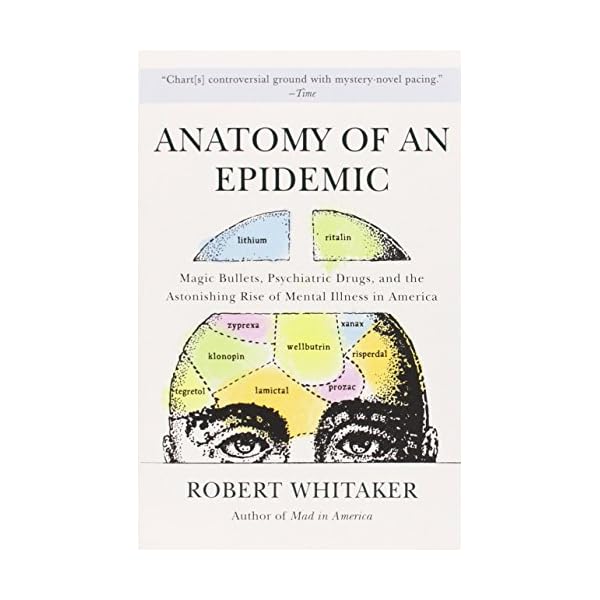
Now with bonus material, including a new foreword and afterword with updated research In this astonishing and startling book, award-winning science and history writer Robert Whitaker investigates a medical mystery: Why has the number of disabled mentally ill in the United States tripled over the past two decades? Every day, 1,100 adults and children are added to the government disability rolls because they have become newly disabled by mental illness, with this epidemic spreading most rapidly among our nation’s children. Or did they find that these medications, for some paradoxical reason, increase the likelihood that people will become chronically ill, less able to function well, more prone to physical illness? Our nation has been hit by an epidemic of disabling mental illness, and yet, as Anatomy of an Epidemic reveals, the medical blueprints for curbing that epidemic have already been drawn up. In Anatomy of an Epidemic investigative reporter Robert Whitaker cuts through flawed science, greed and outright lies to reveal that the drugs hailed as the cure for mental disorders instead worsen them over the long term. Whitaker tenderly interviews children and adults who bear witness to the ravages of mental illness, and testify to their newly found “aliveness” when freed from the prison of mind-numbing drugs.” —Daniel Dorman, M.D., Clinical Assistant Professor of Psychiatry, UCLA School of Medicine and author of Dante’s Cure: A Journey Out of Madness “This is the most alarming book I’ve read in years. Relying on medical evidence and historical documentation, Whitaker builds his case like a prosecuting attorney.” —Carl Elliott, M.D., Ph.D., Professor, Center for Bioethics, University of Minnesota and author of Better than Well: American Medicine Meets the American Dream “ Anatomy of an Epidemic investigates a profoundly troubling question: do psychiatric medications increase the likelihood that people taking them, far from being helped, are more likely to become chronically ill? Robert Whitaker is a reliable, sensible, and persuasive, guide to the paradoxes and complexities of what we know about mental illness, and what we might be able to do to lessen the suffering it brings.” —Jay Neugeboren, author of Imagining Robert and Transforming Madness “Every so often a book comes along that exposes a vast deceit.
Reviews
Find Best Price at Amazon"There's a bunch of reviews on here that say this book is invalid, but when you dig into their reasons, they are cherry picking data and using disproven research. But gradual withdrawal does work, and many people have gotten their lives back by learning how to use psych drugs appropriately as a tool instead of as the entire solution. This book cites like 400 studies, works with all the best patient advocates in the industry, and is the best science has to offer to explain both problems and solutions."
"Many of the harshest reviews of this book seem to be coming from those who currently depend on psychiatric medications, and find the author's conclusions heartless, given their own distress. I had been told by well-respected psychiatrists at two major research universities that the only way to prevent recurring depressive episodes was to be on medication for life. As I looked around at my many, many friends and family members on psychiatric medications, it seemed to me that most of them were still pretty substantially depressed a lot of the time. I understand how doctors came to use that analogy to reassure patients who were alarmed at the prospect of being on mind-altering drugs for long periods of time. I did a very slow, careful taper off of my psych drugs, over a period of months (this part is absolutely crucial). I have found daily aerobic exercise to be a far more reliable way of mitigating depression than my former medications, and research in this book shows this to be true for a majority of people as well. The "medical model" of psychiatry saved that branch of medicine from dying out, given our insurance-based healthcare system, and Robert Whitaker does a great job of exposing the collusion between the pharmaceutical companies and the American Psychiatric Association, with its frightening consequences. I found the section of the book describing the way research evidence was "rewritten" for medical school textbooks truly alarming. There's a lot at stake here for the psychiatric profession; it's not surprising that so many psychiatrists turn from this research with alarm and denial."
"I purchased this book as part of a personal project and, the further I get in it, the more interested I am."
"A must read for anyone considering taking or prescribing psychoactive medication."
"this is a book everyone who is on or about to go on any medications for mental health."
"Great book and highly recommended!"
"Not every claim in it - I my opinion is accurate - but enough are and enough important questions are raised that every doctor and every patient should be familiar with questions it raises."
Best Popular Psychology Mental Illness Books
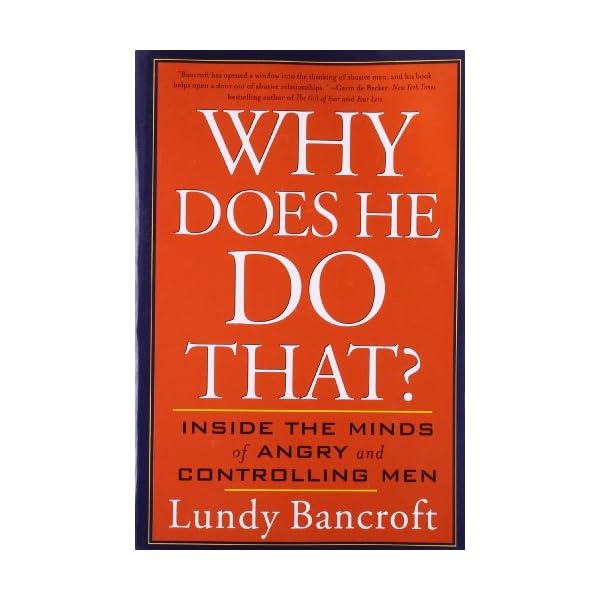
you will learn about: • The early warning signs of abuse. • The nature of abusive thinking. • Myths about abusers. • Ten abusive personality types. • The role of drugs and alcohol. • What you can fix, and what you can’t. • And how to get out of an abusive relationship safely. Bancroft, a former codirector of Emerge, the first U.S. program for abusive men, and a 15-year veteran of work with abusive men, reminds readers that each year in this country, two to four million women are assaulted by their partners and that at least one out of three American women will be a victim of violence by a husband or boyfriend at some point in her life.
Reviews
Find Best Price at Amazon"In short, I wasted 35 years of my life with this man, who distorted reality and everything I knew to be true and tried his best to make me feel small and unworthy. He moved out of the house last week (I bought him out) and I have to say ... it is sad, but I've never felt more at peace with the decision and I am ALREADY much, much happier. NO ONE should have to live with someone who treats you like a child, or curses you out "just because that's the way he's feeling," or will not respect you or your career, or refuses to stop drinking or drugging, or who physically harms or threatens you."
"This book will stop making you feel sorry for your abuser."
"So, with a title like "angry and controlling men," they are more likely to pick up the book, thinking, "Hey, this might apply to the confusing situation I am facing." He can routinely blame her for everything that goes wrong in his life, or he can constantly critique her and tear her down, or he can call her names that when I tried to put them in this review, got it banned from Amazon. Abuse is not a binary kind of behavior that is only invoked when the fists fly, but a deeply ingrained, unrepentant attitude of ownership, entitlement, contempt and resentment that a man displays, not toward most people in his life, but toward "his" woman (including past women). This confusion is created by the abuser himself, in his highly successful attempts to justify himself to himself, to his victim, and to the people around him. Bancroft did not did start out with this assumption, by the way, but came to it after years of working with abusers in mandatory counseling groups. When he started out, he believed what the abusers told him about how their behavior was caused by their wives' failings, their traumatic childhoods, their unemployment, or the hurts done them by past girlfriends; that they didn't know what they were doing; that they "lost control." The abuser, meanwhile, is functional in his life at large (except when it comes to treating his wife well), and appears to be a sane, trustworthy person. Small wonder, then, that the abused woman, her friends, and society at large cannot figure out what her problem is. If they start from the assumption that the abuser is a decent guy who means well, they will never figure out the situation. For example, in one chapter Bancroft examines in some detail a frustrating conversation between a whiny, controlling man and his wife, which ends with him insisting on walking home in the cold, even though she would be willing to drive him. Of course, his main motive is to maintain the role of victim, to keep himself in the right and his wife in the wrong, so that he can tell himself (and tell everyone else later) how she "left him" to walk home in the cold. There is a fascinating, counterintuitive warning (late in the book), that women in abusive situations should not seek couples' counseling. The reassuring presence of the counselor might get the wife to open up and say things to, or about, her husband that she would never otherwise dream of uttering."
"Anger management will not help these people; they need to be in an abuse program. Because most abusers never change, the abuse program needs to consider the victims as their real clients, because they are the ones who will benefit most by feeling supported and validated, and they are a necessary component of the program to keep the abuser accountable. Interesting that the day after I read this in the book, I saw it on Facebook as a meme."
Best Popular Psychology Research
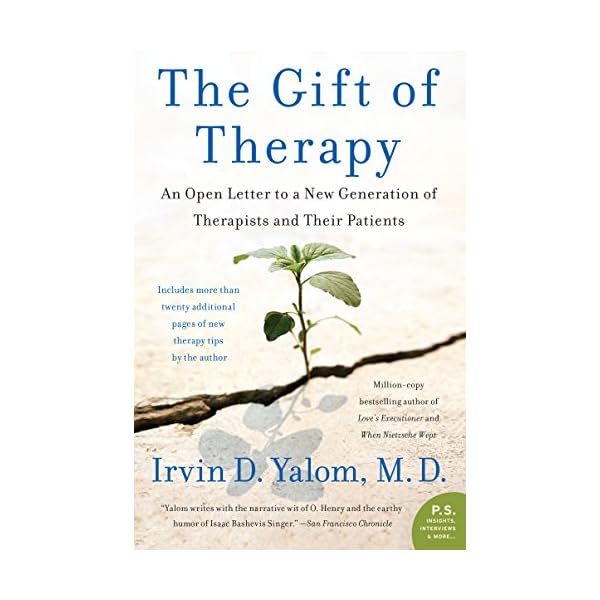
The culmination of master psychiatrist Dr. Irvin D. Yalom’s more than thirty-five years in clinical practice, The Gift of Therapy is a remarkable and essential guidebook that illustrates through real case studies how patients and therapists alike can get the most out of therapy. •Create a new therapy for each patient.
Reviews
Find Best Price at Amazon"The first book I've read by the author, I now want to read the rest of his works."
"It is wonderful to have thirty years of expereince counseling and supporting clients in their therapy work and read thought-provoking and practical ideas that improve my practice."
"great read for both seasoned clinicians and newer ones as well."
"Very good book."
"An enjoyable read, somewhat difficult to digest as a student who prefers more structured and detailed information."
"For the therapist - beginning or seasoned, this is a great book full of shared experiences that one can add to their toolbox for working with clients."
"As a young soon-to-be clinician, this book is an absolute must."
Best Popular Psychology Reference
This new edition of the American Psychiatric Association s Diagnostic and Statistical Manual of Mental Disorders (DSM-5), used by clinicians and researchers to diagnose and classify mental disorders, is the product of more than 10 years of effort by hundreds of international experts in all aspects of mental health.
Reviews
Find Best Price at Amazon"I’m not reviewing the book."
"The DSM 5 is a required reading for my mental health and psychopathology."
"The only thing wrong with mine was that the cultural formulation section was upside down!"
"Is perpetually going through changes as we learn more and more about mental disorders."
"It's the DSM."
"This manual will be very helpful for many years to come."
"Yes so happy I was able to get this book really needed it for my abnormal behavior class I'm taking 🙏🏾."
Best Popular Psychology Counseling
At the time of Frankl's death in 1997, Man's Search for Meaning had sold more than 10 million copies in twenty-four languages. Harold S. Kushner is rabbi emeritus at Temple Israel in Natick, Massachusetts, and the author of bestselling books including When Bad Things Happen to Good People, Living a Life That Matters, and When All You’ve Ever Wanted Isn’t Enough.
Reviews
Find Best Price at Amazon"Read this book, read this book."
"Those that had developed purpose and meaning to the harsh conditions got out of bed every morning to face another unbearable day."
"I cried and became distressed as I listened to Viktor Frankl's personal journey."
"Profound insight."
"A little twist of ideas as to why some people survive the worst and why others don't survive medium bad."
"I am just now to the place he talks about how thinking of his wife and having mental conversations with her gave him strength to stay alive!"
"A nice read about the importance of finding meaning in your life."
"This is a great book from both the personal story aspect as well as for its philosophical aspects."
Best Popular Psychology of Sexuality
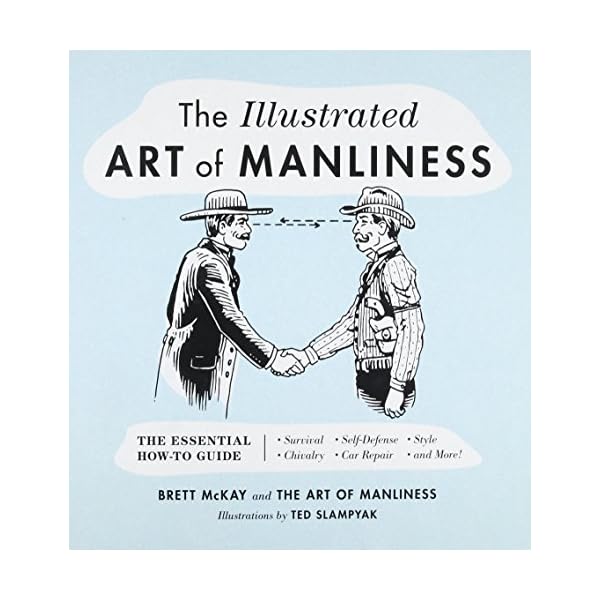
How to disarm an attacker How to fell a tree and start a fire anywhere How a car engine works, and how to fix it How to use every tool in your toolbox What to wear on a first date and to a job interview How to lead a meeting and command the attention of a room How to dance, fight, shave, shake a hand, pick a lock, and fire a gun And other advice for when you're lost, in danger, or merely confronting a shirt that needs to be ironed. Brett McKay is the founder of The Art of Manliness, the internet's #1 independent men's lifestyle side.
Reviews
Find Best Price at Amazon"A fine and rare balance of useful, fun, and aesthetically pleasing."
"Amazing illustrations with fantastic information."
"Looking forward to reading this with my son."
"This is an excellent book."
"Got this as a gift for my teenage son."
"Brett has a easy going style to bring subjects to light in an easy going understandable style."
"A quick, but highly useful and meaningful read."
"This book is so phenomenal that I wanted to write a review."
Best Popular Psychology & Medicine
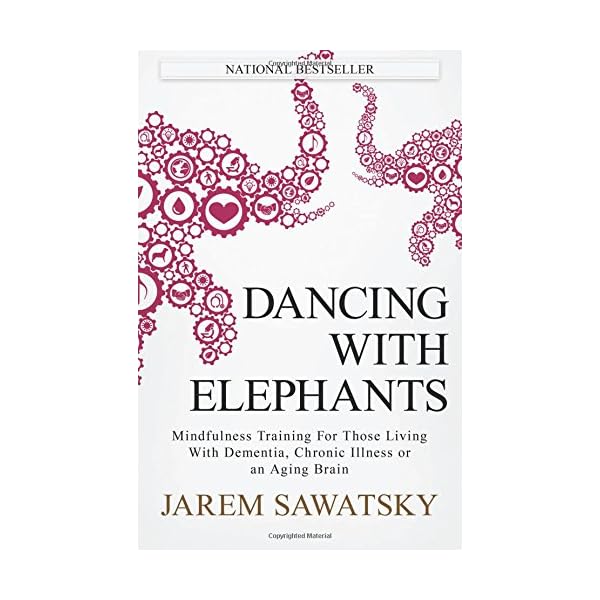
--Lana Philips "Sawatsky beautifully models a way to dance in the gale of full catastrophe, to celebrate life, to laugh with it and at himself." Simple practices to bring healing to your heart and life to your new outlook Humorous (and occasionally heart-wrenching) stories of Sawatsky's own journey Multiple ways to build confidence in yourself, even when you've been shaken to the core A new perspective to transform your pain and renew your spirit Practical tools to face your seemingly inescapable fears, and much, much more! Based on the popular blog of the same name, Dancing With Elephants includes insightful interviews with chronic disease experts Jon Kabat-Zinn, Lucy Kalanithi, and Patch Adams. --Jon Kabat-Zinn, national bestselling author of Full Catastrophe Living "...beautiful and inspiring book...full of humor and wisdom about the pain of loss in our life, by someone living with a debilitating disease." This inspiring story reminds us just how essential it is to bring lovingkindness into every step of life, no matter how difficult the path -Sharon Salzberg, New York Times bestselling author of. Real Happiness. ... forthright and inspiring... Peter V. Rabins , co-author of The 36-Hour Day When life seems to be falling apart, Jarem Sawatsky's interesting and entertaining book reminds us that laughter is what we need to not take ourselves too seriously.
Reviews
Find Best Price at Amazon"Since learning of the practice in the book, I've done it many times."
"Jarem interviewed Jon Kabat-Zinn, Patch Adams, Lucy Kalanthi (wife of Paul Kalanthi who wrote When Breath Becomes Air), Jean Paul Lederach, and Toni Bernhard about living with chronic illness. He comes from a Christian background, but is heavily influenced by the teachings of Thich Nhat Hanh. His story of living with Huntington's Disease as a family member (it is genetic) and after he received the diagnosis he had expected to get is not sad or sentimental in any way."
"Bought both hardback and digital copy of Dancing with Elephants, by Jarem Sawatsky, PhD; With my dementia symptoms, reading requires extra time and extra tools, so I have only completed the first six chapters."
"I have spoken very highly of this book to my support group and hope to see this become THE book to read for everyone who deals with chronic/terminal illness, whether personally or from the outside."
"Dancing with Elephants: Mindfulness Training For Those Living With Dementia, Chronic Illness or an Aging Brain (How to Die Smiling Book 1). By Jarem Sawatsky. WOW! (I’m told this is very normal at my age…but still…). I have read a few, more science-y books on Alzheimer’s and dementia. His humor and wit are woven all throughout this book in such a way that it never takes away from the seriousness of the topic and yet, you—the reader—are left with a smile on your face and hope in your heart. However, the other facet of this book is the fount of information just on aging in general. Though his background is in Christianity he also leans toward Buddhism and the teachings of Thich Nhat Hanh a Vietnamese monk. (While I personally do not follow Buddhism, and am a very conservative Christian—and all that entails—I am wise enough to know there are wiser men and women than I.). If I can find humor and joy, comfort and peace in all my circumstances, that’s what matters."
Best Popular Social Psychology & Interactions
At the time of Frankl's death in 1997, Man's Search for Meaning had sold more than 10 million copies in twenty-four languages. Harold S. Kushner is rabbi emeritus at Temple Israel in Natick, Massachusetts, and the author of bestselling books including When Bad Things Happen to Good People, Living a Life That Matters, and When All You’ve Ever Wanted Isn’t Enough.
Reviews
Find Best Price at Amazon"Read this book, read this book."
"Those that had developed purpose and meaning to the harsh conditions got out of bed every morning to face another unbearable day."
"One of the best works you can take in."
"Life would have been easier if I had read this book sooner in life."
"A little twist of ideas as to why some people survive the worst and why others don't survive medium bad."
"The second part of the book is an analysis of logotherapy and a description of Frankl's studies on the subject."
"I am just now to the place he talks about how thinking of his wife and having mental conversations with her gave him strength to stay alive!"
"Part 1 was easier to read."
Best Popular Psychology Personality Study
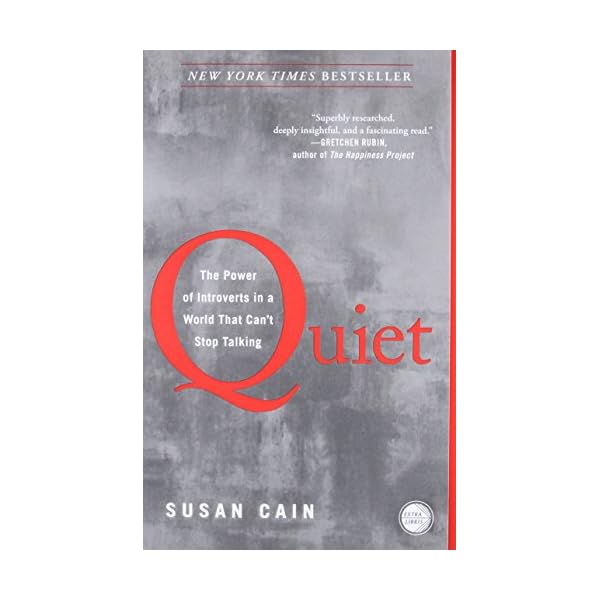
Passionately argued, superbly researched, and filled with indelible stories of real people, Quiet has the power to permanently change how we see introverts and, equally important, how they see themselves. NEW YORK TIMES BESTSELLER. NPR BESTSELLER. WASHINGTON POST. BESTSELLER. LOS ANGELES TIMES. BESTSELLER. USA TODAY. TOP 50 BESTSELLER. INDIEBOUND BESTSELLER. PUBLISHERS WEEKLY. BESTSELLER. Fast Company. ’s #1 Best Business book of 2012. INC Magazine’s. Best 2012 Books for Entrepreneurs. People. Magazine’s 10 Best Books of 2012. O, The Oprah Magazine. 10 Favorite Books of 2012. Christian Science Monitor. ’s Best Books of 2012. GoodReads Nonfiction Choice Award Winner. Audible’s #1 Non-Fiction book of 2012. Amazon’s Best Books of 2012. Barnes & Noble Best Books of 2012. Library Journal. ’s Best Books of 2012. Kirkus REVIEWS’. Best Books of 2012. Her diligence, research, and passion for this important topic has richly paid off.” —Publishers Weekly “This book is a pleasure to read and will make introverts and extroverts alike think twice about the best ways to be themselves and interact with differing personality types.” —Library Journal “An intelligent and often surprising look at what makes us who we are.” —Booklist “Charm and charisma may be one beau ideal, but backed by first-rate research and her usual savvy, Cain makes a convincing case for the benefits of reserve.” —Harper's Bazaar. “Those who value a quiet, reflective life will feel a burden lifting from their shoulders as they read Susan Cain's eloquent and well documented paean to introversion--and will no longer feel guilty or inferior for having made the better choice!” —MIHALY CSIKSZENTMIHALYI, author of Flow and Distinguished Professor of Psychology and Management, Claremont Graduate University “Superbly researched, deeply insightful, and a fascinating read, Quiet is an indispensable resource for anyone who wants to understand the gifts of the introverted half of the population.” —GRETCHEN RUBIN, author of The Happiness Project. Drawing on neuroscientific research and many case reports, Susan Cain explains the advantages and potentials of introversion and of being quiet in a noisy world.” —ANDREW WEIL, author of Healthy Aging and Spontaneous Happiness “Susan Cain has done a superb job of sifting through decades of complex research on introversion, extroversion, and sensitivity--this book will be a boon for the many highly sensitive people who are also introverts.” —ELAINE ARON, author of The Highly Sensitive Person.
Reviews
Find Best Price at Amazon"My entire life has been on hold since this started, I get home from work too exhausted to do anything except veg out for a couple hours and go to bed, and even weekends aren't much better. I learned that the job situation I'm currently in - the non-stop deadline demands, interruptions, never being able to work quietly or alone no matter how difficult a project was, phones ringing incessantly, people in my face all day long, etc. And as enlightening as it was to learn how many of the traits I've beat myself up for over the years are just a product of my introverted temperament (being highly sensitive, shutting down when subjected to stimulation overload, preferring to think a thing through before I speak - something I never get to do at work, as if it takes me more than 5 seconds to say something, I get interrupted and cut off), the most important thing I got from this book is that it's okay to be myself, it's okay to feel the way I do. I am not weak or a failure because I don't feel or behave like my extremely extroverted boss (who thrives in high-energy crisis mode, and is bored unless he's doing 10 things at once - and expects the rest of us to keep up). I also found the information on the history of the "rise of the Culture of Personality" completely fascinating, it really gave me a new insight as to just exactly how we 'grew' this tendency to value extroversion over introversion. I know I will meet resistance from my boss (I'd love for him to read this book, but unfortunately I know he won't), and I know I won't instantly fix everything in one day, and that I'll probably always need to be able to stretch myself a bit to do things that are not ideal for me ... but this book taught me that there are ways to make that work, too, if you understand and honor the need for recharging around such tasks, instead of trying to force yourself to do them 8 hours a day with no break. The wealth of information and insights in this book cannot be overstated - especially if you are an introverted type of person who has always felt there was something not quite right about you, or that you somehow needed to change to fit in or succeed. Thank you, Susan Cain, from the bottom of my heart (which is finally beating at a more normal speed because I'm not panicked about going to work for the first time in months)."
"As somebody who has been called at some point or another the gamut of terms associated with introversion, from "shy" (which I don't object) to "anti-social" (which I most certainly consider unfair), I found in Susan Cain's "Quiet," the validation and appreciation many introverts have been searching for. In "Quiet," Ms. Cain explains the rise of the Extrovert Ideal in the 1920s and how it is that today we associate talkative, risk-taking, and action-oriented people with intelligence, beauty, power and success. She interviews scientists who have conducted hundreds of studies to test different theories in an effort to determine how much of our temperament is a result of genetics and/or of our free will. For those still deciding on a career, the author reminds readers that research shows that introverts are not reward-seeking like extroverts, but rather motivated by the enjoyment they find in pursuing an activity; in other words, by being in what psychologist Mihaly Csikszentmihalyi calls the "flow"."
"Helped me understand a lot of tendencies in my life and in the lives of many others."
"As an introvert I found it very helpful, it explained who I am that the way I see the world and how I socialise is quite normal, not to judge myself against extroverts, that to limit my social contract is quite normal and that I can get overwhelmed by too much happening around me and that quiet time is important to my well-being."
"An engaging non-fiction book that doesn't just devolve into confirmation bias or a single note thesis."
"This book was not at all what I expected."
Best Popular Psychology Testing & Measurement
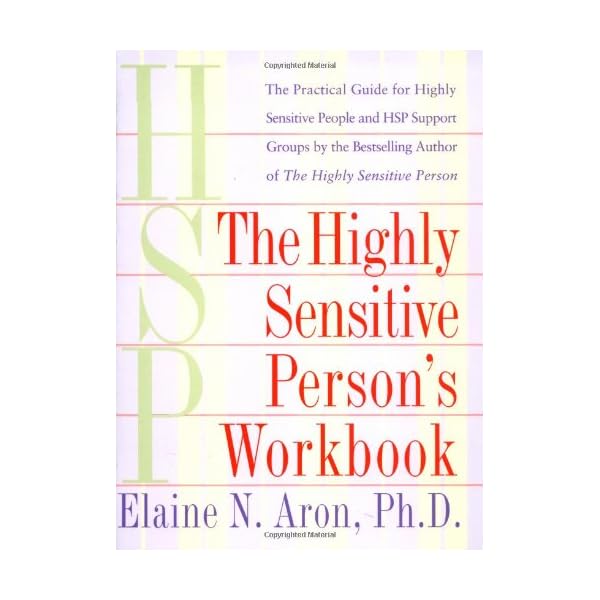
A collection of exercises and activities for both individuals and groups, this workbook will help you identify the HSP trait in yourself, nurture the new, positive self-image you deserve, and create a fuller, richer life. Identify your specific sensitivities with self-assessment tests. Reframe past experiences in a more positive light. Interpret dreams and relate them to your sensitivity. Cope with overarousal through relaxation, breathing, and visualization techniques. Describe your trait in a work interview or to an unsympathetic family member, new friend, doctor, or therapist. Can 1.2 billion exceptionally nervous nervous systems be wrong? There are plenty of blanks to fill in as you analyze your childhood, health concerns, work history, and psychic wounds, with plenty of guidance on how to do it--sample entries as intriguing as someone else's diary. She gives a quick course in dream analysis (Freud couldn't outdo her job on a dream about The A-Team 's Mr. T and a tiger), and rather boldly invites you to envision and prepare for your death.
Reviews
Find Best Price at Amazon"Instead I found a smart, astute, science-based book which explained to me why I was slowly dying at my job, why I could not sleep at night, and why I was so stressed at work that I literally could not stomach my sandwich at lunch but would almost throw it up every day (but I could eat at home) -- I was operating at a level of physical stress which was impossible for a highly sensitive person to sustain, and yet I was somehow sustaining it. Once I actually looked at myself, looked at my actual situation, stopped blaming myself for being "weak" and "broken" and "not tough enough" and stopped trying to be what I am not, I saw clearly that I was ignoring my physical body's symptoms of extreme stress and hurting myself bad. Reading this was a wake up call at a time in my life when I really needed it, and gave me enough confidence to finally stand up to my impossible to please, bullying, manipulative boss and just quit. I am going back to school and retraining to become a software developer so that I can work in an environment that won't kill me."
"I took her test on line at her site... highly sensitive person test, and answered yes to all the questions! I think you only need to answer yes to about 14 of the many questions. Because you might have a friend, partner, child who is highly sensitive and knowing how to treat them, can change both your relationships. It turns out not only are 15 - 20% of humans highly sensitive, so are animals and insects in the same percentages!"
"This is a really good book for those who are highly sensitive or having one in their family."
"This book helped me view my extra sensitivity as a gift to others by being conscientious, at the same time it has made me aware of over stimulating situations that may cause me restlessness."
"It is very good, but I thought it was more about sensory-overload...I haven't finished it ye3t."
"Very insightful!"
"Since I have identified myself as a highly sensitive person recently this book has helped me a lot to maneuver easily in a non-sensitive world."
"If you are highly sensitive or an empath this is an amazing read."
Best Popular Psychology Creativity & Genius
Passionately argued, superbly researched, and filled with indelible stories of real people, Quiet has the power to permanently change how we see introverts and, equally important, how they see themselves. NEW YORK TIMES BESTSELLER. NPR BESTSELLER. WASHINGTON POST. BESTSELLER. LOS ANGELES TIMES. BESTSELLER. USA TODAY. TOP 50 BESTSELLER. INDIEBOUND BESTSELLER. PUBLISHERS WEEKLY. BESTSELLER. Fast Company. ’s #1 Best Business book of 2012. INC Magazine’s. Best 2012 Books for Entrepreneurs. People. Magazine’s 10 Best Books of 2012. O, The Oprah Magazine. 10 Favorite Books of 2012. Christian Science Monitor. ’s Best Books of 2012. GoodReads Nonfiction Choice Award Winner. Audible’s #1 Non-Fiction book of 2012. Amazon’s Best Books of 2012. Barnes & Noble Best Books of 2012. Library Journal. ’s Best Books of 2012. Kirkus REVIEWS’. Best Books of 2012. Her diligence, research, and passion for this important topic has richly paid off.” —Publishers Weekly “This book is a pleasure to read and will make introverts and extroverts alike think twice about the best ways to be themselves and interact with differing personality types.” —Library Journal “An intelligent and often surprising look at what makes us who we are.” —Booklist “Charm and charisma may be one beau ideal, but backed by first-rate research and her usual savvy, Cain makes a convincing case for the benefits of reserve.” —Harper's Bazaar. “Those who value a quiet, reflective life will feel a burden lifting from their shoulders as they read Susan Cain's eloquent and well documented paean to introversion--and will no longer feel guilty or inferior for having made the better choice!” —MIHALY CSIKSZENTMIHALYI, author of Flow and Distinguished Professor of Psychology and Management, Claremont Graduate University “Superbly researched, deeply insightful, and a fascinating read, Quiet is an indispensable resource for anyone who wants to understand the gifts of the introverted half of the population.” —GRETCHEN RUBIN, author of The Happiness Project. Drawing on neuroscientific research and many case reports, Susan Cain explains the advantages and potentials of introversion and of being quiet in a noisy world.” —ANDREW WEIL, author of Healthy Aging and Spontaneous Happiness “Susan Cain has done a superb job of sifting through decades of complex research on introversion, extroversion, and sensitivity--this book will be a boon for the many highly sensitive people who are also introverts.” —ELAINE ARON, author of The Highly Sensitive Person.
Reviews
Find Best Price at Amazon"My entire life has been on hold since this started, I get home from work too exhausted to do anything except veg out for a couple hours and go to bed, and even weekends aren't much better. I learned that the job situation I'm currently in - the non-stop deadline demands, interruptions, never being able to work quietly or alone no matter how difficult a project was, phones ringing incessantly, people in my face all day long, etc. And as enlightening as it was to learn how many of the traits I've beat myself up for over the years are just a product of my introverted temperament (being highly sensitive, shutting down when subjected to stimulation overload, preferring to think a thing through before I speak - something I never get to do at work, as if it takes me more than 5 seconds to say something, I get interrupted and cut off), the most important thing I got from this book is that it's okay to be myself, it's okay to feel the way I do. I am not weak or a failure because I don't feel or behave like my extremely extroverted boss (who thrives in high-energy crisis mode, and is bored unless he's doing 10 things at once - and expects the rest of us to keep up). I also found the information on the history of the "rise of the Culture of Personality" completely fascinating, it really gave me a new insight as to just exactly how we 'grew' this tendency to value extroversion over introversion. I know I will meet resistance from my boss (I'd love for him to read this book, but unfortunately I know he won't), and I know I won't instantly fix everything in one day, and that I'll probably always need to be able to stretch myself a bit to do things that are not ideal for me ... but this book taught me that there are ways to make that work, too, if you understand and honor the need for recharging around such tasks, instead of trying to force yourself to do them 8 hours a day with no break. The wealth of information and insights in this book cannot be overstated - especially if you are an introverted type of person who has always felt there was something not quite right about you, or that you somehow needed to change to fit in or succeed. Thank you, Susan Cain, from the bottom of my heart (which is finally beating at a more normal speed because I'm not panicked about going to work for the first time in months)."
"As somebody who has been called at some point or another the gamut of terms associated with introversion, from "shy" (which I don't object) to "anti-social" (which I most certainly consider unfair), I found in Susan Cain's "Quiet," the validation and appreciation many introverts have been searching for. In "Quiet," Ms. Cain explains the rise of the Extrovert Ideal in the 1920s and how it is that today we associate talkative, risk-taking, and action-oriented people with intelligence, beauty, power and success. She interviews scientists who have conducted hundreds of studies to test different theories in an effort to determine how much of our temperament is a result of genetics and/or of our free will. For those still deciding on a career, the author reminds readers that research shows that introverts are not reward-seeking like extroverts, but rather motivated by the enjoyment they find in pursuing an activity; in other words, by being in what psychologist Mihaly Csikszentmihalyi calls the "flow"."
"As an introvert I found it very helpful, it explained who I am that the way I see the world and how I socialise is quite normal, not to judge myself against extroverts, that to limit my social contract is quite normal and that I can get overwhelmed by too much happening around me and that quiet time is important to my well-being."
"An engaging non-fiction book that doesn't just devolve into confirmation bias or a single note thesis."
"This book was not at all what I expected."
Best Physiological Aspects in Psychology
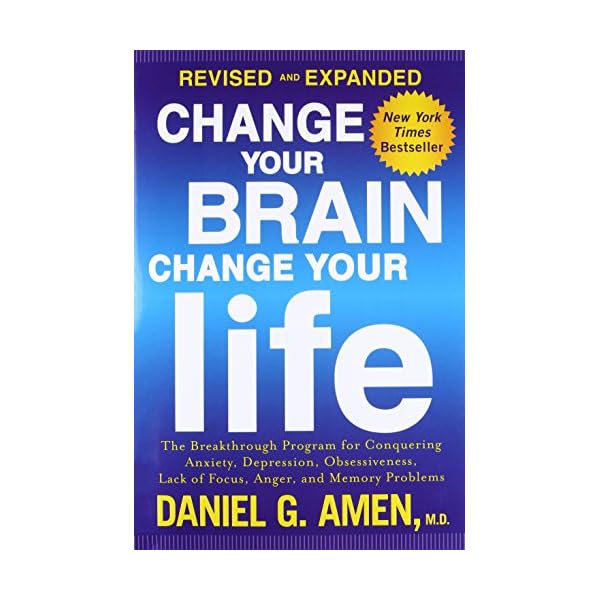
In this completely revised and updated edition of the breakthrough bestseller, neuropsychiatrist Dr. Daniel Amen includes effective "brain prescriptions" that can help heal your brain and change your life. Filled with "brain prescriptions" (among them cognitive exercises and nutritional advice) that are geared toward readers who've experienced anxiety, depression, impulsiveness, excessive anger or worry, and obsessive behavior, Change Your Brain, Change Your Life milks the mind-body connection for all it's worth.
Reviews
Find Best Price at Amazon"This book would be so much better if it focused purely on the science and what behaviors can be modified with actionable tasks/steps people can take (i.e. changing the questions they ask themselves, writing goals on paper, joining support groups). The authors concept is this: Spend thousands getting your brain scanned, then spend hundreds on supplements he sells for your special kind of brain, and join a church."
"it helps reduce guess work, and generalized treatments that sometimes cause more problems for people seeking help. I have been reducing alcohol for years, looking at Scan of Alcohol use has given me enough Reasons to Quit. In this Book Dr. Amen Identifies problems, causes, and potential Solutions and a ton of resources to help manage and treat bad behavior."
"Product came on time and was as described."
"Very informative."
"loved the book made me smarter on the function of the brain."
"Excellent..simple and easy to read."
Best Evolutionary Psychology
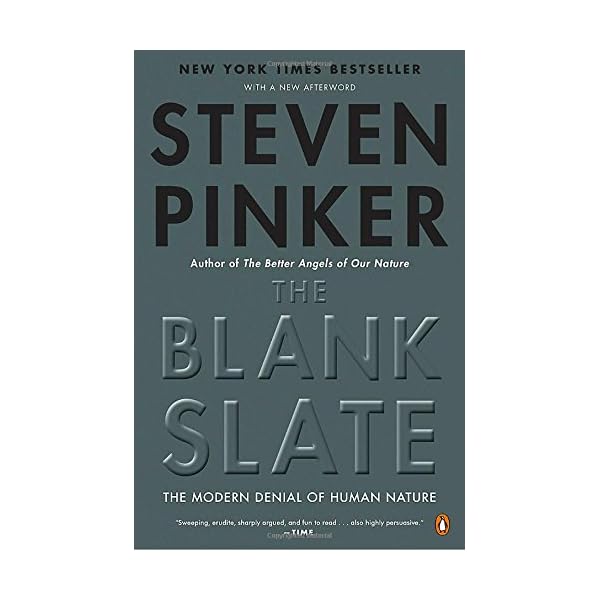
In The Blank Slate , Steven Pinker, one of the world's leading experts on language and the mind, explores the idea of human nature and its moral, emotional, and political colorings.
Reviews
Find Best Price at Amazon"As a parent of two children I was particularly interested in his parenting section, where the argument of "nature VS nurture" is torched."
"The Blank Slate: The Modern Denial of Human Nature by Steven Pinker. The Blank Slate is an ambitious book that goes after the blank slate fallacy that is the idea that the human mind has no inherent structure and can be inscribed at will by society or ourselves. The Blank Slate, the Noble Savage, and the Ghost in the Machine, Part II. Steven Pinker the well known Professor of Psychology at Harvard University writes thought-provoking, well-researched books and this book is no different. Professor Pinker goes after the doctrines of the Blank Slate, the Noble Savage, and the Ghost in the Machine and does so with gusto and a mountain of scientific evidence. "The evidence is overwhelming that every aspect of our mental lives depends entirely on physiological events in the tissues of the brain". How genes affect our behavior..."Small differences in the genes can lead to large differences in behavior". Fascinating look at how our brains remain active during "assembly". Evolutionary biology used to explain the complex cognitive and behavioral adaptations. The religious opposition to evolution and its intended corruption of American science education. The dangerous fallacy of equating evolutionary psychology with "Social Darwinism". Debunking the four fears over the anxiety of human nature. The disposal of eugenics, discrimination, and Social Darwinism. Many excellent messages throughout the book, "An idea is not false or evil because the Nazis misused it". The importance of respecting women's fundamental rights to their bodies. The compatibility of human nature with social and moral progress. The ethics of autonomy, community and divinity explained. How to anticipate and limit that corruption became an obsession of the framers. Fascinating look at the fallacy of the connection between media violence and violent behavior. A good grasp of how the mind works is indispensable to the arts. This could be considered a positive but it's not because the author does unleash ad hominen attacks to some of his opponents. A more comprehensive summary at end of each chapter would have been added value. This book is worthy of five stars just based on the wisdom you will obtain. Many important ideas and thoughts are found throughout this ambitious book. Further suggestions: "Human" by Michael S. Gazzaniga, "SuperSense" by Bruce M. Hood, "The Myth of Free Will" by Cris Evatt, "Hardwired Behavior" by Laurence Tancredi, "Braintrust: What Neuroscience Tells Us about Morality" by Patricia S. Churchland, and "The Brain and the Meaning of Life" by Paul Thagard."
"Important scientific corrective to the current politically correct insanity."
"Accessible to the layman without sacrificing the standards of academic scholarship."
"Witty, well-thought out, and fully anotated, this touchstone came to me highly recommended after I mentioned other books about human nature like Matt Ridley's THE AGILE GENE."
"This book argues against the premise that the human brain begins as an empty tablet awaiting the experiences of life to teach it how to think and act."
Best Occupational & Organizational Popular Psychology
When it comes to the pursuit of success and happiness, most people assume the same formula: if you work hard, you will become successful, and once you become successful, then you'll be happy. Success does not beget happiness. He gives more than 150 lectures a year on the science of happiness and human potential, which have been covered in the New York Times, the Boston Globe, the Wall Street Journal, CNN, and NPR.
Reviews
Find Best Price at Amazon"I saw Shawn Anchor's presentation on PBS where he explained a simple 5 minute technique called 'The 3 Gratitudes'. I was brought up in a culture of pessimism and had 50 years of experience that was so deeply entrenched that I decided that I would be the perfect candidate for experimentation with such a simple exercise. I've never had much luck trying to change my 'default mode' of negative self-concept (no matter how much therapy I've had or how many self-help books I've read) so I was really on a mission to prove this man and his ideas wrong! I listened to the whole book on tape to make sure I was doing it as explained in the television presentation and this is what I did: It takes exactly 21 days to create a new neural pathway so you have to do the exercise everyday for 3 weeks. You want to find the part of your routine in the morning where you have a moment (well, 5 minutes) (when you're having a cup of tea or coffee for instance). THE FUN-15: This one is the optional one but will speed up the process: You want to get 15 minutes of fresh air and exercise...a lovely walk with some sunshine if possible (if you're NOT up to this yet, you can add it in after 21 days when you feel better). After 3 months I figured there was something to this neural construction thing (or whatever it's called) and I kept doing 'The 3 Gratitudes' straight through till August. In September I decided to experiment and I stopped doing the exercise just to see whether I would go back to default (after 7 months of being a happy, optimistic, creative and grateful person). The only time I've slipped back into feelings of real pessimism was one week when I had the flu but it lifted as soon as I started recovering."
"I loved the TED talk and wanted fyi learn more."
"So much goodness is packed in here."
"Interesting to read (never seemed like a slight) and I remind myself, daily, of the suggestions it provided."
"More productivity, more smarts, more cooperation, more accomplishment. This one goes next to other keepers like New Earth by Eckhart Tolle and some other really impressive books that I just can't think of now but surely would know if I was standing right in front of my bookshelf at home that holds all the 'bibles' i've collected over 30+ years. Marcianne Waters, avid reader and avid happiness promoter (I hope)."
"This should be a must read for everyone that works in an organization environment."
"One of the best books out there on happiness."
"Hard to use a highlighter on an audio book."
Best Psychiatry
This new edition of the American Psychiatric Association's Diagnostic and Statistical Manual of Mental Disorders (DSM-5), used by clinicians and researchers to diagnose and classify mental disorders, is the product of more than 10 years of effort by hundreds of international experts in all aspects of mental health.
Reviews
Find Best Price at Amazon"This 5th edition keeps up the tradition but goes well beyond as a clinical handbook and reference."
"Very informative for professionals or those aspiring to be in the field."
"Needed for a class, worked great, not too expensive."
"Love it!"
"The DSM 5 is a required reading for my mental health and psychopathology."
"My copy is literally falling apart and I've only used it for class."
"I ordered this book, and the book I received had about 40 pages that were upside down."