
Best Commerce
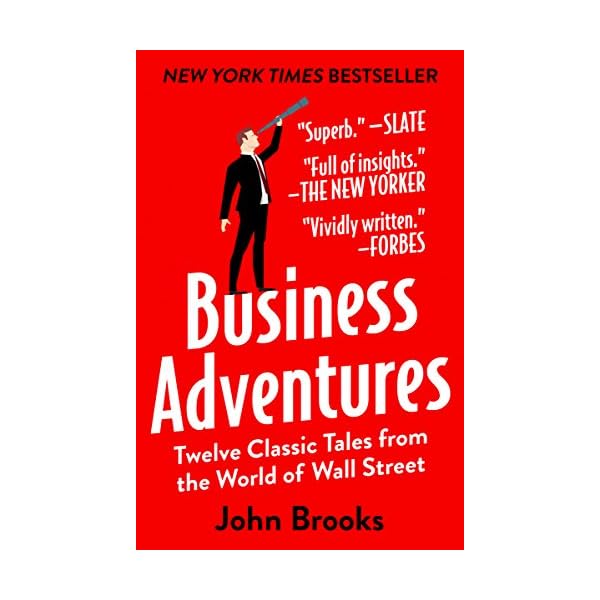
“ Business Adventures remains the best business book I’ve ever read.” —Bill Gates, The Wall Street Journal What do the $350 million Ford Motor Company disaster known as the Edsel, the fast and incredible rise of Xerox, and the unbelievable scandals at General Electric and Texas Gulf Sulphur have in common? But Brooks features another trait that modern business writers, whether James Stewart, Malcolm Gladwell, or Michael Lewis, do not. Brooks is truly willing to give up his own views to get inside the mind of all his subjects.” — National Review “More than two decades after Warren [Buffett] lent it to me—and more than four decades after it was first published— Business Adventures remains the best business book I've ever read . Brooks’s deeper insights about business are just as relevant today as they were back then.” —Bill Gates, The Wall Street Journal.
Reviews
Find Best Price at Amazon"His observations leave room for the reader to consider events, their connections, their parallels to today, the importance of character, and the question of morality in business. John Brooks' perspective is firmly rooted in the past, when the book was written, and provides readers opportunity for a sense of omniscience since we can consider ramifications the author himself could not be aware of, at that time."
"Great book, bringing major financial/business events to the level of understanding."
"It might be dated, but if it's still good enough for Bill Gates, it's good enough for me."
"Otherwise a good and detailed book."
"read it because i saw in some articles that it was popular."
"Good book to understand many of the business issues faced today are the same ones in the 1950s/1960s just cloaked in new garments."
"Great story like presentations of real life examples from which to learn."
"I like the history of these big business and how it came about, but I had to read it very carefully to understand what was going on."
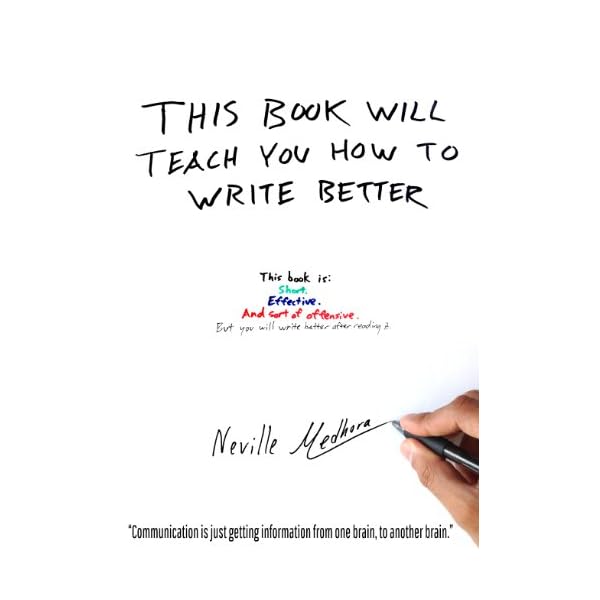
This is an incredibly short book (about 54 pages) that you can read in one sitting. If this book gives you even one tip that increases the performance of your writing....(and keep in mind, writing is a skill you will keep your whole life)....then this will be a fantastic investment for yourself. Find a very comfortable place to sit and read this book. Begin absorbing these mind-hacks and formulas laid out in the book....and apply them to your own writing. I noticed when I sent out emails or wrote content for a page according to proper copywriting principles, THINGS MAGICALLY SOLD BETTER!
Reviews
Find Best Price at Amazon"As the nerds might say, reading this book will increase your persuasion skills by at least +5 points. Neville's small but dense book is at the top of my list for writing better. White and Strunk's Elements of Style teach you proper grammar."
"This is great for: * New (or unpopular) bloggers. * Online store owners. * Startup CEOs. * Sales guys and. * Anyone who writes emails for a living. Last thing: if you hate it, email Neville and he'll refund your money no questions asked."
"I don't mean pictures when I say illustrated."
"Don’t only pay attention to the information he’s giving you through the words he’s writing."
"The book is very interesting, with concise and helpful information."
"You can learn a lot from just how his writing style alone keeps you engaged for the whole book."
"Loved it!"
"A must read book for every Copy Writer, Advertiser, Salesman, Marketer."
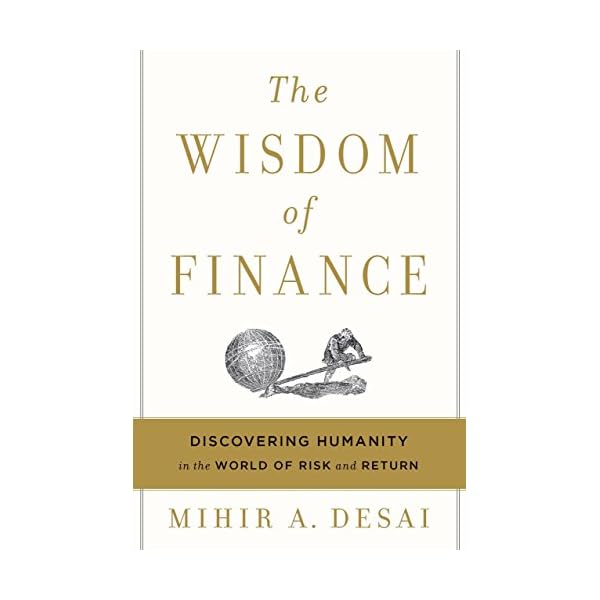
"A fascinating new perspective on modern finance," --Oliver Hart, 2016 Nobel Laureate in Economics. "Lucid, witty and delightfully erudite...From the French revolution to film noir, from the history of probability to Jane Austen and The Simpsons , this is an astonishing intellectual feast." With incisive wit and irony, his lecture drew upon a rich knowledge of literature, film, history, and philosophy to explain the inner workings of finance in a manner that has never been seen before. The mix of finance and the humanities creates unusual pairings: Jane Austen and Anthony Trollope are guides to risk management; Jeff Koons becomes an advocate of leverage; and Mel Brooks’s The Producers teaches us about fiduciary responsibility. Among many surprising parallels, bankruptcy teaches us how to react to failure, the lessons of mergers apply to marriages, and the Capital Asset Pricing Model demonstrates the true value of relationships. ''For those of us who have long believed that the field of finance was more than a way to make a good living, Mihir Desai has written a liberating book. ''In this lucid, witty and delightfully erudite study, Mihir Desai connects finance to philosophy, literature and the deep essence of the human condition. Mihir eloquently traces the products, practices, and services of our modern financial system to their roots while providing literary context and illustration. ''Mihir Desai brilliantly applies original lessons drawn from the world of finance to enable all of us to lead more secure, fulfilling and happier lives. Using myriad examples from historical sources and current experiences, Desai takes essential financial theories and translates them into easily understood ways to enrich and improve our lives. ''. --Bill George, former chairman and CEO of Medtronic and author of Discover Your True North ''This book does valuable work toward demystifying finance for laypeople and deepening the art for practitioners…Will broaden and enrich any perspective.''.
Reviews
Find Best Price at Amazon"The Wisdom of Finance is worth reading if only to marvel at Mihir Desai’s amazing mind, wide range, and exciting set of insights. The book undersells itself, claiming to use a range of novels, movies, music, TV shows, philosophy and history to better understand and illuminate finance."
"Great book, it goes along and it links history of finance with other books that I have read."
"different perspective than usual."
"The best book I’ve read on that topic is entitled Financial Fitness: The Offense, Defense, and Playing People of Personal Finance. It makes me think of an advanced version of books like The Tipping Point or Freakonomics, except it seems to aim less to a business audience and more to academia. If you enjoy studying things like insurance and investment banking, this book gets past the math and statistics and helps finance come alive through stories and the human element."
"They teach you about present value of money, asset allocation, diversification, CAPM, ROA, ROE, Alpha, Beta, CDS, MBS, etc. He does not quote Shakespear, Jane Austen, or Socrates to show off his knowledge but instead to place whatever concepts he presents (such as options, derivatives, investments) in an interesting and often ancient historical context. I derived a good empirical knowledge and understanding of all that stuff as all practicioners of finance eventually do."
"One of the best books on finance that I've ever read."
"It's the perfect book for 2017, when we can't be sure what the government is going to do next."
Best Economics Commercial Policy
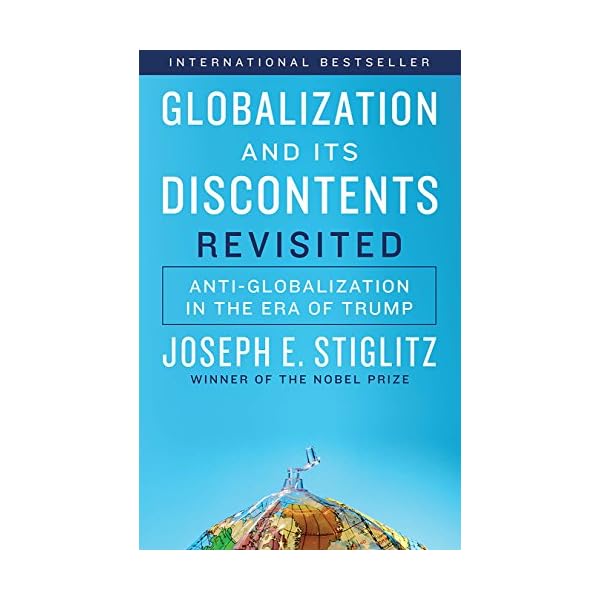
Immediately upon publication, Globalization and Its Discontents became a touchstone in the globalization debate by demonstrating how the International Monetary Fund, other major institutions like the World Bank, and global trade agreements have often harmed the developing nations they are supposedly helping. His book clearly explains the functions and powers of the main institutions that govern globalization--the International Monetary Fund, the World Bank, and the World Trade Organization--along with the ramifications, both good and bad, of their policies. In recent years, the International Monetary Fund, the World Bank and the World Trade Organization have promoted world financial stability, prosperity and free trade, yet Stiglitz wonders why so many revile these organizations' programs to the point of rioting in the streets. Stiglitz shares inside information from cabinet meetings when he served on Clinton's Council of Economic Advisers and from his years as chief economist at the World Bank, divulging debates in Washington's conference rooms, naming names and raising his eyebrows at those who refuse to question certain IMF policies' repeated shortcomings.
Reviews
Find Best Price at Amazon"Still, I found his coverage and insights into events that now seem like ancient history, that is, the transition of Russia from communism to (mafia) capitalism, and the East Asian financial crisis of the late `90's to be fascinating. ), and when the government devalued, after the "Big Boys" got their money out at very favorable rates, then the poor are saddled with the obligation to pay off the loan. It is enough to give capitalism a bad name (and it has in such countries)! Another key point that the author makes concerns Adam Smith, who started the wonderful "invisible hand" of the marketplace business, but also clearly identified market failures. Numerous times he is straightforward in his critique, such as: "The billions of dollars in Cayman Islands and other such centers are not there because those islands provide better banking services that Wall Street, London or Frankfurt; they are there because the secrecy allows them to engage in tax evasion, money laundering, and other nefarious activities. Only after September 11 was it recognized that among those other nefarious activities was financing of terrorism." Numerous redundancies, numerous inane reminders that farmers need to buy seeds, and tautologies like the following: "A real and effective banking system requires strong banking regulation.""
"This should be considered a companion book of a trilogy to those wishing to learn from highly educated, directly-experienced and politically objective experts - those who have "been there, done that" - who reveal to us the inner workings of world politics and why it is so ineffective and counter-productive the way it is currently being managed. Incredible as his story is, it also dovetails precisely with what these other authors - a Nobel prize winner, a counsellor to the Secretary of commerce and special economic envoy to Japan, and a New York Times journalist- have consistently and convincingly presented as the same story and delivered as a remarkably similar conclusion from their different perspectives."
Best Economic Theory
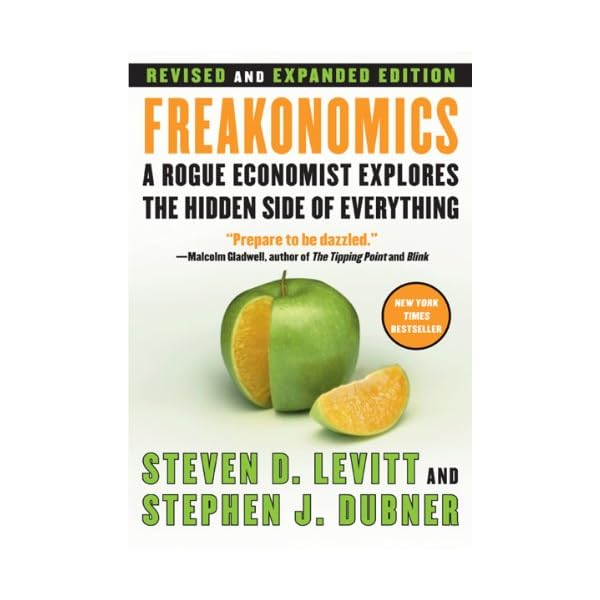
Freakonomics is a groundbreaking collaboration between Levitt and Stephen J. Dubner, an award-winning author and journalist. Thus the new field of study contained in this book: freakonomics.Through forceful storytelling and wry insight, Levitt and Dubner show that economics is, at root, the study of incentiveshow people get what they want, or need, especially when other people want or need the same thing. What unites all these stories is a belief that the modern world, despite a great deal of complexity and downright deceit, is not impenetrable, is not unknowable, andif the right questions are askedis even more intriguing than we think. Freakonomics establishes this unconventional premise: If morality represents how we would like the world to work, then economics represents how it actually does work. It will literally redefine the way we view the modern world.Bonus material added to the revised and expanded 2006 edition.The original New York Times Magazine article about Steven D. Levitt by Stephen J. Dubner, which led to the creation of this book.Seven Freakonomics columns written for the New York Times Magazine, published between August 2005 and April 2006. “Levitt dissects complex real-world phenomena, e.g. baby-naming patterns and Sumo wrestling, with an economist’s laser.” (San Diego Union-Tribune). This is bracing fun of the highest order.” (Kurt Andersen, host of public radio's Studio 360 and author of Turn of the Century). “Freakonomics challenges conventional wisdom and makes for fun reading.” (Book Sense Picks and Notables). Steven D. Levitt, a professor of economics at the University of Chicago, was awarded the John Bates Clark Medal, given to the most influential American economist under forty. Stephen J. Dubner, an award-winning journalist and radio and TV personality, has worked for the New York Times and published three non- Freakonomics books.
Reviews
Find Best Price at Amazon"Indeed, the most common reaction I get from people when telling them that I am an economist is that they have read Freakonomics, which implies that they have at least seen some work similar to what I do at aguanomics. All I remember was a lot of math and curves.” This depressing outcome results from lecturers who merely reproduce problems and equations on the blackboard, without helping students understand either why those theories are used or how they came to be so popular with economists. Third, there are books like mine [pdf] that try to explain how to improve failing policies using basic economic insights and incentives. This book with a memorable (but useless) name provides readers with just-so stories that are good for cocktail conversations but not for understanding economics. What struck me is their ongoing attempts to hold onto at least some elements in the original claim in later blog posts in what I’d call a “my-ladydoth-protest-too-much” manner. Looking over their other chapters (on cheating sumo wrestlers, drug dealers who live with their moms, the KKK as a multilevel marketing organization, etc. ), I agree that the chapters are interesting and thought provoking, but they do not provide “lessons on the hidden side of everything.” Instead, they read like a series of magazine articles whose quirky “insights” might contribute to your next cocktail conversation. [7] I didn’t detect any reliable technique (except perhaps to collect a neat dataset and call Steve Levitt), and that’s where I was disappointed. In this case, street dealers are (a) NOT condemned to death, (b) not able to find other work with their experience, and (c) not aware of their statistical mortality as much as their potential wealth. Dubner and Levitt present interesting puzzles worthy of cocktail conversation, but they overstate their contributions and accuracy (“numbers don’t lie” but theory can be incomplete or just wrong). He's a fine person and excellent economist, but this book is too “pop” in its oversimplification of his work and hagiographic treatment of his insights. Yes, he brings interesting statistical tools to“freaky” questions, but he’s not a “rogue economist exploring the hidden side of everything.” He’s just a guy with a dataset and empirical theory who finds some strong correlations. (8) My years of experience traveling in 100+ countries leads me to respect the diversity of beliefs and institutions that result in a variety of outcomes. As another example, take Dubner on page 199, who writes “that paper [on police officer counts and crime] was later disputed… a gradate student found an obvious mathematical mistake in it — but Levitt’s ingenuity was obvious.” I’m not sure I’d say the same about someone whose claims rested on logic with “obvious mathematical mistakes”!"
"LOVE THIS BOOK!"
"I enjoyed the many hidden causal connections that no one without the proper research could ever have put together."
"This book is absolutely brilliant."
"You may or may not agree with everything in here, but that is not the point."
"It takes an engaging and unique look at the world through the lens of an economist and the results are quite compelling."
"I thought this book was both thought provoking and interesting."
"Really a great book."
Best Macroeconomics
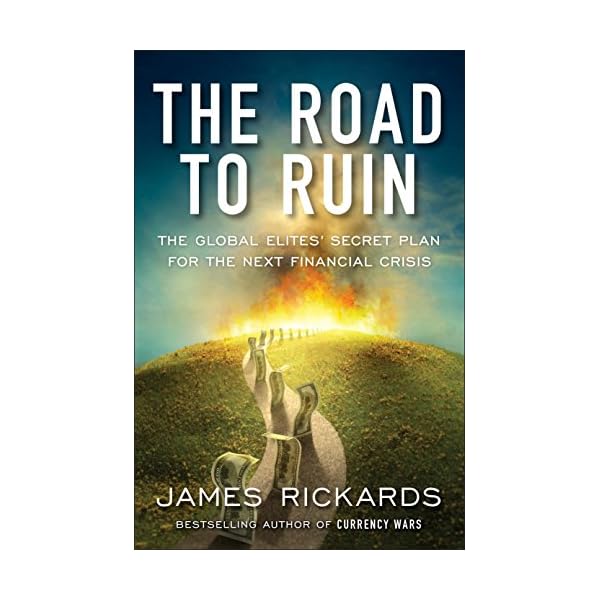
Since 2014, international monetary agencies have been issuing warnings to a small group of finance ministers, banks, and private equity funds: the U.S. government’s cowardly choices not to prosecute J.P. Morgan and its ilk, and to bloat the economy with a $4 trillion injection of easy credit, are driving us headlong toward a cliff. "If you are curious about what the financial Götterdämmerung might look like you’ve certainly come to the right place... Rickards believes -- and provides tantalizing snippets of private conversations with those who dwell in the very eye-in-the-pyramid -- that the current world monetary and financial system is on the verge of insolvency and that the world financial elites already have a successor system for which they are laying the groundwork." An adviser on international economics and financial threats to the Department of Defense and the U.S. intelligence community, he served as a facilitator of the first-ever financial war games conducted by the Pentagon.
Reviews
Find Best Price at Amazon"I find Jim Rickards to be a gifted teacher - he successfully explains numerous complicated concepts in layman terms. Thanks to his writings in this particular book, I feel I have a basic working knowledge of some troubling issues that may very well threaten the long term success of not just my own family, but America in general. I found his suggestions to be tersely worded and lacking the "fleshing out" helpfulness characteristic in Rickards previous chapters. When I finished this much anticipated section I sensed Rickards had deliberately withheld information the average reader needed to understand and apply his suggestions and ideas."
"Rickards speaks of "elites," but as an amorphous group bound together by shared goals rather than as a dark organization dedicated to evil. The typical free trade policies have led to the gutting of US manufacturing, and the loss of the jobs on which the middle class used to depend. If President Trump can shift our trade policies so that a certain amount of manufacturing returns to the US, he will have done generations of Americans a great favor."
"I realize this is a sensitive issue with our society, but when I was on the ground at 2 am, January 1st of 2015, fighting a guy who had tried to assault me, you bet I sure loved the blue squad cars that delivered public servants who took over and arrested the social blight that tried to harm me."
"Also, does it bother anyone else that someone who previously worked for the CIA and has all this present day high level clearance, is just allowed to tell everything he knows without being offed?"
Best Microeconomics
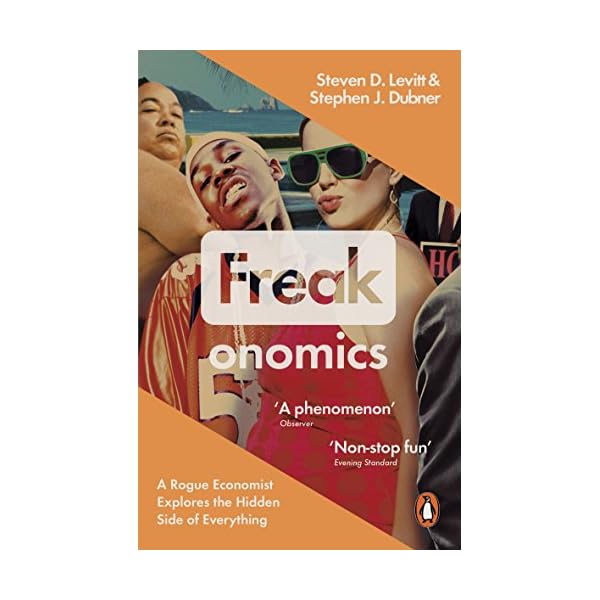
Cult bestseller, new buzz word... Freakonomics is at the heart of everything we see and do and the subjects that bedevil us daily: from parenting to crime, sport to politics, fat to cheating, fear to traffic jams. “If Indiana Jones were an economist, he’d be Steven Levitt… Criticizing Freakonomics would be like criticizing a hot fudge sundae.” (Wall Street Journal). “Provocative… eye-popping.” (New York Times Book Review: Inside the List). He studies the riddles of everyday life—from cheating and crime to parenting and sports—and reaches conclusions that turn conventional wisdom on its head. They set out to explore the inner workings of a crack gang, the truth about real estate agents, the secrets of the Ku Klux Klan, and much more.
Reviews
Find Best Price at Amazon"Indeed, the most common reaction I get from people when telling them that I am an economist is that they have read Freakonomics, which implies that they have at least seen some work similar to what I do at aguanomics. All I remember was a lot of math and curves.” This depressing outcome results from lecturers who merely reproduce problems and equations on the blackboard, without helping students understand either why those theories are used or how they came to be so popular with economists. Third, there are books like mine [pdf] that try to explain how to improve failing policies using basic economic insights and incentives. This book with a memorable (but useless) name provides readers with just-so stories that are good for cocktail conversations but not for understanding economics. What struck me is their ongoing attempts to hold onto at least some elements in the original claim in later blog posts in what I’d call a “my-ladydoth-protest-too-much” manner. Looking over their other chapters (on cheating sumo wrestlers, drug dealers who live with their moms, the KKK as a multilevel marketing organization, etc. ), I agree that the chapters are interesting and thought provoking, but they do not provide “lessons on the hidden side of everything.” Instead, they read like a series of magazine articles whose quirky “insights” might contribute to your next cocktail conversation. [7] I didn’t detect any reliable technique (except perhaps to collect a neat dataset and call Steve Levitt), and that’s where I was disappointed. In this case, street dealers are (a) NOT condemned to death, (b) not able to find other work with their experience, and (c) not aware of their statistical mortality as much as their potential wealth. Dubner and Levitt present interesting puzzles worthy of cocktail conversation, but they overstate their contributions and accuracy (“numbers don’t lie” but theory can be incomplete or just wrong). He's a fine person and excellent economist, but this book is too “pop” in its oversimplification of his work and hagiographic treatment of his insights. Yes, he brings interesting statistical tools to“freaky” questions, but he’s not a “rogue economist exploring the hidden side of everything.” He’s just a guy with a dataset and empirical theory who finds some strong correlations. (8) My years of experience traveling in 100+ countries leads me to respect the diversity of beliefs and institutions that result in a variety of outcomes. As another example, take Dubner on page 199, who writes “that paper [on police officer counts and crime] was later disputed… a gradate student found an obvious mathematical mistake in it — but Levitt’s ingenuity was obvious.” I’m not sure I’d say the same about someone whose claims rested on logic with “obvious mathematical mistakes”!"
"I enjoyed the many hidden causal connections that no one without the proper research could ever have put together."
"This book is absolutely brilliant."
"You may or may not agree with everything in here, but that is not the point."
"It takes an engaging and unique look at the world through the lens of an economist and the results are quite compelling."
"I thought this book was both thought provoking and interesting."
"Really a great book."
"As an economist I can say that for most people is just boring or impossible to understand economic theory."
Best Free Enterprise
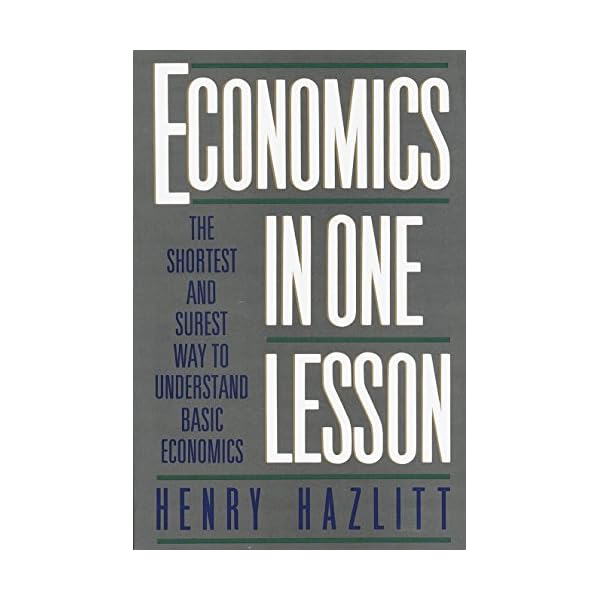
Hazlitt’s focus on non-governmental solutions, strong — and strongly reasoned — anti-deficit position, and general emphasis on free markets, economic liberty of individuals, and the dangers of government intervention make Economics in One Lesson every bit as relevant and valuable today as it has been since publication. "A magnificent job of theoretical exposition."
Reviews
Find Best Price at Amazon"This is an enlightening book."
"a new issue of one of the best summaries on political economy - easy study for the general audience."
"More people need to read this book; Great lesson and so practical."
"An outstanding book!"
"A must read for anyone interested in quickly coming up to speed on economics."
"Even if you have some or zero knowledge of economics, this book breaks it down so simple."
"new copy, but I know the book well."
"If you don't understand economics, then one read through this will open your eyes to how easy it is to understand things when you have the correct principles and right perspective on things."
Best Public Finance
In the book, I describe the fundamentals of day trading, explain how day trading is different from other styles of trading and investment, and elaborate on important trading strategies that many traders use every day. For beginner traders, this book gives you an understanding of where to start, how to start, what to expect from day trading, and how to develop your strategy. If you think you are beyond the stage of a novice trader, then you may want to jump ahead and start reading from Chapter 7 for an overview of the most important day trading strategies: ABCD Pattern Trading Bull Flag Momentum Trading Top Reversal Trading Bottom Reversal Trading Moving Average Trend Trading VWAP Trading Support and Resistance Trading. For each strategy, I explain: How to find the Stock in Play for trade What indicators I am using on my charts When I enter the trade When I exit the trade (profit taking) What is my stop loss. Day trading is not gambling. That's How to Day Trade for a Living . If you just wanted to get started in day trading, following Andrew's guidelines gets you stated on the right foot. There are a lot of other books on day trading that just give you basic philosophy and market theory. To be successful at day trading you need the right tools and you need to be motivated, to work hard, and to persevere. At the beginning of my trading career, a pharmaceutical company announced some positive results for one of its drugs and its stock jumped from $1 to over $55 in just two days. As such, I wake up early, go for a run, take a shower, get dressed, eat breakfast, and fire up my trading station before the markets open in New York. I am motivated when I sit down and start working on the list of stocks I will watch that day. This morning routine has tremendously helped my mental preparation for coming into the market. Whatever your routine is, starting the morning in a similar fashion will pay invaluable dividends. Sitting at your computer in your pajamas or underwear does not put you in the right mindset to attack the market. In this book, I use simple and easy to understand words to explain the strategies and concepts you need to know to launch yourself into day trading on the stock market. This book is definitely NOT a difficult, technical, hard to understand, complicated and complex guide to the stock market. You can monitor my screen in real time, watch me trade the strategies explained in his book, and ask questions of me and other traders in our chat room. I know you will learn much about day trading and the stock market from studying my book.
Reviews
Find Best Price at Amazon"Scanning for stocks in play and trading unknown stocks is an approach I have resisted for my entire career but I think I have to go there now. There is also good information on other topics for real beginners such as the importance of risk management, emotional control which are important."
"In other words -- the information seemed useful, but I wasn't sure OF the author's genuine intentions (to write a great book, versus suck people in for long-term profits). Aziz offers his readers a few recommendations relative to "tools of the trade," and given this was my first experience with this sort of text -- I was caught off guard by some of what felt like self-promotion from within... Yup, as "good" as CANSLIM has (apparently) proven itself over the years, IBD not only sucked me in -- but they continue to annoy the heck out of me -- AS A PAID SUBSCRIBER -- by constantly inundating me with ads... Her "tools," by the way, are actually pretty useful... My point though, is this: Though these authors (obviously) have something to gain by increasing their follower-ship, they are also simultaneously recommending invaluable resources for ANY "trader" genuinely interested in succeeding in this business. Believe it, or not, the guy (Aziz) would be doing his readers a disservice if he didn't recommend (and/or offer) tools for success... My experiences so far: Chat Room: When I first stumbled into his chatroom, I was caught off guard. I think I was expecting some sort of forum-based venue, where newbie's like me could browse topics of interest, ask redundant questions, and receive "platinum" membership status for posting 1 billion times... And when he (Aziz) loses money on the day, it speaks volumes toward: 1) Everybody is capable of failing, and even a professional trader has risk/reward factors to consider, and 2) he's not pretending to have a "secret sauce" that will guarantee billions of dollars overnight! To be honest, I never imagined I'd put forth any sort of tangible effort into a simulator (it was "beneath me"), but now that I have the experience -- I'm soooooooo glad that I humbled myself, and took his advice! I would also argue that Aziz cuts a lot of unnecessary fluff, and focuses on providing advice that actually works; rather than just including pages of theory in an attempt to convince us of his acumen. I'm now thankful that Aziz made it a point to help guys like me consider the "big picture" ---- while holding our hand(s) along the journey ---- before my accounts were wiped away like an open bag of leaves on a gusty day!"
"Probably the best, most concise book I've read on day trading."
"The terminologies are simple and the concepts are written for easy understanding with many real life trading examples."
"Also check out Ross Cameron’s book from Warrior Trading, I love his strategy and he explains it very simply too!"
"This is the book you want to buy if you want to day trade for a living."
"The best book on stocks and especially day trading I have come across."
"Good, easy read with tons of information."
Best Economic History
The real story of the crash began in bizarre feeder markets where the sun doesn't shine and the SEC doesn't dare, or bother, to tread: the bond and real estate derivative markets where geeks invent impenetrable securities to profit from the misery of lower- and middle-class Americans who can't pay their debts. Although Lewis is perhaps best known for his sports-related nonfiction (including The Blind Side ), his first book was the autobiographical Liar's Poker , in which he chronicled his disillusionment as a young gun on Wall Street in the greed is good 1980s. He returns to his financial roots to excavate the crisis of 2007–2008, employing his trademark technique of casting a microcosmic lens on the personal histories of several Wall Street outsiders who were betting against the grain—to shed light on the macrocosmic tale of greed and fear. Lewis returns on the final disc for a 10-minute interview about the crisis's aftermath, including a savvy assessment of the wisdom of the financial bailout and where-are-they-now updates on the book's various heroes and villains.
Reviews
Find Best Price at Amazon"A lot of folks have already reviewed The Big Short, and generally I don’t do big write-ups on traditionally published works."
"Read the book before watching the movie, and I think it was a great portrayal of the mechanics of how the american housing market was manipulated by those using their own bottom line as apposed to the individuals obtaining mortgages."
"But in the indiscriminate bailouts that occurred in 2008 (reward the guilty, punish the innocent), our government (our tax dollars) has enabled the unthinkable -- this could happen again."
"I'd like to start out by saying that I work in finance so I found this particularly interesting."
"Had heard about Paulson before, whom the media has made famous for his contrarian call (and deservedly so), but learning about Michael Burry, Greg Lippmann, et al. REALLY enforced the need not just to be patient, but to have the patience of Job with our best investing ideas."
"The bank, the investors, the mortgage loan officers and even the borrowers, who could sell their house properties after a two year time frame (Bush tax laws and escape paying any tax at all) were the players receiving benefit."
"Michael Lewis has a gift for explaining the complicated & esoteric in a very simple & straightforward manner."
"I'm very keen to see the movie based on this book. Also, the people involved here are more interesting than any characters I've seen in financial movies."
Best Environmental Economics
The most important book yet from the author of the international bestseller The Shock Doctrine, a brilliant explanation of why the climate crisis challenges us to abandon the core “free market” ideology of our time, restructure the global economy, and remake our political systems. Klein argues that the changes to our relationship with nature and one another that are required to respond to the climate crisis humanely should not be viewed as grim penance, but rather as a kind of gift—a catalyst to transform broken economic and cultural priorities and to heal long-festering historical wounds. [Klein] writes of a decisive battle for the fate of the earth in which we either take back control of the planet from the capitalists who are destroying it or watch it all burn.” (Roy Scranton Rolling Stone). “This may be the first truly honest book ever written about climate change.” (Bryan Walsh Time). It sets the most important crisis in human history in the context of our other ongoing traumas, reminding us just how much the powers-that-be depend on the power of coal, gas and oil. She skillfully blends politics, economics and history and distills out simple and powerful truths with universal applicability.” (Robert F. Kennedy, Jr. ). Drawing on an impressive volume of research, Ms. Klein savages the idea that we will be saved by new technologies or by an incremental shift away from fossil fuels: Both approaches, she argues, are forms of denial. Ms. Klein is aware of the intractability of the problems she describes, but she manages optimism nonetheless.” (Nathaniel Rich The New York Times). We haven't made significant progress, Klein argues, because we've been expecting solutions from the very same institutions that created the problem in the first place. Klein's sharp analysis makes a compelling case that a mass awakening is part of the answer.” (Chris Bentley The Chicago Tribune). For those with whom her message does resonate — and they are likely to be legion — her book could help catalyze the kind of mass movement she argues the world needs now.” (Mason Inman San Francisco Chronicle). “Powerfully and uncompromisingly written, the impassioned polemic we have come to expect from Klein, mixing first-hand accounts of events around the world and withering political analysis. Her stirring vision is nothing less than a political, economic, social, cultural and moral make-over of the human world.” (Mike Hulme New Scientist). Naomi Klein is an award-winning journalist, syndicated columnist, and author of the New York Times and #1 international bestseller The Shock Doctrine: The Rise of Disaster Capitalism . Klein is a contributing editor for Harper’s and reporter for Rolling Stone and writes a syndicated column for The Nation and the Guardian .
Reviews
Find Best Price at Amazon"While she spends an entire chapter explaining why Virgin Airlines owner, Richard Branson, and other Green billionaires won't save us, she devotes three meager sentences to the most violent, wasteful, petroleum-burning institution on Earth--the US military. It props up the most reactionary petro-tyrannies; devours enormous quantities of oil to fuel its war machine; and spews more dangerous toxins into the environment than any corporate polluter. This odious relationship stands out in bold relief in the Middle East where Washington arms the region's repressive regimes with the latest weaponry and imposes a phalanx of bases where American soldiers, mercenaries, and drones are deployed to guard the pumps, pipelines, and sea lanes for Exxon-Mobil, BP, and Chevron. In response, the Pentagon is gearing up to fight "climate wars" over resources threatened by (or revealed by) atmospheric disruption, like Arctic deep sea oil, fresh water, arable land, and food. The current fall in oil prices also reflects the slowdown of the global economy (especially in China), as well as Saudi Arabia's determination keep production levels high in order to punish its political enemies (Iran & Russia) and drive its economic competitors (North American frackers) out of the market. In their estimation, global fossil fuel supplies will drop dramatically relative to rising demand because society will require ever-increasing amounts of energy just to find and extract the remaining dirty, unconventional hydrocarbons. But she avoids the deeper question this raises: if capitalism lacks the abundant, cheap energy needed to sustain growth, how will the climate movement respond when stagnation, recession, and depression become the new normal and carbon emissions begin falling as a result? How will a climate movement respond if credit freezes, financial assets vaporize, currency values fluctuate wildly, trade shuts down, and governments impose draconian measures to maintain their authority? In the midst of deep recession and dramatic reductions in carbon emissions would climate chaos remain a central public concern and a galvanizing issue for the Left? Will the public be receptive to calls for curbing carbon emissions to save the climate if burning cheaper hydrocarbons seems like the fastest way to kick start growth, no matter how temporary? Under these conditions, the movement will only survive if it transfers its focus from climate change to building a stable, sustainable recovery free from addiction to vanishing reserves of fossil fuels. If they initiate nonprofit forms of socially responsible banking, production, and exchange that help people survive systemic breakdowns, they will earn valuable public approval. And if they can rally people to protect their savings and pensions and prevent foreclosures, evictions, layoffs, and workplace shutdowns, then popular resistance to catabolic capitalism will grow dramatically. To nurture the transition toward a thriving, just, ecologically stable society, all of these struggles must be interwoven and infused with an inspirational vision of how much better life could be if we freed ourselves from this dysfunctional, profit-obsessed, petroleum-addicted system once and for all. To survive catabolic capitalism and germinate an alternative, movement activists will have to anticipate and help people respond to multiple crises while organizing them to recognize and root out their source. If the movement lacks the foresight to anticipate these cascading calamities and change its focus when needed, we will have squandered a vital lesson from Klein's previous book, The Shock Doctrine. If the Left cannot build a movement strong enough and flexible enough to resist the ecological, economic, and military emergencies of declining industrial civilization and begin generating hopeful alternatives it will quickly lose momentum to those who profit from disaster."
"Read it and Weep."
"This is a highly informative and exceedingly well researched work."
"This book not only explains the what of the current carbon-climate problem, it explains the why, including why it is proving so difficult to make the transition to renewable energy."
"It is a great read, very informative."
"This work offers a profound analysis of climate modification due to human activities, a circumstance and dilemma different in kind and magnitude than any mankind has yet faced."
Best Money & Monetary Policy
While many books explain the how of bitcoin, The Internet of Money delves into the why of bitcoin. With The Internet of Money, he's matchedthat feat by compiling his talks into one of the best books on Bitcoinfor a broad audience. That required people to grasp not only how thisunorthodox technology worked but also its profound promise for society.No one has done more than Andreas Antonopoulos to get them over thathurdle. As an engaging public speaker, teacher and writer, Andreas makes complex subjects accessible and easy to understand.
Reviews
Find Best Price at Amazon"When I dove down the rabbit hole of Bitcoin in late 2013, Andreas' YouTube talks and podcasts pulled me further in, and this book is a compilation of these entertaining and informative talks."
"This study of Bitcoin is truly turning out to be an elemental experience where Andreaus' approach gives me the power to create endless scenarios about the world we live in."
"The objective of this book is not to be a technical guide on Bitcoin, but rather to offer a philosophical background on why we need Bitcoin/why it's important."
"Although almost three years old, this is still a stimulating read in terms of a well-grounded vision, and an excellent introduction to the ideas underlying what many think of merely as a fledgling alternative currency to fiat ones, but which is actually a decentralized, consensus-based paradigm for non-mediated transactions of all types."
"This book helped me understand that Bitcoin is more than a currency."
"If you can check your preconceived notions about Bitcoin at the door; I promise you will turn the last page a more educated individual for having read it."
"Could not put the book down very thought provoking."
"The author is a Bitcoin evangelist and makes a seductive presentation."
Best Statistics Economics
Fooled by Randomness is a standalone book in Nassim Nicholas Taleb’s landmark Incerto series, an investigation of opacity, luck, uncertainty, probability, human error, risk, and decision-making in a world we don’t understand. Set against the backdrop of the most conspicuous forum in which luck is mistaken for skill–the world of business– Fooled by Randomness is an irreverent, iconoclastic, eye-opening, and endlessly entertaining exploration of one of the least understood forces in all of our lives. This eccentric and highly personal exploration of the nature of randomness meanders from the court of Croesus and trading rooms in New York and London to Russian roulette, Monte Carlo engines, and the philosophy of Karl Popper. Using his own investing experience and examples of others' successes and disappointments, he discusses theories like Monte Carlo math (easy; considered cheating by purists) and the concept of Russian roulette.
Reviews
Find Best Price at Amazon"This book is fun to read."
"Starts off kind of slow but then picks up."
"This reflects a couple of things from this book, which is interesting for people who might want to read it. Taleb tells his opinion very raw and in doing so he doesn't mind potentially offending a lot of people. Some people found it simplistic or not missing substance, but they did have a fairly strong reaction to it. There is no attempt to make it short, it is a bit like the author just talking a good glass of wine. Nicolas Taleb tries to point out the randomness in the world and then shows how it fooled us. Yet, I still enjoyed Fooled by Randomness and it caused me to reflect on a lot of things."
"It also questions the assertions of skill made by individuals when favourable outcomes help them score important victories in their respective professions or fields of interest."
"Reading this is like being stuck in a cage with a combination of the most fearlessly intelligent teacher you remember, an orangutan, a rampant egotist getting revenge on the world which didn't value him enough (at the time) and the really personable nice teacher you had when you were little."
"Who knows, but if they were inspecting for this kind of failure, they missed it on this plane."
"Cons: - At times it felt like the writing was just a flagrant assertion of Taleb's intellectual depth in areas such as mythology, philosophy, and a few other subjects he appears to be well read in. Rather he just tells you "I always take positions in which I lose almost nothing under normal circumstances, but make an enormous profit when a rare event occurs"."
Best Development & Growth Economics
Recognized as one of the most iconic and impactful strategy books ever written, Blue Ocean Strategy , now updated with fresh content from the authors, argues that cutthroat competition results in nothing but a bloody red ocean of rivals fighting over a shrinking profit pool. Blue Ocean Strategy presents a systematic approach to making the competition irrelevant and outlines principles and tools any organization can use to create and capture their own blue oceans. Praise for Blue Ocean Strategy : A bestseller across 5 continents More than 3.6 million copies sold worldwide Translated into 44 languages A Wall Street Journal , BusinessWeek , and Fast Company bestseller Thinkers50 Strategy Award for Best Business Book of the decade The Fast Company Leadership Hall of Fame Winner of the Carl S. Sloane Award for Excellence in Management Consulting.
Reviews
Find Best Price at Amazon"This book defines a way of thinking about business strategy."
"This edition of Blue Ocean Strategy is a wonderful update to the book that has forever changed the strategy field."
"Love the approach and have applied them quite often."
"This book offers ground-breaking on innovative thinking that has both business and technological aspects."
"Anyone interested in strategy articulation is, no doubt, steeped in the traditional approaches to strategy development."
"As the author of twenty-two books on organizational development, it pains me to say this but Blue Ocean Strategy is the finest book on business strategy that I have ever read. Then the authors show the six ways we can “systematically” think our way through on the demand side of the equation to a solution that is innovative and strongly needed by the market."
"This is a must read book for anyone stumped with a business situation to resolve."
Best Economic Policy & Development
In Zero to One , legendary entrepreneur and investor Peter Thiel shows how we can find singular ways to create those new things. Thiel begins with the contrarian premise that we live in an age of technological stagnation, even if we’re too distracted by shiny mobile devices to notice. Zero to One presents at once an optimistic view of the future of progress in America and a new way of thinking about innovation: it starts by learning to ask the questions that lead you to find value in unexpected places. What Thiel is after is the revitalization of imagination and invention writ large…" – The New Republic "Might be the best business book I've read...Barely 200 pages long and well lit by clear prose and pithy aphorisms, Thiel has written a perfectly tweetable treatise and a relentlessly thought-provoking handbook." “ This book delivers completely new and refreshing ideas on how to create value in the world.” - Mark Zuckerberg, CEO of Facebook “Peter Thiel has built multiple breakthrough companies, and Zero to One shows how.” - Elon Musk, CEO of SpaceX and Tesla. In the case of Peter Thiel, read it twice. This is a classic.” - Nassim Nicholas Taleb, author of Fooled by Randomness and The Black Swan “Thiel has drawn upon his wide-ranging and idiosyncratic readings in philosophy, history, economics, anthropology, and culture to become perhaps America’s leading public intellectual today” - Fortune "Peter Thiel, in addition to being an accomplished entrepreneur and investor, is also one of the leading public intellectuals of our time. He started the Thiel Fellowship, which ignited a national debate by encouraging young people to put learning before schooling, and he leads the Thiel Foundation, which works to advance technological progress and long- term thinking about the future.
Reviews
Find Best Price at Amazon"For example "we never invest in entrepreneurs who turn up for the interview in a suit" or "four of the founders of PayPal had built bombs as children." Memo to Peter Thiel: you are successful despite your prejudice against people who don't share your sartorial taste, and your partners made it to adulthood despite having been poorly supervised as children. He was not beaten by a better provider of software, he was superseded by a shift in technology toward powerful mobile devices, tablets and the cloud, all of which, in turn, were motivated by other entrepreneurs' desire to obtain monopoly profits. So Steve Jobs dominated many of these arenas for long enough to enjoy monopoly profits and other people will some day take this all further. Even the government is in on the act, Peter Thiel claims, or else it would not be granting patents to inventors or freedom from competition from generic drugs to the pharmaceutical companies that first develop new medications. My mom taught me that "necessity is the mother of invention:" GM did not develop the Volt till it was up against the wall, Archimedes discovered how to screw water upwards during the Roman siege of Syracuse, the Germans developed jet propulsion, the swept wing and the rocket we later sent to the moon when they had pretty much already lost WWII. And then we have the cases where, as the author says, it's clear that you need to incentivize people to innovate (drugs spring to mind, where the US has a lead) and that's where patents come in. And it was crystal clear to everybody with a modicum of common sense that both Intel and Microsoft were not helping the world along when they used dirty tricks to hurt AMD and Netscape. The author takes us on a (rather gratuitous) trip from Plato and Aristotle to Nozick and Rawls via Epicurus, Lucretius, Hegel and Marx to discuss when optimism is and isn't warranted and the bottom line is that you're only allowed to be an optimist if you have "definite optimism" based on a specific Design (my capital D) for a business. Peter Thiel takes a massive swipe at the Malcolm Gladwells of the world who overemphasize chance, serendipity and fate with facile arguments about the similarity in Steve Jobs' and Bill Gates' birthdates. It's the Nassim Nicholas Taleb idea, and he duly appears on the back cover to endorse the book. For the best book on the subject I'd swerve around NNT's work and turn to Benoit Mandelbrot's masterpiece, "The (Mis)behaviour of Markets." The fourth idea is no more original, but Thiel puts it well: "there are many more secrets left to find, but they will yield only to relentless searchers." The fifth idea is you need to pick your partners i.e. your investors, your fellow managers and your (ideally 3) directors very carefully in order to make sure you all want the same thing out of the company (and it had better not be immediate rewards). But once they have their first billion and don't need to run their ideas by anyone else to get them funded they very often go do something stupid (dunno, like go mine asteroids) with exactly the same fervour they previously applied to the sensible endeavour that made them rich. The more grounded ones keep their further investments close to home and direct their creativity toward giving lectures and writing books."
"Along with business strategy, Thiel outlines how successful innovation shapes society and shares an intriguing vision. Rather than offer scripts or formulas, Thiel discusses the logic of starting a company that will make a truly meaningful and unique impact on the world. Blake did a great job of adapting and presenting the contents, many of which were delivered when Thiel taught at Stanford. Keeping in mind that companies growing 1000x often carry entire portfolios, Peter gives a good argument for successful moonshots and grand visions. He also highlights the dangers of trying to disrupt entrenched competitors and avoid extra resistance and burn rates on marketing. Rather, Tesla began by making powertrains, then started with high end luxury models to which no solid alternative existed. His strong argument for monopolies are both for novelty and to develop early market dominance should competitors arise later. I found a Monopoly Index by Forbes that showed these types of companies outperforming the Dow and S&P by 33%, which was a pleasant result of some due diligence. Even if you make a product that’s a 3x improvement over a market leader, you aren’t creating anything truly new, and well funded competitors are likely to catch up. It looks at economics, globalization, artificial intelligence, and historical trends along with founder characteristics and the qualities of great salespeople. If you like diving really deep into the mind of a founder across many life experiences, check out Tony Hseih’s Delivering Happiness."
Best Urban & Regional Economics
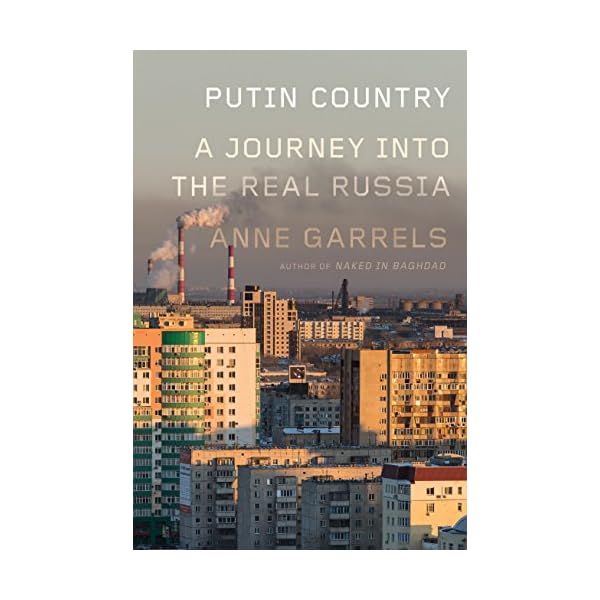
The longtime home of the Soviet nuclear program, the Chelyabinsk region contained beautiful lakes, shuttered factories, mysterious closed cities, and some of the most polluted places on earth. As Vladimir Putin tightens his grip on power and war in Ukraine leads to Western sanctions and a lower standard of living, the local population mingles belligerent nationalism with a deep ambivalence about their country’s direction. Correcting the misconceptions of Putin’s supporters and critics alike, Garrels’s portrait of Russia’s silent majority is both essential and engaging reading at a time when cold war tensions are resurgent. [Garrels's] clear, patient, sympathetic portraits of teachers, children, prostitutes, doctors―the whole raft of Russian humanity―provide a pointillist landscape and an understanding of the country, and its mentalities, that eludes many more overtly political books." The search for a post-Soviet ideology has, in Chelyabinsk and across Russia, led to a strange mishmash, at once faithful and mystical, distrustful and fatalistic." Garrels keeps her cool and listens quietly as she gathers locals’ narratives and opinions, no matter how disturbing . Two of the best chapters, “The Taxi Driver” and “The Forensic Expert,” are like nonfictional short stories, wherein we become familiar with the long arcs of the protagonists’ tumultuous lives." Anne Garrels burrows deep into the heartland and enlists a diverse cast of authentic Russians to show why Putin happened, how he remains popular, and what might threaten his hold on power." "More than twenty years ago, Anne Garrels began visiting the formerly ‘secret’ city of Chelyabinsk, closed to foreigners because of its military and industrial installations. With great journalistic skill, Garrels helps us understand the complex emotions of people still in transition, trying to define what it means to be Russian." Save yourself a trip to Chelyabinsk―Anne Garrels gives you the grime and glitz, the hangovers and heartbreak, of today’s Russia, and all without a visa!" ―Stephen Sestanovich, author of Maximalist: America in the World from Truman to Obama and U.S. ambassador-at-large to the former Soviet Union, 1997–2001. ―Jack F. Matlock, Jr., author of Reagan and Gorbachev: How the Cold War Ended and U.S. ambassador to the Soviet Union, 1987–1991. "A critical and crucial study of a country with which America has always had a volatile connection, Garrels’s essays cover vital ground and are essential reading for anyone who wishes to understand the myriad issues that inform U.S.-Russian relations." "Former NPR foreign correspondent Garrels offers finely delineated, meticulously researched dispatches from a region in Russia that seemed to her both typical of a certain Russian provincialism and arbitrarily chosen: Chelyabinsk, on the southern edge of the Ural Mountains . In essence, Garrels shows how the gloomy sense of ‘Russian fatalism’ poisons all aspects of society.
Reviews
Find Best Price at Amazon"Anne coming back home to Norfolk, CT brings into perspective what we take for granted as Anne conveys the real side of America."
"I just finished Anne Garrels book about her experiences in the Southern Urals area of Russia."
"Given the authors's perspective being in and out of the country over a number a years, this book seems to provide the informed commentary that it purports to on the effect of Putinism on the everyday lives of Russians in the hinterlands."
"Anne Garrels immersed herself into the culture and lives of people who became her friends in Cheylabinsk."
"Well written and very informative."
"Fascinating reporting from an interesting perspective: a 20 plus friendship with a Siberian city and how it has changed from the fall of the Soviet Union to today, focusing on the impact on the people in the town."
"Comparable to Hedrick Smith's "The Russians" as a look at the current status of a country with a long and tortured history."
"I found this book to be very informative."
Best Sustainable Development Economics
Drawing upon a six-year research project at the Stanford University Graduate School of Business, Collins and Porras took eighteen truly exceptional and long-lasting companies -- they have an average age of nearly one hundred years and have outperformed the general stock market by a factor of fifteen since 1926 -- and studied each company in direct comparison to one of its top competitors. They examined the companies from their very beginnings to the present day -- as start-ups, as midsize companies, and as large corporations. Throughout, the authors asked: "What makes the truly exceptional companies different from other companies?" They set out to determine what's special about "visionary" companies--the Disneys, Wal-Marts, and Mercks, companies at the very top of their game that have demonstrated longevity and great brand image. The authors compare 18 "visionary" picks to a control group of "successful-but-second-rank" companies. This book, written by a team from Stanford's Graduate School of Business, compares what the authors have identified as "visionary" companies with selected companies in the same industry. The visionary companies, the authors found out, had a number of common characteristics; for instance, almost all had some type of core ideology that guided the company in times of upheaval and served as a constant bench mark.
Reviews
Find Best Price at Amazon"I honestly think there are better books out there for this subject matter."
"If you have the good to great I feel all info are just copy paste."
"As a manager in a large company that is trying to reinvent itself, I found many parallels to both the visionary and non-visionary examples."
"This books offers great insights on how some of the most successful organizations had been built."
"30/Jul/2009 Update: One can not read this book in the right context and perspective without reading The Halo Effect: ... and the Eight Other Business Delusions That Deceive Managers - so far the best business book I've ever read!"
"One of the classics and very much enjoyed reading."
"This work from team Collins/Porras is a fine book and. a must read for any business savy person or executive. interested in tuning in to some basic and yet essential. precepts on keeping ahead of the inevitable changes. and cycles that consume so many companies and industries."
Best Labor & Industrial Economic Relations
The Curies' newly discovered element of radium makes gleaming headlines across the nation as the fresh face of beauty, and wonder drug of the medical community. Written with a sparkling voice and breakneck pace, The Radium Girls fully illuminates the inspiring young women exposed to the "wonder" substance of radium, and their awe-inspiring strength in the face of almost impossible circumstances. "Kate Moore's new book will move, shock and anger you" -- The Big Issue Kate Moore is a Sunday Times bestselling writer with more than a decade's experience in writing across varying genres, including memoir and biography and history.
Reviews
Find Best Price at Amazon"In The Radium Girls Kate Moore tells the story of these young women, seemingly so fortunate, who were poisoned by the jobs they felt so lucky to have. After some of the women died and more became ill the companies making large profits on radium rushed to dismiss any hint that the work was unsafe. Eventually publicity stemming from lawsuits filed by some of the victims (using their own scanty resources) focused enough attention on the problem that governments felt compelled to set safety standards and regulations. The safety regulations and restrictions which were finally put into place hardly seem adequate, and the Epilogue and Postscript giving details of the women's later lives, as well as an account of another industry that made careless use of radium as late as the 1970s, are especially harrowing."
"This is one these books that will stay with you long after you finished reading it."
"One of the best books I have read in a long time!"
"I learned so much from this book."
"This was such a heartfelt story bringing to life the stories of such brave women and their suffering."
"This a book that should be read by people of all ages and occupation."
"Awesome book could not stop thinking about it for weeks such a long fight these woman had n some did not make it sadly."
"I have not read many of these types of books about real life stories about history and I found this fascinating."