
Best Holidays
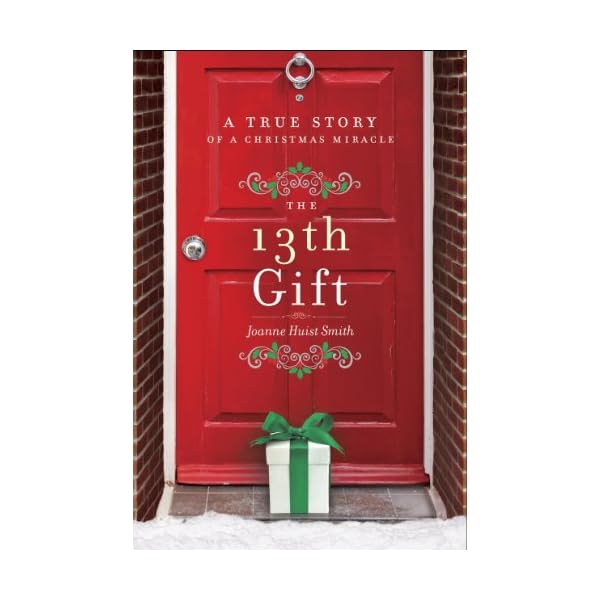
This true story about the power of random acts of kindness will warm the heart, a beautiful reminder of the miracles of Christmas and the gift of family during the holiday season. "The book's simple prose and profound message will fill even the Grinch-iest hearts with Christmas spirit while affirming the age-old adage, it really is the thought that counts." Joanne Smith deftly reconciles the difficult terrain that ranges between the Christmas we all want and the tragedies of life that sooner or later beset us all. As a veteran devourer of Christmas stories short and long, fictional and true, I mistakenly assumed I'd encountered every conceivable plot variant in the genre. Joanne Hurst Smith's wondrous story hit me from so many directions, playing on the strings of so many emotions, that it left me limp at the end Quite simply, it is a masterpiece .” -- Joe L. Wheeler, Ph.D., author of the bestselling Christmas in My Heart ® series. "For readers of Richard Paul Evans and Greg Kincaid comes The 13th Gift , a heartwarming Christmas memoir about how a random act of kindness transformed one of the bleakest moments in a family's history into a time of strength and love." She earned a bachelor's degree in English at Wright State University and worked as a reporter for the Dayton Daily News .
Reviews
Find Best Price at Amazon"This book is a wonderful, heartwarming, true story of how the Lord and the generosity of others help a family in their time of need!"
"A straightforward, easy read that still manages to pull the heartstrings hard."
"I try to read a Christmas book around the holidays each year, as I find it helps to put me in the Christmas Spirit."
"This book is a wonderful read and I would hope that Hallmark or someone would come out with a movie about this. I was extremely captivated and moved by this story and could not put the book down until I read all of it."
"Everyone deals with tragedy in their own way and this book does well at explaining how each of the family members were affected differently, and how they consciously or unconsciously used their own particular strengths to help each other."
"The author/ mother shares how these small gifts helped the family function better & how the "true friends" blessed them & made it possible for them to pull together as a family again."
"I loved this book!"
"You will have your heart stolen by hopeful, peace-making little Megan, your sympathies aroused by middle-child Nick's dogged struggle to put the awful images of the night his father died behind him, and your gut twisted by the rawness of 17-year-old Ben's angry grief."
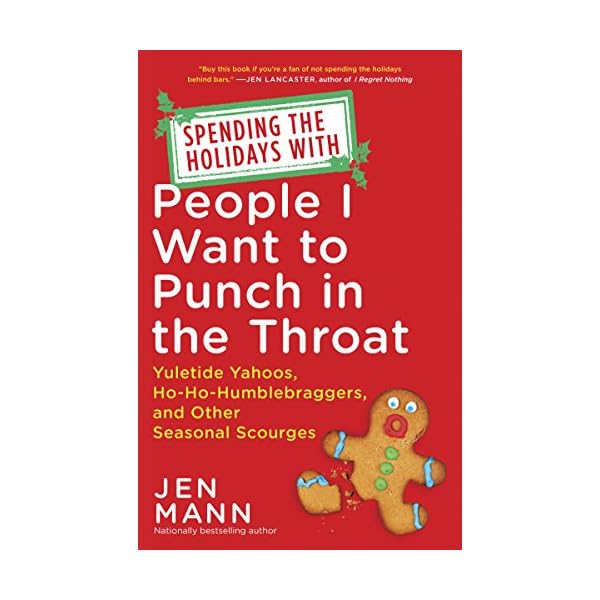
For fans of Laurie Notaro and Jenny Lawson comes an uproarious and oddly endearing essay collection for anyone trying to survive the holidays in one piece. In this hilariously irreverent collection of essays, Jen Mann, nationally bestselling author of People I Want to Punch in the Throat, turns her mordant wit on the holidays. On Mann’s naughty list: mothers who go way overboard with their Elf on the Shelf, overzealous carolers who can’t take a hint, and people who write their Christmas cards in the third person (“ Joyce is enjoying Bunko. From hosting an ill-fated Chinese New Year party, to receiving horrible gifts from her husband on Mother’s Day, to reluctantly telling her son the truth about the Easter Bunny, Mann knows the challenge of navigating the holidays while keeping her sanity intact. Harried holiday haters will chuckle and perhaps see themselves somewhere in Mann’s lifetime dislike of and misbehavior during America’s increasingly commercialized celebrations.” — Booklist. Mann delivers her signature punch lines and sharp critique on the oftentimes ridiculous shenanigans of the modern family. “Grab a cup of hot cocoa, sit back and enjoy Jen’s latest collection of humorous rants dissecting the ‘most wonderful time’ of the year. She unleashes her biting wit and hilarious opinions on everything from cookie exchanges to annual humblebrag Christmas letters from overachieving moms to horrifying Christmases of her childhood.” —Creating Serenity. She packs the maximum amount of funny into the fewest words, and many of these essays are downright hilarious. Hidden among the many laugh-out-loud zingers are lessons on how we relate to each other, and how ridiculous parenting culture has become.” —Associated Press “Following the success of her first book, she is now punching throats at holidays, starting from her being age two and continuing to the present, where she is a harried mother bemoaning not just Christmas but all holidays. Harried holiday haters will chuckle and perhaps see themselves somewhere in Mann’s lifetime dislike of and misbehavior during America’s increasingly commercialized celebrations.” — Booklist “The cure for my cold holiday spirit this year is the sidesplitting new book by Jen Mann. Mann delivers her signature punch lines and sharp critique on the oftentimes ridiculous shenanigans of the modern family. Her ability to make an otherwise boring subject come alive with colorful personalities, biting sarcasm, and impressively astute observations on suburban culture is what makes Mann so much fun to read and so easy to relate to.” — The Huffington Post “A lighthearted, laugh-out-loud book . Spending the Holidays with People I Want to Punch in the Throat will fill you with nostalgia.” —Creating Serenity “[Mann] has really mastered the short story format. If you’ve read and liked her other books, you will definitely want to read this one, too.” —Bug Bug Book Reviews Jen Mann is the nationally bestselling author of People I Want to Punch in the Throat, based on her popular blog of the same name.
Reviews
Find Best Price at Amazon"I loved the zany, crazy, real life moments Jen pours into her books...What the h-e-double hockey sticks are you supposed to do when you have unexpected (and sometimes unwanted) Christmas Carolers at your door?"
"One of my favorite authors, Mann did not disappoint with Spending the Holidays with People I Want to Punch in the Throat."
"Hilarious!"
"I particularly enjoyed the chapters about Elf on the Shelf, the Christmas Carolers and also decorating her mother's house."
"I love the holidays -- and I love humor -- so this is the perfect book for me!"
"I read Jen Mann's first People I Want to Punch in the Throat book and loved it."
"Jen Mann is the woman you stand with on the playground, at school drop off, or in line at the grocery store who makes you feel like you are not alone in this world."
"If you are a suburban mom, you can totally relate to Jen's essays compiled in this funny book."
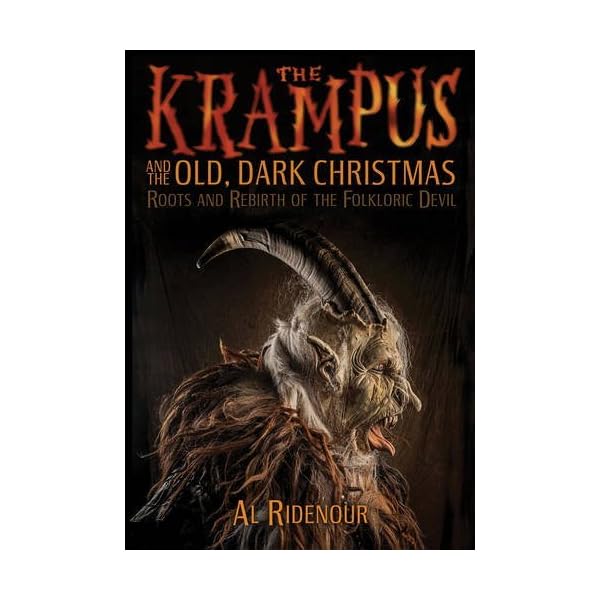
The Krampus, a folkloric devil associated with St. Nicholas in Alpine Austria and Germany, has been embraced by the American counterculture and is lately skewing mainstream. - Dangerous Minds "Ridenour ( Offbeat Food ) serves up an immensely accessible, well-researched history mixed in with his own personal journey..." - Publishers Weekly. But the old world from which he comes knew a very different holiday, one haunted by ghosts, witches, devilish horsemen, murderous incarnations of Catholic saints, the demonic Perchten, and witch-like Frau Perchta, known for disemboweling naughty children.
Reviews
Find Best Price at Amazon"In his book about the historic Christmas pageants of central Europe, Al Ridenour has investigated these symbolic figures in detail, searching for their origins, transformations over time, and exploring their permutations in various local traditions. A great deal of historical information is provided about the integration of the Nikolausspiel (Nicholas Play) with the rural Alpine Perchtenlauf (raucous parade of mountain spirits). The author brings home the realization that Christmas cannot be fully understood without both the Christian foundations and the "indigenous pagan folklore" that melded to form the modern Nikolaus-Krampus traditions. I recalled that Carl Jung was visited by a throng of Anabaptist ghosts, an experience recounted in Memories, Dreams, Reflections. The old, dark Christmas traditions continue, through centuries, to feed the unconscious needs of people facing the frozen times of winter. Ridenour succeeds in weaving together the strands of an enormous database of information to create a fascinating and enjoyable reading experience. This is not a book of "library research" but an all-in endeavor during which he consulted Krampuslauf participants and the regional folk to obtain first-hand knowledge and perspective on these traditions."
"Very well-researched and presented tome."
"A great read for those truly curious about this European tradition."
"Excellent book."
"Al Ridenour not only opens your eyes to the true nature of krampus, but also to the characters supporting and related to."
"Being the first time that someone puts out an information book about Krampus and on that does not get caught up in any Neo _Pagan craziness or New Agey stuff just makes m want to jump up and down for joy. Making the masques is an art and there is frowning down upon innovations that alter the Krampus outfit. Now according to lore the Krampus helps Saint Nicholas by punishing bad kids while he gives out the gifts. The book traces th evolution of Church plays and Saint Nicholasmarches into how they evolved into the Krampus run. The wild Hunt with Odin leading a menagerie of people who dies early or whatever provides another source for he Krampus run."
"This book is a MUST have addition to anyone interested in folklore and the history of the Krampus and related legends!!!"
Best Antique & Collectible Paper Ephemera
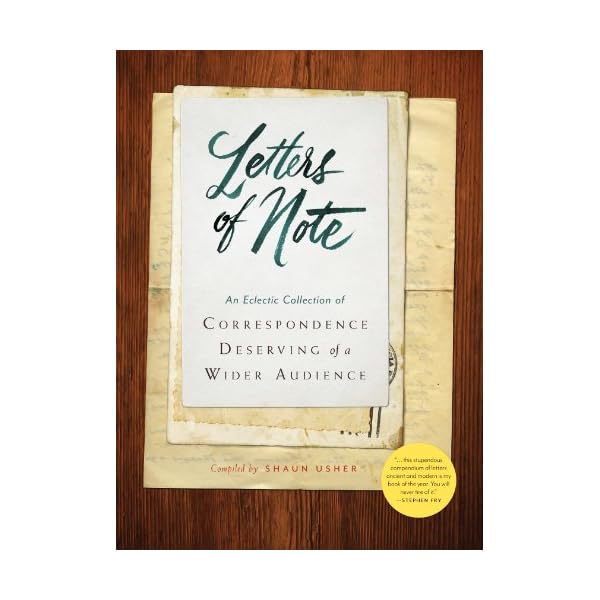
This spectacular collection of more than 125 letters offers a never-before-seen glimpse of the events and people of history—the brightest and best, the most notorious, and the endearingly everyday. "While some might argue that the art of correspondence died with the advent of the internet, it was Letters of Note-a popular website sharing correspondence across history and spheres-that paved the way for the exceptional hardcover of the same name. The book's introduction aptly describes itself as "a museum of letters" that are as addictive as they are enlightening; featuring letters from Ernest Hemingway, Fidel Castro, Nick Cave, Elvis and more than a few world leaders. London-based author Shaun Usher compiled the collection of over 125 letters over the course of four years and the subjects span both private and public theatrics. In Letters of Note: An Eclectic Collection of Correspondence Deserving of a Wider Audience (brought to you by the creator of the blog by the same name) you'll read letters spanning across centuries, from influential political leaders, authors, actors, murderers, and more. "This new book beautifully highlights fascinating letters ...The hardcover demands prime space on the coffee table." "Someone should write a love letter to a new book called Letters of Note . It's a splendid collection of all kinds of correspondence through the ages: Elvis Presley fans writing to the president, children making suggestions to famous cartoonists, a scientist's poignant love letter to his late wife."
Reviews
Find Best Price at Amazon"There could have been a thousand letters here and I still would not have tired of reading. In the meantime, I will peruse his website, Letters of Note, to see if I can find more wonderful letters from personalities famous and obscure."
"Letters of Note by Shaun Usher. NOVEMBER 7, 2017 ~ LEAVE A COMMENT ~ EDIT. Letters of Note: An Eclectic Collection of Correspondence Deserving of a Wider AudienceLetters of Note: An Eclectic Collection of Correspondence Deserving of a Wider Audience by Shaun Usher. My rating: 5 of 5 stars. It was from “A Way with Words” a public radio show about the English language, including the origins of words, the usages, and good books that I came to know this lovely book. Of all the letters in the book, the following three letters resonate in my mind: (1) E. B. White’s letter to his gentleman acquaintance regarding the importance of having hope for humanity; (2) Anaïs Nin’s rebuking letter to a faceless collector of her co-authored “Erotica” for his demand of more prevalent racy contents; and (3) a nameless German’s woman’s letter to her husband asking him to take her back home from a dreadful mental hospital she was in."
"True to its title, this master piece contained missives that communicated a myriad of emotions, raised pertinent questions and advised the ones in need. The typography lends a rich grandeur which these letters of note truly deserve and needless to say, it evoke the emotions that come with holding a hard cover. Upon reading this work, one cannot help but think even though we as humanity have progressed in leaps and bounds in terms of technology and life style, have lost out a lot in the art of truly communicating and asking questions that makes us think long, hard, deep and all other attributes alike."
"This is a wonderful book that I will re-read many times."
Best Sociology
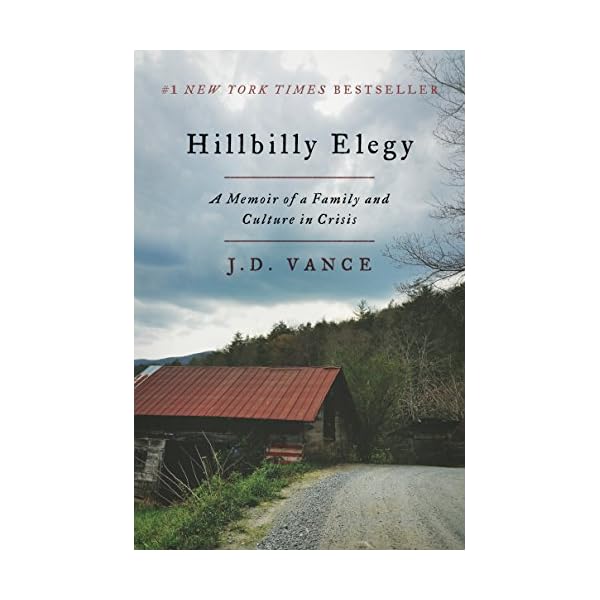
From a former marine and Yale Law School graduate, a powerful account of growing up in a poor Rust Belt town that offers a broader, probing look at the struggles of America’s white working class. They raised a middle-class family, and eventually their grandchild (the author) would graduate from Yale Law School, a conventional marker of their success in achieving generational upward mobility. Vance’s grandparents, aunt, uncle, sister, and, most of all, his mother, struggled profoundly with the demands of their new middle-class life, and were never able to fully escape the legacy of abuse, alcoholism, poverty, and trauma so characteristic of their part of America. ''[A] compassionate, discerning sociological analysis...Combining thoughtful inquiry with firsthand experience, Mr. Vance has inadvertently provided a civilized reference guide for an uncivilized election, and he's done so in a vocabulary intelligible to both Democrats and Republicans. ( Jennifer Senior, New York Times ). ''[ Hillbilly Elegy ] is a beautiful memoir but it is equally a work of cultural criticism about white working-class America....[Vance] offers a compelling explanation for why it's so hard for someone who grew up the way he did to make it...a riveting book.''. ''[An] understated, engaging debut...An unusually timely and deeply affecting view of a social class whose health and economic problems are making headlines in this election year.''. ''Vance compellingly describes the terrible toll that alcoholism, drug abuse, and an unrelenting code of honor took on his family, neither excusing the behavior nor condemning it...The portrait that emerges is a complex one...Unerringly forthright, remarkably insightful, and refreshingly focused, Hillbilly Elegy is the cry of a community in crisis.''. ''A beautifully and powerfully written memoir about the author's journey from a troubled, addiction-torn Appalachian family to Yale Law School, Hillbilly Elegy is shocking, heartbreaking, gut-wrenching, and hysterically funny. It's also a profoundly important book, one that opens a window on a part of America usually hidden from view and offers genuine hope in the form of hard-hitting honesty. From a former marine and Yale Law School graduate, a probing look at the struggles of America’s white working class through the author’s own story of growing up in a poor Rust Belt town. The disintegration of this group, a process that has been slowly occurring now for over forty years, has been reported with growing frequency and alarm, but has never before been written about as searingly from the inside. J.D.’s grandparents were “dirt poor and in love” and moved north from Kentucky’s Appalachia region to Ohio in the hopes of escaping the dreadful poverty around them. They raised a middle-class family, and eventually one of their grandchildren would graduate from Yale Law School, a conventional marker of success in achieving generational upward mobility. But as the family saga of Hillbilly Elegy plays out, we learn that J.D.’s grandparents, aunt, uncle, sister, and, most of all, his mother struggled profoundly with the demands of their new middle-class life, never fully escaping the legacy of abuse, alcoholism, poverty, and trauma so characteristic of their part of America. A deeply moving memoir, with its share of humor and vividly colorful figures, Hillbilly Elegy is the story of how upward mobility really feels.
Reviews
Find Best Price at Amazon"Drugs, crime, jail time, abusive interactions without any knowledge of other forms of interaction, children growing up in a wild mix of stoned mother care, foster care, and care by temporary "boyfriends," and in general, an image of life on the edge of survival where even the heroes are distinctly flawed for lack of knowledge and experience of any other way of living. Second, the author's growing realization, fully present by the end of the work, that while individuals do not have total control over the shapes of their lives, their choices do in fact matter—that even if one can't direct one's life like a film, one does always have the at least the input into life that comes from being free to make choices, every day, and in every situation. I hate to fall into self-analysis and virtue-signaling behavior in a public review, but in this case I feel compelled to say that the author really did leave with me a renewed motivation to make more of my life every day, to respect and consider the choices that confront me much more carefully, and to seize moments of opportunity with aplomb when they present themselves."
"I never heard of the author until I saw him on Morning Joe a few days ago but I looked him up and read several articles he wrote for various publications so I bought his book. He suggests that tribalism, mistrust of outsiders and "elites," violence and irresponsibility among family members, parents without ethics and a sense of responsibility, terrible work ethics, and an us-against-them mentality is dooming the people who live that way to becoming poorer, more addicted, and more marginalized."
"I grew up without running water in Boone County, WV, and wound up with a degree from Harvard Law School."
"I escaped inner city Baltimore (see The Wire) due to luck, the ability to do well in school and a few good teachers.Instead of trying to describe my early life to my family and friends, I will give them this book."
Best Demography
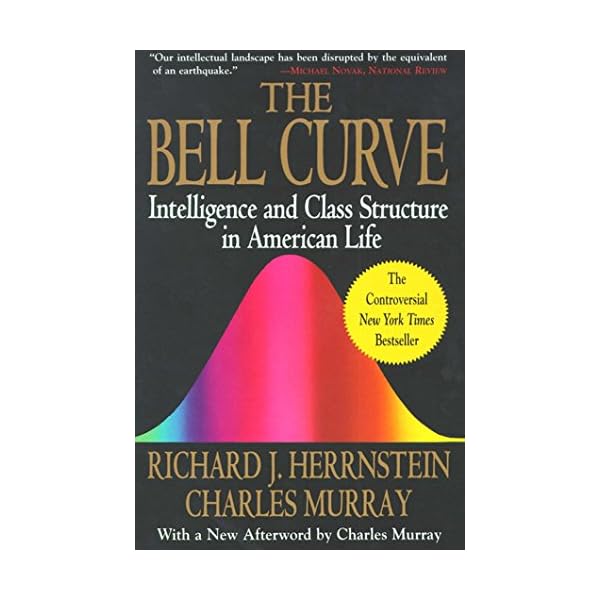
The controversial book linking intelligence to class and race in modern society, and what public policy can do to mitigate socioeconomic differences in IQ, birth rate, crime, fertility, welfare, and poverty. Milton Friedman This brilliant, original, objective, and lucidly written book will force you to rethink your biases and prejudices about the role that individual difference in intelligence plays in our economy, our policy, and our society. Prof. Thomas J. Bouchard Contemporary Psychology [The authors] have been cast as racists and elitists and The Bell Curve has been dismissed as pseudoscience....The book's message cannot be dismissed so easily. Herrnstein and Murray have written one of the most provocative social science books published in many years....This is a superbly written and exceedingly well documented book. Malcolme W. Browne The New York Times Book Review Mr. Murray and Mr. Herrnstein write that "for the last 30 years, the concept of intelligence has been a pariah in the world of ideas," and that the time has come to rehabilitate rational discourse on the subject. Prof. Eugene D. Genovese National Review Richard Herrnstein and Charles Murray might not feel at home with Daniel Patrick Moynihan and Lani Guinier, but they should....They have all [made] brave attempts to force a national debate on urgent matters that will not go away. In the second round of reaction, some commentators suggested that Herrnstein and Murray were merely bringing up facts that were well known in the scientific community, but perhaps best not discussed in public. Prof. E. L. Patullo Society From beginning to end, it is apparent that Herrnstein and Murray are eminently reasonable, responsible, civilized and compassionate human beings.
Reviews
Find Best Price at Amazon"Although you would not glean as much from the vicious attacks that have been leveled against this book since its publishing, the major thesis is that intelligence is highly correlated with success in America. This same kind of intelligence, needless to say, is valuable to employers and leads to success at work. There are enclaves of high income, highly intelligent people in Boston, New York, San Francisco and Washington DC. What they also find, but which does not excite controversy, is that Ashkenazi Jews average 115, Americans of Northeast Asian descent average about 107, American Indians average about 90, and Hispanic Americans about the same. They produce highly reproducible results – there are a wide range of intelligence tests available, and all of them will yield pretty much the same results for a given individual. In practical terms, a one standard deviation difference in population averages means that only one person in six in the lower population has an intelligence at or exceeding the average of the higher group. Only one white person in six is as smart as the average Ashkenazi Jew, and only one black and six is as intelligent as the average white. Intelligence is highly correlated with success in school, income, health and happiness. In round numbers, intelligence explains about 25% of the difference in levels of success. At the same time, as noted in Lynn's book above, the intelligence of nativeborn Americans is declining."
"The Bell Curve got so much positive attention as a revolutionary, critical review of issues so current and pressing within our society, at the time, and today that I felt I would really appreciate reading it and reviewing the authors scientific efforts. In fact, as you will find, upon studying the text, the Bell Curve IS about the relationship between "Intellect" and "One's ability to succeed in life". It is scary to me, but when I, a student of the Bell Curve, see these commentators on telivision or read of them in the papers.... speaking of "dirty little books", "racism disguised as science" etc..., I have the feeling that If this were not the 20th century, and if we did not have the constitution protecting our right to publish scientific findings, these very same negative commentators might just try to force Murray to renounce his scientific findings, keeping us all in the dark for as long as possible."
"Interesting book on the study of human cognition."
"It is not about what we want, but about what nature does with human nature and its most distinctive feature / evolutionary advantage. What really bothers many readers and many more opinionated none-readers of this book, is the fact that nature does not care what they think, and shall never consult with them."
"Everybody should read this controversial book."
"Excellent book, although many so called 'experts' have discredited it."
"Fantastic reading combined with a good seller equals a satisfied customer."
Best Social Work
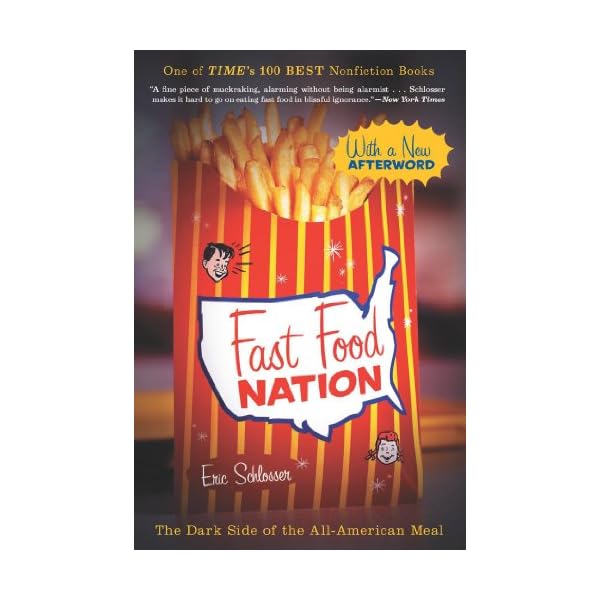
Fast Food Nation points the way but, to resurrect an old fast food slogan, the choice is yours.”— Los Angeles Times. Eric Schlosser’s exposé revealed how the fast food industry has altered the landscape of America, widened the gap between rich and poor, fueled an epidemic of obesity, and transformed food production throughout the world. In a new afterword for this edition, Schlosser discusses the growing interest in local and organic food, the continued exploitation of poor workers by the food industry, and the need to ensure that every American has access to good, healthy, affordable food. “Schlosser shows how the fast food industry conquered both appetite and landscape.”— The New Yorker. In this fascinating sociocultural report, Schlosser digs into the deeper meaning of Burger King, Auggie's, The Chicken Shack, Jack-in-the-Box, Little Caesar's and myriad other examples of fast food in America. Frequently using McDonald's as a template, Schlosser, an Atlantic Monthly correspondent, explains how the development of fast-food restaurants has led to the standardization of American culture, widespread obesity, urban sprawl and more. In a perky, reportorial voice, Adamson tells of the history, economics, day-to-day dealings and broad and often negative cultural implications of franchised burger joints and pizza factories, delivering impressive snippets of information (e.g., two-thirds of America's fast-food restaurant employees are teenagers; Willard Scott posed as the first Ronald McDonald until higher-ups decided Scott was too round to represent a healthy restaurant like McDonald's). According to Schlosser, most visits to fast-food restaurants are the culinary equivalent of "impulse buys," i.e., someone is driving by and pulls over for a Big Mac.
Reviews
Find Best Price at Amazon"The book starts off by explaining how the fast food industry came to be the American symbol. Schlosser took many tours through slaughterhouses and interviewed many former employees that have been burned out from the tortuous conditions. Schlosser says that, "Everyday in the United States, roughly 200,000 people are sickened by food borne disease, 900 are hospitalized, and 14 die". His main message presented was how the fast food industry is affecting society. Having more people know about what is really behind the Big Mac and the Whopper will help society understand what they are eating and how it can affect them."
"I bought Fast Food Nation through Amazon seller as a used book."
"It offers an amazing insight of the entire meet industry."
"Regardless if you never eat at a FF joint, the food we eat is processed in the same slick, fast food procedure."
"Beginning in the late 1980s, a series of food safety scandals opened people's eyes to the way their food was being produced, each one drawing the curtain back a little further on a food system that had changed beyond recognition. In the wake of these food safety scandals, the conversation about food politics that briefly flourished in the 1970s was picked up again in a series of books, articles, and movies about the consequences of industrial food production. Beginning in 2001 with the publication of Eric Schlosser's Fast Food Nation, a surprise best-seller, and, the following year, Marion Nestle's Food Politics, the food journalism of the last decade has succeeded in making clear and telling connections between the methods of industrial food production, agricultural policy, food-borne illness, childhood obesity, the decline of the family meal as an institution, and, notably, the decline of family income beginning in the 1970s. The picture of the food economy Schlosser painted resembles an upside-down version of the social compact sometimes referred to as "Fordism": instead of paying workers well enough to allow them to buy things like cars, as Henry Ford proposed to do, companies like Wal-Mart and McDonald's pay their workers so poorly that they can afford only the cheap, low-quality food these companies sell, creating a kind of nonvirtuous circle driving down both wages and the quality of food."
Best Pornography
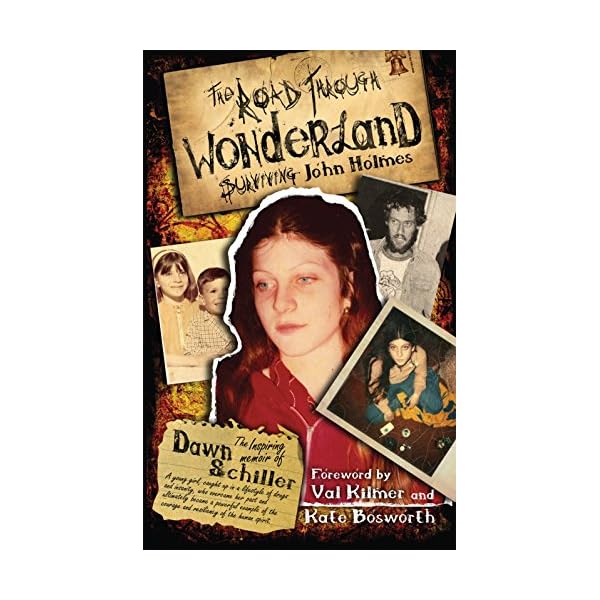
Painstakingly honest, this chilling memoir reveals how a teenager became immersed in the bizarre life of legendary porn star John Holmes. The 2003 movie Wonderland vivified Schiller's teenage experience under the thrall of a drug-addled porn star in L.A. in the late 1970s, while this long docudrama expands on that raw era to include her peripatetic, dysfunctional upbringing and aftermath as a survivor. The daughter of a Vietnam vet and a German woman he met and married overseas, Schiller spent her early years moving around to accommodate her father's military career, especially between New Jersey and the suburbs of Miami. Instead, Schiller, who met Holmes in 1976 when she was just 15, details their five-year love affair, the stability he provided in the wake of her troubled childhood, and the deterioration of their relationship after Homes became addicted to cocaine and was ultimately arrested.
Reviews
Find Best Price at Amazon"Just wow this certainly had my attention a intense case of Stockholm syndrome as dawn same name as me shares a birthday with my significant other and came from New Jersey where I live consider my mind blown as this story takes readers from the happiest of times to the worst of times with a legendary porn star as he corrupts her innocence and ruins her for his enjoyment."
"Starting cautiously with a sample first, I was drawn in by the frank, consistent and honest writing by the author, Dawn Schiller, and I bought this book with great interest."
"For anyone interested in the long term effects of dysfunctional childhoods, look up the sobering long-term study - Adverse Childhood Experiences (ACE) Study, through the Center for Disease Control's website."
"It gives great detail into her early family life and how at 15, she met John Holmes who would ultimately bring her great love and everlasting pain."
"One that any love-struck teenager can relate to when after the fairy tale has worn off, it's a nightmare."
"Without much in the way of parental supervision or familial support, she found herself in the sights of the landlord of the people she was "crashing" with. You have to take memoirs with a grain of salt, but she is pretty good in depicting her personal thoughts as she was taken down that "road," and why she made her choices."
Best Archaeology
The bestselling author of The Sign and the Seal reveals the true origins of civilization. Praise for Fingerprints of the Gods: "A fancy piece of historical sleuthing...intriguing and entertaining and sturdy enough to give a long pause for thought."
Reviews
Find Best Price at Amazon"After reading you'll have a clearer idea of whether: we should worry about asteroids; science is purely scientific, and; civilization is relatively strong or fragile."
"Was not let down, as the info here was welllll beyond what I had watched in the short YT vid."
"Very important book to read."
"I love this and plan on getting the sequel as well "Magicians of the Gods"."
"Weighty and dense reading, while still intriguing and engaging."
"Worth reading for anyone interested in human history and the varied interpretations of myth and archeological evidence."
Best Gerontology
In The Longevity Economy , Coughlin provides the framing and insight business leaders need to serve the growing older market: a vast, diverse group of consumers representing every possible level of health and wealth, worth about $8 trillion in the United States alone and climbing. In The Longevity Economy , he not only defines that better narrative--he shows businesses how to lead in creating it and how to profit from the opportunities it provides. The magnificent result--at once forward-looking, hilariously irreverent, and engaging--serves as an indispensable road map for how to take full advantage of life's ever-lengthening third act. Longer lifespans will revolutionize the way we live and offer incredible new opportunities, but will also require a new rigor in the way people plan and save for their later years. The Longevity Economy doesn't just make you rethink the role of consumer insights and trends, it forces you to re-imagine their impact." Increasingly, inclusive design is where businesses are heading because 'the golden years' are where true gold lies in the new, longevity economy. Joseph Coughlin is the founder and director of the MIT AgeLab, a multidisciplinary research program created to understand the behavior of the 50+ population, the role of technology in their lives, and the opportunity for innovation to improve the quality of life for older adults and their families.
Reviews
Find Best Price at Amazon"Amazing book."
"There is a powerful message that Joe Coughlin delivers in his new book, that continues what Daniel Kahneman and Yuval Noah Harari have articulated. Coughlin uses this key understanding of the human mind's working to dismantle the "narrative" we have been using about old age. Once old age is framed in our minds as frail and incompetent, it leaves no room for any other way of thinking about vast and an ever growing swath of society. One is when the author is speaking about females being decision makers on key aspects of managing family affairs such as health care and doctors. The narrative power of males being the "deciders in chief' was too deeply rooted to even tolerate this counter observation. Thus we are creating communes where people with experience, wisdom, vitality and a whole lot to offer are no longer active part of the larger society. It is full colorful anecdotes including the author's experiences at MIT, the US Government and working with companies all around the world."
"It isn’t just big, he suggests, “It’s so enormous, it’s as though a new [begin italics] continent [end italics] were rising out of the sea, filled with more than a billion air-breathing consumers just begging for products that fulfill their demands.” Welcome to the Longevity Economy. First, the emerging population of older adults isn’t just big."
"Superb book, flows with great stories and brilliant insights."
Best Statistics
n this stunning new book, Malcolm Gladwell takes us on an intellectual journey through the world of "outliers"--the best and the brightest, the most famous and the most successful. Amazon Best of the Month, November 2008 : Now that he's gotten us talking about the viral life of ideas and the power of gut reactions , Malcolm Gladwell poses a more provocative question in Outliers : why do some people succeed, living remarkably productive and impactful lives, while so many more never reach their potential? Outliers can be enjoyed for its bits of trivia, like why most pro hockey players were born in January, how many hours of practice it takes to master a skill, why the descendents of Jewish immigrant garment workers became the most powerful lawyers in New York, how a pilots' culture impacts their crash record, how a centuries-old culture of rice farming helps Asian kids master math. Signature Reviewed by Leslie ChangIn Outliers , Gladwell ( The Tipping Point ) once again proves masterful in a genre he essentially pioneered—the book that illuminates secret patterns behind everyday phenomena. Through case studies ranging from Canadian junior hockey champions to the robber barons of the Gilded Age, from Asian math whizzes to software entrepreneurs to the rise of his own family in Jamaica, Gladwell tears down the myth of individual merit to explore how culture, circumstance, timing, birth and luck account for success—and how historical legacies can hold others back despite ample individual gifts. In seeking to understand why Asian children score higher on math tests, Gladwell explores the persistence and painstaking labor required to cultivate rice as it has been done in East Asia for thousands of years; though fascinating in its details, the study does not prove that a rice-growing heritage explains math prowess, as Gladwell asserts.
Reviews
Find Best Price at Amazon"I found more than a few myths debunked in this book."
"What you realize after reading the book: individual success is fake - oftentimes it is the result of multiple factors contributing to a single outcome."
"I had to buy this book for a college course and I didn't have any idea what it was about but after just getting through the first 10 pages I was hooked!!"
"Outliers is my favorite book written by Malcolm Gladwell so far and it is definitely a very enjoyable read."
"Chapter 7 on commercial airplane pilots was fascinating...thinking outside the box."
"The path to perceived success follows many stones."
"Very interesting perspective."
"Excellent, it opens your mind and gives you a different approach of what "the road of success" is."
Best Human Geography
Societies that had had a head start in food production advanced beyond the hunter-gatherer stage, and then developed religion --as well as nasty germs and potent weapons of war --and adventured on sea and land to conquer and decimate preliterate cultures. Most of this work deals with non-Europeans, but Diamond's thesis sheds light on why Western civilization became hegemonic: "History followed different courses for different peoples because of differences among peoples' environments, not because of biological differences among peoples themselves."
Reviews
Find Best Price at Amazon"Two decades ago a UCLA geography professor named Jared Diamond published Guns, Germs, and Steel: The Fates of Human Societies. Diamond hypothesized that the arc of human history was dramatically shifted by geographic, environmental, biological, and other factors, resulting in the worldwide dominance of the leading industrial powers during the past 500 years. “Why did wealth and power [among nations] become distributed as they now are, rather than in some other way?” “[W]hy did human development proceed at such different rates on different continents?” “[W]hy were Europeans, rather than Africans or Native Americans, the ones to end up with guns, the nastiest germs, and steel?” In his award-winning book, Diamond posited a “unified synthesis”—a unified field theory of history. Drawing from his wide-ranging knowledge of medicine, evolutionary biology, physiology, linguistics, and anthropology as well as geography, he surveyed the history of the past 13,000 years and identified plausible answers to the questions he had posed. For example, geographers complained that Diamond referred to Eurasia as a single continent rather than separately to Asia, North Africa, and Europe. There were complaints that Diamond had overlooked the contrast between temperate and tropical zones (he didn’t) and that he had only explained what happened 500 years ago but not subsequently (untrue). However, regardless of the sequence, that shift from hunter-gatherer society to agriculturally based settlements set in motion the course of events that have led to the “civilization” in which we live. Furthermore, he explains that the east-west orientation of Eurasia from the Bering Strait to the Atlantic Ocean made it possible for the development of agriculture and animal husbandry to spread quickly to distant lands. This, in turn, spelled the emergence of labor specialization and eventually the growth of empires as well as the appearance and spread of communicable diseases contracted from domesticated animals."
"very interesting book if you are into deep history and anthropology."
"As an islander living in a Caribbean Island devoid of native indigenous ancestors and the oldest active colony, I've always had the yearning for context and understanding."
"The book's Pulitzer Prize is well-deserved, and it's little surprise that other books consistently reference "Guns, Germs, and Steel" as an authority."
"Ultimately, this book is a long and ingenius answer to a single question: "Why is it that you white people developed so much cargo and brougt it to New Guinea, but we black people had little cargo of our own?""
"I throughly enjoyed this book and found it a very intriguing read with logical and non-stereotypical explanations of why/how some societies have succeeded, while others have failed."
"a classic!"
Best Media Studies
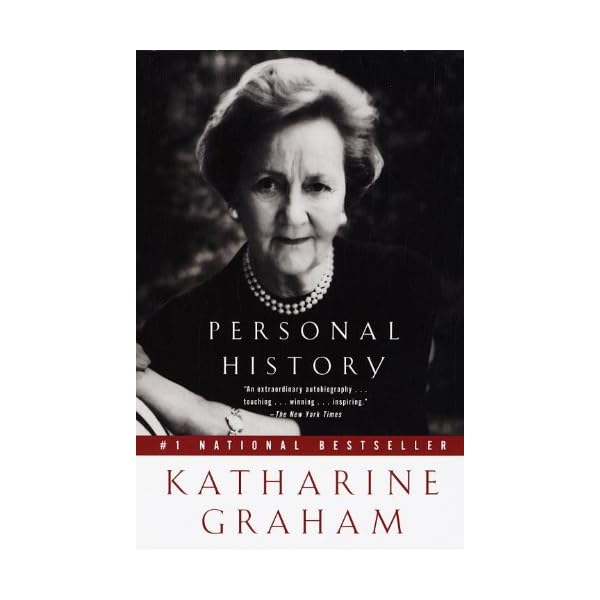
As seen in the new movie The Post, here is the. captivating, inside story of the woman who helmed the Washington Post during one of the most turbulent periods in the history of American media. In lieu of an unrevealing Famous-People-I-Have-Known autobiography, the owner of the Washington Post has chosen to be remarkably candid about the insecurities prompted by remote parents and a difficult marriage to the charismatic, manic-depressive Phil Graham, who ran the newspaper her father acquired. Katharine's account of her years as subservient daughter and wife is so painful that by the time she finally asserts herself at the Post following Phil's suicide in 1963 (more than halfway through the book), readers will want to cheer.
Reviews
Find Best Price at Amazon"An engaging book about an amazing Lady."
"I bought this book after the sale of Washington Post."
"Katherine did a spell-binding history of her life in the land of wealth and prestigue, showing it to be one of just plain Jane and how she literally uplifter herself into one of grandeur."
"A wonderful book that brings the excitement, and the changes in our country alive, through Katherine Graham's recollections."
"THOUGHT IT WOULD BE BORING, WAS I EVER WRONG; ABSOLUTELY FASCINATING; LEARNED SO MUCH MORE ABOUT PUBLISHING A PAPER, UNIONS, ETC AND THIS WONDERFUL WOMANS LIFE; YOU WILL NOT BE BORED;"
"Loads of recent history and a real glimpse into the workings of the newspaper business ."
Best Poverty Studies
From a former marine and Yale Law School graduate, a powerful account of growing up in a poor Rust Belt town that offers a broader, probing look at the struggles of America’s white working class. They raised a middle-class family, and eventually their grandchild (the author) would graduate from Yale Law School, a conventional marker of their success in achieving generational upward mobility. Vance’s grandparents, aunt, uncle, sister, and, most of all, his mother, struggled profoundly with the demands of their new middle-class life, and were never able to fully escape the legacy of abuse, alcoholism, poverty, and trauma so characteristic of their part of America. ''[A] compassionate, discerning sociological analysis...Combining thoughtful inquiry with firsthand experience, Mr. Vance has inadvertently provided a civilized reference guide for an uncivilized election, and he's done so in a vocabulary intelligible to both Democrats and Republicans. ( Jennifer Senior, New York Times ). ''[ Hillbilly Elegy ] is a beautiful memoir but it is equally a work of cultural criticism about white working-class America....[Vance] offers a compelling explanation for why it's so hard for someone who grew up the way he did to make it...a riveting book.''. ''[An] understated, engaging debut...An unusually timely and deeply affecting view of a social class whose health and economic problems are making headlines in this election year.''. ''Vance compellingly describes the terrible toll that alcoholism, drug abuse, and an unrelenting code of honor took on his family, neither excusing the behavior nor condemning it...The portrait that emerges is a complex one...Unerringly forthright, remarkably insightful, and refreshingly focused, Hillbilly Elegy is the cry of a community in crisis.''. ''A beautifully and powerfully written memoir about the author's journey from a troubled, addiction-torn Appalachian family to Yale Law School, Hillbilly Elegy is shocking, heartbreaking, gut-wrenching, and hysterically funny. It's also a profoundly important book, one that opens a window on a part of America usually hidden from view and offers genuine hope in the form of hard-hitting honesty. From a former marine and Yale Law School graduate, a probing look at the struggles of America’s white working class through the author’s own story of growing up in a poor Rust Belt town. The disintegration of this group, a process that has been slowly occurring now for over forty years, has been reported with growing frequency and alarm, but has never before been written about as searingly from the inside. J.D.’s grandparents were “dirt poor and in love” and moved north from Kentucky’s Appalachia region to Ohio in the hopes of escaping the dreadful poverty around them. They raised a middle-class family, and eventually one of their grandchildren would graduate from Yale Law School, a conventional marker of success in achieving generational upward mobility. But as the family saga of Hillbilly Elegy plays out, we learn that J.D.’s grandparents, aunt, uncle, sister, and, most of all, his mother struggled profoundly with the demands of their new middle-class life, never fully escaping the legacy of abuse, alcoholism, poverty, and trauma so characteristic of their part of America. A deeply moving memoir, with its share of humor and vividly colorful figures, Hillbilly Elegy is the story of how upward mobility really feels.
Reviews
Find Best Price at Amazon"Drugs, crime, jail time, abusive interactions without any knowledge of other forms of interaction, children growing up in a wild mix of stoned mother care, foster care, and care by temporary "boyfriends," and in general, an image of life on the edge of survival where even the heroes are distinctly flawed for lack of knowledge and experience of any other way of living. Second, the author's growing realization, fully present by the end of the work, that while individuals do not have total control over the shapes of their lives, their choices do in fact matter—that even if one can't direct one's life like a film, one does always have the at least the input into life that comes from being free to make choices, every day, and in every situation. I hate to fall into self-analysis and virtue-signaling behavior in a public review, but in this case I feel compelled to say that the author really did leave with me a renewed motivation to make more of my life every day, to respect and consider the choices that confront me much more carefully, and to seize moments of opportunity with aplomb when they present themselves."
"I never heard of the author until I saw him on Morning Joe a few days ago but I looked him up and read several articles he wrote for various publications so I bought his book. He suggests that tribalism, mistrust of outsiders and "elites," violence and irresponsibility among family members, parents without ethics and a sense of responsibility, terrible work ethics, and an us-against-them mentality is dooming the people who live that way to becoming poorer, more addicted, and more marginalized."
"I grew up without running water in Boone County, WV, and wound up with a degree from Harvard Law School."
"I escaped inner city Baltimore (see The Wire) due to luck, the ability to do well in school and a few good teachers.Instead of trying to describe my early life to my family and friends, I will give them this book."
Best Anthropology

From a renowned historian comes a groundbreaking narrative of humanity’s creation and evolution—a #1 international bestseller—that explores the ways in which biology and history have defined us and enhanced our understanding of what it means to be “human.”. From examining the role evolving humans have played in the global ecosystem to charting the rise of empires, Sapiens integrates history and science to reconsider accepted narratives, connect past developments with contemporary concerns, and examine specific events within the context of larger ideas. Tackling evolutionary concepts from a historian’s perspective, Sapiens: A Brief History of Humankind , describes human development through a framework of three not-necessarily-orthodox “Revolutions”: the Cognitive, the Agricultural, and the Scientific. His ideas are interesting and often amusing: Why have humans managed to build astonishingly large populations when other primate groups top out at 150 individuals? Because our talent for gossip allows us to build networks in societies too large for personal relationships between everyone, and our universally accepted “imagined realities”--such as money, religion, and Limited Liability Corporations—keep us in line. Though the concepts are unusual and sometimes heavy (as is the book, literally) Harari’s deft prose and wry, subversive humor make quick work of material prone to academic tedium. He’s written a book of popular nonfiction (it was a bestseller overseas, no doubt in part because his conclusions draw controversy) landing somewhere in the middle of a Venn diagram of genetics, sociology, and history. An engrossing read.” (Dan Ariely, New York Times Bestselling author of Predictably Irrational, The Upside of Irrationality , and The Honest Truth About Dishonesty ). “Yuval Noah Harari’s celebrated Sapiens does for human evolution what Stephen Hawking’s A Brief History of Time did for physics.… He does a superb job of outlining our slow emergence and eventual domination of the planet.” ( Forbes ). “Writing with wit and verve, Harari…attempts to explain how Homo sapiens came to be the dominant species on Earth as well as the sole representative of the human genus.… Provocative and entertaining.” ( Publishers Weekly ). “In this sweeping look at the history of humans, Harari offers readers the chance to reconsider, well, everything, from a look at why Homo sapiens endured to a compelling discussion of how society organizes itself through fictions.” ( Booklist Best Books of the Year).
Reviews
Find Best Price at Amazon"Parts of it were downright fascinating such as "imagination" being a keystone to human activity, e.g. corporations, money, and religion. Finally he keeps touching on the fact that animals have paid a terrible price for the rise of sapiens. Incidentally our family has a farm background and I eat no chicken, turkey, pork, or beef. Now I didn't give the book five stars because he makes positive references to the misguided but widely read Jared Diamond. Let me emphasize that on this snowy March day the cat and I are both glad we don't need to go out and scavenge something off the frozen earth."
"A standard history of the human race begins with Paleolithic proto-humans, traces the development of modern man or homo sapiens sapiens, then chronicles the beginnings and expansions of human civilization from agriculture to the present. He asks how "An Animal of No Significance" managed to become the dominant life form, and whether that animal's learning to produce his own food and then to further harness the natural world to his will through science were boons or setbacks, both for that animal and for the rest of the biosphere."
"An interesting book and very enjoyable to read."
"And at least for me, a fresh set of insights about the Agricultural Revolution - it was an accident, we can't go back, and if it hadn't happened we'd lack anything we call civilization. Also, our entire economic system - money, capitalism, et al, is another delusion that requires our faith in order to survive. The book can be generously called a set of personal meditations of history and human nature, but done with little research and even scanter evidence."
Best Special Groups
From a former marine and Yale Law School graduate, a powerful account of growing up in a poor Rust Belt town that offers a broader, probing look at the struggles of America’s white working class. They raised a middle-class family, and eventually their grandchild (the author) would graduate from Yale Law School, a conventional marker of their success in achieving generational upward mobility. Vance’s grandparents, aunt, uncle, sister, and, most of all, his mother, struggled profoundly with the demands of their new middle-class life, and were never able to fully escape the legacy of abuse, alcoholism, poverty, and trauma so characteristic of their part of America. ''[A] compassionate, discerning sociological analysis...Combining thoughtful inquiry with firsthand experience, Mr. Vance has inadvertently provided a civilized reference guide for an uncivilized election, and he's done so in a vocabulary intelligible to both Democrats and Republicans. ( Jennifer Senior, New York Times ). ''[ Hillbilly Elegy ] is a beautiful memoir but it is equally a work of cultural criticism about white working-class America....[Vance] offers a compelling explanation for why it's so hard for someone who grew up the way he did to make it...a riveting book.''. ''[An] understated, engaging debut...An unusually timely and deeply affecting view of a social class whose health and economic problems are making headlines in this election year.''. ''Vance compellingly describes the terrible toll that alcoholism, drug abuse, and an unrelenting code of honor took on his family, neither excusing the behavior nor condemning it...The portrait that emerges is a complex one...Unerringly forthright, remarkably insightful, and refreshingly focused, Hillbilly Elegy is the cry of a community in crisis.''. ''A beautifully and powerfully written memoir about the author's journey from a troubled, addiction-torn Appalachian family to Yale Law School, Hillbilly Elegy is shocking, heartbreaking, gut-wrenching, and hysterically funny. It's also a profoundly important book, one that opens a window on a part of America usually hidden from view and offers genuine hope in the form of hard-hitting honesty. From a former marine and Yale Law School graduate, a probing look at the struggles of America’s white working class through the author’s own story of growing up in a poor Rust Belt town. The disintegration of this group, a process that has been slowly occurring now for over forty years, has been reported with growing frequency and alarm, but has never before been written about as searingly from the inside. J.D.’s grandparents were “dirt poor and in love” and moved north from Kentucky’s Appalachia region to Ohio in the hopes of escaping the dreadful poverty around them. They raised a middle-class family, and eventually one of their grandchildren would graduate from Yale Law School, a conventional marker of success in achieving generational upward mobility. But as the family saga of Hillbilly Elegy plays out, we learn that J.D.’s grandparents, aunt, uncle, sister, and, most of all, his mother struggled profoundly with the demands of their new middle-class life, never fully escaping the legacy of abuse, alcoholism, poverty, and trauma so characteristic of their part of America. A deeply moving memoir, with its share of humor and vividly colorful figures, Hillbilly Elegy is the story of how upward mobility really feels.
Reviews
Find Best Price at Amazon"Drugs, crime, jail time, abusive interactions without any knowledge of other forms of interaction, children growing up in a wild mix of stoned mother care, foster care, and care by temporary "boyfriends," and in general, an image of life on the edge of survival where even the heroes are distinctly flawed for lack of knowledge and experience of any other way of living. Second, the author's growing realization, fully present by the end of the work, that while individuals do not have total control over the shapes of their lives, their choices do in fact matter—that even if one can't direct one's life like a film, one does always have the at least the input into life that comes from being free to make choices, every day, and in every situation. I hate to fall into self-analysis and virtue-signaling behavior in a public review, but in this case I feel compelled to say that the author really did leave with me a renewed motivation to make more of my life every day, to respect and consider the choices that confront me much more carefully, and to seize moments of opportunity with aplomb when they present themselves."
"I never heard of the author until I saw him on Morning Joe a few days ago but I looked him up and read several articles he wrote for various publications so I bought his book. He suggests that tribalism, mistrust of outsiders and "elites," violence and irresponsibility among family members, parents without ethics and a sense of responsibility, terrible work ethics, and an us-against-them mentality is dooming the people who live that way to becoming poorer, more addicted, and more marginalized."
"I grew up without running water in Boone County, WV, and wound up with a degree from Harvard Law School."
"I escaped inner city Baltimore (see The Wire) due to luck, the ability to do well in school and a few good teachers.Instead of trying to describe my early life to my family and friends, I will give them this book."
Best Popular Culture
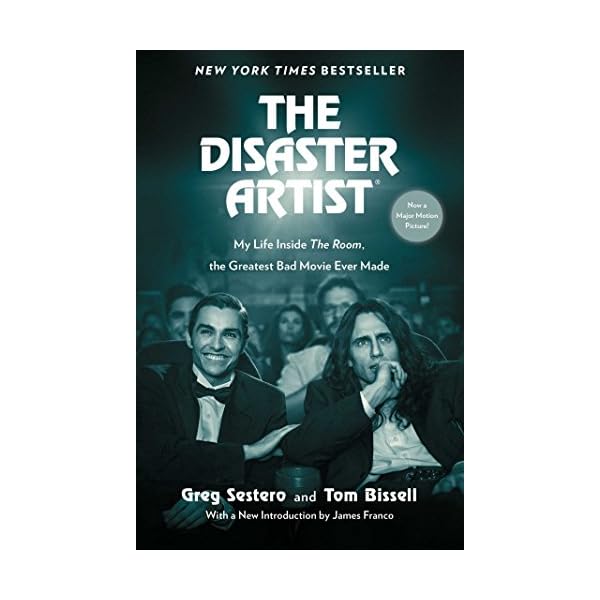
From the actor who somehow lived through it all, a “sharply detailed…funny book about a cinematic comedy of errors” ( The New York Times ): the making of the cult film phenomenon The Room . But more than just a riotously funny story about cinematic hubris, “ The Disaster Artist is one of the most honest books about friendship I’ve read in years” ( Los Angeles Times ). The Room, a 2003 film written, directed, and starring the inscrutable Tommy Wiseau, was massively and enthusiastically lambasted by critics, proclaimed by some as the worst movie ever made (an insult, some movie fans might say, to Ed Wood’s Plan 9 from Outer Space). But it’s also the story of a very interesting friendship between Sestero and Wiseau (who knew each other for several years before The Room), and the story of an enigmatic and incredibly self-absorbed man who, in making his film, seemed to be trying to exorcise a troubled past and build an entirely new version of himself.
Reviews
Find Best Price at Amazon"Greg Sestero has done something fantastic. I think as fans we sometimes forget that these characters we see onscreen (and yell insults to on countless midnight screenings) are portrayed by actual human beings, separate from their characters. Without this book I would never have known that I've memorized The Room better than Tommy Wiseau."
"Knowing the background story behind various scenes has me wanting to go back and watch the film again to find the context!"
"I most disliked the file's poor audio quality, especially the very-poor-quality "This is Audible" tags on the book's beginning and ending, which shouldn't even be there, and which soured my whole experience. My absolute best-case scenario is lossless audio, like .wav or whatever file format it was originally recorded in (so long as it's not really obscure or proprietary or something), presumably/hopefully at a sample rate 48 or more kHz and a bit depth of 16 or more (one hopes)—basically a full-quality final edit of the file or files—which is why I prefer to buy audiobooks on CD. I got this sad excuse for an audiobook because I wanted to give Audible another chance, for their sheer monopolostic pervasiveness. The only thing I like about the file is it's in Audible's house format, .aax, i.e. .m4a or maybe .m4b?, with chapter markers, a handy feature in itself but one which is also genuinely helpful for navigating an audiobook."
"Kooky, weird and touching, it tells the now infamous story of the making of The Room, that wonderfully terrible film that has now become a cult classic."
"There is no making sense of "The Room," and little likelihood of understanding Tommy Wiseau -- but this is a fascinating, funny, and oddly moving revelation of how the Worst Serious Movie Ever Made was actually put together in all its glorious awfulnesd."
"This book is amazing I read it cover-to-cover in like two days I couldn't put it down watching the movie The Room is a experience all on its own but the things you discover in this book make the film even more obscure."
"What an incredibly fun read!"
Best Gender Studies
And in these lairs, men trade the most devastatingly effective techniques ever invented to charm women. The result is one of the most explosive and controversial books of the last decade—guaranteed to change the lives of men and transform the way women understand the opposite sex forever. The answers, my friend, are in Neil Strauss's entertaining book The Game . After two years, Strauss ends up becoming almost as successful as Mystery, but he comes to an important realization. But a few years ago, a distraught Strauss decided he was a loser with women and set about transforming himself into the world's greatest pick-up artist. This ugly-duckling tale will affect different readers in different ways, depending on their degree of cynicism: some will be awed by Strauss's ménage-à-trois snowball scene, while others will suspect it was cribbed from a third-rate porno Strauss watched in his pre-macking days.When his story begins Strauss is, well, a Neil: an unconfident, self-described AFC (average frustrated chump). After paying $500 to join a workshop for aspiring PUAs (pick-up artists) led by a magician named Mystery at Hollywood's Roosevelt Hotel, Strauss becomes addicted to pick-up technique. With his brains and dedication, Strauss renames himself Style and soon becomes a master of the game—able to get sex from beautiful women who once would have run the other way.But The Game doesn't get really interesting until Strauss deviates from his NC-17 Horatio Alger story and tells what happens when he moves into a Sunset Strip mansion with a group of other PUAs. The AFC who became a PUA to understand women ultimately becomes an expert on men.As Strauss grows restless to talk about things other than number closes and phase shifts (the book's glossary is a juicy read of its own), the mansion loses its appeal and he reluctantly grows up. In the book's final pages, he dumps onto his bed all the phone numbers he's collected and tells Lisa, "I've spent two years meeting every girl in L.A. And out of them all, I chose you," which is like telling your mother-in-law that the Thanksgiving dinner you had last year at Applebee's was nothing compared to the one she just prepared.
Reviews
Find Best Price at Amazon"The were so many ways to pick up and talk to women that I thought would never work, or never even thought of. It wasn't until the end of book that I realized that I didn't need any fine tuned pickup lines. While this book still makes me want to go out and try to pickup women, it's not to become a pickup artist. Even though Neil Strauss will never know of me and never know how big of an impact his book has had on me, his book has unlocked the door to my future that I can now begin to open. I cannot thank him enough for writing this book."
"The Game traces the author's rise from an unconfident single guy to a true player and pick up artist."
"Honestly, buy this book if you have low confidence and need a kick in the pants."
"Ok book for what it is."
"I could not stop reading this book!"
"This is a great story but it offers basic advice on chatting up women."
"It's a good story."
Best Disaster Relief
Five Days at Memorial , the culmination of six years of reporting, unspools the mystery of what happened in those days, bringing the reader into a hospital fighting for its life and into a conversation about the most terrifying form of health care rationing. Fink, a Pulitzer Prize winner for her reporting on Memorial in the New York Times Magazine, offers a stunning re-creation of the storm, its aftermath, and the investigation that followed (one doctor and two nurses were charged with second-degree murder but acquitted by a grand jury). She evenhandedly compels readers to consider larger questions, not just of ethics but race, resources, history, and what constitutes the greater good, while humanizing the countless smaller tragedies that make up the whole. --Keir Graff Five Days at Memorial is Sheri Fink’s elaborately researched chronicle of life, death, and the choices in between at a New Orleans hospital immediately following Hurricane Katrina.
Reviews
Find Best Price at Amazon"When making decisions in a chaotic disaster situation, it would be helpful to have at least a minimal understanding of the job that the people you are directing do."
"I used to work in a hospital as a pharmacy tech,I recognized the narcotics the author mentions in the book."
"If this book had been 50 pages shorter, I would have given it 5 Stars."
"I almost feel bad giving this book 4 instead of 5 stars considering the incredible amount of research and effort that has gone into its composition, but as a reader, I found this book to be tedious in certain parts, and in need of some editing. For academic and research purposes, I think this book is a masterpiece because it contains such minute detail, but for a casual reader like me, who wanted to gain some insight into this particular event, the book is just too drawn out."
"What happens when you work for five days in unbelievable circumstances, with no air conditioning, no power, little or no sleep, reduced staff, and many critically ill patients? After the complete coverage on Katrina, including the chilling human and political ramifications, she explores what has been done, or not done, for planning for future events in Louisiana and several other states."
"I lived in New Orleans for 9 years prior to Hurricane Katrina, so the story hit me pretty hard."
Best Children's Studies

Based on a true story, Call Me Tuesday recounts, with raw emotion, a young girl's physical and mental torment at the mercy of the monster in her mother's clothes--a monster she doesn't know how to stop loving. - Jayne L. Williams MS LPC, Mental Health Therapist & former Assistant Professor, Saint-Mary-of-the Woods College "A compelling portrayal of grief gone horribly wrong." - Alexandra Levit, a former nationally syndicated columnist for the Wall Street Journal, current writer for the New York Times, and bestselling author "This story was like a blueprint and a guidance for all children who have suffered from their loved ones." - David Lloyd, The Virtual Muser eBook Review "Despite the disturbing subject matter, the writing is well-crafted but never emotionally manipulative or maudlin, which made this a surprisingly enjoyable read." Call Me Tuesday is my small attempt to make as many people as possible aware that extreme maltreatment of a child at the hands of a parent does actually happen, an ugly truth I feel everyone needs to know.
Reviews
Find Best Price at Amazon"This book is very well written without going into extreme graphics about the abuse that was suffered."
"I loved this story and I wished I could hug this person! Now I'm on to the sequel Call Me Cockroach."
"I can't imagine a child having gone through so much torture."
"As a fellow survivor of physical and mental abuse I felt a rage toward her parents like I haven't felt in a long time."
"It is time for people in positions of power to stand up and help these children."
"I enjoyed it."
"What an amazing book."
"Any adult including the social worker should have seen by the way she was dressed and her physical condition that things were not good at home."
Best Violence in Society
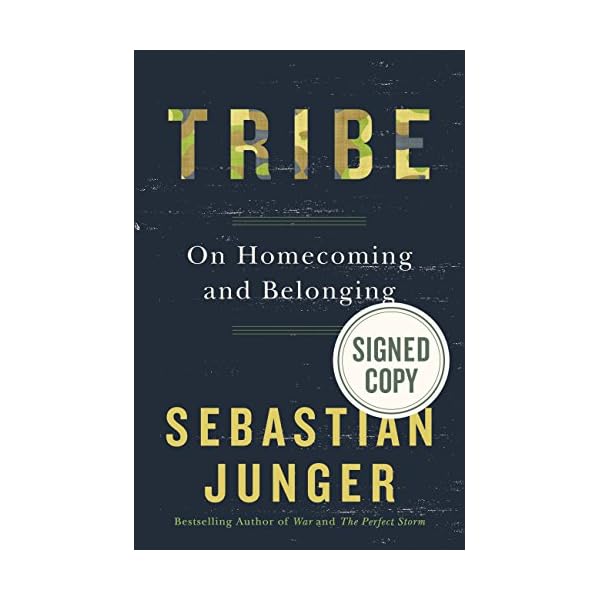
Decades before the American Revolution, Benjamin Franklin lamented that English settlers were constantly fleeing over to the Indians-but Indians almost never did the same. Tribal society has been exerting an almost gravitational pull on Westerners for hundreds of years, and the reason lies deep in our evolutionary past as a communal species. "Junger has raised one of the most provocative ideas of this campaign season--and accidentally written one of its most intriguing political books. "― The New York Times "There are three excellent reasons to read Sebastian Junger's new book: the clarity of his thought, the elegance of his prose, and the provocativeness of his chosen subject. "Compelling...Junger...offers a starting point for mending some of the toxic divisiveness rampant in our current political and cultural climate. "TRIBE is a fascinating, eloquent and thought-provoking book..packed with ideas...It could help us to think more deeply about how to help men and women battered by war to find a new purpose in peace. Sebastian Junger is the #1 New York Times bestselling author of Tribe , War , The Perfect Storm , Fire, and A Death in Belmont .
Reviews
Find Best Price at Amazon"Upon reading Junger’s article in a recent Vanity Fair article on the affects of PTSD (it’s not exclusive to just war veterans, by the way), I was under the assumption that a large portion of this book would be dedicated to that. It’s an eye-opening letter to the American public that politely reminds us that we’ve lost our way when it comes to being a closer knit community as a whole. The young Junger, afraid of being mugged for his supplies, lies and tells the man that he has just a little food to last him."
"One of his central themes is the idea that soldiers in combat situations have such an intense experience of interdependency, solidarity and community that they often struggle upon returning to civilian life in the US, in which there rarely is any similar sort of community to which they can belong."
"From the devastating news of schools shootings, wars that appear on the surface to have little relevance 'back home', and financial injustices that literally rob society; these are at once at the top of our news streams, and almost as quickly dismissed as aberrations. He addresses everything from how we inappropriately treat our soldiers, the unbalanced attention to criminal acts within our society, and the fundamental social needs that are shown to be more powerful than war and catastrophe."
"Junger takes us on a journey of human community, using the stories of cultures and soldiers throughout history to provide guidance on how we can live better together in the future."
Best Folklore & Mythology
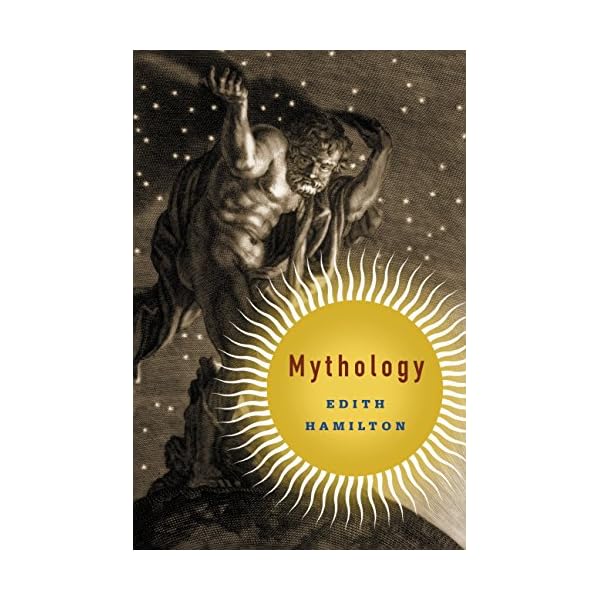
The world-renowned classic that has enthralled and delighted millions of readers with its timeless tales of gods and heroes. Fans of Greek mythology will find all the great stories and characters here--Perseus, Hercules, and Odysseus--each discussed in generous detail by the voice of an impressively knowledgeable and engaging (with occasional lapses) narrator.
Reviews
Find Best Price at Amazon"Always been a fan of Greek Mythology, now I can listen to it whenever I want."
"It's a classic for good reason."
"Exactly what my daughter needed for her class."
"Required for freshman English class."
"This book gives you details about the gods that you didn't know you wanted to know!"
"Edith Hamilton's classic."
"Needed this For my English IS class and it provided spot on and flawless information over Greek mythology down to the core."
Best Social Science Research
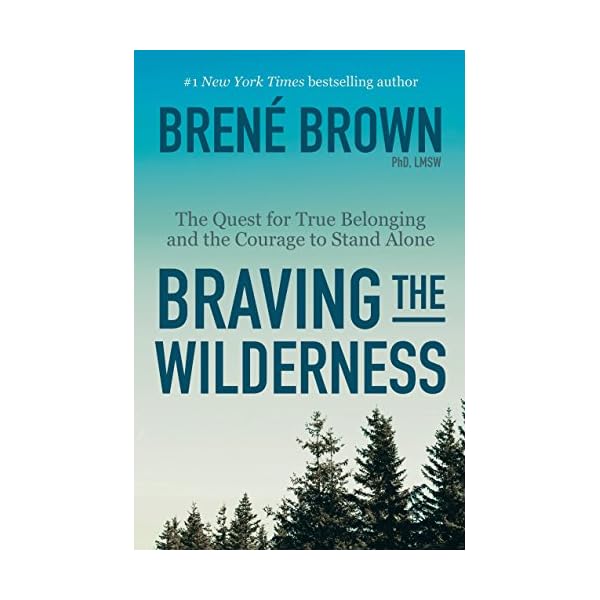
#1 NEW YORK TIMES BESTSELLER • A timely and important new book that challenges everything we think we know about cultivating true belonging in our communities, organizations, and culture, from the #1 bestselling author of Rising Strong, Daring Greatly, and The Gifts of Imperfection HELLO SUNSHINE BOOK CLUB PICK “True belonging doesn’t require us to change who we are. She writes, “True belonging requires us to believe in and belong to ourselves so fully that we can find sacredness both in being a part of something and in standing alone when necessary. Praise for Brené Brown’s Rising Strong “[Brown’s] research and work have given us a new vocabulary, a way to talk with each other about the ideas and feelings and fears we’ve all had but haven’t quite known how to articulate. Thankfully, Brené Brown is there with an outstretched arm to help us up.” —Simon Sinek, author of Start with Why and Leaders Eat Last. Brené Brown, PhD, LMSW, is a research professor at the University of Houston where she holds the Huffington Foundation–Brené Brown Endowed Chair at the Graduate College of Social Work.
Reviews
Find Best Price at Amazon"I started working toward being an Amazon Top 1000 reviewer about a year ago. And I chose it, because sad though it is, my reviews on Amazon and Goodreads are the last place in this entire world where I am willing to communicate, in any capacity, with other human beings. So lonely that as I type this I feel like crying, even though I accepted this as my reality a long time ago. I struggle to call and make appointments because it requires talking to strangers, and for this reason I also can't go to the grocery store, or the gas station, or any other list of a hundred places that normal people go to have normal lives. You see, I decided five years ago that I was done with fitting in, and that I'd rather be lonely and alone, than to continue immersing myself in a world I found caustic. I saw people ripping each other down through the medium of social media because they didn't have to look that person in the face, and see how their comments hurt them. It seemed like a good idea at the time, but as the years have passed, I've cut myself so far off from humanity that it feels like I'm the only person left in my world. But I didn't know how else to express the impact this book had on me, without first talking about how much pain I've been in, and how nefarious my reasons for reading it in the first place. I expected to write an honest, clinical review discussing its contents from a dispassionate point of view. But instead, here I am, still clumsily attempting to convey my feelings in the hopes that some part of this review might encourage even one other person to read this book."
"This is the best of all of her books, as well as a prescription for being alive now, of being a citizen, a human being, a kind and caring and loving person--now--at this time in history. I read it yesterday and today in two sittings and am going back again and again to the writing, the ideas, and the inspiration to me to life more authentically and to be able to connect with others in deeper and braver ways."
"I've only listened to the first chapter of the book so far and I've been in tears three times."
"This is the book that I needed now."
"I could read and re read this author all day."
"We hate the idea that we are afraid to talk to our own children but don't want to lose our connection nor go against our deep beliefs."
"Her style is a simple, comical one - that brings simplicity to the complexity of the human condition."
Best Philanthropy & Charity
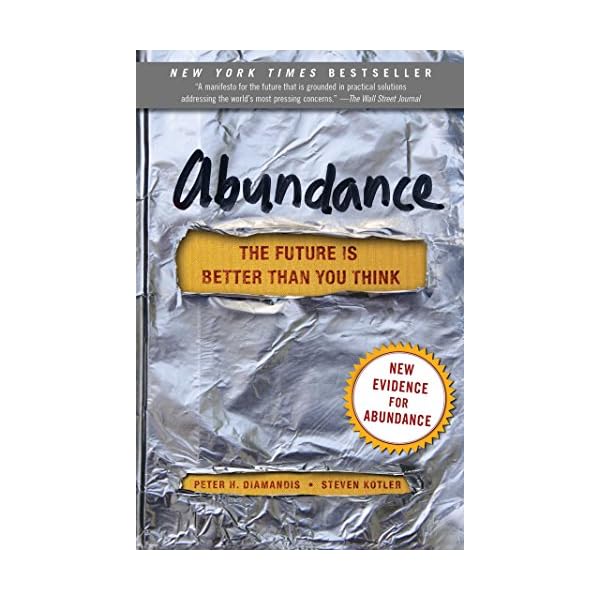
This bold, contrarian view, backed up by exhaustive research, introduces our near-term future, where exponentially growing technologies and three other powerful forces are conspiring to better the lives of billions. Examining human need by category—water, food, energy, healthcare, education, freedom—Diamandis and Kotler introduce dozens of innovators making great strides in each area: Larry Page, Steven Hawking, Dean Kamen, Daniel Kahneman, Elon Musk, Bill Joy, Stewart Brand, Jeff Skoll, Ray Kurzweil, Ratan Tata, Craig Venter, among many, many others. "This engaging book is a needed corrective, a whirlwind tour of the latest developments in health care, agriculture, energy, and other fields as well as an introduction to thinkers and innovators such as Daniel Kahneman, Ray Kurzweil, and Craig Ventor."
Reviews
Find Best Price at Amazon"Abundance by Peter Diamandis revolves around the concept that our perception on life is based off of our own experiences, but collectively taken life has improved in many categories such as lifespan, economic wages, & number of conflicts in a given time period."
"It is an excellent place to start for anyone. interested in exponential technologies, the. future, artificial intelligence, global social. issues or business."
"A must read for all generations, I couldn't put the book down...."
"We think the world today is worst than ever, this book will tell you how we are wrong, how we are better now and how Technologies are shaping our future, a future of abundance."
"The authors rightly point out that if you study any period of human existence on planet Earth, you will see both incredible advancements and terrible tragedies. Diamandis and Kotler define abundance as having a life of possibilities where the day is spent dreaming and doing as opposed to scrapping and scraping just to get by. The bulk of the book describes how science and technology will be used to address each of the challenges identified in the tiers of the abundance pyramid. Its contents leave the reader full of hope that science and technology will solve our problems and better life on the planet."
"Anything that is abundant, has zero scarcity, and therefore zero market value (anything multiplied by zero equals zero - consider oxygen, important, abundant, and zero market value in ordinary circumstances). Thus while we are developing technology that is capable of delivering abundance, that abundance is invalidating our dominant social valuation paradigm (money and markets). There is a flip side to this concept also, which is that there is zero market incentive to ever deliver true abundance (abundance that reaches every person on the planet), and there is in fact massive monetary incentive to prevent such abundance ever being created. Thus the question really is, what sort of social political and technical institutions are required to provide security and freedom in an age of abundance (which abundance includes longevity)."
"Yes, the future is better than you think."
Best Social Science Methodology
In the revised Fourth Edition of the best-selling text, John W. Creswell and new co-author Cheryl N. Poth explore the philosophical underpinnings, history, and key elements of five qualitative inquiry approaches: narrative research, phenomenology, grounded theory, ethnography, and case study. "The Fourth Edition of Qualitative Inquiry and Research Design is refreshingly readable and will be accessible to students of all levels. --Charles Quist-Adade. "In my teaching experience, I have found this to be the best text for teaching an introductory course in qualitative research, as it demonstrates in a clear and systematic manner how qualitative research can be undertaken in the five most popular approaches in contemporary applied social science research." "Creswell and Poth's newly revised edition of Qualitative Inquiry and Research Design represents an accessible yet in-depth resource for developing an understanding of both the main approaches to qualitative research in the social sciences, as well as the wide variation across and beyond these approaches." -Creswell and Poth's newly revised edition of Qualitative Inquiry and Research Design represents an accessible yet in-depth resource for developing an understanding of both the main approaches to qualitative research in the social sciences, as well as the wide variation across and beyond these approaches.---Kai A. Schafft. "The Fourth Edition of Qualitative Inquiry and Research Design is refreshingly readable and will be accessible to students of all levels. (Charles Quist-Adade). "In my teaching experience, I have found this to be the best text for teaching an introductory course in qualitative research, as it demonstrates in a clear and systematic manner how qualitative research can be undertaken in the five most popular approaches in contemporary applied social science research." "Creswell and Poth’s newly revised edition of Qualitative Inquiry and Research Design represents an accessible yet in-depth resource for developing an understanding of both the main approaches to qualitative research in the social sciences, as well as the wide variation across and beyond these approaches."
Reviews
Find Best Price at Amazon"This is a good read for someone who is currently conducting research!"
"Great new book and timely delivery."
"Good for school and working towards developing qualitative research - good guides on process for beginners."
"Excellent information written well."
"Solid read, as usual from a legend in the research sciences..."
"Absolutely LOVE Creswell!"
"A must for every qualitative researcher!"
Best Discrimination & Racism
Hailed by Toni Morrison as “required reading,” a bold and personal literary exploration of America’s racial history by “the single best writer on the subject of race in the United States” ( The New York Observer ) #1 NEW YORK TIMES BESTSELLER | NATIONAL BOOK AWARD WINNER | NAACP IMAGE AWARD WINNER | PULITZER PRIZE FINALIST | NATIONAL BOOK CRITICS CIRCLE AWARD FINALIST | NAMED ONE OF THE TEN BEST BOOKS OF THE YEAR BY The New York Times Book Review • O: The Oprah Magazine • The Washington Post • People •. Entertainment Weekly •. Vogue • Los Angeles Times • San Francisco Chronicle • Chicago Tribune • New York • Newsday • Library Journal • Publishers Weekly In a profound work that pivots from the biggest questions about American history and ideals to the most intimate concerns of a father for his son, Ta-Nehisi Coates offers a powerful new framework for understanding our nation’s history and current crisis. Americans have built an empire on the idea of “race,” a falsehood that damages us all but falls most heavily on the bodies of black women and men—bodies exploited through slavery and segregation, and, today, threatened, locked up, and murdered out of all proportion. Between the World and Me is Ta-Nehisi Coates’s attempt to answer these questions in a letter to his adolescent son. Coates shares with his son—and readers—the story of his awakening to the truth about his place in the world through a series of revelatory experiences, from Howard University to Civil War battlefields, from the South Side of Chicago to Paris, from his childhood home to the living rooms of mothers whose children’s lives were taken as American plunder. Beautifully woven from personal narrative, reimagined history, and fresh, emotionally charged reportage, Between the World and Me clearly illuminates the past, bracingly confronts our present, and offers a transcendent vision for a way forward. in the tradition of James Baldwin with echoes of Ralph Ellison’s Invisible Man . Ferguson, Trayvon Martin, and South Carolina are not bumps on the road of progress and harmony, but the results of a systemized, ubiquitous threat to “black bodies” in the form of slavery, police brutality, and mass incarceration. Thoughtfully exploring personal and historical events, from his time at Howard University to the Civil War, the author poignantly asks and attempts to answer difficult questions that plague modern society. In this short memoir, the Atlantic writer explains that the tragic examples of Michael Brown, Trayvon Martin, and those killed in South Carolina are the results of a systematically constructed and maintained assault to black people—a structure that includes slavery, mass incarceration, and police brutality as part of its foundation.
Reviews
Find Best Price at Amazon"This book came recommended by a quasi-stranger, not for it's content but for its structure: letters from a father to a son. After ordering it, I heard the author on NPR - without knowing it was the author of the book, mind you - and I thought "wow, this guy is really interesting, provocative, well-spoken, intellectually sound, and speaks from a world that I can only see from afar." At times I felt compelled to put the book down, that it was just conjuring up too much weight of history that I wanted to put back out of sight. Even those outside of the USA will benefit from it, as it will certainly illuminate the tension and schizophrenia and contradictions and rewritten history of our country."
"So I understand the scorn directed at this book by many who dismiss it as divisive and simplistic in its assessment of the black experience in America. I felt the anger he feels at people who believe that they are white dismissing that experience as so many sour grapes. I felt the hypocrisy of being told not to wear hoodies or play loud music for fear of someone breaking your body. It's not a solution to our race problems or an accurate assessment of the progress of America as a nation."
"For those who realize that they MUST be faced, no matter how painful we find them, Coates provides a remarkable first step with this compelling, poetic, and sometimes heartbreaking expressionistic book. Empathy and a desire to understand that which we haven't personally experienced but that we know are pernicious facts of modern Anerican life are key to the changes we must make. As an upper-middle class white woman, I've lived through very few of the events and feelings Coates describes in "Between the World and Me.""
Best Social Customs & Traditions
Berendt skillfully interweaves a hugely entertaining first-person account of life in this isolated remnant of the Old South with the unpredictable twists and turns of a landmark murder case. It is a spellbinding story peopled by a gallery of remarkable characters: the well-bred society ladies of the Married Woman's Card Club; the turbulent young redneck gigolo; the hapless recluse who owns a bottle of poison so powerful it could kill every man, woman, and child in Savannah; the aging and profane Southern belle who is the "soul of pampered self-absorption"; the uproariously funny black drag queen; the acerbic and arrogant antiques dealer; the sweet-talking, piano-playing con artist; young blacks dancing the minuet at the black debutante ball; and Minerva, the voodoo priestess who works her magic in the graveyard at midnight. John Berendt's Midnight in the Garden of Good and Evil has been heralded as a "lyrical work of nonfiction," and the book's extremely graceful prose depictions of some of Savannah, Georgia's most colorful eccentrics--remarkable characters who could have once prospered in a William Faulkner novel or Eudora Welty short story--were certainly a critical factor in its tremendous success. The book is also about the wealthy international antiques dealer Jim Williams, who played an active role in the historic city's restoration--and would also be tried four times for the 1981 shooting death of 21-year-old Danny Handsford, his high-energy, self-destructive house helper.
Reviews
Find Best Price at Amazon"I loved this book so much that I made my husband go with me to Savannah to visit the city and see the bird girl statue. John Berendt did a wonderful job in writing this book and I wish he would do another one."
"Finally read this book."
"This story held my interest in each and every character contributing their unique personality, and in the end leaving their spirit, on this place."
"I first loved the movie, then I loved the city and finally I overcame my apprehensions that after that the book would not be that great."
"What a fun, quirky group of characters set in the beautiful Savannah, Ga backdrop."
"I am glad that I read this book since people in Savannah made references to this book, However, I found a couple of characters that didn't relate much to the main story and was bored reading about them."
"The thing is it's told in such a interesting manner that you're deep into it before you realize you're learning a LOT of Savannah culture and history while being riotously entertained!"
"This book kind of draws you in with it's very unusual characters (which there are many) and the way it's written - it casts its own spell on the reader."
Best Social Science Reference
Using actual case histories of innocent men and women exonerated after decades in prison because of information they voluntarily gave to police, Professor Duane demonstrates the critical importance of a constitutional right not well or widely understood by the average American. “James Duane’s amazing but true stories of innocent people exonerated after decades of wrongful imprisonment (which could have been avoided if they had just insisted on their fundamental right to avoid self-incrimination) are riveting reminders of the high price we pay, as individuals and as a society, when we fail to assert our constitutional rights.” —Laurence H. Tribe, Harvard Law School. You Have the Right to Remain Innocent describes a stream of miscarriages of justice that occurred only because innocent suspects cooperated with deceptive officers preying on their ignorance and good intentions. “Well-informed, scary, sobering, and sure to tick off police officers and prosecutors even as it contributes to keeping innocent people out of jail.” — Kirkus Reviews.
Reviews
Find Best Price at Amazon"Prof. Duane mixes his brilliant legal scholarship with his trademark humor in this brief overview of what to do when a police officer asks cheerfully, "You don't mind answering a few questions, do you?""
"I knew these tactics and techniques were used by law enforcement, I never knew how much simple statements could be woven into a guilty sentence for the most innocent."
"Once you start looking, it's alarming to realize how many innocent people go to jail because they don't understand the system and they thought if they just told the truth to the arresting officers that everything would be ok. Three felony's a day... Know your rights, the don't and do's of using the 5th, when and when not to keep your mouth shut."
"Every citizen owes it to her or himself to read this book."
"Some very important points made in this book about you (as a suspect, a person being questioned, a random person) and how you should deal with the police if they come to you."
"If you don't know about the lobster law or you even vaguely believe what you might have seen regarding forensics on TV, you should read this book."
"This text clearly shows the dangers of talking to the police."
"Even a single sentence shared with police before remaining silent can be construed into a confession, allowing police to bypass the investigatory work of finding a true culprit."
Best Emigration & Immigration
With stunning historical detail, Wilkerson tells this story through the lives of three unique individuals: Ida Mae Gladney, who in 1937 left sharecropping and prejudice in Mississippi for Chicago, where she achieved quiet blue-collar success and, in old age, voted for Barack Obama when he ran for an Illinois Senate seat; sharp and quick-tempered George Starling, who in 1945 fled Florida for Harlem, where he endangered his job fighting for civil rights, saw his family fall, and finally found peace in God; and Robert Foster, who left Louisiana in 1953 to pursue a medical career, the personal physician to Ray Charles as part of a glitteringly successful medical career, which allowed him to purchase a grand home where he often threw exuberant parties. A Look Inside The Warmth of Other Suns The author's father as a Tuskegee Airman George Starling as a young manThe author's mother at Meridian Hill The author’s mother at Howard University with friends A migrant man studying a mapA migrant man packing his suitcaseIda Mae Brandon Gladney as a young womanRobert Joseph Pershing Foster as a young physician Starred Review.
Reviews
Find Best Price at Amazon"Isabel Wilkerson, the Pulitzer Prize winning newspaper writer, has now come back to write a fascinating and sweeping book on what she calls ""the biggest underreported story of the twentieth century." Of course we all know the tale of the "Dust Bowl" and the "Okies", as captured by Steinbeck in words, by Dorothea Lange in photographs, and even in song by Woody Guthrie. The title of this book is taken from Richard Wright's "Black Boy: A Record of Childhood and Youth": "I was taking a part of the South to transplant in alien soil, to see if it could grow differently, if it could drink of new and cool rains, bend in strange winds, respond to the warmth of other suns, and, perhaps, to bloom." Our families became friends, as also "Miz Edna's" husband had served in New Guinea with my father (as a cook, however, remember the WWII Army was still segregated) ."
"It does a commendable job of presenting the sweep of history while also telling individual stories of those who left brutal conditions for better lives elsewhere."
"I am awed by the sacrifice and courage displayed by my mother who made the decision to leave her family in Alabama to give us a chance to realize our greatest potential by driving north to start a new life."
"This collection of stories takes the reader through the history of the black migration from the South to the North and lays out in clear terms the challenges blacks faced and provides a foundational understanding of the challenges blacks continue to face in America today."
"This book was well articulated by a very pleasant-voice lady."
"I knew very little about this period in our history, and as a result of this book, I've sought out more information."
"This book, by focusing on the stories few individuals citizens, transcendentally captures both the unspeakable tragedy of Jim Crow, and the remarkable faith and sheer fortitude of those making the journey north (I'll never forget Ida Mae!!)."
Best Library & Information Science
The 40th anniversary edition of the classic Newbery Medal-winning title by beloved author Katherine Paterson, with brand-new bonus materials including an author's note by Katherine herself and a foreword by New York Times bestselling author Kate DiCamillo. Here they reign as king and queen, fighting off imaginary giants and the walking dead, sharing stories and dreams, and plotting against the schoolmates who tease them. Together, they create an imaginary, secret kingdom in the woods called Terabithia that can be reached only by swinging across a creek bed on a rope. But one morning a tragic accident befalls Leslie as she ventures alone to Terabithia, and Jess's life is changed forever. Contemporary instrumental interludes featuring guitar, piano and drums signal the beginning and end of each tape side.
Reviews
Find Best Price at Amazon"One of the best Children's book I have read."
"Brilliant piece of writing that meshes vivid imagination with real feelings - feelings of friendship and goodness."
"excellent product, good attention!"
"bought book for our club to go with the movie."
"Cute book for young ones."
"Excellent!"
"Very good book with a few unexpected plot twists."