
Best Statistics
n this stunning new book, Malcolm Gladwell takes us on an intellectual journey through the world of "outliers"--the best and the brightest, the most famous and the most successful. Amazon Best of the Month, November 2008 : Now that he's gotten us talking about the viral life of ideas and the power of gut reactions , Malcolm Gladwell poses a more provocative question in Outliers : why do some people succeed, living remarkably productive and impactful lives, while so many more never reach their potential? Outliers can be enjoyed for its bits of trivia, like why most pro hockey players were born in January, how many hours of practice it takes to master a skill, why the descendents of Jewish immigrant garment workers became the most powerful lawyers in New York, how a pilots' culture impacts their crash record, how a centuries-old culture of rice farming helps Asian kids master math. Signature Reviewed by Leslie ChangIn Outliers , Gladwell ( The Tipping Point ) once again proves masterful in a genre he essentially pioneered—the book that illuminates secret patterns behind everyday phenomena. Through case studies ranging from Canadian junior hockey champions to the robber barons of the Gilded Age, from Asian math whizzes to software entrepreneurs to the rise of his own family in Jamaica, Gladwell tears down the myth of individual merit to explore how culture, circumstance, timing, birth and luck account for success—and how historical legacies can hold others back despite ample individual gifts. In seeking to understand why Asian children score higher on math tests, Gladwell explores the persistence and painstaking labor required to cultivate rice as it has been done in East Asia for thousands of years; though fascinating in its details, the study does not prove that a rice-growing heritage explains math prowess, as Gladwell asserts.
Reviews
Find Best Price at Amazon"I found more than a few myths debunked in this book."
"What you realize after reading the book: individual success is fake - oftentimes it is the result of multiple factors contributing to a single outcome."
"I had to buy this book for a college course and I didn't have any idea what it was about but after just getting through the first 10 pages I was hooked!!"
"Outliers is my favorite book written by Malcolm Gladwell so far and it is definitely a very enjoyable read."
"Chapter 7 on commercial airplane pilots was fascinating...thinking outside the box."
"The path to perceived success follows many stones."
"Very interesting perspective."
"Excellent, it opens your mind and gives you a different approach of what "the road of success" is."
n this stunning new book, Malcolm Gladwell takes us on an intellectual journey through the world of "outliers"--the best and the brightest, the most famous and the most successful. Amazon Best of the Month, November 2008 : Now that he's gotten us talking about the viral life of ideas and the power of gut reactions , Malcolm Gladwell poses a more provocative question in Outliers : why do some people succeed, living remarkably productive and impactful lives, while so many more never reach their potential? Outliers can be enjoyed for its bits of trivia, like why most pro hockey players were born in January, how many hours of practice it takes to master a skill, why the descendents of Jewish immigrant garment workers became the most powerful lawyers in New York, how a pilots' culture impacts their crash record, how a centuries-old culture of rice farming helps Asian kids master math. Signature Reviewed by Leslie ChangIn Outliers , Gladwell ( The Tipping Point ) once again proves masterful in a genre he essentially pioneered—the book that illuminates secret patterns behind everyday phenomena. Through case studies ranging from Canadian junior hockey champions to the robber barons of the Gilded Age, from Asian math whizzes to software entrepreneurs to the rise of his own family in Jamaica, Gladwell tears down the myth of individual merit to explore how culture, circumstance, timing, birth and luck account for success—and how historical legacies can hold others back despite ample individual gifts. In seeking to understand why Asian children score higher on math tests, Gladwell explores the persistence and painstaking labor required to cultivate rice as it has been done in East Asia for thousands of years; though fascinating in its details, the study does not prove that a rice-growing heritage explains math prowess, as Gladwell asserts.
Reviews
Find Best Price at Amazon"I found more than a few myths debunked in this book."
"What you realize after reading the book: individual success is fake - oftentimes it is the result of multiple factors contributing to a single outcome."
"I had to buy this book for a college course and I didn't have any idea what it was about but after just getting through the first 10 pages I was hooked!!"
"Outliers is my favorite book written by Malcolm Gladwell so far and it is definitely a very enjoyable read."
"Chapter 7 on commercial airplane pilots was fascinating...thinking outside the box."
"The path to perceived success follows many stones."
"Very interesting perspective."
"Excellent, it opens your mind and gives you a different approach of what "the road of success" is."
Rebecca M. Warner's Applied Statistics: From Bivariate Through Multivariate Techniques, Second Edition provides a clear introduction to widely used topics in bivariate and multivariate statistics, including multiple regression, discriminant analysis, MANOVA, factor analysis, and binary logistic regression. She is a Fellow in the Association for Psychological Science and a member of the American Psychological Association, the International Association for Relationships Research, the Society of Experimental Social Psychology, and the Society for Personality and Social Psychology.
Reviews
Find Best Price at Amazon"While it is gigantic, Warner does a great job of explaining the underlying concepts, using data to make it even more clear, and showing tables and charts for it to all come together."
"Very easy to read this book."
"I am using this textbook in my PhD Program."
"Who doesn't love stats?!?"
"Excellent text."
"It wasn't the one assigned by my professor but I bought it anyway because it was so clear and I preferred it to the assigned text."
"Excellent, so much to learn and excellent examples."
"Oh my... this is now for light reading but amazing for my advanced stats class in doctoral program."
Best Education Statistics
The book walks readers through various statistical procedures, beginning with simple descriptive statistics, correlations, and graphical representations of data, and ending with inferential techniques, analysis of variance, and a new introductory chapter on working with large datasets and data mining using Excel. I enthusiastically recommended it for anyone interested in the subject and even (and especially) for those who aren't!--Russ Shafer-Landau Statistics for People who (Think They) Hate Statistics is definitely the right book for people who have to overcome that familiar anxious feeling when opening a standard statistics book and who having finally managed to do so are still not able to make much sense of it all. I enthusiastically recommended it for anyone interested in the subject and even (and especially) for those who aren′t! Statistics for People who (Think They) Hate Statistics is definitely the right book for people who have to overcome that familiar anxious feeling when opening a standard statistics book and who having finally managed to do so are still not able to make much sense of it all.
Reviews
Find Best Price at Amazon"I had to buy this book for class and it explains everything in layman's terms."
"Perfect like new condition."
"Best text book prices!!"
"exactly what i was looking for."
"Actually really helpful for your statistic courses."
"I have enjoyed this book immensely."
"It was interesting to use for college."
Best Probability & Statistics
Freakonomics is a groundbreaking collaboration between Levitt and Stephen J. Dubner, an award-winning author and journalist. Thus the new field of study contained in this book: freakonomics.Through forceful storytelling and wry insight, Levitt and Dubner show that economics is, at root, the study of incentiveshow people get what they want, or need, especially when other people want or need the same thing. What unites all these stories is a belief that the modern world, despite a great deal of complexity and downright deceit, is not impenetrable, is not unknowable, andif the right questions are askedis even more intriguing than we think. Freakonomics establishes this unconventional premise: If morality represents how we would like the world to work, then economics represents how it actually does work. It will literally redefine the way we view the modern world.Bonus material added to the revised and expanded 2006 edition.The original New York Times Magazine article about Steven D. Levitt by Stephen J. Dubner, which led to the creation of this book.Seven Freakonomics columns written for the New York Times Magazine, published between August 2005 and April 2006. “Levitt dissects complex real-world phenomena, e.g. baby-naming patterns and Sumo wrestling, with an economist’s laser.” (San Diego Union-Tribune). This is bracing fun of the highest order.” (Kurt Andersen, host of public radio's Studio 360 and author of Turn of the Century). “Freakonomics challenges conventional wisdom and makes for fun reading.” (Book Sense Picks and Notables). Steven D. Levitt, a professor of economics at the University of Chicago, was awarded the John Bates Clark Medal, given to the most influential American economist under forty. Stephen J. Dubner, an award-winning journalist and radio and TV personality, has worked for the New York Times and published three non- Freakonomics books.
Reviews
Find Best Price at Amazon"Indeed, the most common reaction I get from people when telling them that I am an economist is that they have read Freakonomics, which implies that they have at least seen some work similar to what I do at aguanomics. All I remember was a lot of math and curves.” This depressing outcome results from lecturers who merely reproduce problems and equations on the blackboard, without helping students understand either why those theories are used or how they came to be so popular with economists. Third, there are books like mine [pdf] that try to explain how to improve failing policies using basic economic insights and incentives. This book with a memorable (but useless) name provides readers with just-so stories that are good for cocktail conversations but not for understanding economics. What struck me is their ongoing attempts to hold onto at least some elements in the original claim in later blog posts in what I’d call a “my-ladydoth-protest-too-much” manner. Looking over their other chapters (on cheating sumo wrestlers, drug dealers who live with their moms, the KKK as a multilevel marketing organization, etc. ), I agree that the chapters are interesting and thought provoking, but they do not provide “lessons on the hidden side of everything.” Instead, they read like a series of magazine articles whose quirky “insights” might contribute to your next cocktail conversation. [7] I didn’t detect any reliable technique (except perhaps to collect a neat dataset and call Steve Levitt), and that’s where I was disappointed. In this case, street dealers are (a) NOT condemned to death, (b) not able to find other work with their experience, and (c) not aware of their statistical mortality as much as their potential wealth. Dubner and Levitt present interesting puzzles worthy of cocktail conversation, but they overstate their contributions and accuracy (“numbers don’t lie” but theory can be incomplete or just wrong). He's a fine person and excellent economist, but this book is too “pop” in its oversimplification of his work and hagiographic treatment of his insights. Yes, he brings interesting statistical tools to“freaky” questions, but he’s not a “rogue economist exploring the hidden side of everything.” He’s just a guy with a dataset and empirical theory who finds some strong correlations. (8) My years of experience traveling in 100+ countries leads me to respect the diversity of beliefs and institutions that result in a variety of outcomes. As another example, take Dubner on page 199, who writes “that paper [on police officer counts and crime] was later disputed… a gradate student found an obvious mathematical mistake in it — but Levitt’s ingenuity was obvious.” I’m not sure I’d say the same about someone whose claims rested on logic with “obvious mathematical mistakes”!"
"I enjoyed the many hidden causal connections that no one without the proper research could ever have put together."
"This book is absolutely brilliant."
"You may or may not agree with everything in here, but that is not the point."
"I thought this book was both thought provoking and interesting."
"Really a great book."
"Here's my verdict: if you want a fun, engaging read, and have a lot of time, don't read non-fiction a lot, etc., this would be a lot of fun."
"Only gripe I have with this particular edition (really of no fault to the book or its authors) is that I thought it was much longer (311 pages) than the actual book (192 pages) is."
Best Sociology
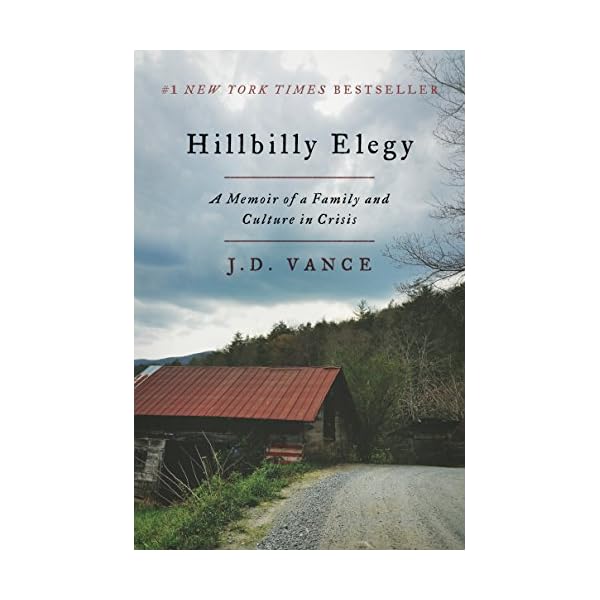
From a former marine and Yale Law School graduate, a powerful account of growing up in a poor Rust Belt town that offers a broader, probing look at the struggles of America’s white working class. They raised a middle-class family, and eventually their grandchild (the author) would graduate from Yale Law School, a conventional marker of their success in achieving generational upward mobility. Vance’s grandparents, aunt, uncle, sister, and, most of all, his mother, struggled profoundly with the demands of their new middle-class life, and were never able to fully escape the legacy of abuse, alcoholism, poverty, and trauma so characteristic of their part of America. ''[A] compassionate, discerning sociological analysis...Combining thoughtful inquiry with firsthand experience, Mr. Vance has inadvertently provided a civilized reference guide for an uncivilized election, and he's done so in a vocabulary intelligible to both Democrats and Republicans. ( Jennifer Senior, New York Times ). ''[ Hillbilly Elegy ] is a beautiful memoir but it is equally a work of cultural criticism about white working-class America....[Vance] offers a compelling explanation for why it's so hard for someone who grew up the way he did to make it...a riveting book.''. ''[An] understated, engaging debut...An unusually timely and deeply affecting view of a social class whose health and economic problems are making headlines in this election year.''. ''Vance compellingly describes the terrible toll that alcoholism, drug abuse, and an unrelenting code of honor took on his family, neither excusing the behavior nor condemning it...The portrait that emerges is a complex one...Unerringly forthright, remarkably insightful, and refreshingly focused, Hillbilly Elegy is the cry of a community in crisis.''. ''A beautifully and powerfully written memoir about the author's journey from a troubled, addiction-torn Appalachian family to Yale Law School, Hillbilly Elegy is shocking, heartbreaking, gut-wrenching, and hysterically funny. It's also a profoundly important book, one that opens a window on a part of America usually hidden from view and offers genuine hope in the form of hard-hitting honesty. From a former marine and Yale Law School graduate, a probing look at the struggles of America’s white working class through the author’s own story of growing up in a poor Rust Belt town. The disintegration of this group, a process that has been slowly occurring now for over forty years, has been reported with growing frequency and alarm, but has never before been written about as searingly from the inside. J.D.’s grandparents were “dirt poor and in love” and moved north from Kentucky’s Appalachia region to Ohio in the hopes of escaping the dreadful poverty around them. They raised a middle-class family, and eventually one of their grandchildren would graduate from Yale Law School, a conventional marker of success in achieving generational upward mobility. But as the family saga of Hillbilly Elegy plays out, we learn that J.D.’s grandparents, aunt, uncle, sister, and, most of all, his mother struggled profoundly with the demands of their new middle-class life, never fully escaping the legacy of abuse, alcoholism, poverty, and trauma so characteristic of their part of America. A deeply moving memoir, with its share of humor and vividly colorful figures, Hillbilly Elegy is the story of how upward mobility really feels.
Reviews
Find Best Price at Amazon"Drugs, crime, jail time, abusive interactions without any knowledge of other forms of interaction, children growing up in a wild mix of stoned mother care, foster care, and care by temporary "boyfriends," and in general, an image of life on the edge of survival where even the heroes are distinctly flawed for lack of knowledge and experience of any other way of living. Second, the author's growing realization, fully present by the end of the work, that while individuals do not have total control over the shapes of their lives, their choices do in fact matter—that even if one can't direct one's life like a film, one does always have the at least the input into life that comes from being free to make choices, every day, and in every situation. I hate to fall into self-analysis and virtue-signaling behavior in a public review, but in this case I feel compelled to say that the author really did leave with me a renewed motivation to make more of my life every day, to respect and consider the choices that confront me much more carefully, and to seize moments of opportunity with aplomb when they present themselves."
"I never heard of the author until I saw him on Morning Joe a few days ago but I looked him up and read several articles he wrote for various publications so I bought his book. He suggests that tribalism, mistrust of outsiders and "elites," violence and irresponsibility among family members, parents without ethics and a sense of responsibility, terrible work ethics, and an us-against-them mentality is dooming the people who live that way to becoming poorer, more addicted, and more marginalized."
"I grew up without running water in Boone County, WV, and wound up with a degree from Harvard Law School."
"I escaped inner city Baltimore (see The Wire) due to luck, the ability to do well in school and a few good teachers.Instead of trying to describe my early life to my family and friends, I will give them this book."
Best Social Work
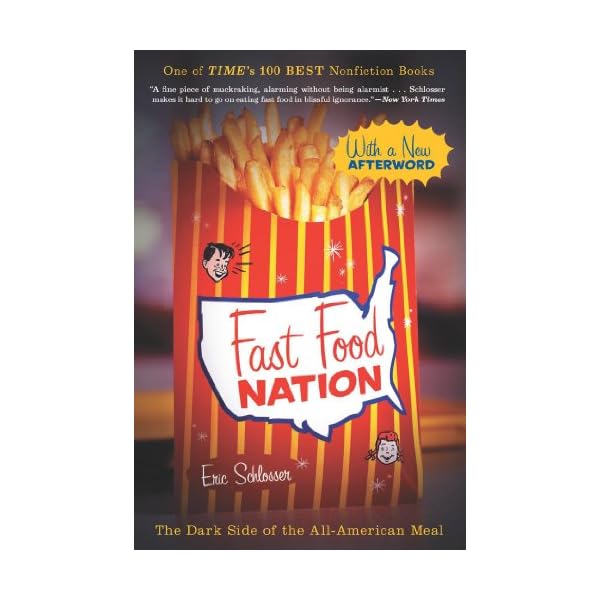
Fast Food Nation points the way but, to resurrect an old fast food slogan, the choice is yours.”— Los Angeles Times. Eric Schlosser’s exposé revealed how the fast food industry has altered the landscape of America, widened the gap between rich and poor, fueled an epidemic of obesity, and transformed food production throughout the world. In a new afterword for this edition, Schlosser discusses the growing interest in local and organic food, the continued exploitation of poor workers by the food industry, and the need to ensure that every American has access to good, healthy, affordable food. “Schlosser shows how the fast food industry conquered both appetite and landscape.”— The New Yorker. In this fascinating sociocultural report, Schlosser digs into the deeper meaning of Burger King, Auggie's, The Chicken Shack, Jack-in-the-Box, Little Caesar's and myriad other examples of fast food in America. Frequently using McDonald's as a template, Schlosser, an Atlantic Monthly correspondent, explains how the development of fast-food restaurants has led to the standardization of American culture, widespread obesity, urban sprawl and more. In a perky, reportorial voice, Adamson tells of the history, economics, day-to-day dealings and broad and often negative cultural implications of franchised burger joints and pizza factories, delivering impressive snippets of information (e.g., two-thirds of America's fast-food restaurant employees are teenagers; Willard Scott posed as the first Ronald McDonald until higher-ups decided Scott was too round to represent a healthy restaurant like McDonald's). According to Schlosser, most visits to fast-food restaurants are the culinary equivalent of "impulse buys," i.e., someone is driving by and pulls over for a Big Mac.
Reviews
Find Best Price at Amazon"The book starts off by explaining how the fast food industry came to be the American symbol. Schlosser took many tours through slaughterhouses and interviewed many former employees that have been burned out from the tortuous conditions. Schlosser says that, "Everyday in the United States, roughly 200,000 people are sickened by food borne disease, 900 are hospitalized, and 14 die". His main message presented was how the fast food industry is affecting society. Having more people know about what is really behind the Big Mac and the Whopper will help society understand what they are eating and how it can affect them."
"I bought Fast Food Nation through Amazon seller as a used book."
"It offers an amazing insight of the entire meet industry."
"Regardless if you never eat at a FF joint, the food we eat is processed in the same slick, fast food procedure."
"Beginning in the late 1980s, a series of food safety scandals opened people's eyes to the way their food was being produced, each one drawing the curtain back a little further on a food system that had changed beyond recognition. In the wake of these food safety scandals, the conversation about food politics that briefly flourished in the 1970s was picked up again in a series of books, articles, and movies about the consequences of industrial food production. Beginning in 2001 with the publication of Eric Schlosser's Fast Food Nation, a surprise best-seller, and, the following year, Marion Nestle's Food Politics, the food journalism of the last decade has succeeded in making clear and telling connections between the methods of industrial food production, agricultural policy, food-borne illness, childhood obesity, the decline of the family meal as an institution, and, notably, the decline of family income beginning in the 1970s. The picture of the food economy Schlosser painted resembles an upside-down version of the social compact sometimes referred to as "Fordism": instead of paying workers well enough to allow them to buy things like cars, as Henry Ford proposed to do, companies like Wal-Mart and McDonald's pay their workers so poorly that they can afford only the cheap, low-quality food these companies sell, creating a kind of nonvirtuous circle driving down both wages and the quality of food."
Best Poverty Studies
From a former marine and Yale Law School graduate, a powerful account of growing up in a poor Rust Belt town that offers a broader, probing look at the struggles of America’s white working class. They raised a middle-class family, and eventually their grandchild (the author) would graduate from Yale Law School, a conventional marker of their success in achieving generational upward mobility. Vance’s grandparents, aunt, uncle, sister, and, most of all, his mother, struggled profoundly with the demands of their new middle-class life, and were never able to fully escape the legacy of abuse, alcoholism, poverty, and trauma so characteristic of their part of America. ''[A] compassionate, discerning sociological analysis...Combining thoughtful inquiry with firsthand experience, Mr. Vance has inadvertently provided a civilized reference guide for an uncivilized election, and he's done so in a vocabulary intelligible to both Democrats and Republicans. ( Jennifer Senior, New York Times ). ''[ Hillbilly Elegy ] is a beautiful memoir but it is equally a work of cultural criticism about white working-class America....[Vance] offers a compelling explanation for why it's so hard for someone who grew up the way he did to make it...a riveting book.''. ''[An] understated, engaging debut...An unusually timely and deeply affecting view of a social class whose health and economic problems are making headlines in this election year.''. ''Vance compellingly describes the terrible toll that alcoholism, drug abuse, and an unrelenting code of honor took on his family, neither excusing the behavior nor condemning it...The portrait that emerges is a complex one...Unerringly forthright, remarkably insightful, and refreshingly focused, Hillbilly Elegy is the cry of a community in crisis.''. ''A beautifully and powerfully written memoir about the author's journey from a troubled, addiction-torn Appalachian family to Yale Law School, Hillbilly Elegy is shocking, heartbreaking, gut-wrenching, and hysterically funny. It's also a profoundly important book, one that opens a window on a part of America usually hidden from view and offers genuine hope in the form of hard-hitting honesty. From a former marine and Yale Law School graduate, a probing look at the struggles of America’s white working class through the author’s own story of growing up in a poor Rust Belt town. The disintegration of this group, a process that has been slowly occurring now for over forty years, has been reported with growing frequency and alarm, but has never before been written about as searingly from the inside. J.D.’s grandparents were “dirt poor and in love” and moved north from Kentucky’s Appalachia region to Ohio in the hopes of escaping the dreadful poverty around them. They raised a middle-class family, and eventually one of their grandchildren would graduate from Yale Law School, a conventional marker of success in achieving generational upward mobility. But as the family saga of Hillbilly Elegy plays out, we learn that J.D.’s grandparents, aunt, uncle, sister, and, most of all, his mother struggled profoundly with the demands of their new middle-class life, never fully escaping the legacy of abuse, alcoholism, poverty, and trauma so characteristic of their part of America. A deeply moving memoir, with its share of humor and vividly colorful figures, Hillbilly Elegy is the story of how upward mobility really feels.
Reviews
Find Best Price at Amazon"Drugs, crime, jail time, abusive interactions without any knowledge of other forms of interaction, children growing up in a wild mix of stoned mother care, foster care, and care by temporary "boyfriends," and in general, an image of life on the edge of survival where even the heroes are distinctly flawed for lack of knowledge and experience of any other way of living. Second, the author's growing realization, fully present by the end of the work, that while individuals do not have total control over the shapes of their lives, their choices do in fact matter—that even if one can't direct one's life like a film, one does always have the at least the input into life that comes from being free to make choices, every day, and in every situation. I hate to fall into self-analysis and virtue-signaling behavior in a public review, but in this case I feel compelled to say that the author really did leave with me a renewed motivation to make more of my life every day, to respect and consider the choices that confront me much more carefully, and to seize moments of opportunity with aplomb when they present themselves."
"I never heard of the author until I saw him on Morning Joe a few days ago but I looked him up and read several articles he wrote for various publications so I bought his book. He suggests that tribalism, mistrust of outsiders and "elites," violence and irresponsibility among family members, parents without ethics and a sense of responsibility, terrible work ethics, and an us-against-them mentality is dooming the people who live that way to becoming poorer, more addicted, and more marginalized."
"I grew up without running water in Boone County, WV, and wound up with a degree from Harvard Law School."
"I escaped inner city Baltimore (see The Wire) due to luck, the ability to do well in school and a few good teachers.Instead of trying to describe my early life to my family and friends, I will give them this book."
Best Special Groups
From a former marine and Yale Law School graduate, a powerful account of growing up in a poor Rust Belt town that offers a broader, probing look at the struggles of America’s white working class. They raised a middle-class family, and eventually their grandchild (the author) would graduate from Yale Law School, a conventional marker of their success in achieving generational upward mobility. Vance’s grandparents, aunt, uncle, sister, and, most of all, his mother, struggled profoundly with the demands of their new middle-class life, and were never able to fully escape the legacy of abuse, alcoholism, poverty, and trauma so characteristic of their part of America. ''[A] compassionate, discerning sociological analysis...Combining thoughtful inquiry with firsthand experience, Mr. Vance has inadvertently provided a civilized reference guide for an uncivilized election, and he's done so in a vocabulary intelligible to both Democrats and Republicans. ( Jennifer Senior, New York Times ). ''[ Hillbilly Elegy ] is a beautiful memoir but it is equally a work of cultural criticism about white working-class America....[Vance] offers a compelling explanation for why it's so hard for someone who grew up the way he did to make it...a riveting book.''. ''[An] understated, engaging debut...An unusually timely and deeply affecting view of a social class whose health and economic problems are making headlines in this election year.''. ''Vance compellingly describes the terrible toll that alcoholism, drug abuse, and an unrelenting code of honor took on his family, neither excusing the behavior nor condemning it...The portrait that emerges is a complex one...Unerringly forthright, remarkably insightful, and refreshingly focused, Hillbilly Elegy is the cry of a community in crisis.''. ''A beautifully and powerfully written memoir about the author's journey from a troubled, addiction-torn Appalachian family to Yale Law School, Hillbilly Elegy is shocking, heartbreaking, gut-wrenching, and hysterically funny. It's also a profoundly important book, one that opens a window on a part of America usually hidden from view and offers genuine hope in the form of hard-hitting honesty. From a former marine and Yale Law School graduate, a probing look at the struggles of America’s white working class through the author’s own story of growing up in a poor Rust Belt town. The disintegration of this group, a process that has been slowly occurring now for over forty years, has been reported with growing frequency and alarm, but has never before been written about as searingly from the inside. J.D.’s grandparents were “dirt poor and in love” and moved north from Kentucky’s Appalachia region to Ohio in the hopes of escaping the dreadful poverty around them. They raised a middle-class family, and eventually one of their grandchildren would graduate from Yale Law School, a conventional marker of success in achieving generational upward mobility. But as the family saga of Hillbilly Elegy plays out, we learn that J.D.’s grandparents, aunt, uncle, sister, and, most of all, his mother struggled profoundly with the demands of their new middle-class life, never fully escaping the legacy of abuse, alcoholism, poverty, and trauma so characteristic of their part of America. A deeply moving memoir, with its share of humor and vividly colorful figures, Hillbilly Elegy is the story of how upward mobility really feels.
Reviews
Find Best Price at Amazon"Drugs, crime, jail time, abusive interactions without any knowledge of other forms of interaction, children growing up in a wild mix of stoned mother care, foster care, and care by temporary "boyfriends," and in general, an image of life on the edge of survival where even the heroes are distinctly flawed for lack of knowledge and experience of any other way of living. Second, the author's growing realization, fully present by the end of the work, that while individuals do not have total control over the shapes of their lives, their choices do in fact matter—that even if one can't direct one's life like a film, one does always have the at least the input into life that comes from being free to make choices, every day, and in every situation. I hate to fall into self-analysis and virtue-signaling behavior in a public review, but in this case I feel compelled to say that the author really did leave with me a renewed motivation to make more of my life every day, to respect and consider the choices that confront me much more carefully, and to seize moments of opportunity with aplomb when they present themselves."
"I never heard of the author until I saw him on Morning Joe a few days ago but I looked him up and read several articles he wrote for various publications so I bought his book. He suggests that tribalism, mistrust of outsiders and "elites," violence and irresponsibility among family members, parents without ethics and a sense of responsibility, terrible work ethics, and an us-against-them mentality is dooming the people who live that way to becoming poorer, more addicted, and more marginalized."
"I grew up without running water in Boone County, WV, and wound up with a degree from Harvard Law School."
"I escaped inner city Baltimore (see The Wire) due to luck, the ability to do well in school and a few good teachers.Instead of trying to describe my early life to my family and friends, I will give them this book."
Best Disaster Relief
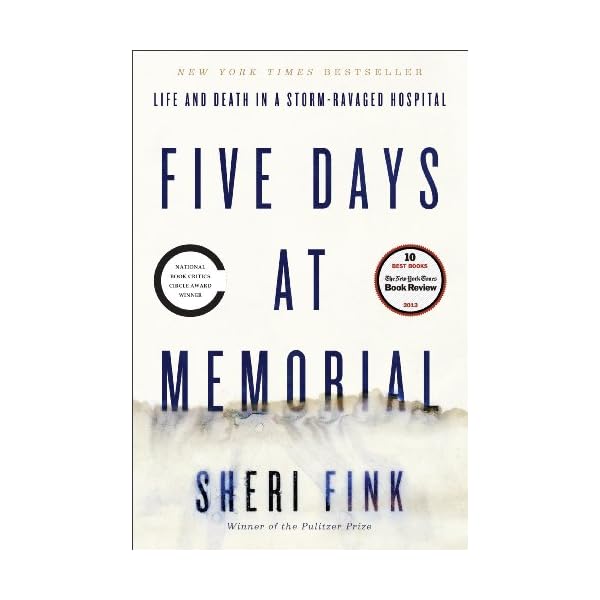
Five Days at Memorial , the culmination of six years of reporting, unspools the mystery of what happened in those days, bringing the reader into a hospital fighting for its life and into a conversation about the most terrifying form of health care rationing. Fink, a Pulitzer Prize winner for her reporting on Memorial in the New York Times Magazine, offers a stunning re-creation of the storm, its aftermath, and the investigation that followed (one doctor and two nurses were charged with second-degree murder but acquitted by a grand jury). She evenhandedly compels readers to consider larger questions, not just of ethics but race, resources, history, and what constitutes the greater good, while humanizing the countless smaller tragedies that make up the whole. --Keir Graff Five Days at Memorial is Sheri Fink’s elaborately researched chronicle of life, death, and the choices in between at a New Orleans hospital immediately following Hurricane Katrina.
Reviews
Find Best Price at Amazon"When making decisions in a chaotic disaster situation, it would be helpful to have at least a minimal understanding of the job that the people you are directing do."
"I used to work in a hospital as a pharmacy tech,I recognized the narcotics the author mentions in the book."
"If this book had been 50 pages shorter, I would have given it 5 Stars."
"I almost feel bad giving this book 4 instead of 5 stars considering the incredible amount of research and effort that has gone into its composition, but as a reader, I found this book to be tedious in certain parts, and in need of some editing. For academic and research purposes, I think this book is a masterpiece because it contains such minute detail, but for a casual reader like me, who wanted to gain some insight into this particular event, the book is just too drawn out."
"What happens when you work for five days in unbelievable circumstances, with no air conditioning, no power, little or no sleep, reduced staff, and many critically ill patients? After the complete coverage on Katrina, including the chilling human and political ramifications, she explores what has been done, or not done, for planning for future events in Louisiana and several other states."
"I lived in New Orleans for 9 years prior to Hurricane Katrina, so the story hit me pretty hard."
Best Discrimination & Racism
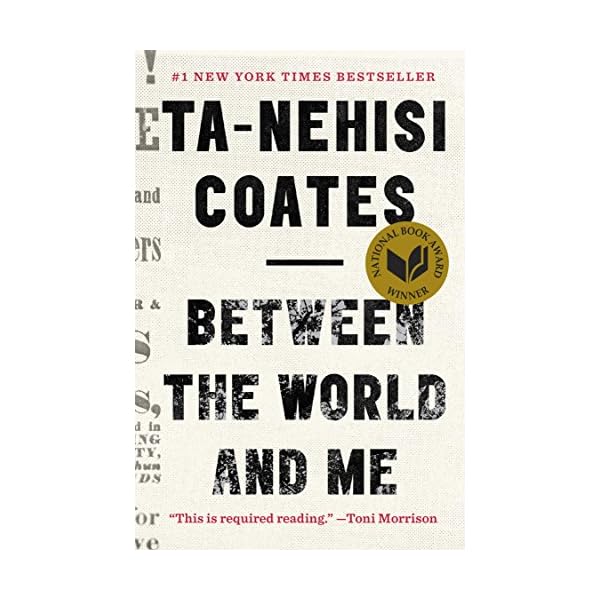
Hailed by Toni Morrison as “required reading,” a bold and personal literary exploration of America’s racial history by “the single best writer on the subject of race in the United States” ( The New York Observer ) #1 NEW YORK TIMES BESTSELLER | NATIONAL BOOK AWARD WINNER | NAACP IMAGE AWARD WINNER | PULITZER PRIZE FINALIST | NATIONAL BOOK CRITICS CIRCLE AWARD FINALIST | NAMED ONE OF THE TEN BEST BOOKS OF THE YEAR BY The New York Times Book Review • O: The Oprah Magazine • The Washington Post • People •. Entertainment Weekly •. Vogue • Los Angeles Times • San Francisco Chronicle • Chicago Tribune • New York • Newsday • Library Journal • Publishers Weekly In a profound work that pivots from the biggest questions about American history and ideals to the most intimate concerns of a father for his son, Ta-Nehisi Coates offers a powerful new framework for understanding our nation’s history and current crisis. Americans have built an empire on the idea of “race,” a falsehood that damages us all but falls most heavily on the bodies of black women and men—bodies exploited through slavery and segregation, and, today, threatened, locked up, and murdered out of all proportion. Between the World and Me is Ta-Nehisi Coates’s attempt to answer these questions in a letter to his adolescent son. Coates shares with his son—and readers—the story of his awakening to the truth about his place in the world through a series of revelatory experiences, from Howard University to Civil War battlefields, from the South Side of Chicago to Paris, from his childhood home to the living rooms of mothers whose children’s lives were taken as American plunder. Beautifully woven from personal narrative, reimagined history, and fresh, emotionally charged reportage, Between the World and Me clearly illuminates the past, bracingly confronts our present, and offers a transcendent vision for a way forward. in the tradition of James Baldwin with echoes of Ralph Ellison’s Invisible Man . Ferguson, Trayvon Martin, and South Carolina are not bumps on the road of progress and harmony, but the results of a systemized, ubiquitous threat to “black bodies” in the form of slavery, police brutality, and mass incarceration. Thoughtfully exploring personal and historical events, from his time at Howard University to the Civil War, the author poignantly asks and attempts to answer difficult questions that plague modern society. In this short memoir, the Atlantic writer explains that the tragic examples of Michael Brown, Trayvon Martin, and those killed in South Carolina are the results of a systematically constructed and maintained assault to black people—a structure that includes slavery, mass incarceration, and police brutality as part of its foundation.
Reviews
Find Best Price at Amazon"This book came recommended by a quasi-stranger, not for it's content but for its structure: letters from a father to a son. After ordering it, I heard the author on NPR - without knowing it was the author of the book, mind you - and I thought "wow, this guy is really interesting, provocative, well-spoken, intellectually sound, and speaks from a world that I can only see from afar." At times I felt compelled to put the book down, that it was just conjuring up too much weight of history that I wanted to put back out of sight. Even those outside of the USA will benefit from it, as it will certainly illuminate the tension and schizophrenia and contradictions and rewritten history of our country."
"So I understand the scorn directed at this book by many who dismiss it as divisive and simplistic in its assessment of the black experience in America. I felt the anger he feels at people who believe that they are white dismissing that experience as so many sour grapes. I felt the hypocrisy of being told not to wear hoodies or play loud music for fear of someone breaking your body. It's not a solution to our race problems or an accurate assessment of the progress of America as a nation."
"For those who realize that they MUST be faced, no matter how painful we find them, Coates provides a remarkable first step with this compelling, poetic, and sometimes heartbreaking expressionistic book. Empathy and a desire to understand that which we haven't personally experienced but that we know are pernicious facts of modern Anerican life are key to the changes we must make. As an upper-middle class white woman, I've lived through very few of the events and feelings Coates describes in "Between the World and Me.""
Best Demography
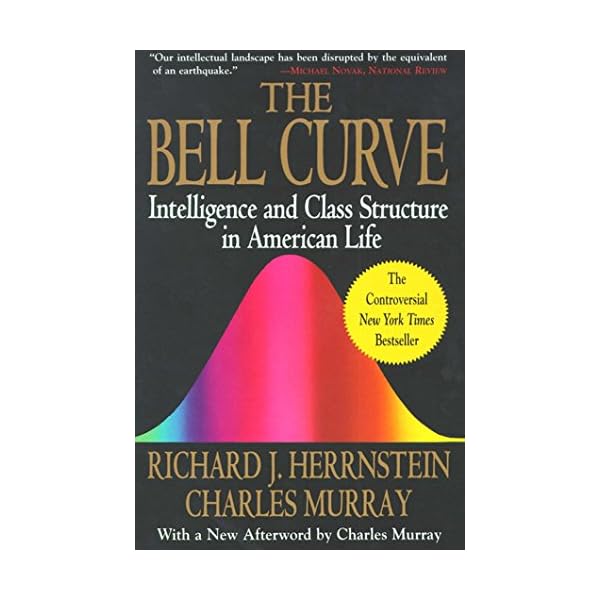
The controversial book linking intelligence to class and race in modern society, and what public policy can do to mitigate socioeconomic differences in IQ, birth rate, crime, fertility, welfare, and poverty. Milton Friedman This brilliant, original, objective, and lucidly written book will force you to rethink your biases and prejudices about the role that individual difference in intelligence plays in our economy, our policy, and our society. Prof. Thomas J. Bouchard Contemporary Psychology [The authors] have been cast as racists and elitists and The Bell Curve has been dismissed as pseudoscience....The book's message cannot be dismissed so easily. Herrnstein and Murray have written one of the most provocative social science books published in many years....This is a superbly written and exceedingly well documented book. Malcolme W. Browne The New York Times Book Review Mr. Murray and Mr. Herrnstein write that "for the last 30 years, the concept of intelligence has been a pariah in the world of ideas," and that the time has come to rehabilitate rational discourse on the subject. Prof. Eugene D. Genovese National Review Richard Herrnstein and Charles Murray might not feel at home with Daniel Patrick Moynihan and Lani Guinier, but they should....They have all [made] brave attempts to force a national debate on urgent matters that will not go away. In the second round of reaction, some commentators suggested that Herrnstein and Murray were merely bringing up facts that were well known in the scientific community, but perhaps best not discussed in public. Prof. E. L. Patullo Society From beginning to end, it is apparent that Herrnstein and Murray are eminently reasonable, responsible, civilized and compassionate human beings.
Reviews
Find Best Price at Amazon"Although you would not glean as much from the vicious attacks that have been leveled against this book since its publishing, the major thesis is that intelligence is highly correlated with success in America. This same kind of intelligence, needless to say, is valuable to employers and leads to success at work. There are enclaves of high income, highly intelligent people in Boston, New York, San Francisco and Washington DC. What they also find, but which does not excite controversy, is that Ashkenazi Jews average 115, Americans of Northeast Asian descent average about 107, American Indians average about 90, and Hispanic Americans about the same. They produce highly reproducible results – there are a wide range of intelligence tests available, and all of them will yield pretty much the same results for a given individual. In practical terms, a one standard deviation difference in population averages means that only one person in six in the lower population has an intelligence at or exceeding the average of the higher group. Only one white person in six is as smart as the average Ashkenazi Jew, and only one black and six is as intelligent as the average white. Intelligence is highly correlated with success in school, income, health and happiness. In round numbers, intelligence explains about 25% of the difference in levels of success. At the same time, as noted in Lynn's book above, the intelligence of nativeborn Americans is declining."
"The Bell Curve got so much positive attention as a revolutionary, critical review of issues so current and pressing within our society, at the time, and today that I felt I would really appreciate reading it and reviewing the authors scientific efforts. In fact, as you will find, upon studying the text, the Bell Curve IS about the relationship between "Intellect" and "One's ability to succeed in life". It is scary to me, but when I, a student of the Bell Curve, see these commentators on telivision or read of them in the papers.... speaking of "dirty little books", "racism disguised as science" etc..., I have the feeling that If this were not the 20th century, and if we did not have the constitution protecting our right to publish scientific findings, these very same negative commentators might just try to force Murray to renounce his scientific findings, keeping us all in the dark for as long as possible."
"Interesting book on the study of human cognition."
"It is not about what we want, but about what nature does with human nature and its most distinctive feature / evolutionary advantage. What really bothers many readers and many more opinionated none-readers of this book, is the fact that nature does not care what they think, and shall never consult with them."
"Everybody should read this controversial book."
"Excellent book, although many so called 'experts' have discredited it."
"Fantastic reading combined with a good seller equals a satisfied customer."
Best Social Customs & Traditions
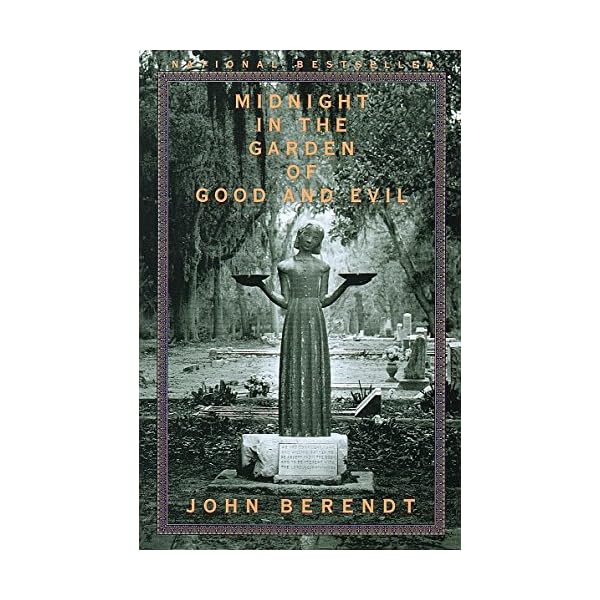
Berendt skillfully interweaves a hugely entertaining first-person account of life in this isolated remnant of the Old South with the unpredictable twists and turns of a landmark murder case. It is a spellbinding story peopled by a gallery of remarkable characters: the well-bred society ladies of the Married Woman's Card Club; the turbulent young redneck gigolo; the hapless recluse who owns a bottle of poison so powerful it could kill every man, woman, and child in Savannah; the aging and profane Southern belle who is the "soul of pampered self-absorption"; the uproariously funny black drag queen; the acerbic and arrogant antiques dealer; the sweet-talking, piano-playing con artist; young blacks dancing the minuet at the black debutante ball; and Minerva, the voodoo priestess who works her magic in the graveyard at midnight. John Berendt's Midnight in the Garden of Good and Evil has been heralded as a "lyrical work of nonfiction," and the book's extremely graceful prose depictions of some of Savannah, Georgia's most colorful eccentrics--remarkable characters who could have once prospered in a William Faulkner novel or Eudora Welty short story--were certainly a critical factor in its tremendous success. The book is also about the wealthy international antiques dealer Jim Williams, who played an active role in the historic city's restoration--and would also be tried four times for the 1981 shooting death of 21-year-old Danny Handsford, his high-energy, self-destructive house helper.
Reviews
Find Best Price at Amazon"I loved this book so much that I made my husband go with me to Savannah to visit the city and see the bird girl statue. John Berendt did a wonderful job in writing this book and I wish he would do another one."
"Finally read this book."
"This story held my interest in each and every character contributing their unique personality, and in the end leaving their spirit, on this place."
"I first loved the movie, then I loved the city and finally I overcame my apprehensions that after that the book would not be that great."
"What a fun, quirky group of characters set in the beautiful Savannah, Ga backdrop."
"I am glad that I read this book since people in Savannah made references to this book, However, I found a couple of characters that didn't relate much to the main story and was bored reading about them."
"The thing is it's told in such a interesting manner that you're deep into it before you realize you're learning a LOT of Savannah culture and history while being riotously entertained!"
"This book kind of draws you in with it's very unusual characters (which there are many) and the way it's written - it casts its own spell on the reader."
Best Pornography
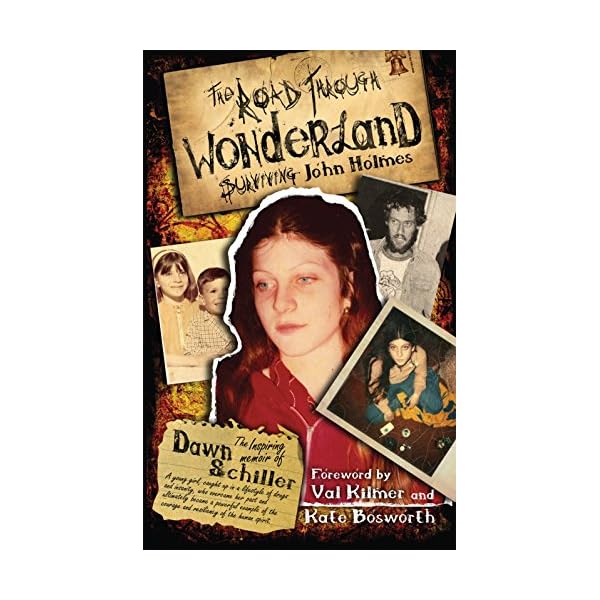
Painstakingly honest, this chilling memoir reveals how a teenager became immersed in the bizarre life of legendary porn star John Holmes. The 2003 movie Wonderland vivified Schiller's teenage experience under the thrall of a drug-addled porn star in L.A. in the late 1970s, while this long docudrama expands on that raw era to include her peripatetic, dysfunctional upbringing and aftermath as a survivor. The daughter of a Vietnam vet and a German woman he met and married overseas, Schiller spent her early years moving around to accommodate her father's military career, especially between New Jersey and the suburbs of Miami. Instead, Schiller, who met Holmes in 1976 when she was just 15, details their five-year love affair, the stability he provided in the wake of her troubled childhood, and the deterioration of their relationship after Homes became addicted to cocaine and was ultimately arrested.
Reviews
Find Best Price at Amazon"Just wow this certainly had my attention a intense case of Stockholm syndrome as dawn same name as me shares a birthday with my significant other and came from New Jersey where I live consider my mind blown as this story takes readers from the happiest of times to the worst of times with a legendary porn star as he corrupts her innocence and ruins her for his enjoyment."
"Starting cautiously with a sample first, I was drawn in by the frank, consistent and honest writing by the author, Dawn Schiller, and I bought this book with great interest."
"For anyone interested in the long term effects of dysfunctional childhoods, look up the sobering long-term study - Adverse Childhood Experiences (ACE) Study, through the Center for Disease Control's website."
"It gives great detail into her early family life and how at 15, she met John Holmes who would ultimately bring her great love and everlasting pain."
"One that any love-struck teenager can relate to when after the fairy tale has worn off, it's a nightmare."
"Without much in the way of parental supervision or familial support, she found herself in the sights of the landlord of the people she was "crashing" with. You have to take memoirs with a grain of salt, but she is pretty good in depicting her personal thoughts as she was taken down that "road," and why she made her choices."
Best Gerontology
In The Longevity Economy , Coughlin provides the framing and insight business leaders need to serve the growing older market: a vast, diverse group of consumers representing every possible level of health and wealth, worth about $8 trillion in the United States alone and climbing. In The Longevity Economy , he not only defines that better narrative--he shows businesses how to lead in creating it and how to profit from the opportunities it provides. The magnificent result--at once forward-looking, hilariously irreverent, and engaging--serves as an indispensable road map for how to take full advantage of life's ever-lengthening third act. Longer lifespans will revolutionize the way we live and offer incredible new opportunities, but will also require a new rigor in the way people plan and save for their later years. The Longevity Economy doesn't just make you rethink the role of consumer insights and trends, it forces you to re-imagine their impact." Increasingly, inclusive design is where businesses are heading because 'the golden years' are where true gold lies in the new, longevity economy. Joseph Coughlin is the founder and director of the MIT AgeLab, a multidisciplinary research program created to understand the behavior of the 50+ population, the role of technology in their lives, and the opportunity for innovation to improve the quality of life for older adults and their families.
Reviews
Find Best Price at Amazon"Amazing book."
"There is a powerful message that Joe Coughlin delivers in his new book, that continues what Daniel Kahneman and Yuval Noah Harari have articulated. Coughlin uses this key understanding of the human mind's working to dismantle the "narrative" we have been using about old age. Once old age is framed in our minds as frail and incompetent, it leaves no room for any other way of thinking about vast and an ever growing swath of society. One is when the author is speaking about females being decision makers on key aspects of managing family affairs such as health care and doctors. The narrative power of males being the "deciders in chief' was too deeply rooted to even tolerate this counter observation. Thus we are creating communes where people with experience, wisdom, vitality and a whole lot to offer are no longer active part of the larger society. It is full colorful anecdotes including the author's experiences at MIT, the US Government and working with companies all around the world."
"It isn’t just big, he suggests, “It’s so enormous, it’s as though a new [begin italics] continent [end italics] were rising out of the sea, filled with more than a billion air-breathing consumers just begging for products that fulfill their demands.” Welcome to the Longevity Economy. First, the emerging population of older adults isn’t just big."
"Superb book, flows with great stories and brilliant insights."
Best Popular Culture
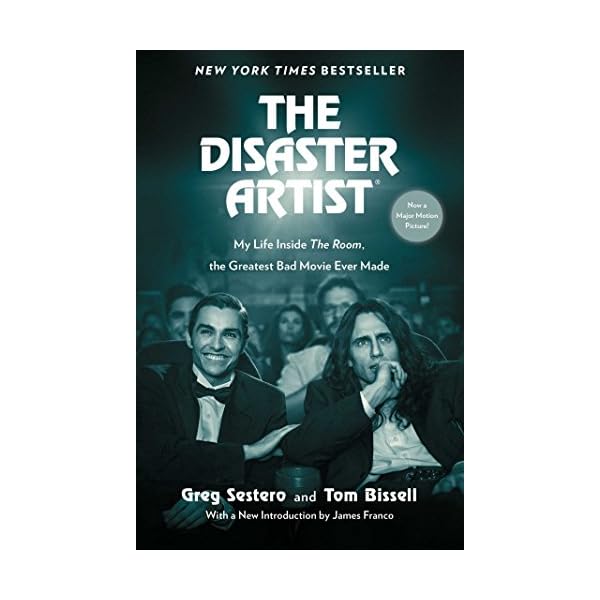
From the actor who somehow lived through it all, a “sharply detailed…funny book about a cinematic comedy of errors” ( The New York Times ): the making of the cult film phenomenon The Room . But more than just a riotously funny story about cinematic hubris, “ The Disaster Artist is one of the most honest books about friendship I’ve read in years” ( Los Angeles Times ). The Room, a 2003 film written, directed, and starring the inscrutable Tommy Wiseau, was massively and enthusiastically lambasted by critics, proclaimed by some as the worst movie ever made (an insult, some movie fans might say, to Ed Wood’s Plan 9 from Outer Space). But it’s also the story of a very interesting friendship between Sestero and Wiseau (who knew each other for several years before The Room), and the story of an enigmatic and incredibly self-absorbed man who, in making his film, seemed to be trying to exorcise a troubled past and build an entirely new version of himself.
Reviews
Find Best Price at Amazon"Greg Sestero has done something fantastic. I think as fans we sometimes forget that these characters we see onscreen (and yell insults to on countless midnight screenings) are portrayed by actual human beings, separate from their characters. Without this book I would never have known that I've memorized The Room better than Tommy Wiseau."
"Knowing the background story behind various scenes has me wanting to go back and watch the film again to find the context!"
"I most disliked the file's poor audio quality, especially the very-poor-quality "This is Audible" tags on the book's beginning and ending, which shouldn't even be there, and which soured my whole experience. My absolute best-case scenario is lossless audio, like .wav or whatever file format it was originally recorded in (so long as it's not really obscure or proprietary or something), presumably/hopefully at a sample rate 48 or more kHz and a bit depth of 16 or more (one hopes)—basically a full-quality final edit of the file or files—which is why I prefer to buy audiobooks on CD. I got this sad excuse for an audiobook because I wanted to give Audible another chance, for their sheer monopolostic pervasiveness. The only thing I like about the file is it's in Audible's house format, .aax, i.e. .m4a or maybe .m4b?, with chapter markers, a handy feature in itself but one which is also genuinely helpful for navigating an audiobook."
"Kooky, weird and touching, it tells the now infamous story of the making of The Room, that wonderfully terrible film that has now become a cult classic."
"There is no making sense of "The Room," and little likelihood of understanding Tommy Wiseau -- but this is a fascinating, funny, and oddly moving revelation of how the Worst Serious Movie Ever Made was actually put together in all its glorious awfulnesd."
"This book is amazing I read it cover-to-cover in like two days I couldn't put it down watching the movie The Room is a experience all on its own but the things you discover in this book make the film even more obscure."
"What an incredibly fun read!"
Best Social Science Reference
Using actual case histories of innocent men and women exonerated after decades in prison because of information they voluntarily gave to police, Professor Duane demonstrates the critical importance of a constitutional right not well or widely understood by the average American. “James Duane’s amazing but true stories of innocent people exonerated after decades of wrongful imprisonment (which could have been avoided if they had just insisted on their fundamental right to avoid self-incrimination) are riveting reminders of the high price we pay, as individuals and as a society, when we fail to assert our constitutional rights.” —Laurence H. Tribe, Harvard Law School. You Have the Right to Remain Innocent describes a stream of miscarriages of justice that occurred only because innocent suspects cooperated with deceptive officers preying on their ignorance and good intentions. “Well-informed, scary, sobering, and sure to tick off police officers and prosecutors even as it contributes to keeping innocent people out of jail.” — Kirkus Reviews.
Reviews
Find Best Price at Amazon"Prof. Duane mixes his brilliant legal scholarship with his trademark humor in this brief overview of what to do when a police officer asks cheerfully, "You don't mind answering a few questions, do you?""
"I knew these tactics and techniques were used by law enforcement, I never knew how much simple statements could be woven into a guilty sentence for the most innocent."
"Once you start looking, it's alarming to realize how many innocent people go to jail because they don't understand the system and they thought if they just told the truth to the arresting officers that everything would be ok. Three felony's a day... Know your rights, the don't and do's of using the 5th, when and when not to keep your mouth shut."
"Every citizen owes it to her or himself to read this book."
"Some very important points made in this book about you (as a suspect, a person being questioned, a random person) and how you should deal with the police if they come to you."
"If you don't know about the lobster law or you even vaguely believe what you might have seen regarding forensics on TV, you should read this book."
"This text clearly shows the dangers of talking to the police."
"Even a single sentence shared with police before remaining silent can be construed into a confession, allowing police to bypass the investigatory work of finding a true culprit."
Best Folklore & Mythology
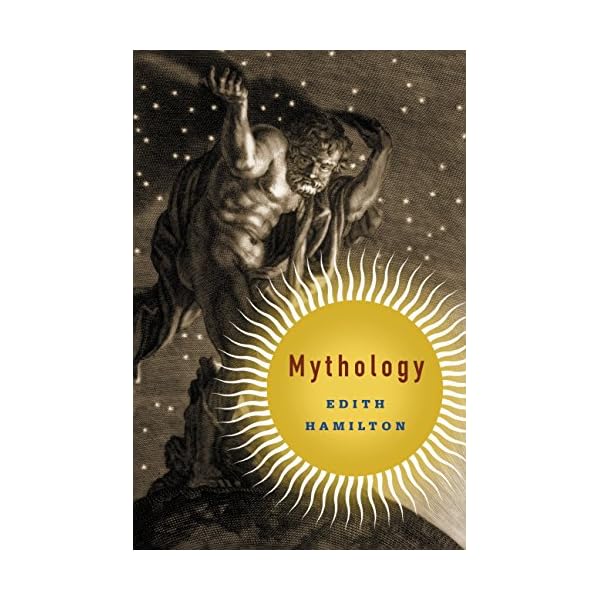
The world-renowned classic that has enthralled and delighted millions of readers with its timeless tales of gods and heroes. Fans of Greek mythology will find all the great stories and characters here--Perseus, Hercules, and Odysseus--each discussed in generous detail by the voice of an impressively knowledgeable and engaging (with occasional lapses) narrator.
Reviews
Find Best Price at Amazon"Always been a fan of Greek Mythology, now I can listen to it whenever I want."
"It's a classic for good reason."
"Exactly what my daughter needed for her class."
"Required for freshman English class."
"This book gives you details about the gods that you didn't know you wanted to know!"
"Edith Hamilton's classic."
"Needed this For my English IS class and it provided spot on and flawless information over Greek mythology down to the core."